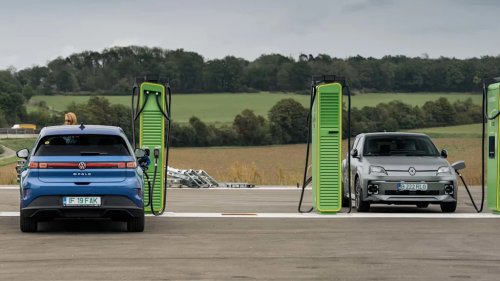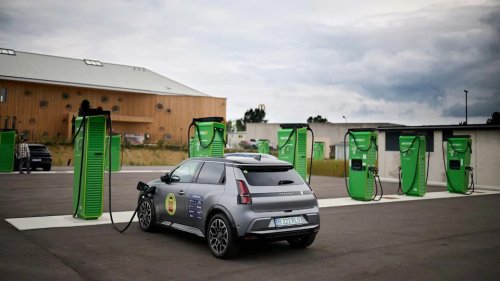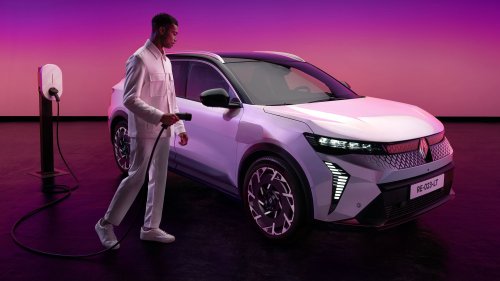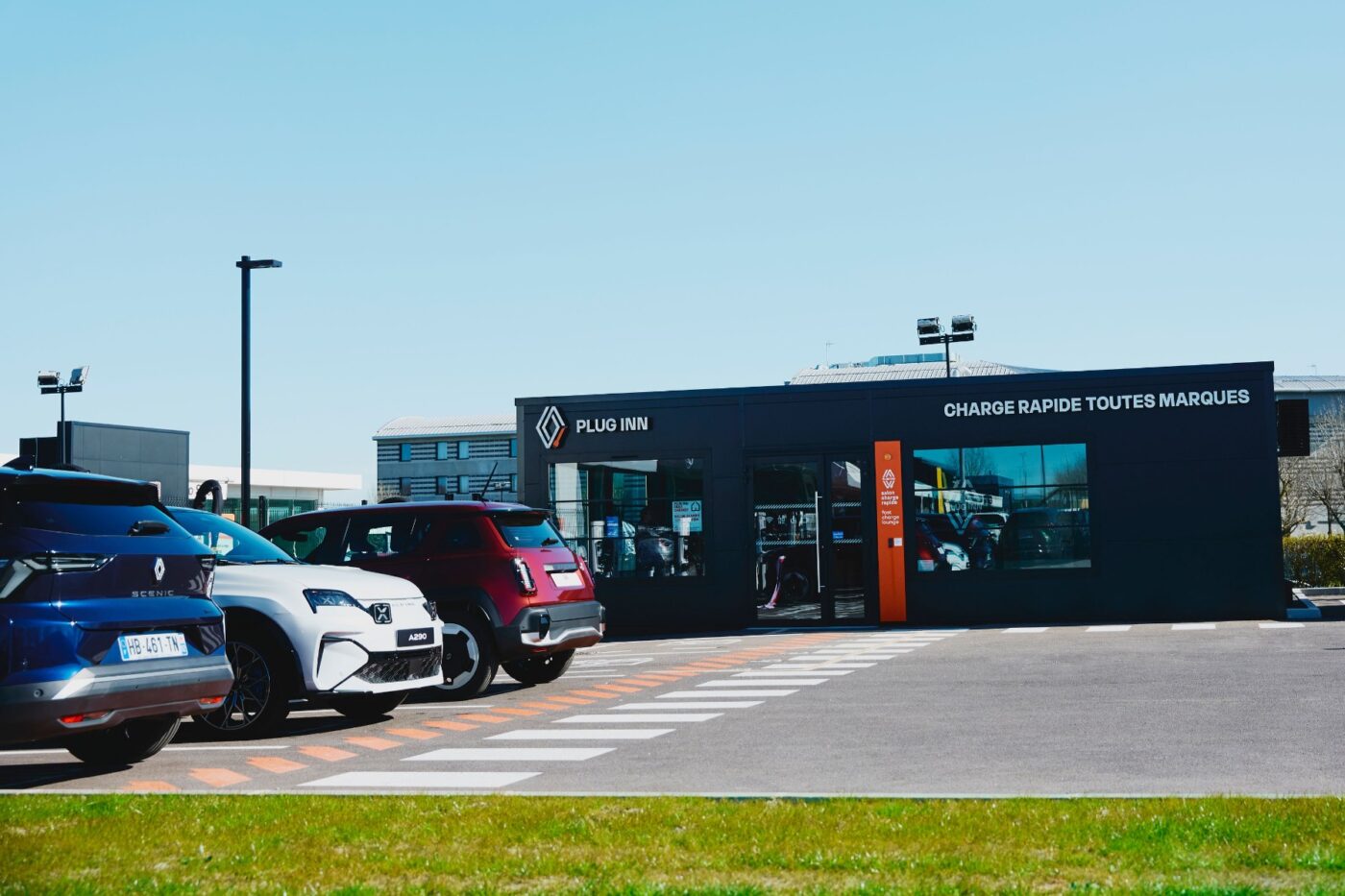



















Image: Renault/FisheyeRenault is continuing the restructuring programme launched in 2025 with this move. As early as December, the group integrated its charging and energy services—previously developed under Mobilize Beyond Automotive—directly into the core business and discontinued its e-carsharing offering.With the new ‘Plug Inn’ brand, Renault aims to increase strategic coherence, improve operational efficiency and create greater transparency for customers. ‘Plug’ refers to EV charging, while ‘Inn’ is intended to convey hospitality, comfort and service.Renault will consolidate all charging activities previously bundled under Mobilize under the new Plug Inn brand. The bidirectional charging solution with its V2G service will be marketed as ‘Plug Inn Powerbox.’ The public charging service, formerly known as ‘Mobilize Charge Pass,’ will be rebranded as ‘Plug Inn Charge Pass.’ The company’s fast-charging network will also adopt the new naming and operate as ‘Plug Inn Fast Charge.’Renault has not provided further details about the future of the first two offerings in its charging ecosystem. It has only stated that the name changes for these services will be implemented by the end of this year. However, the company has been more specific regarding its own fast-charging network, which has already adopted the new name this month.“[Our] ambition that remains unchanged: to offer the best fast-charging experience in France,” the company said, underlining the network’s focus. Rather than pursuing rapid expansion, Renault prioritises user experience and reliability for its fast-charging infrastructure launched in 2023.The stations, which are open to all electric vehicle brands, are mainly located at Renault dealerships along major routes. Selected sites also feature premium lounges with Wi-Fi, toilets, coffee, workspaces and relaxation areas.Renault has not fully ruled out further expansion, but it has significantly scaled back its ambitions. The group initially aimed to deploy 650 HPC sites across Europe by 2028. By December 2025, it had already lowered the target to 100 sites in France and more than 100 in Italy by the end of this year.Renault now only refers to a goal of 93 operational sites in France by year-end. Italy is no longer mentioned, while previously planned projects in Belgium and Spain have been dropped.Mobilize, Renault’s mobility brand, was founded in 2021 by then-Renault CEO Luca de Meo and was intended to develop new mobility solutions beyond Renault’s traditional business.These included carsharing services, electric vehicle charging solutions, and specialised vehicles such as the Duo or an electric limousine designed for ride-hailing services, which was discontinued as early as 2023. De Meo’s successor, François Provost, decided at the end of 2025—following an internal review—to cease further investment in carsharing services and fast-charging infrastructure, as these do not contribute to the core business under financial pressure. This is especially true given that fast-charging stations are also being built by other providers.However, it remains to be seen whether the concept will ultimately succeed. At least Jérôme Faton, VP of Customer Experience & Energy at Renault Group, is optimistic:“Our priority is to simplify every step of the electric experience for our customers by offering them a reliable, clear and scalable charging ecosystem. With Plug Inn, we are setting a structuring milestone: an infrastructure designed to support, on a large scale, the ramp-up of zero-emission mobility in Europe,” said Faton. “Beyond a change of name, Plug Inn embodies a strong industrial and technological ambition: to create a reference standard, harmonise the charging experience, and support the acceleration of electric vehicles by focusing on service quality, transparency and trust. This is how we will help make the transition to all-electric mobility a simple, seamless and accessible reality for everyone,”renaultgroup.com