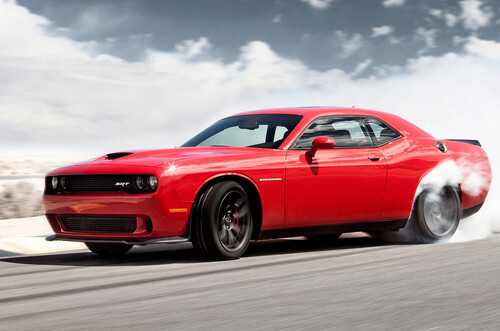
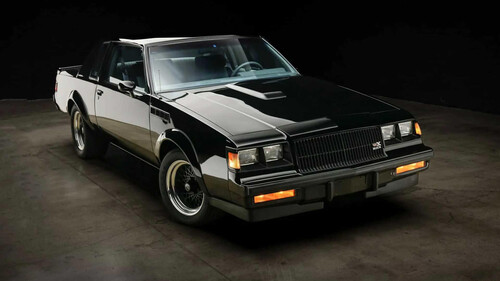
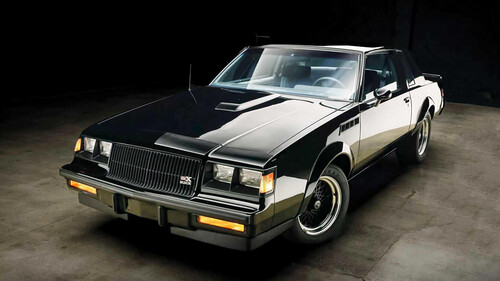
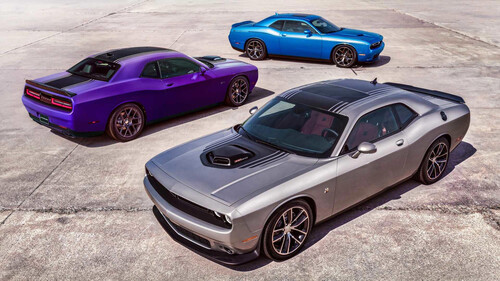
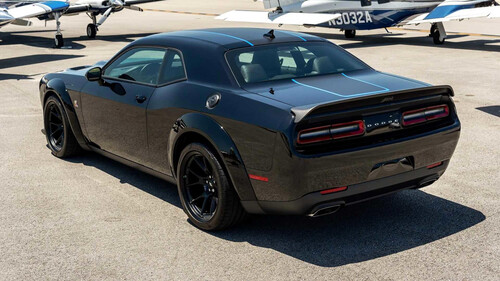
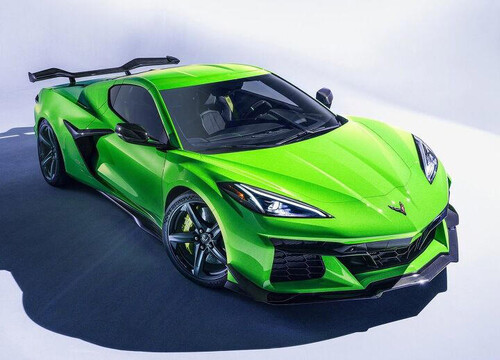
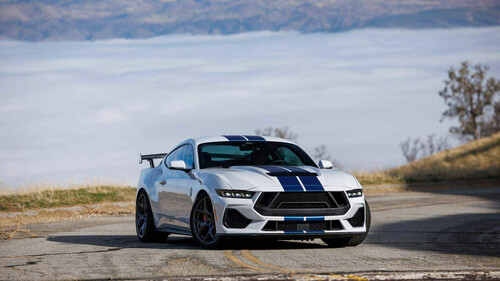
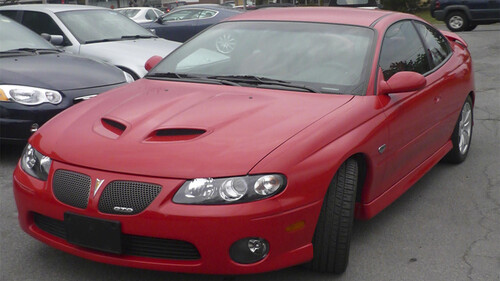
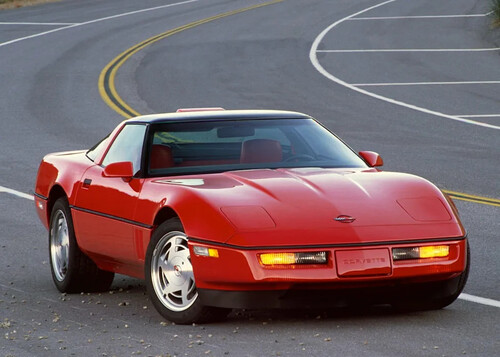
Angus MacKenzie Revisits U.S. V-8 Glory in EuropeMotorTrend StaffI was on an autobahn somewhere near Ramstein, Germany, in the late 1980s when I saw a boxy little Dodge Aries with U.S. Army Europe license plates wheezing along in the slow lane, shimmying and shuddering on its suspension at 70 mph. As locals in their garden variety Volkswagen Golfs and Opel Kadetts whisked past it at 85 or more, I remember thinking how cruel it was to be sent to a country that had the fastest roads on earth, that was the home of Mercedes-Benz, BMW, and Porsche—and Uncle Sam made you drive a crummy K-car.Hard TimesTo be fair, the late '80s weren't exactly a golden age when it came to desirable American automobiles. The Ford Taurus SHO was the nearest thing America had to a fast sedan, but it was 60 hp down on an E28 BMW M5 and drove the front wheels, not the rear. By the end of the decade, Chevrolet's C4 Corvette had finally been given a decent six-speed manual transmission to replace the awful Borg Warner "4+3," and it could hit 150 mph. But it still looked cheap and rode like a Conestoga wagon, which made it slow and cumbersome on a bumpy road. The Fox-body Mustang 5.0 was a ride on the mild side, nowhere near as fast or as accomplished as the V-8-powered Holden Commodores I was testing back in Australia at the time.Only the Buick Regal GNX, a blocky, darkly sinister Darth Vader coupe with a 3.8-liter turbocharged V-6 that General Motors said developed 276 hp but probably pumped out closer to 300, really quickened the pulse. The GNX could beat a Ferrari Testarossa to 60 mph and ran the quarter mile in a tick more than 13 seconds, though it turned into a wobbly mess if you threw any corners into the equation. Buick only built 547 of those cars in 1987, a final hurrah for the live-axle, rear-wheel-drive G-body platform that had been designed in the mid-1970s. Its moment of madness over, Buick switched the Regal to the new front-drive W-platform for 1988 and banished any thought of building another muscle car from its corporate mindset.MotorTrendThe Muscle ResurrectionBy the time I joined MotorTrend in August 2004, American muscle was on the way back, a swag of hot and exciting new cars previewing a Detroit powerfest we hadn't seen since the glory days of the 1960s. Our February 2005 print issue's cover featured a showdown between the 425-hp Chrysler 300C SRT8, the 400-hp gen-1 Cadillac CTS-V, and the (Australian-engineered, Holden Monaro–based) 400-hp Pontiac GTO, as well as a first look under the skins of the 500-hp C6 Corvette Z06 and the 500-hp Dodge Viper GTS. "American muscle is back, and it has definitely changed for the better," I wrote in my editorial column. The coverline wrote itself: "The Power Issue!"AdvertisementAdvertisementThis new wave of American muscle kicked off a paradigm shift in Detroit. These were cars that not only were fast in a straight line but also had the suspension and brakes, the steering and tires, that got them through corners at speeds the guys who built SS454 Chevelles and Dodge Hemi Daytonas and Boss 429 Mustangs could have scarcely imagined possible. Old-school American muscle had been all about the quarter mile; new-wave American muscle promised something different: performance that was more than one dimensional. But could it really handle a flat-out run on an autobahn and a rapid rush up and over a winding Alpine pass, the driving environments that had spawned cars like the Mercedes-Benz E55 and the BMW M5? Visions of that old K-car swirled in my head. I had to find out in a variety of these new offerings.MotorTrend Staff2007: Cadillac XLR-VThe Porsches hadn't wanted to play. We'd covered more than 1,000 hard-charging miles in two days across Germany, Austria, and Italy, and not one had appeared in the Cadillac's sights. Which was a pity, because the wedgy, quad-piped XLR-V I was driving was locked and loaded for 911s. Chasing Porsches in a Cadillac? Was I serious? Oh yes.Jim Taylor, then general manager of Cadillac, clearly had a sense of adventure. When I casually mentioned it might be interesting to remove the 155-mph speed limiter on an XLR-V and take it to Germany to see how fast its 443-hp supercharged Northstar V-8 could make it go, he cracked a wry grin and said, "That sounds like fun. Let me see what I can do." A few months later, photographer Mark Bramley and I were heading out of Mainz, Germany, in a rumbling red XLR-V whose speed nanny had been banished to the electronic ether.We cruised as fast as the traffic allowed down to the Austrian border. The XLR-V's natural gait on the autobahn proved to be somewhere between 135 and 140 mph—a relatively restrained 2,800 to 3,000 rpm in the moonshot sixth gear. It was comfortable at those speeds, as relaxed and stable as an SL Mercedes, though there was more wind noise from around the roof. Bramley, no stranger to fast and exotic machinery, raised an approving eyebrow. "It's better than I thought it would be," he said.MotorTrend StaffUp and over the tight and twisting Stelvio Pass into Italy, with the shifter moved across into manual mode, the 4.4-liter quad-cam Northstar impressed with its smooth and flexible power delivery, willing to rev while delivering a healthy side order of torque as I worked the gears. In third, the engine pulled like a train all the way from 2,000 rpm through to 6,700 rpm, giving the Caddy a working speed range of 37 to 124 mph as it demolished short straightaways and tucked into tight turns, the V-8 exhaust booming off the rock walls.AdvertisementAdvertisementLater, on a quiet section of the A63 autobahn near Frankfurt, I had the chance the wring every last drop from the engine, the induction roar ratcheting up an octave every time the tach needle swung past 3,600 rpm. Fourth gear ran to 165 mph before the transmission slipped into fifth and the increments on the digital display—the analog speedo stopped at 160 mph—ticked upward ever more slowly before topping out at 171 mph. Once I'd confirmed that was all she wrote, I backed right off. The fuel light was on. The XLR-V had sucked through a quarter of a tank of gas in barely 15 minutes.OK, the 911s had proven elusive, but no one had passed our Cadillac XLR-V on the world's fastest roads over those two days. Not the silver-haired guy in the big, black Audi S8 with Wuppertal plates. Or the guy in the E46 BMW M3 who tried to run with us near Nuremburg. Not even the guy in the Mercedes-AMG who gave us a cold, hard stare when we blew past him near Mainz. None of them could keep up.MotorTrend Staff2008: Dodge Challenger SRT8"I'd like to do something interesting with the Challenger SRT8." Newly installed director of Dodge Brand and SRT8 global marketing Mike Accavitti had left an irresistible opportunity dangling in the air. I didn't hesitate. "Why don't we take one to Europe?" I said. The Challenger SRT8 was the hottest car in America at the time, a feel-good take on a beloved Dodge muscle car that raised smiles and thumbs from Beverly Hills to Baltimore. It even had a Hemi under the hood.I thought it would be cool to take this unabashed piece of automotive Americana to Europe because there was nothing like it over there, and I was interested to see how Europeans would react. And there was something else: The Challenger, like the closely related Chrysler 300C and Dodge Charger sedans, had Mercedes-Benz know-how deep in its bones, courtesy of the 1998 DaimlerChrysler merger that had led to those cars being engineered using hardware from the W210 E-Class. Would I be able to feel it?AdvertisementAdvertisementRain and traffic conspired to foil our first top-speed run on the autobahn near Stuttgart. I'd laughed out loud as the 6.1-liter Hemi harrumphed like a big old grizzly bear clearing its throat when the automatic transmission shifted from third to fourth gear at 118 mph. But soon I was scowling at the sky as rain began spattering on the windshield just as the Challenger closed in on 160 mph, ending the fun.MotorTrend StaffI got my chance to max out the Challenger on the sunny side of the Alps, on a section of an Italian autostrada we'd pre-run to make sure there were no cops or speed cameras. As the speedo needle climbed past 150 mph, then 160 and on toward 170, there was no lightness in the steering, no harmonic speed wobble, not a hint of high-speed instability. The speedo needle slowed, then stopped and held steady: 173 mph. The Challenger thundered past Fiats and Alfas in the bright Italian sun. A gentle sweeper loomed in the distance. The big Dodge arrowed through the turn at 160 mph, rock-steady all the way. Yep, the Mercedes capability was there.Sure, it was a big car to hustle along the back roads, but as long as you drove it like an old-school, front-engine, rear-wheel-drive Italian GT—like a Maserati, actually—braking early to settle the chassis and get the weight onto the front axle, then turning in and going to power early to transfer the weight rearward, it proved surprisingly quick and composed through the twisties.As we headed back over the Alps and westward through France back to London, I marveled at the fact that if you'd said you hit 170 mph in an American car, people would have automatically assumed you'd been driving a Corvette or a Viper. But I'd done it behind the wheel of a big, comfortable sedan-based coupe with a roomy trunk. I'd done it in new-wave American muscle.MotorTrend Staff2010: Cadillac CTS-V CoupeThe angular red two-door darted and weaved along the narrow glistening switchbacks as clouds swirled around the brooding 11th-century Schloss Hohenwerfen, the castle that starred in the 1968 action thriller Where Eagles Dare. Earlier, on the wide-open spaces of the autobahn, we'd scattered quotidian Volkswagens and Opels and Skodas like autumn leaves, thundering past them at 165 mph with a supercharged sonic boom. But now we were deep in enemy territory, prowling roads that had honed the reflexes of some of Germany's best driver's cars. And once again, I was in a Cadillac.AdvertisementAdvertisementThe 2011 Cadillac CTS-V Coupe packed the same punch as the gen-2 CTS-V sedan in a car that was slightly smaller, a little lighter, and a fraction more agile. But would that be enough to take the American muscle car fight to the likes of the storied M3 and Audi's rumbling RS5, two of Germany's fastest and most driver-focused coupes? It was an interesting question, not least because both the M3 and the RS5 were powered by that enduring staple of American muscle—a V-8 engine.Now, the Europeans obviously didn't read the bit in the muscle car manual that insisted there was no replacement for displacement: While the Caddy rocked a 6.1-liter supercharged, wet-sump version of GM's heavy-hitting LS9 that pumped out 556 hp, the BMW's 414-hp, naturally aspirated V-8 came in at just 4.0 liters, and the Audi's 444-hp engine displaced 4.2. On paper, the CTS-V had the edge over its European rivals, with a better weight-to-power ratio than either the M3 or the RS5, even though it tipped the scales at 279 pounds more than the Audi and a hefty 710 more than the BMW.MotorTrend StaffIt didn't take long in Germany for the CTS-V Coupe to blow away old Motown muscle stereotypes. On the autobahn, it had the same calm, deliberate manner as an AMG model, even when hammering through almost endless sweepers at 140 mph or more. In the twisties, the muscular engine seemed to shrink the car's mass and girth, while the Magnetic Ride Control suspension and Michelin Pilot Sport 2 tires—cutting edge performance rubber back then—delivered impressive poise and grip. Its steering was much more talkative than the synthesized stylings of the Audi and more delicately defined than the BMW's. And the Caddy's Brembo brakes outperformed the M3's and delivered a more consistent pedal feel than the carbon-ceramics on the RS5.But the CTS-V sent its power to the rear wheels through a six-speed automatic transmission. Both the rear-drive M3 and the all-wheel-drive RS 5 utilized sharper, more efficient seven-speed dual-clutch automated manuals. "In this test, against these cars," I wrote in MotorTrend's September 2010 issue, "the CTS-V Coupe suffers because its old-school six-speed automatic transmission comes up a day late and a dollar short." The CTS-V finished in third place, behind the RS5 and the overall winner, the M3.AdvertisementAdvertisementThere was no shame in that, however, as my final thoughts on this ambitious comparison test revealed. "That we could even contemplate putting a Cadillac up against the best from BMW and Audi," I wrote, "and not have the thing left gasping and wheezing, brakes on fire and suspension turned to mush after three days of hammering around Bavaria, shows how far Caddy has come from the days when most of its customers left their teeth in a glass by the bed at night." Amen to that.MotorTrend Staff2012: Chevrolet Corvette ZR1"You don't bring a knife to a gunfight." Justin Bell, former FIA GT2 champion and one of the drivers who took a Dodge Viper GTS-R to victory in the GT2 class at Le Mans in 1998, succinctly summed up why we had shipped a C6 Corvette ZR1 to Europe to film an episode of Epic Drives for the MotorTrend YouTube channel in 2012. Shock and awe: That had been the design directive given by then Corvette chief engineer Tadge Juechter to his ZR1 engineering team as they developed what was then the most powerful GM production car ever built. And that's exactly what the ZR1 delivered on a 1,500-mile blast from London to Milan via Munich and Maranello.The mighty bellow of the 638-hp, supercharged V-8 engine had rattled the squadrons of Benzes and BMWs and Audis minding their own business in the middle lane of the autobahn north of Munich as we flew past them. The slightly nervous, squirrely feeling through the steering I'd noticed from the super-grippy Michelin Pilot Sport Cup tires at lesser speeds disappeared as the aerodynamics kicked in, the car feeling as if a giant invisible hand was gently pressing it into the tarmac, steadying it. And the power! Back then, few cars on the planet could accelerate from 160 mph to 190 mph with this Corvette's urgency.I'd just averaged—yes, averaged—132 mph over 55 miles in the ZR1 on that run into Munich, the needle on the speedo never falling below 120 mph and occasionally flickering to 190 when I could read the traffic flow in the far distance. But I knew there was more to come from this Corvette. The ZR1 felt like it could take the fight to Ferrari, like a Corvette that was more than a sports car with muscle car moves. It felt like America's first true supercar. To find out if that was an accurate description, Bell and I would drive it down to Maranello to run it against a Ferrari 458 Italia. But first, I had some unfinished business to attend in the country with the fastest roads on earth.MotorTrend StaffThe A92 autobahn, heading northeast out of Munich. The traffic's light, the skies are clear, and there's no wind. I punch the gas as the traffic clears, shifting into fifth at 160 mph and into sixth somewhere north of 180. And then, with Bell watching the speedo and counting off the increments, almost shouting to be heard over the shrieking wall-of-sound snarl from the supercharged small-block, I took the ZR1 all the way to 200 mph. And what was remarkable about it was that it felt calm and composed all the way. It was in its comfort zone.AdvertisementAdvertisementAnd against the 458 Italia? The Ferrari was at the time probably the best supercar in the business, certainly one of the best Ferraris ever built. Powered by a 4.5-liter naturally aspirated V-8 that revved to 9,000 rpm and produced 557 hp, it was the mid-engine Italian supercar from central casting. But the all-American Corvette matched its 3.4-second 0–60-mph time and 200-mph-plus top speed. The ZR1 wasn't quite as agile and responsive as the Ferrari on the winding hill roads outside Maranello, not least because the Italian car's seven-speed dual-clutch gearbox allowed left-foot braking and lightning quick shifts. But it didn't feel out of its depth, either—you had to really work the 458 Italia to make a gap over the Corvette.When I parked the ZR1 that day, the juddery old Dodge Aries was but a distant memory. This Corvette had proven new-wave American muscle, a genre that would evolve and eventually spawn stunning American supercars like today's C8 Corvette ZR1 and the Ford Mustang GTD, had nothing to fear in Europe.