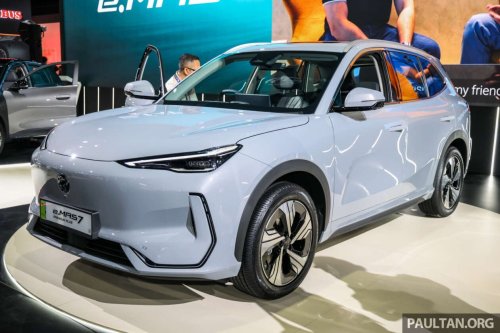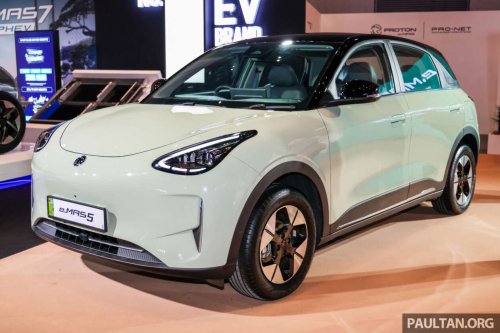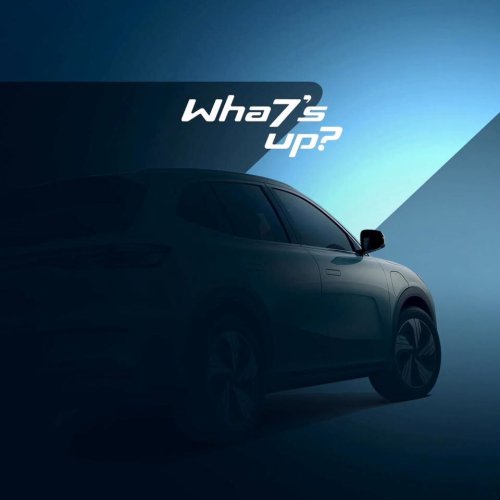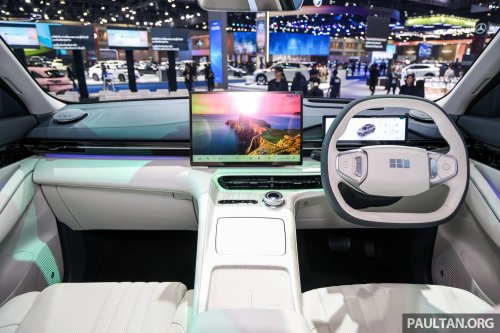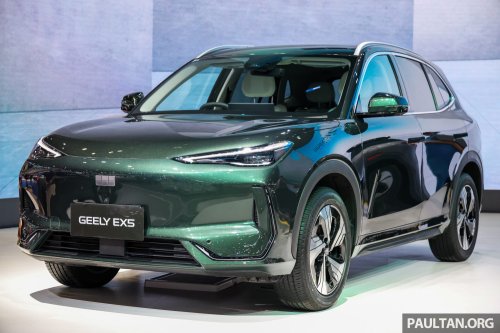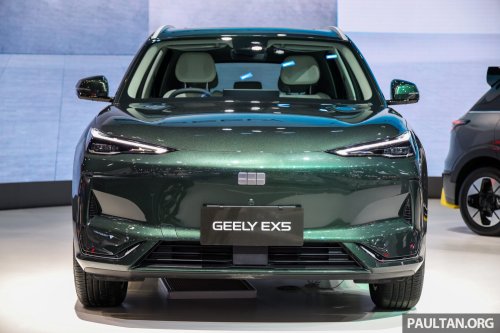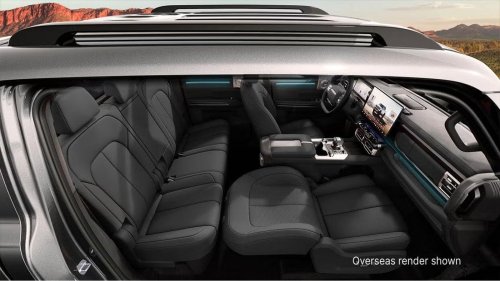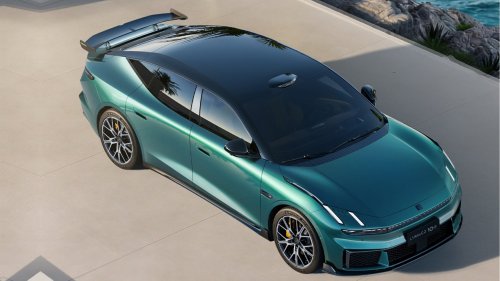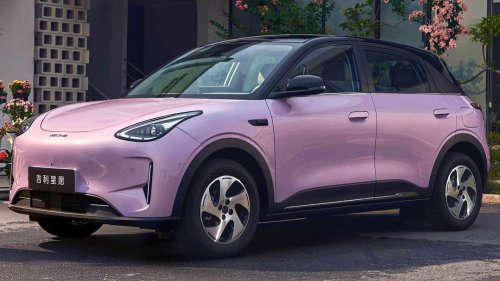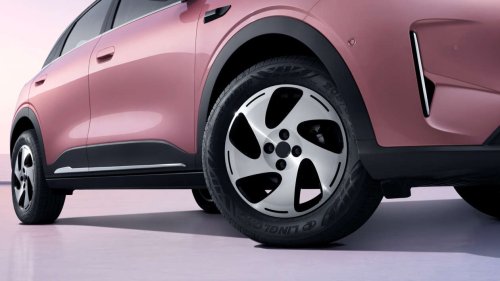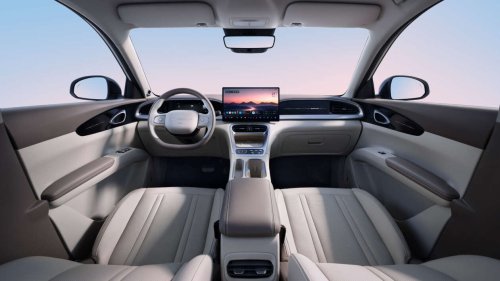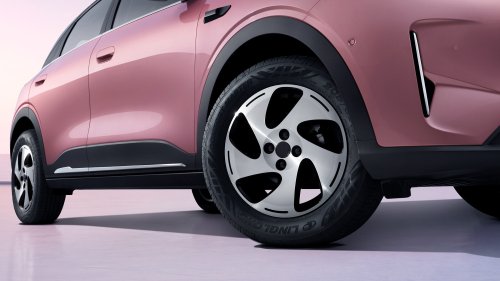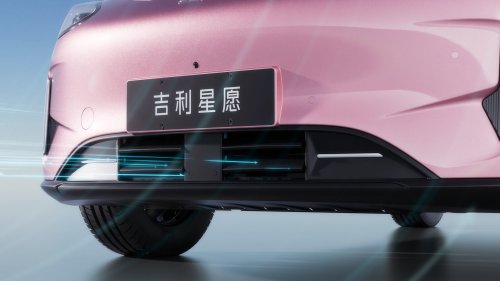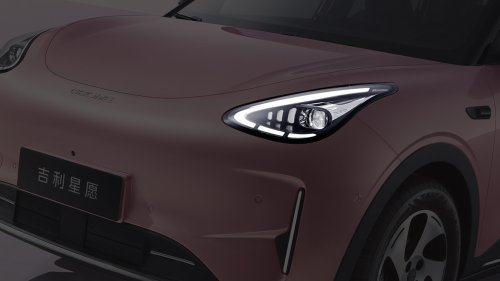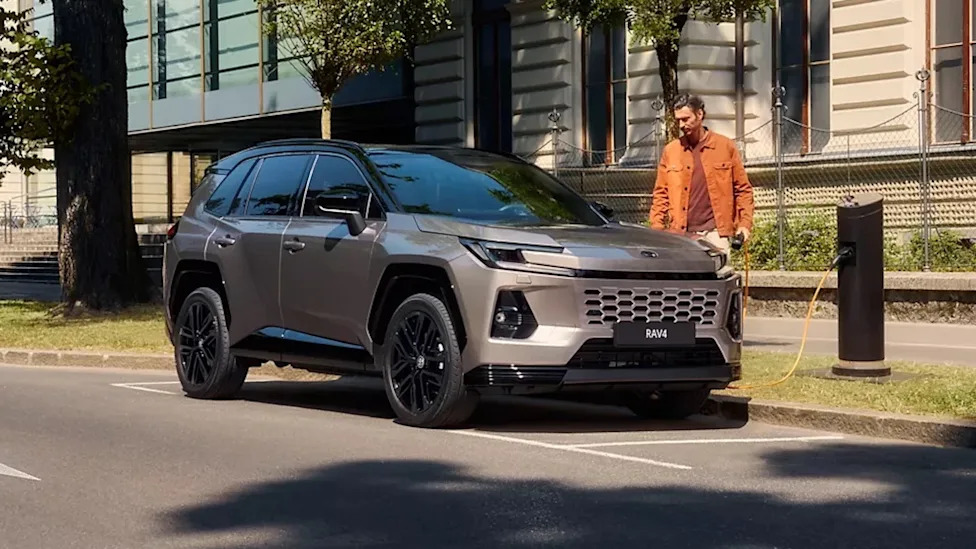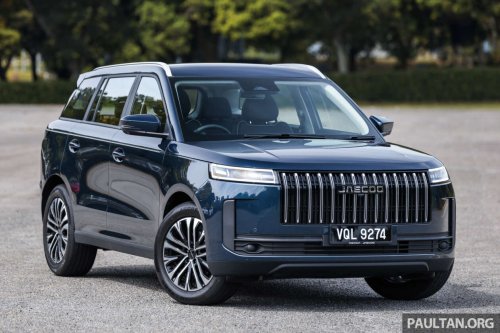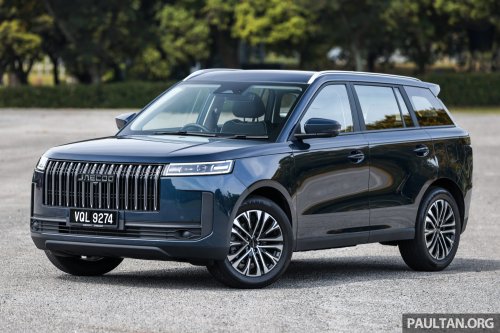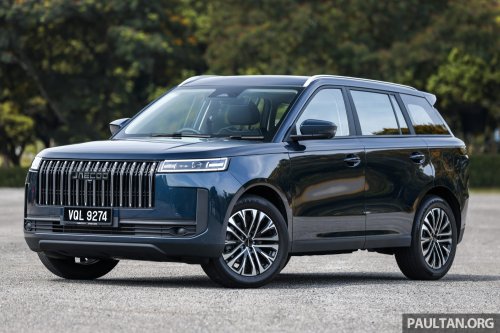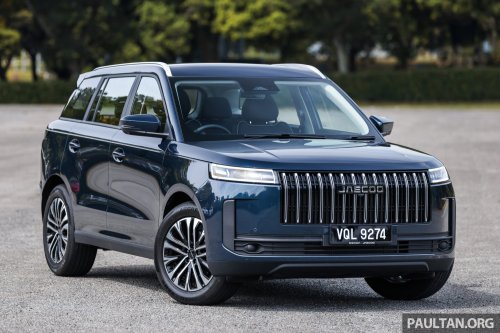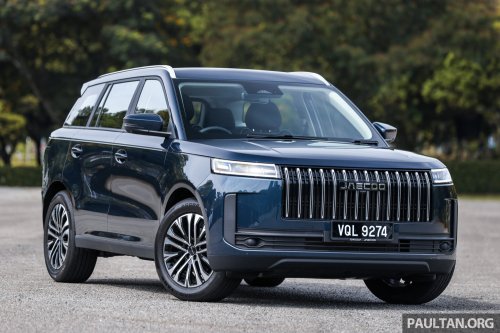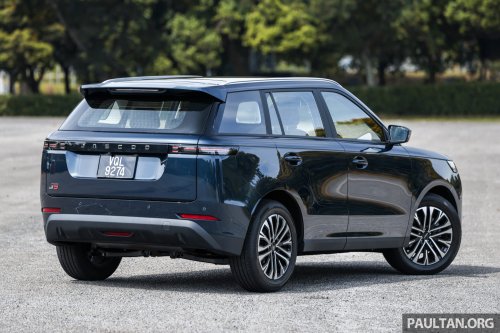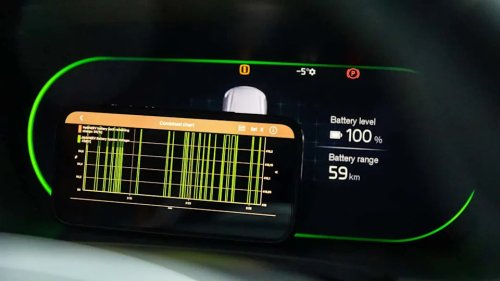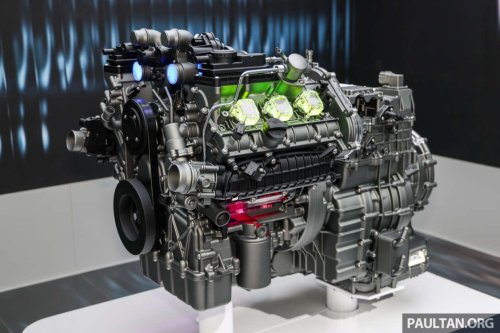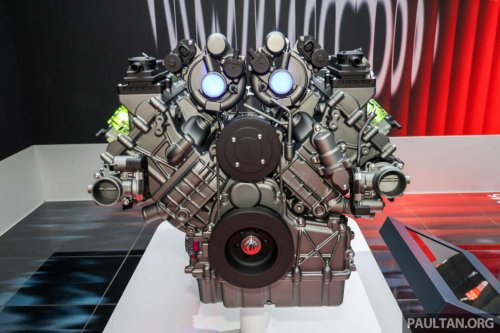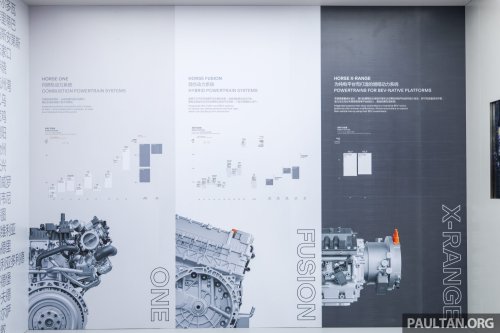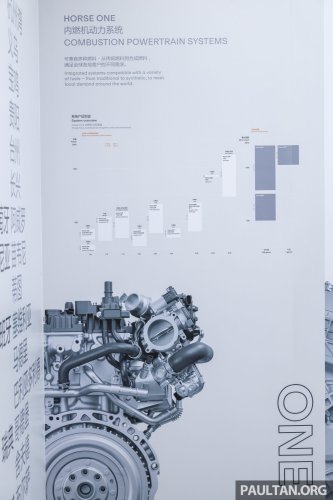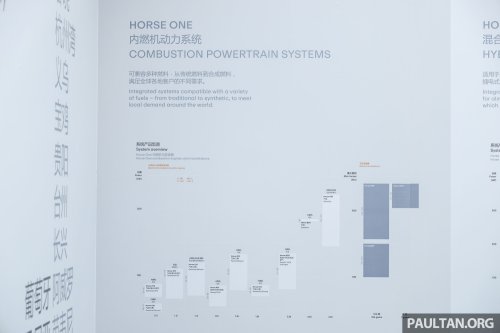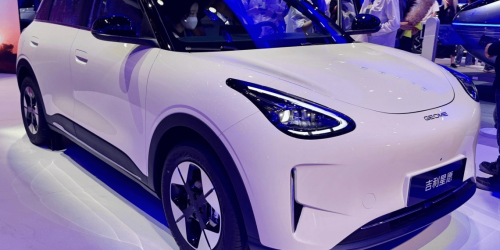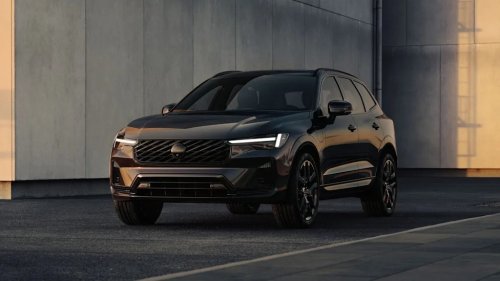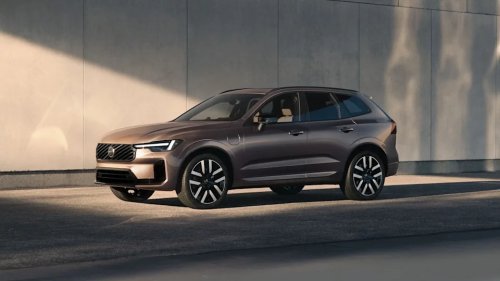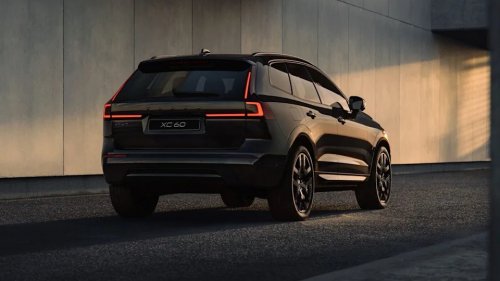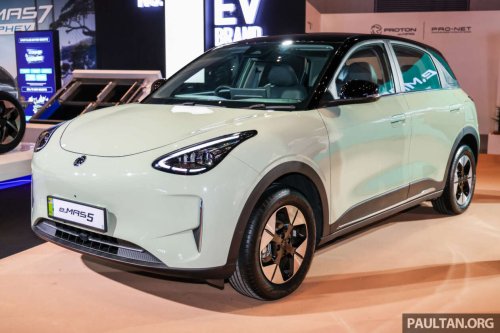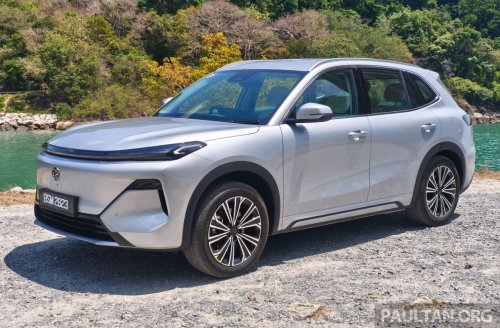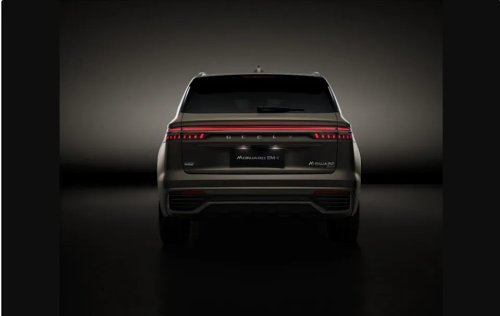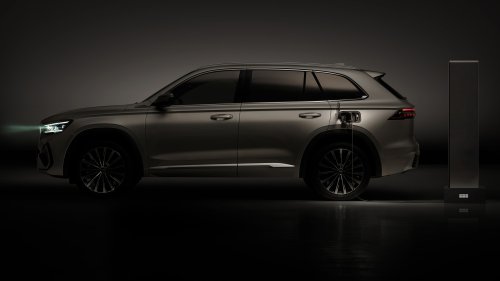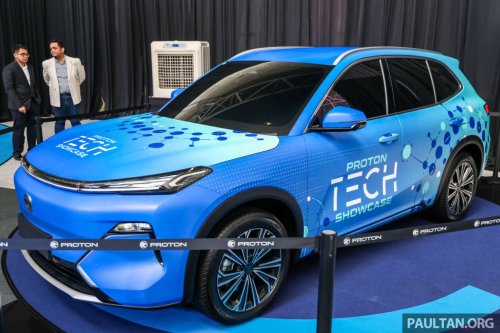
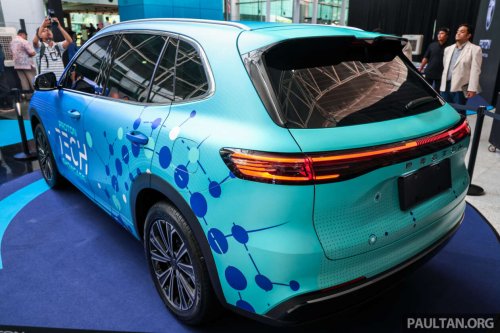
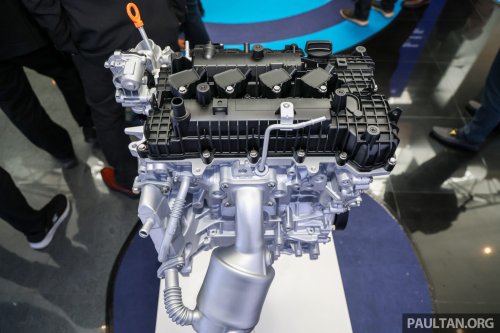
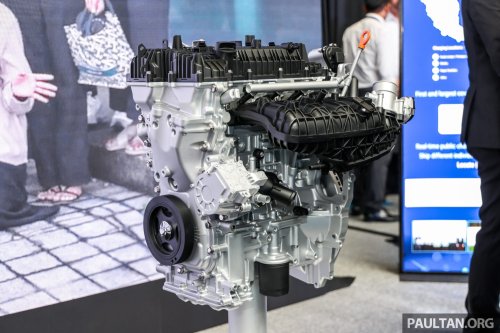
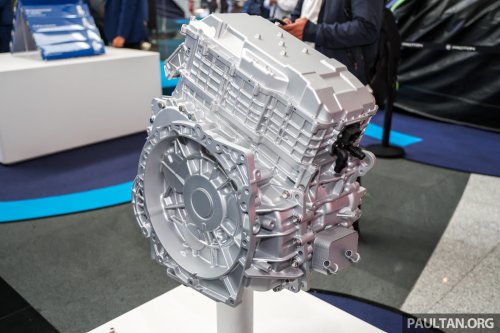
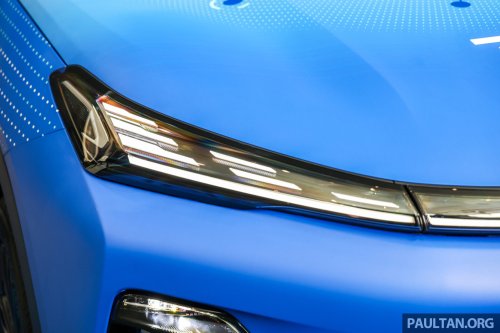
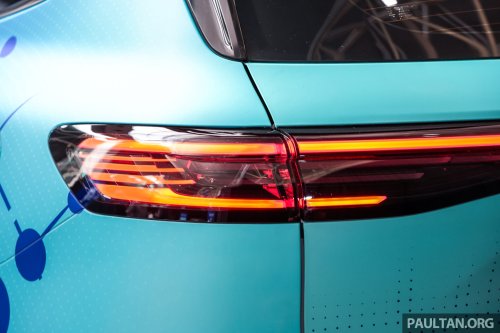
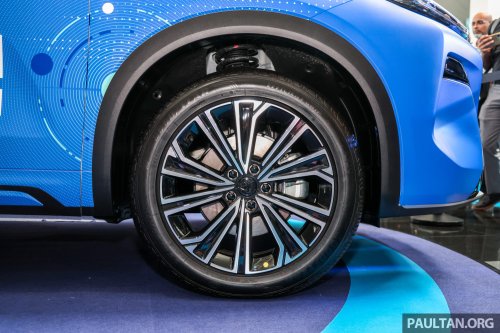
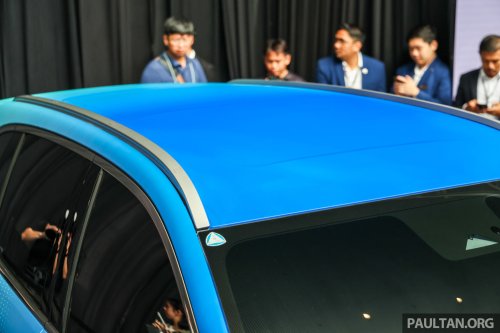
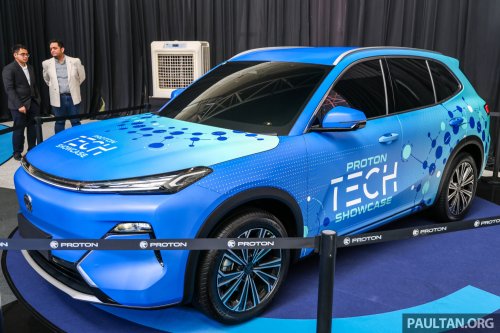
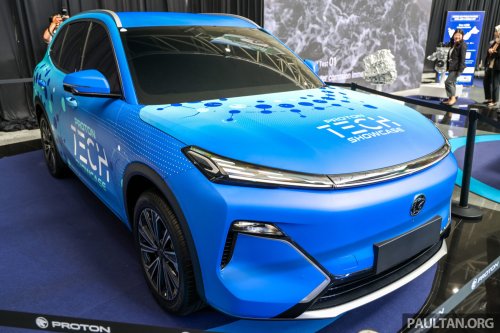
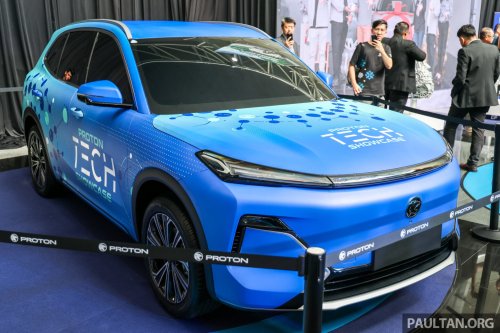
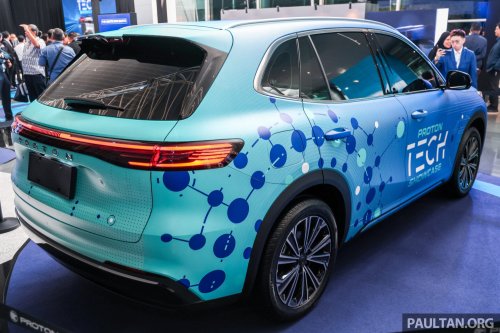
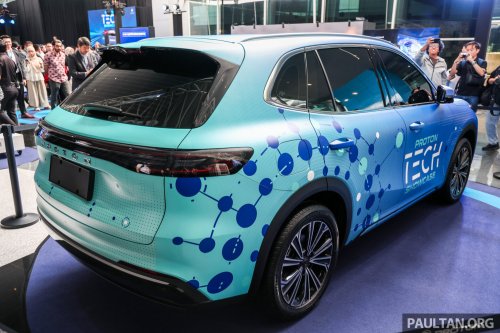
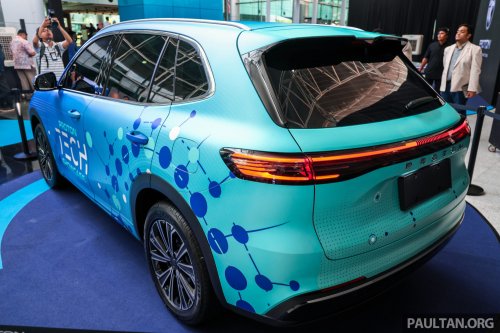
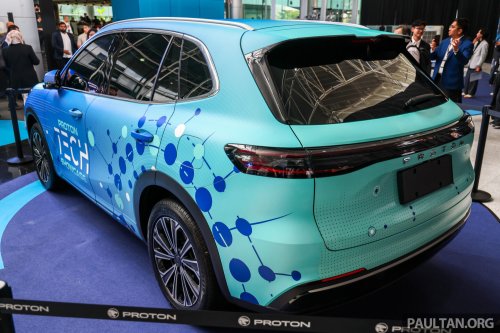
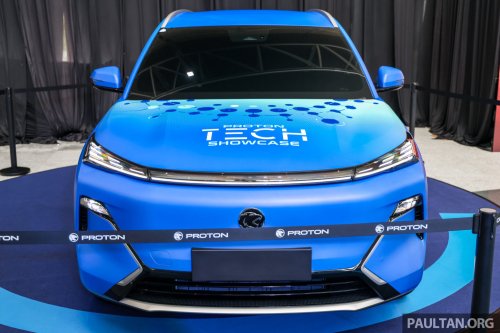
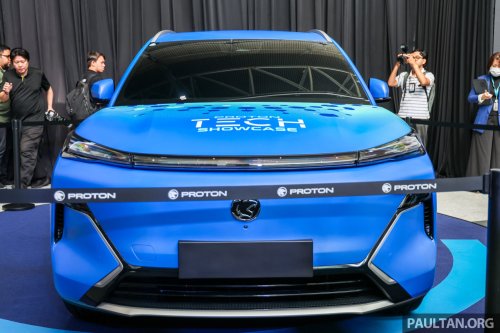
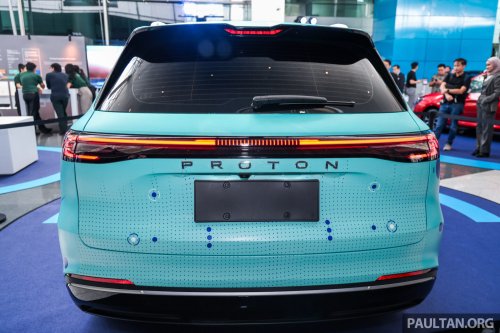
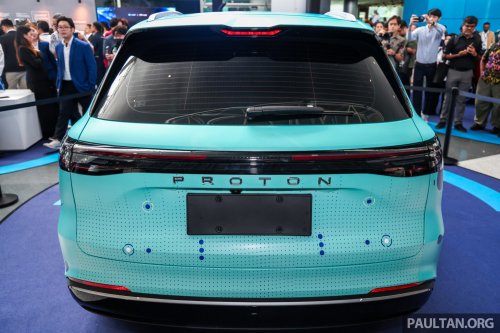
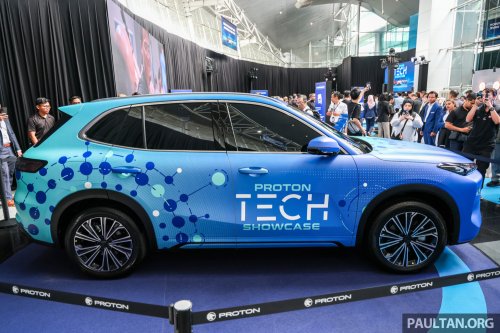
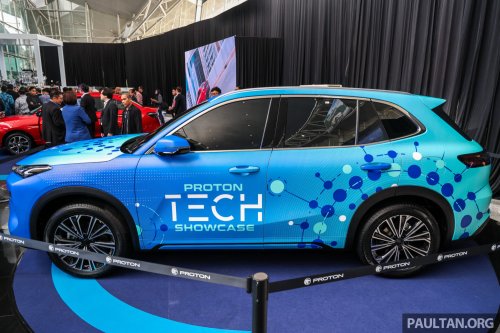
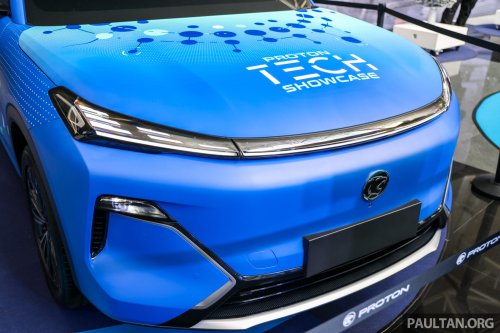
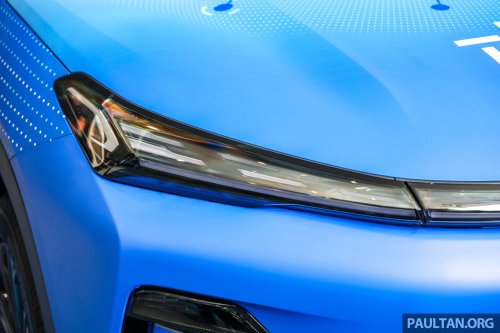
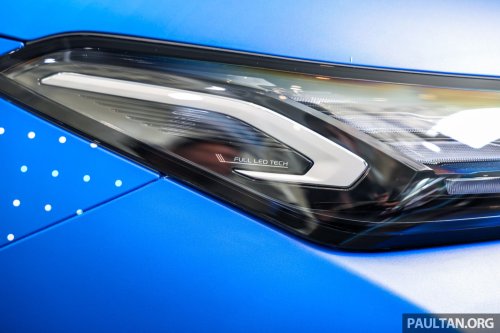
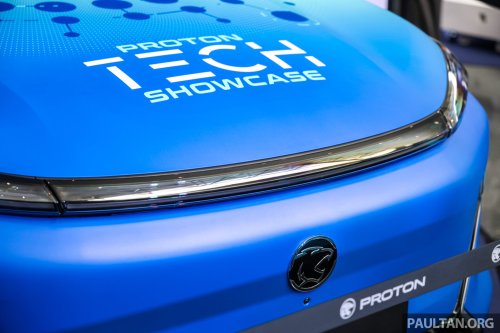
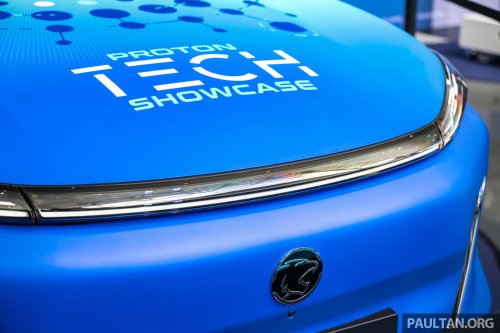
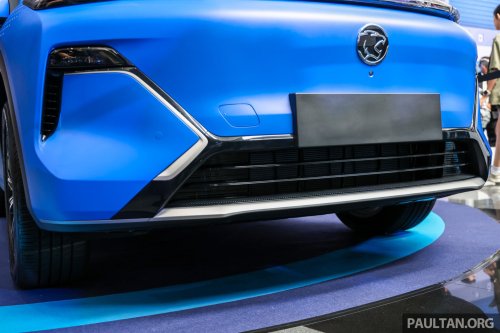
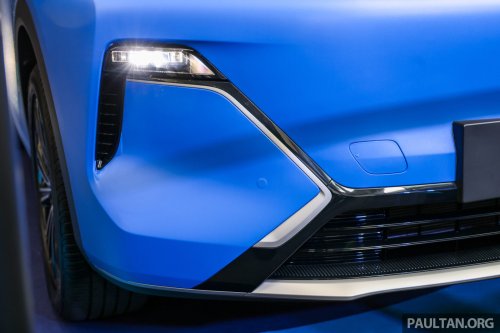
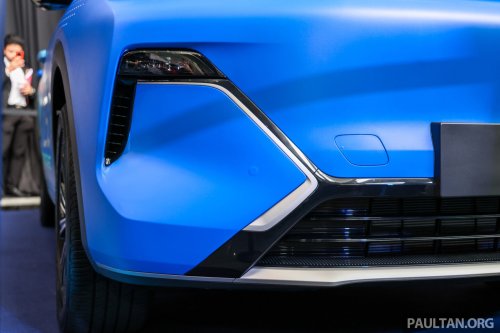
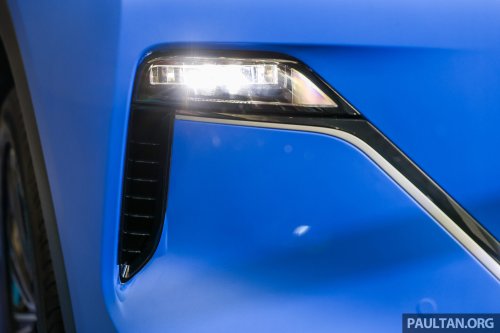
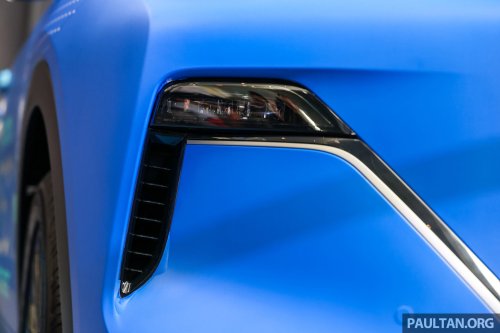
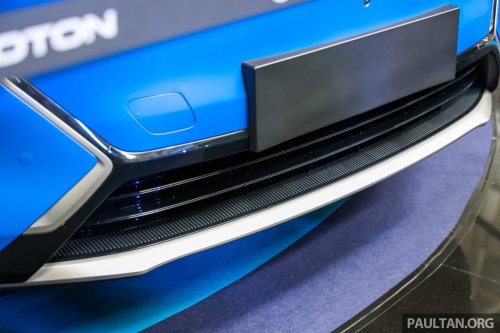
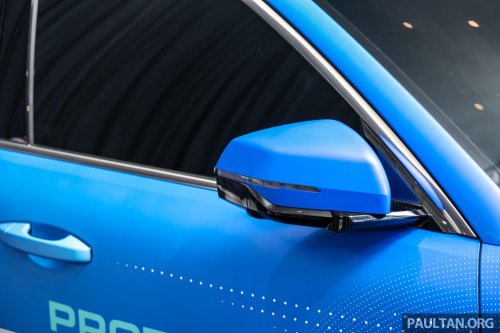
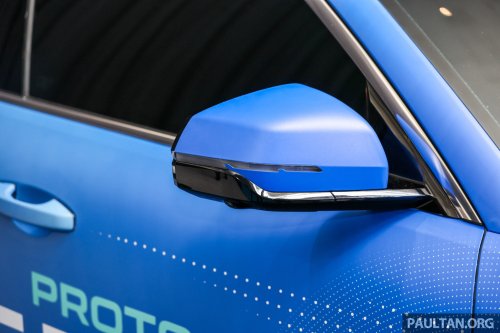
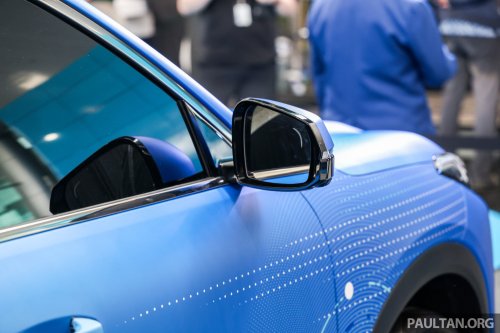
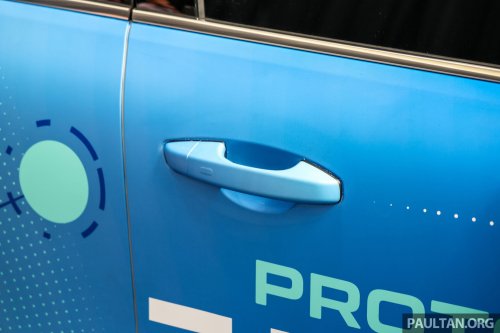
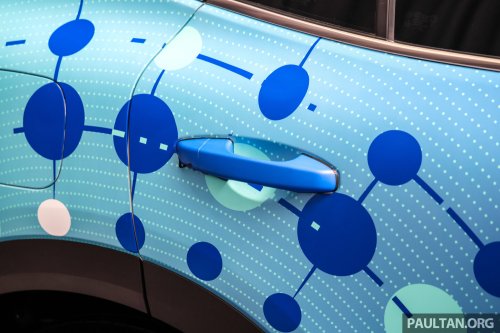
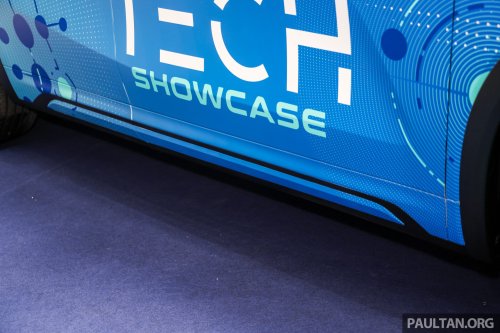
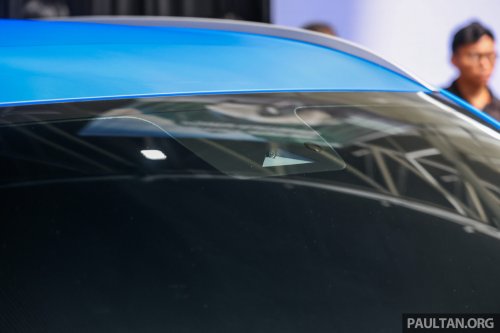
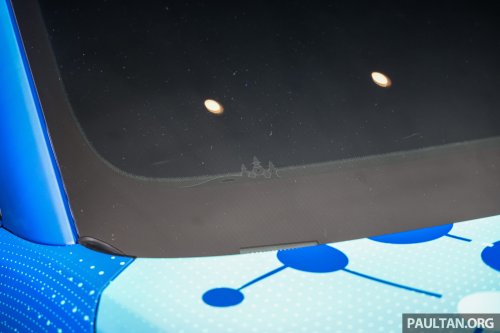
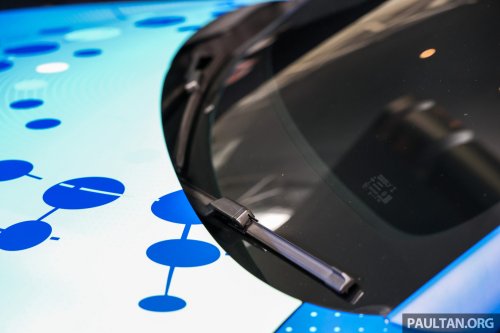
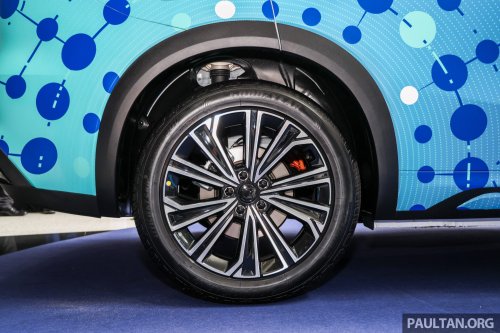
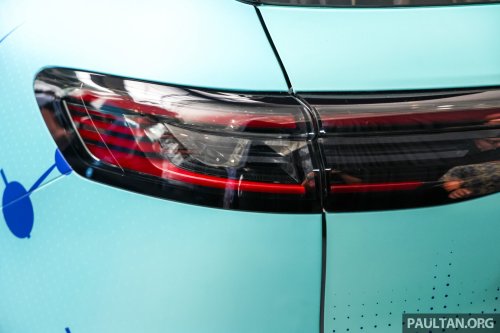
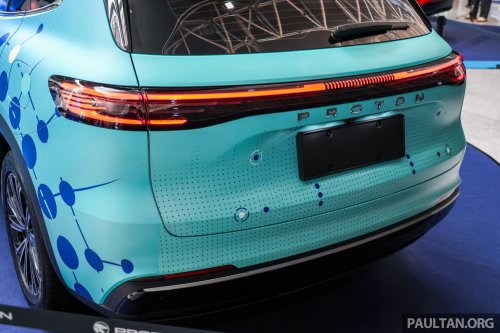
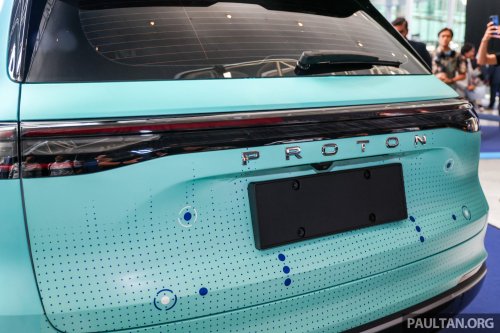
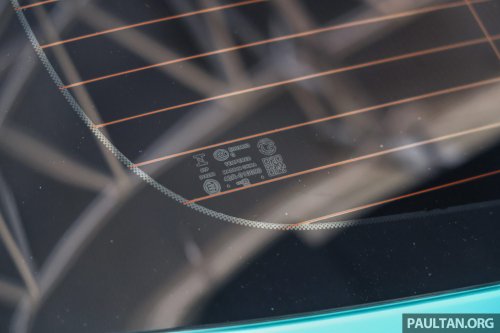
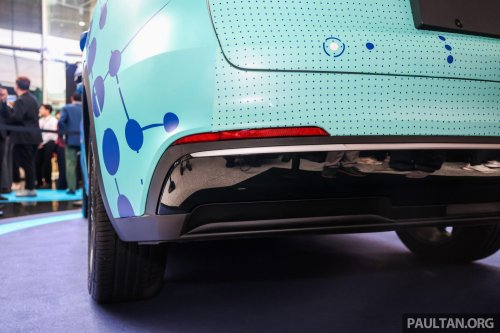
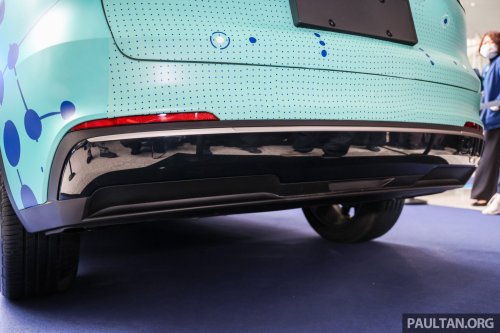
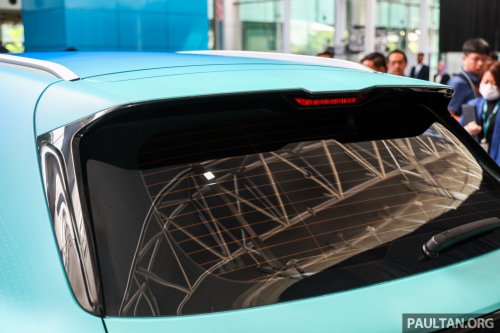
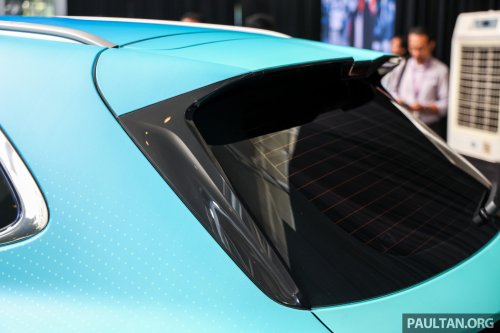
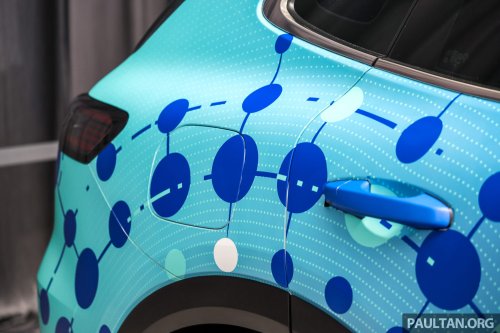
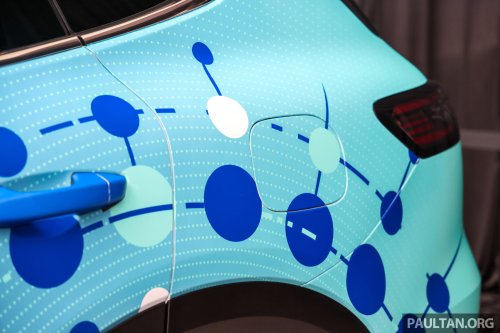
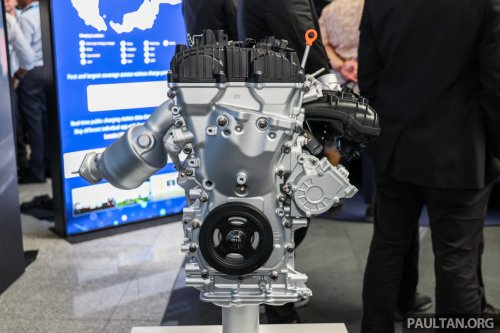
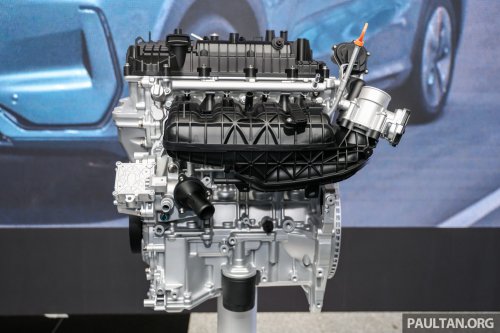
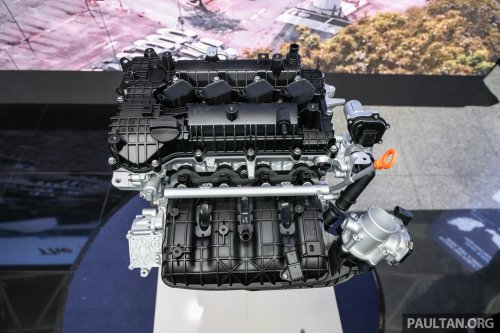
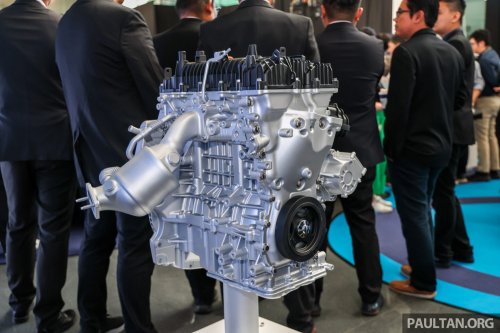
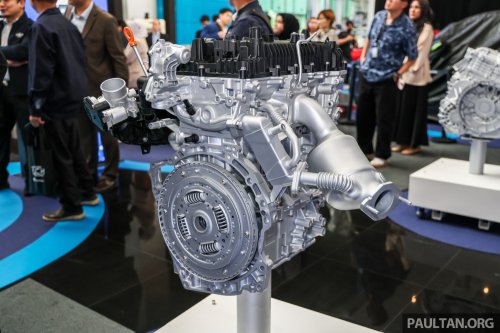
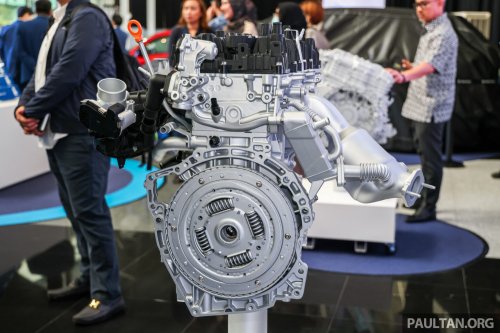
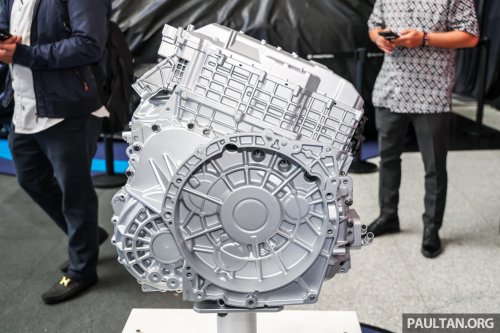
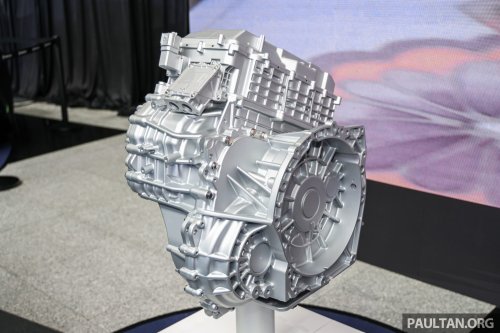
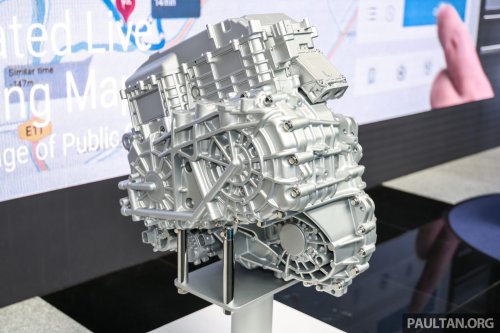
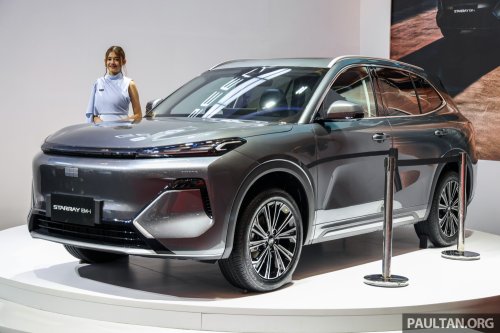
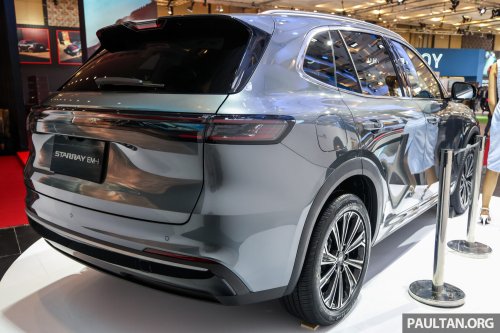
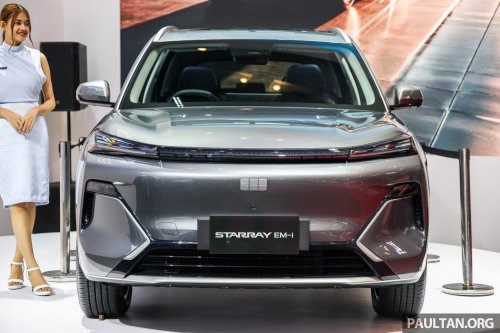
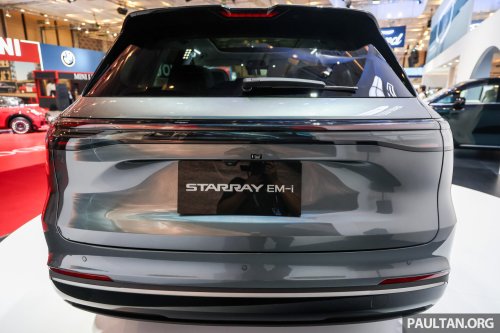
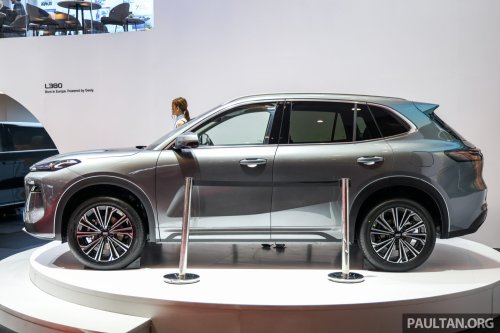
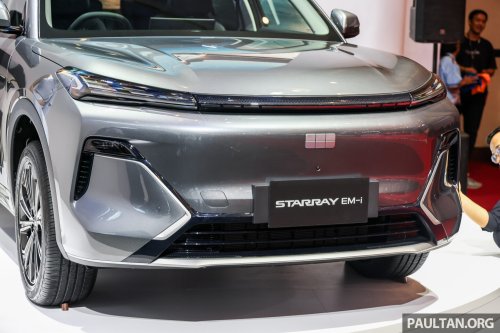
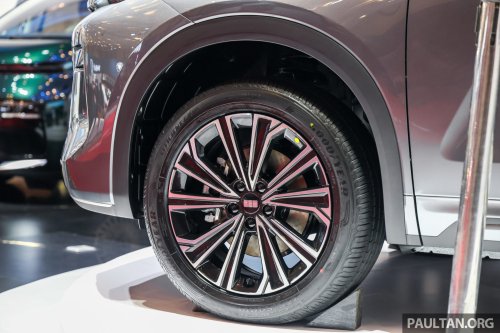
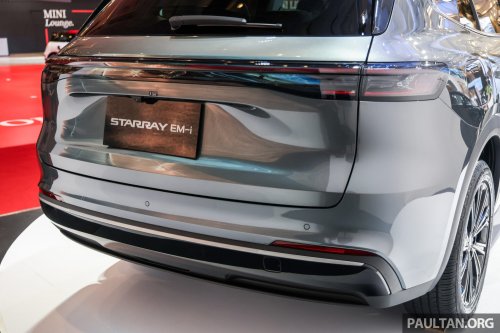
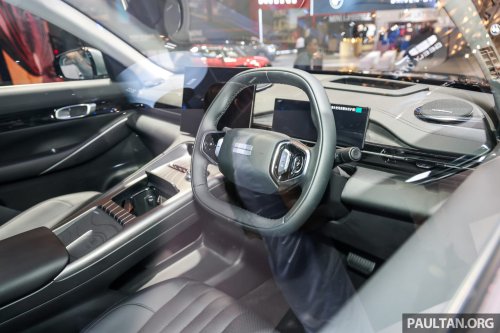
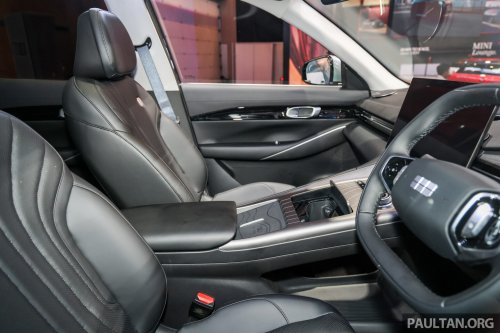
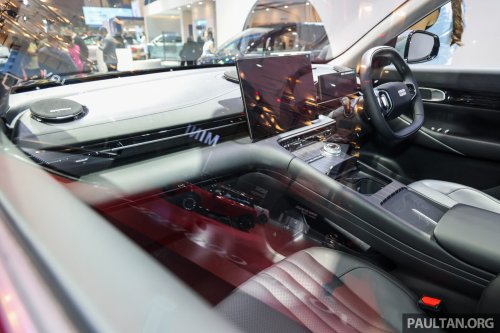
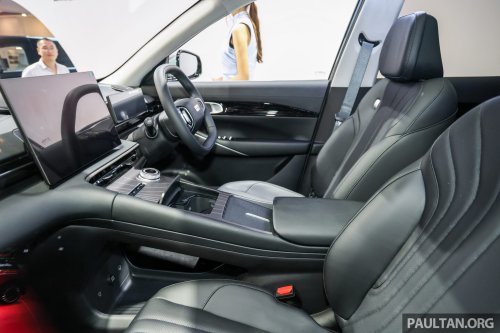
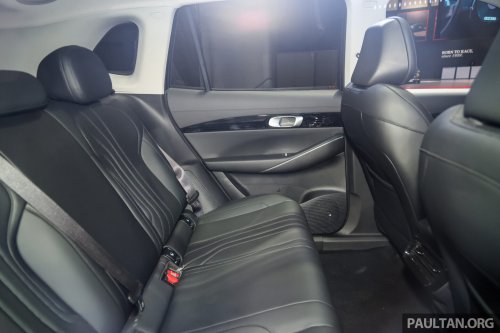
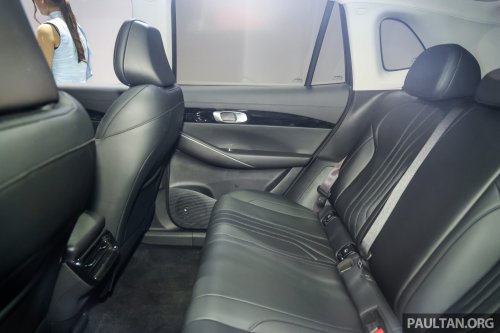



















As teased, Proton has unveiled the upcoming Proton eMas 7 PHEV for the first time at the Proton Tech Showcase, which opens to the public tomorrow at Proton’s Centre of Excellence (COE) in Shah Alam. Upcoming because this isn’t yet a launch, but a preview of the carmaker’s first ever plug-in hybrid. It’s no secret that the eMas 7 PHEV is a Proton-badged Geely Starray EM-i a.k.a. Geely Galaxy Starship 7 in China, just like how the fully-electric eMas 7 is basically the Geely Galaxy E5/Geely EX5. Speaking of logos, Proton’s tiger badge is not just found on the nose of this PHEV (larger here than on the EV), but this right-hand-drive demo car’s glass panels as well – the latter is a hint that this unit is close to the production car and the launch should not be too far away. Proton’s first PHEV will feature a version of the 1.5 litre BHE15PFI that has already made its debut in the new Saga. Here, the naturally-aspirated four-cylinder PFI unit is made simpler and lighter for higher efficiency – single instead of dual-VVT and efficient EGR (exhaust gas recirculation) at the back. Of course, it runs full-time on the efficient Atkinson cycle. The powertrain, which is also on display here, does not use an auxiliary belt and there’s minimal parasitic loss as a result. The AC compressor is electric and the car’s 12V battery is charged via DC-DC converter instead of an alternator. The water pump has a higher capacity compared to the version in the Saga. All global markets get Geely’s EM-i (for E-Motive Intelligence) Super Hybrid powertrain with a 99 PS/125 Nm engine and a 218 PS/262 Nm front motor. This is a step below the Chinese market’s 111 PS/136 Nm engine. The 0-100 km/h sprint is done in eight seconds flat. The engine has a thermal efficiency of 47.26%, which is claimed by Geely to be the best in the world for a mass produced ICE. According to a powertrain expert from Geely who made the presentation today, contributing factors include very efficient combustion (burning speed increased by 20%), tumble ratio that’s increased by 21% and 44% better turbulent kinetic energy. The PHEV’s battery is an 18.4 kWh Aegis short blade lithium iron phosphate (LFP) unit (less than the 19.09 kWh pack in China’s Starship 7) and it powers the above-mentioned e-motor, which is housed in a 12-in-1 single-speed dedicated hybrid transmission (DHT). The system mostly lets the motor power the wheels on its own, but it has the ability to engage a clutch and feed in the ICE’s power at higher speeds where the engine is more efficient – this is like Honda’s e:HEV (non plug-in) hybrid system. Finally, range. With the 18.4 kWh battery, the total range claimed by Proton in today’s presentation is 1,065 km, which has to be from a lenient cycle. The Australian-spec Starray EM-i is quoted with 83 km pure EV range and overall range of 943 km, both on the benchmark WLTP cycle. The eMas 7 PHEV is largely similar to the electric eMas 7 on the outside, but it’s a fair bit more handsome to these eyes thanks to a more ‘filled up’ front fascia, which sports split headlights with a full-width LED light bar on top. Other differences include conventional door handles instead of flush pop-out items, bumpers and the tailgate/tail lamp design. With the number plate moved up, the PHEV looks even more like a Porsche Cayenne. The 19-inch alloys (unchanged size) have a multi-spoke design, and of course, there an extra flap on the side for charging. Other observations based on this display unit include the Hangzhou West Lake print on the edge of the windscreen and a panoramic sunroof that’s well camouflaged by the blue wrap. Inside, right-hand-drive cars get the eMas 7’s dashboard instead of the one seen in the domestic market Starship 7. What do you think of the Proton eMas 7 PHEV’s looks and tech package? Would you pay RM130k for it? While Proton did not share any estimated price at today’s event, selected Proton X50 owners have received survey forms for the upcoming PHEV SUV. In it, one question asks if they would consider buying the eMas 7 PHEV if it was priced around RM20-30k above their car. Given that the latest X50 – launched in July this year – is priced from RM85,800 to RM109,300 for the Flagship, and that the eMas 7 PHEV is expected to have all the kit of the range-topping X50 (and then some), would the eMas 7 PHEV have a price of between RM130k to RM140k? That’s costlier than the fully-electric eMas 7, but bear in mind that CKD EVs are tax-free now and will remain to be so from next year, while PHEVs do not have this perk. Would you be willing to pay more for this PHEV over the EV? GALLERY: 2026 Proton eMas 7 PHEV at Proton Tech Showcase GALLERY: RHD Geely Starray EM-i at GIIAS 2025 Compare prices between different insurer providers to save the most on your car insurance renewal compared to other competing services. Many payment method supported and you can pay with instalment using Grab PayLater or Shopee SPayLater.