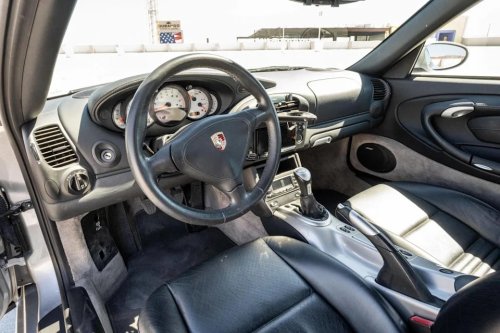
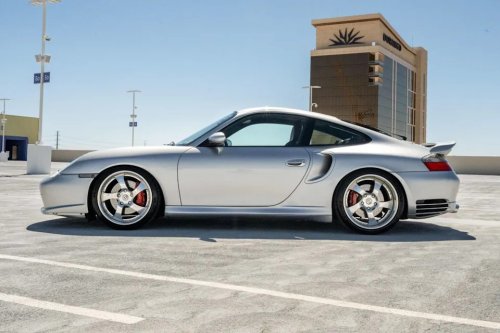
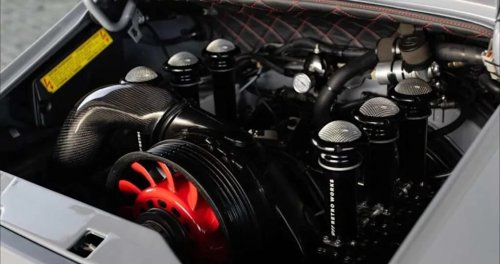
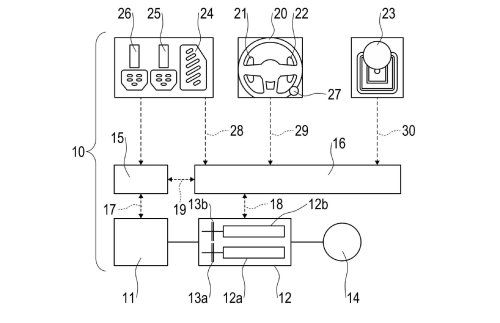
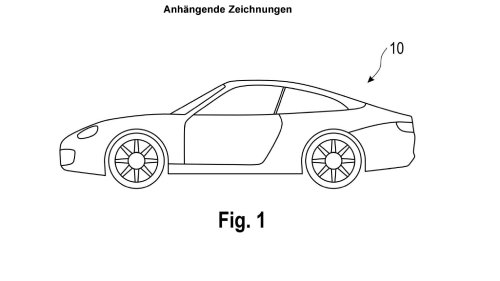
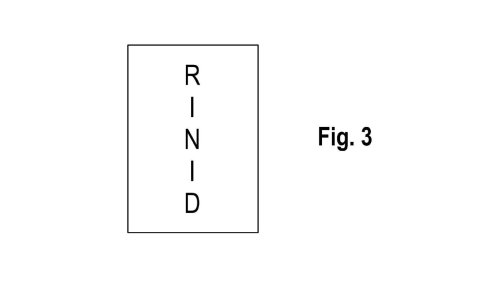
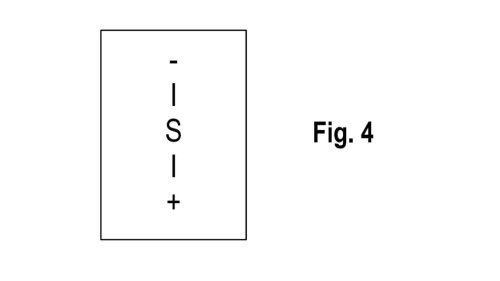
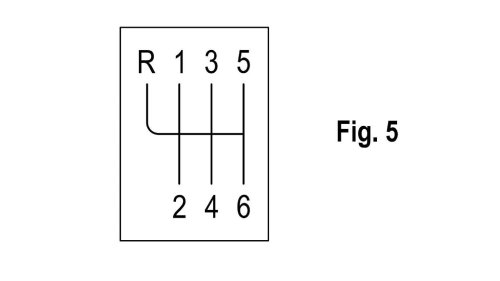
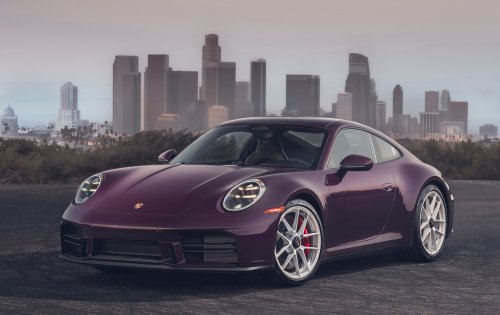
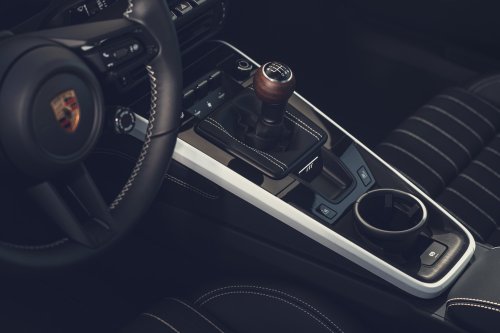
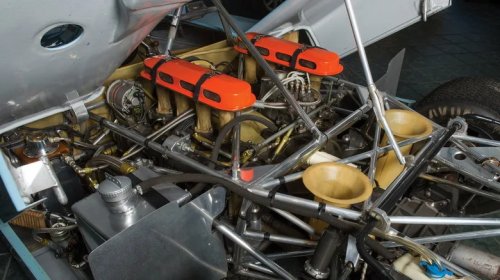
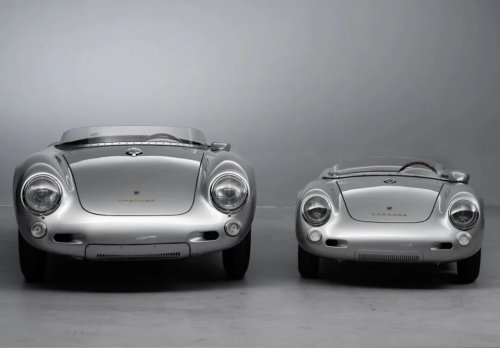
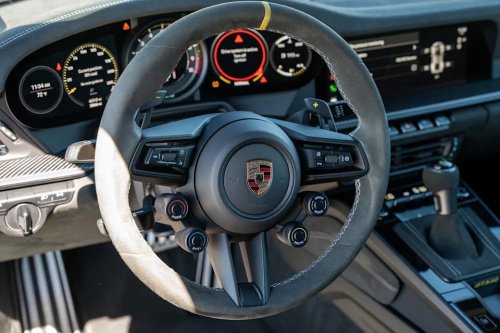
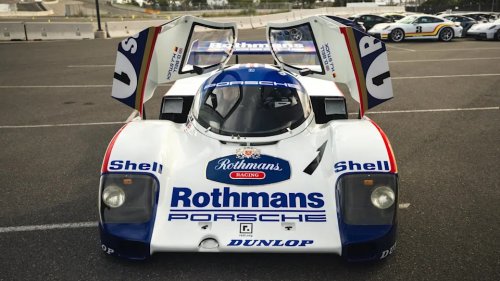
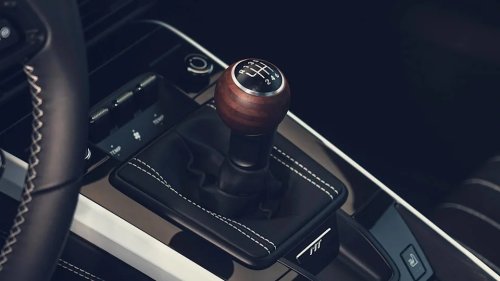
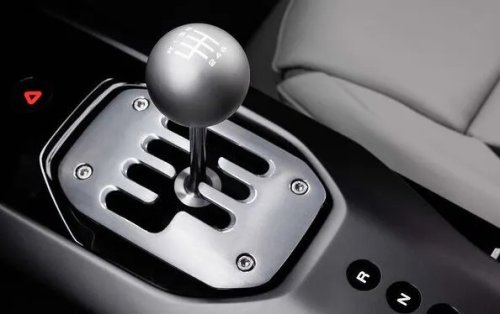
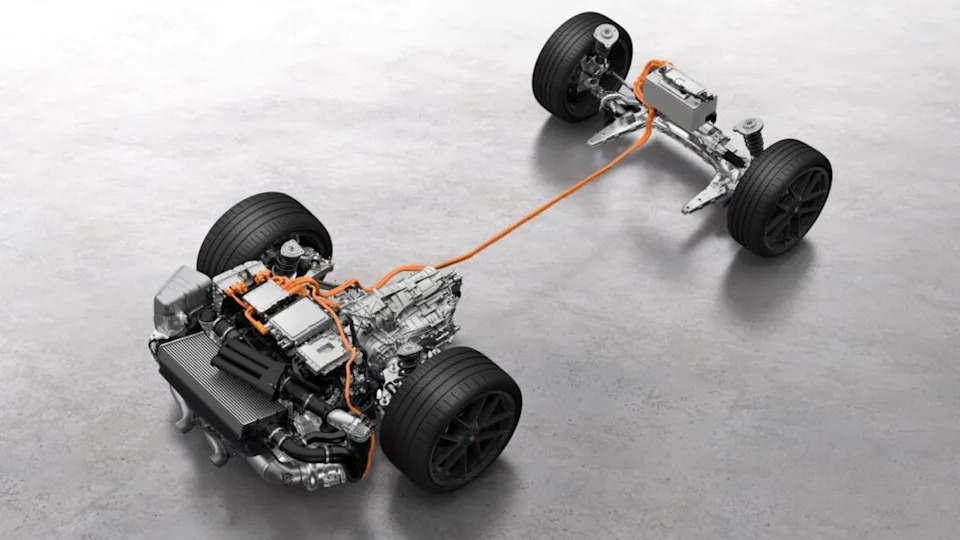
Porsche Patents a Clutch Pedal and H-Gate for Its PDK, and the Shifter Is the Clever PartBackfire NewsJohn LloydSun, September 27, 2026 at 6:35 PM UTCAdd us on GooglePorsche engineers have spent decades making the clutch pedal unnecessary. Now one of them has filed paperwork to bring it back as a controller.German patent application DE 10 2025 109 563 A1, published by the German Patent and Trade Mark Office (DPMA) on September 17, describes a car with a combustion engine, an automatic gearbox, and three pedals in the footwell. The filing's plain title, "motor vehicle with an internal combustion engine and an automatic transmission," hides the interesting part. The preferred gearbox is a dual-clutch unit, which in Porsche-speak means PDK. In one of its three modes, the third pedal works as a clutch pedal and the center lever works as a multi-gate H-pattern shifter.The obvious headline is "Porsche invents fake manual." That undersells it. Read the whole document and the real work turns out to be a shift lever that changes how it feels depending on the job it is doing, plus a clutch pedal that does useful things even when the car is shifting by itself.What's on fileThe applicant is Dr. Ing. h.c. F. Porsche AG, and the named inventor is Julian Philip Stocks of Stuttgart. The application was filed on March 13, 2025, and its public release lands right around the usual 18-month mark for German applications. It has 11 claims, and the patent office cited four earlier German documents as prior art.AdvertisementAdvertisementThe register history shows this has already been through some back-and-forth. An examination request went in with the filing, an examiner's objection followed in November 2025, and Porsche replied in December. A divisional application (10 2025 005 152.2) was split off in January 2026, and the register shows a decision to grant on January 14. Then an appeal was lodged on February 13, and the file has sat at Germany's Federal Patent Court under case number 1 W (pat) 4/26 since March. The public register summary doesn't say who appealed or why. Put simply, the scope of what Porsche ends up owning isn't settled yet, and splitting off a divisional is a standard way for an applicant to keep other versions of the idea alive while the main application gets fought over.Three modes, one lever with three personalitiesThe driver picks a mode with a rotary push controller on the steering wheel: turn to choose, press to activate. That will look familiar to anyone who has used Porsche's wheel-mounted drive-mode dial. The patent also allows a button or switch on the console or dashboard instead. From there, the same hardware behaves three different ways.Automatic mode: The lever acts only as a direction selector for Drive, Reverse, and Neutral. It is monostable, meaning it springs back to center, with two detents in each direction. Tapping a paddle drops you into sequential control for a set period, and then the car returns to full automatic on its own.Sequential mode: Every gear sits in a single gate. The lever still springs back to center, now with just one detent each way, and it works alongside the paddles for upshifts and downshifts.Third mode (the one everyone cares about): The lever becomes the gear lever of a conventional manual, with the gears spread across several side-by-side gates. The third pedal takes on the job of a clutch pedal, and gear changes depend on the driver working both.The clever bit is how one lever can be a spring-loaded toggle in the morning and a notchy H-gate by lunchtime. The filing says the lever becomes "multistable" in all end positions in manual mode, so it stays in whatever gear slot you leave it in, like a real shifter. It also says the preselect and shift travel are designed for an authentic feel. The patent proposes magnetorheological actuators to do this: fluids whose resistance changes almost instantly when a magnetic field is applied. Electromagnetic actuators are listed as an alternative. In other words, the gate you feel is a force field the car creates, not a slotted metal plate.The 911 Carrera GTS T-Hybrid drivetrain. Its electric motor lives inside the PDK housing, which is exactly why a conventional stick doesn't fit. (Image: Porsche AG)The clutch pedal that works in automatic mode tooThis is the detail most people will skip, and it's the one that sounds most like a Porsche engineer who actually drives. In both automatic and sequential modes, the third pedal isn't dead weight. Press it past a set threshold and the car opens the driveline so it rolls freely. Lift off and the driveline closes again.AdvertisementAdvertisementThat gives the left foot a real job even when the gearbox is doing the shifting. You can declutch to coast into a corner, unload the driven wheels on a slippery hairpin, or gather the car up after a moment of wheelspin. And none of it takes away the car's ability to shift for itself.The filing also sends every input, including pedals, paddles, the mode selector, and the lever, to the transmission control unit. That unit then decides how the gearbox should respond based on the active mode. Nowhere does the document describe a hydraulic line running from the third pedal to the clutch packs. The pedal is an input to software, which is what lets one pedal do three different jobs.There's one more quirk. In manual mode, the paddles don't sit idle. The patent says they can adjust the shifting parameters of that mode, with the stated aim of making it sportier and more emotional. Picture a wheel-mounted control for how aggressive the fake clutch engagement feels.Why Porsche can't just bolt a stick to the hybridThe patent says the car's drive unit may include at least one electric machine alongside the engine, which makes it a hybrid. That clause matters because of how the current 911 hybrid is built. In the 911 Carrera GTS T-Hybrid, Porsche places a permanently excited synchronous motor fully inside the eight-speed PDK housing. That motor supplies 150 Nm from idle and up to 40 kW, and it works with a 3.6-liter flat-six and an electric turbocharger for 541 PS (398 kW) and 610 Nm combined.AdvertisementAdvertisementWhen the motor is part of the gearbox, you can't swap the gearbox for a six-speed manual without re-engineering the whole hybrid system. The patent sidesteps that problem entirely. Keep the PDK and its motor, and change what the driver touches. It also notes that the idea works with a conventional torque-converter automatic, not just a dual-clutch.The patent's own background section is refreshingly blunt about the reason. Drivers of sporty manual cars, it says, find automatics "little sporty and little emotional," and dual-clutch gearboxes are no exception. That's a Porsche engineering document conceding that even dual-clutch technology, which Porsche was racing as far back as its Group C prototypes like the 962, still loses the emotional argument to a stick.The market Porsche is protectingThis isn't a company giving up on real manuals. In August, Porsche Cars North America brought back a manual 911 Carrera S through a new MT Package. That model is rear-drive only, has 473 hp, and starts at $167,100 for the coupe before a $2,350 delivery fee. It raised the number of three-pedal 911 variants on sale in North America to seven, across the Carrera T, Carrera S, and GT3 families. PCNA chief Timo Resch said managing a clutch "isn't for everyone," but for the drivers who want it, "there really is no substitute."That quote is the problem this patent is trying to solve. As more of the lineup goes hybrid, Porsche needs a substitute that the no-substitute crowd will accept. Other luxury brands are betting on synthetic sensations too, like Bentley giving its Torcal EV a recorded drum soundtrack in place of its V8. Porsche's version at least gives the driver something mechanical-feeling to work with, not just something to listen to.What it would mean for ownersIf something like this reaches production, the ownership math shifts in a few directions.AdvertisementAdvertisementClutch wear becomes a software question. On a traditional manual, a bad launch or a habit of riding the clutch costs you a clutch job. With a by-wire pedal feeding a dual-clutch gearbox, the control unit decides how the actual clutch packs engage. That gives engineers room to protect the hardware from the driver. Whether Porsche chooses to is a calibration decision, not a law of physics.New parts to fail. A shifter full of magnetorheological or electromagnetic actuators, plus pedal and position sensors, is far more complex than a cable-operated gear lever. Out of warranty, those parts are unlikely to be cheap. A buyer of a used one would want proof that software updates are current.The collector question. Manual 911s have long had their own following. A simulated H-pattern on a hybrid is a new category, and nobody knows yet whether collectors will treat it like a real manual, like a PDK, or as something in between.The usual caveat applies, and it matters more here than usual. A published patent application is a legal marker, not a product announcement, and this one is tied up in an appeal. Porsche hasn't linked the filing to any model. Automakers patent plenty of ideas they never build, and McLaren's clean-sheet Artura hybrid is a reminder of how much it costs to turn hybrid engineering into a car you can buy.Still, the filing shows how Porsche frames the problem. It isn't whether hybrids can have manuals. It's whether a car can convince your left foot and right hand that nothing has changed. If the magnets in the shifter are convincing enough, a lot of purists may not care that their clutch pedal is really just an input to the gearbox computer.Want more engineering oddities? Porsche also recently signed off on a 48-volt, 80-percent-scale 550 Spyder, and Hyundai's electric hot hatch turns out to make a suspiciously good Group B car.AdvertisementAdvertisementSources: German Patent and Trade Mark Office register and published application DE 10 2025 109 563 A1; Porsche AG and Porsche Cars North America press materials. Images courtesy of Porsche AG and Porsche Cars North America.



















 +53 others