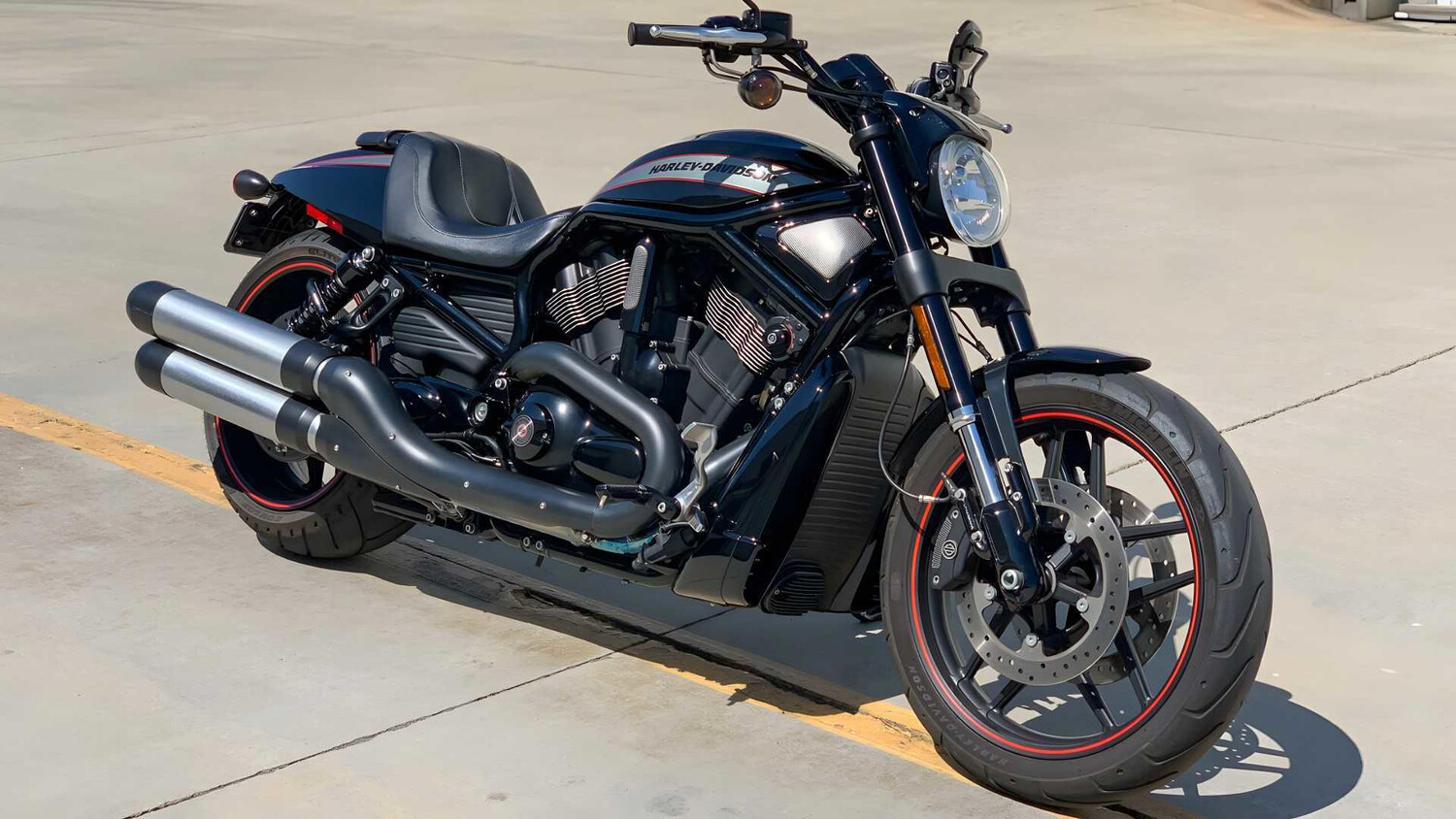
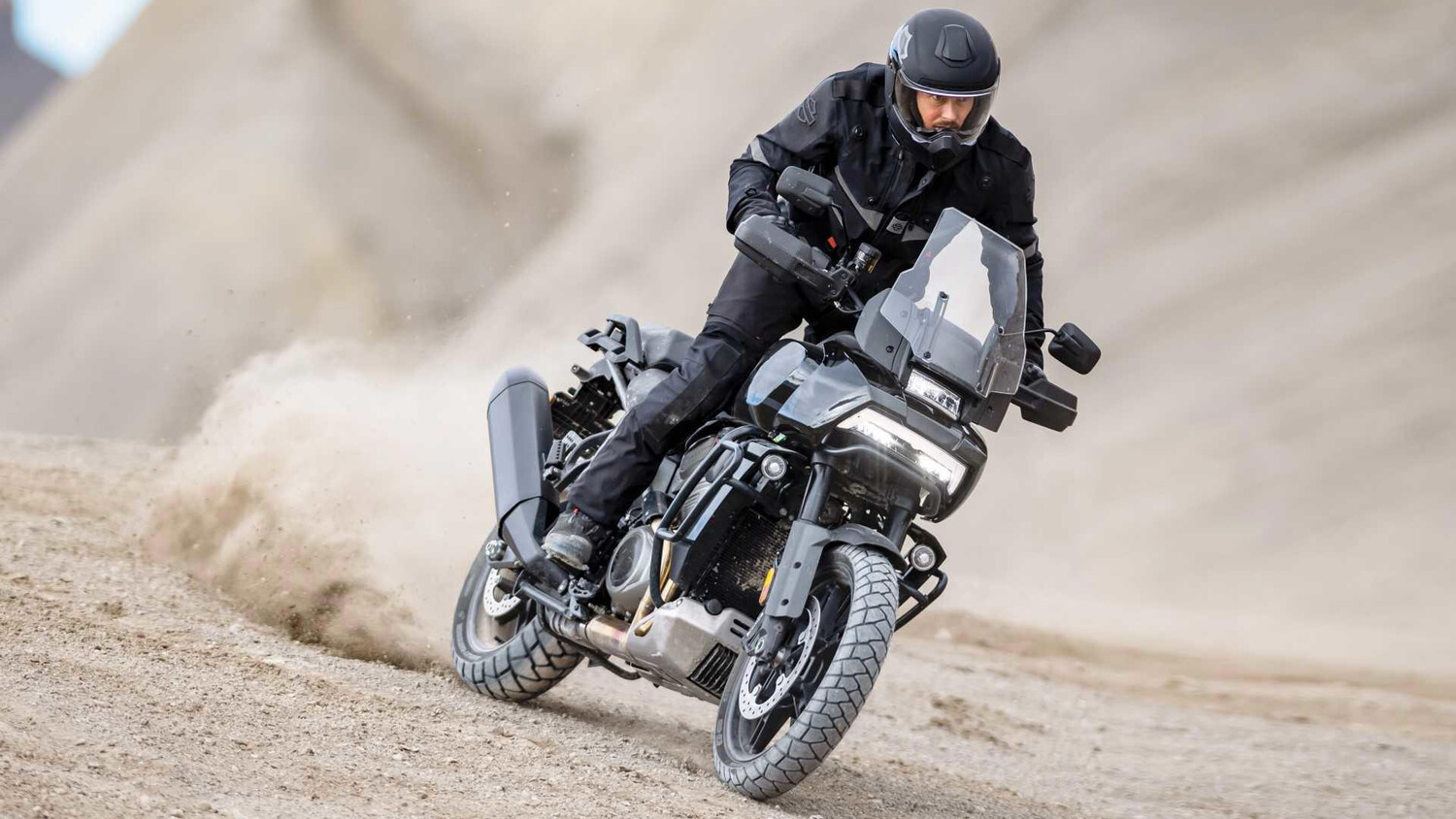
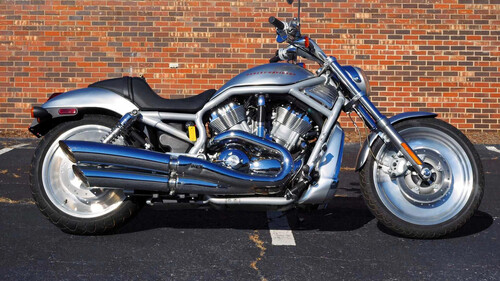
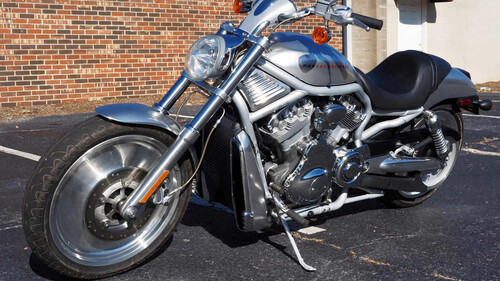
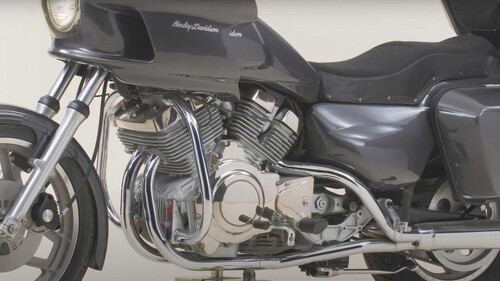
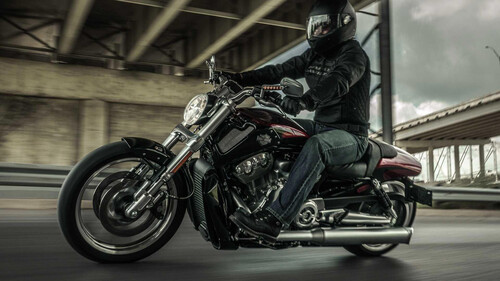
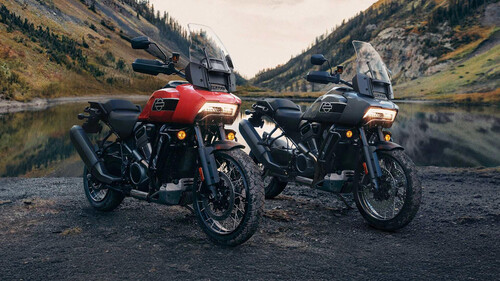
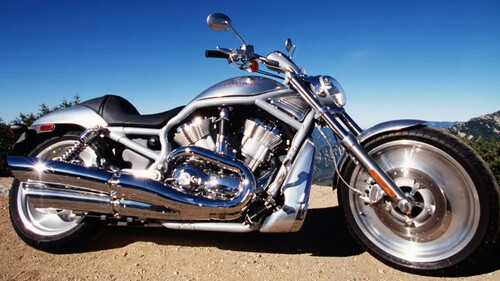
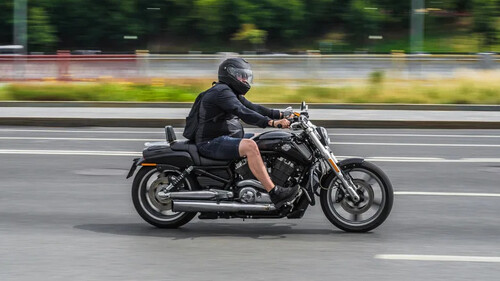
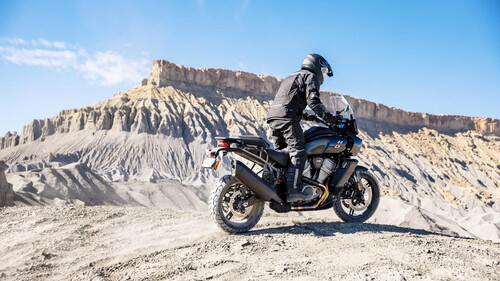
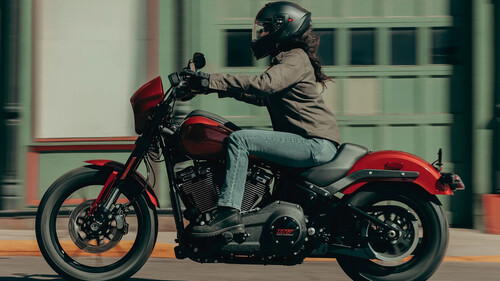
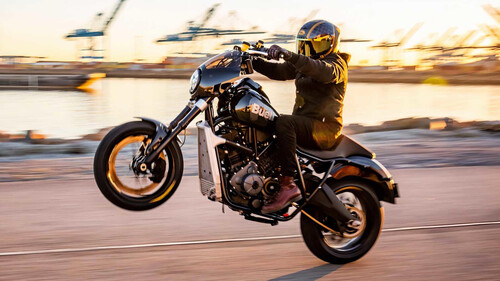
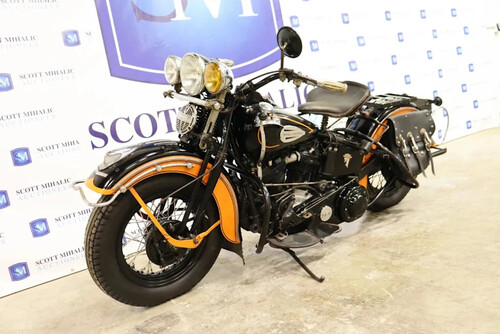
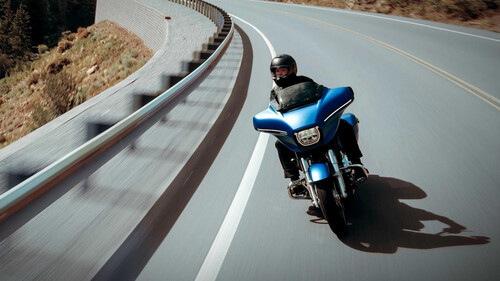
If you ask a Harley owner what the fastest bike the company ever built was, they will most likely come up with one of two answers. The Sportster S, obviously, because it is the one everyone has been talking about over the last few years. Or the FXDR 114, usually followed by a 0-60 number that sounds like it belongs to a Ferrari, not a cruiser. Both answers are wrong. In fact, they have been for years now.The actual record holder did zero to 60 in 3.5 seconds. It also ran the quarter mile in just over 11 seconds. And it did all that with an engine the Milwaukee-based manufacturer didn't build on its own. It was not the fastest Harley ever made in every measurable sense. But for a traditional cruiser, its numbers were extraordinary.If you're under 35, there's a good chance you've never even swung a leg over the motorcycle in question. Production stopped in 2017. Surprisingly, Harley never made much noise about why. Harley Built A Full-On Muscle Cruiser, Then Just Walked Away YouTube/Riding in the Ozarks The bike was not a special edition, nor was it a paint job slapped on a bike you already knew. It was its own ground-up platform, with its own family of names, and it ran for fifteen years before it simply stopped.There was no downsizing, no migration of its technology to another line, and no successor ready to take its place. It was there, and then it was not, and whatever came closest to replacing it showed up years later wearing a completely different name.It is worth noting that this is not how Harley usually operates. For reference, the Softail has been around for decades. Touring bikes like the Road King too. The Sportster has been around since before America's modern highway era. So when a platform stays around for more than a decade and is then discontinued entirely, there are likely two reasons behind it. Sales were not strong enough, or the bike no longer fit the image the company wanted. It could have been both.What it does not mean is that the bike was slow. Or forgettable. The interesting part isn't that Harley once had an unusual partner on an engine program. It's that nothing since has really matched what came out of it. The Harley-Davidson V-Rod Was The One That Got Away Bring A Trailer Here's the detail most coverage skips right past. The V-Rod's Revolution engine, a liquid-cooled, 60-degree V-twin, was developed with Porsche Engineering, and its roots trace back to the VR1000. For the unversed, it was Harley's short-lived but genuinely serious attempt at Superbike racing in the '90s.Odd pairing on paper. Porsche, the company behind the 911, helping shape the internals of a drag-strip-styled Harley cruiser. But that is exactly the part worth focusing on, because nothing before the V-Rod carried that story. Nothing after it, either.Over its run, the Revolution came in two sizes: 1,130 cc first, then 1,247 cc. These powerplants made somewhere between 115 and 125 hp depending on year and trim. Although it does not sound like much today, in the early 2000s, nothing else wearing a Harley badge was in that ballpark.Liquid cooling played a big role here. It helped the engine maintain its power longer, especially when the bike was being ridden hard. Unlike an air-cooled engine, it did not have to rely as much on airflow to keep temperatures under control.That is not to say air-cooled V-twins cannot make power. Harley’s Milwaukee-Eight is a good example of that. But there are limits to how far you can push an air-cooled setup. The V-Rod’s engine was designed from the start without having to work around that same limitation. The Numbers That Still Hold Up Iconic Motorbike Auctions The numbers are what really stand out. The V-Rod could do 0-60 mph in 3.5 seconds and cover the quarter mile in 11.31 seconds at 115 mph. Depending on the variant, top speed was between 135 and 144 mph.These numbers came from a bike with a low seat and a long, stretched-out design. It was not built to look aerodynamic or like a traditional sportbike. Yet, the performance was strong enough to make even some sportbikes look twice. Killing The FXDR 114 Myth MOTOGEN PL via YouTube Now, about the FXDR numbers that keep coming up online. You will often see a 2.5-second 0-60 mph time and a 160 mph top speed attached to it. The problem is that those figures have been repeated so much that few people question them anymore.Those numbers do not really stand up when you look at the FXDR closely. The Milwaukee-Eight 114 makes 90 hp and 119 lb-ft of torque, while the FXDR weighs around 303 kg ready to ride. That power-to-weight ratio makes a 2.5-second 0-60 mph run extremely difficult. It would need far more power and traction than the bike has to get off the line that quickly.That does not make the FXDR a bad motorcycle. It simply was not designed to chase those kinds of performance figures.Once you clear up the FXDR myth, the V-Rod's actual numbers become even more interesting. They stop sounding like an exaggerated bike-night story and start looking like what they really were: a genuinely serious performance achievement from a Harley that is now mostly forgotten. What the V-Rod can legitimately claim is a narrower title: it was the fastest-accelerating traditional cruiser Harley had put into showrooms. What "Fastest" Actually Means Now Harley-DavidsonTo be fair, the V-Rod does not win everything. The Pan America 1250 and the Sportster S both beat its top speed today. But they are not really competing in the same category. The Pan America is an adventure bike, built around ground clearance and long days in the saddle, not straight-line performance. The Sportster S sits closer in spirit, but it is really a performance hybrid: part streetfighter, part cruiser, wrapped in ride modes and traction control, and a chassis that has had twenty extra years of development poured into it.The Sportster S has the edge when it comes to top speed, electronics, and overall modernity. But the V-Rod still has something going for it. In that specific formula of a low seat, stretched-out frame, drag-racing roots, and a 3.5-second 0-60 mph time, it remains a standout. The Sportster S has not officially matched that figure in the same kind of body style and overall package.It is not a claim that the V-Rod was the fastest Harley ever made. It is a much narrower claim, but one that holds up when you look at the numbers. The Destroyer Proved What Was Left In The Tank Harley V-Rod Destroyer Any doubt about what the Revolution platform could really do, once Harley stopped worrying about street legality, is answered by the Screamin' Eagle V-Rod Destroyer. It was a factory-built drag bike and was never meant for the road. It produced around 170 hp and a top speed of 165 mph. By most accounts, it was the most powerful machine Harley has ever put its name on.It wasn't trying to be a street bike. It was Harley showing, plainly, what that engine had left once emissions rules and warranty concerns stopped being part of the equation.Harley had the platform. It had the proof, right there in the Destroyer, that there was more to give. And then it let the whole thing quietly fade out. Everything since (the Sportster S, FXDR, even LiveWire's very different flavor of fast) has been chasing pieces of something the V-Rod already did, years before any of them existed.