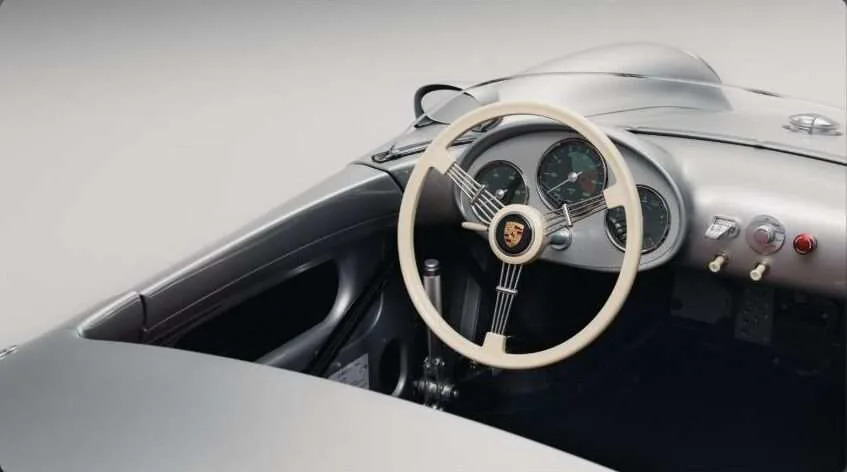
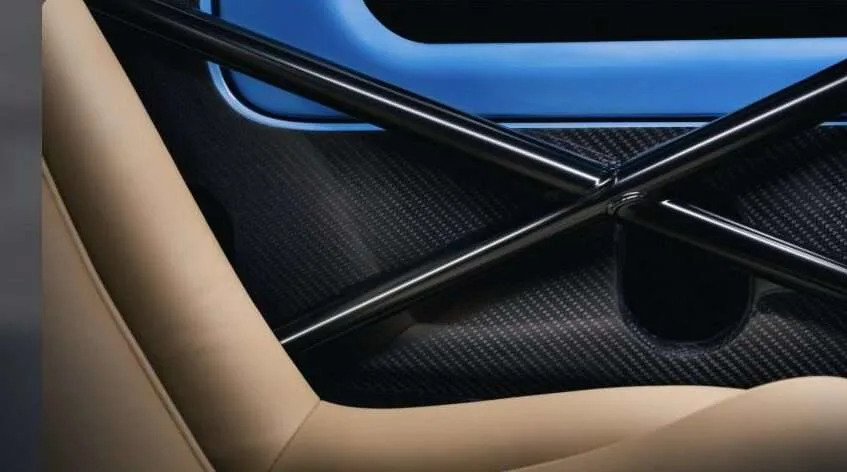
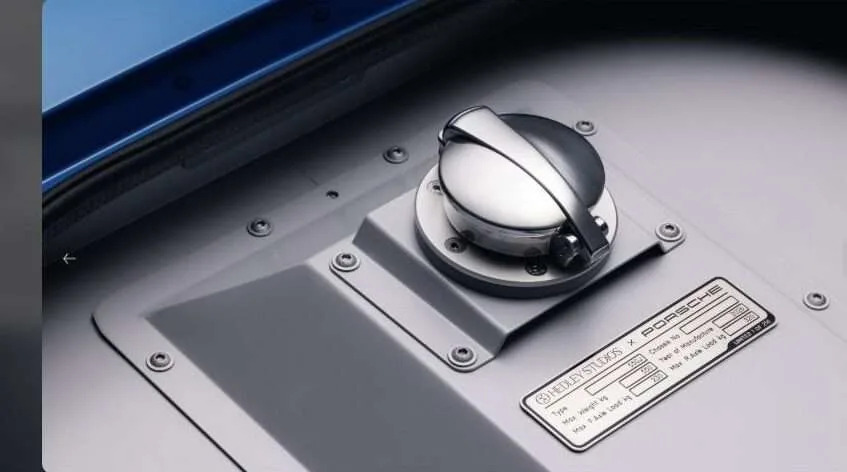
Porsche Didn't Build a Smaller 550 Spyder. It Built a New Kind of Collectible.Modern Car CollectorEve NowellThu, September 17, 2026 at 5:13 PM UTCAdd us on GooglePorsche has spent 75 years turning the 550 Spyder into shorthand for everything the brand believes about itself: lightness beating displacement, precision beating brute force, a small factory in Zuffenhausen out-engineering better-funded rivals. This month, to mark that anniversary, Porsche put its name behind something it has never done before — an 80-percent-scale, fully electric, non-road-legal reimagining of the car, handbuilt not by Porsche but by a British atelier called Hedley Studios, and sold not as a toy but as what the company itself calls "an exclusive collector's item." The number that will get the headlines is £69,500, roughly $93,600. The number worth actually thinking about is 250 — and what it tells us about where Porsche believes the collector market is headed.The Car That Earned the Right to Be CopiedThe original 550 Spyder was never a boulevard car. Porsche built it in 1953 as a purpose-designed racer, engineered from the outset to dominate the under-1,500cc class rather than to sell to the public. It succeeded almost immediately. At the 1954 Carrera Panamericana, drivers Hans Herrmann and Jaroslav Juhan took a class victory and a third-place overall finish, 36 seconds apart after five days and 3,077 kilometers of racing against cars with vastly more displacement. That result is the reason every fast Porsche since has worn the name Carrera. Only around 90 examples of the 550 were built between 1953 and 1956, and the survivors now trade in seven figures — a 1958 550A sold for $1.545 million at Gooding & Christie's Pebble Beach sale this past August, while a 1955 example consigned to RM Sotheby's Monterey carried a pre-sale estimate between $3.75 million and $4.25 million.The 550 also carries a weight most race cars never accumulate: cultural gravity. James Dean was killed behind the wheel of a 550 Spyder in September 1955, and the car he was driving — nicknamed "Little Bastard" — has become one of the most mythologized machines in American automotive history. Porsche doesn't need to mention that story to sell a 550 tribute. It's baked into why the silhouette still stops people on a concours lawn seven decades later, in a way that a 911 Carrera RS or a 1973 Carrera RS 2.7 Touring, however collectible in their own right, simply doesn't.What Hedley Studios Actually BuiltThe 550 J's cockpit references the original car's dash layout. Photo: Porsche AG / Hedley StudiosSet the electric drivetrain aside for a moment and look at how the 550 J was made. Hedley Studios, working from original archive drawings and scans sourced directly from the Porsche Corporate Archives in Stuttgart-Zuffenhausen, built the car around a rigid steel space-frame chassis wrapped in a carbon-fibre body — more than 1,300 individually crafted components in total, hand-assembled at the company's facility in Bicester, Oxfordshire. At 2.9 meters long and roughly 330 kilograms, it's an 80-percent replica that still seats two, with a cabin built to reference the original car's dash layout and steering wheel down to the typeface on the gauges.Each Porsche 550 J uses a rigid steel space-frame chassis under a carbon-fibre body. Photo: Porsche AG / Hedley StudiosUnderneath, the Type 547 Fuhrmann boxer four is gone, replaced by a 48-volt electric powertrain — 8 kW and a 40 mph top speed in standard trim, or up to 16 kW and roughly 50 mph with the optional RS Package, delivered through four selectable drive modes: Novice, Comfort, Sport and Race. It will never turn a wheel on public roads; Porsche and Hedley are explicit that the car isn't road-legal anywhere. What it does have, tucked under the fuel-filler door, is a numbered plate reading "Hedley Studios x Porsche," recording chassis number, year of manufacture and its place among the 250-car run — the same instinct toward documentation and traceability that drives every serious provenance conversation about the real thing.Each car carries a numbered Hedley Studios x Porsche plate confirming its place among the 250-unit run. Photo: Porsche AG / Hedley Studios"The Porsche 550 J celebrates this unique heritage and brings the story of one of the most significant sports cars in our company's history back to life in a contemporary and inspiring way," said Porsche's Deniz Keskin. Hedley Studios founder Ben Hedley put it more plainly: the goal was to preserve the original's spirit "while making it relevant for a new generation."Collectible, or Merchandise With Extra Steps?Here is the question that actually matters, and it isn't whether a battery-powered 80-percent Porsche is "real." It's whether official licensing changes what kind of object this is. Unauthorized tribute cars and replicas have existed for as long as valuable cars have — which is precisely why marques guard their identity so aggressively. Ferrari, for one, has physically destroyed counterfeit cars built to impersonate its own models rather than let them circulate. Porsche took the opposite approach here: it opened its archive, put its museum's name behind the project, and let a third party build something nobody could mistake for a real 550 Spyder, but that carries Porsche's own authentication infrastructure — chassis plates, factory drawings, an official landing page — anyway.AdvertisementAdvertisementThat distinction is the entire product. Hedley Studios isn't new to this; the Porsche 550 J is its fifth marque partnership, following unprecedented licensing agreements with Ferrari, Bugatti, Bentley and Aston Martin, and the company has now delivered roughly 600 cars to collectors in more than 50 countries. Porsche is the first to lend its own museum and factory archive to the process, which is a meaningfully different endorsement than a licensing fee. It's also a different category of object than a sanctioned full-size derivative. A Theon Design 911 or a Thornley Kelham European RS remains a real, road-legal, drivable car built on a genuine chassis — its value proposition rests on engineering and usability. The 550 J's value proposition rests entirely on authentication and story. It is closer, in spirit, to a factory-sanctioned scale bronze than to a restomod.Why NowThe 75th-anniversary framing is real, but it isn't the whole answer. Heritage brands across the industry are quietly recalculating who their next collector actually is. Ferrari has said nearly 40 percent of its new customers are now under 40, up from 30 percent two years ago, and the brand is leaning into electrification specifically to meet that cohort where it already is. A $93,600 licensed object, however unconventional, is a far lower-risk way for Porsche to test appetite for archive-backed heritage merchandise among a broader, younger audience than the ultra-high-net-worth buyers competing for the genuine, seven-figure 550 Spyders that come up at Monterey and Pebble Beach once or twice a year. It doesn't cannibalize the real market. It builds a new one adjacent to it.What Serious Collectors Should Actually WeighNone of that makes the 550 J a safe bet, and MCC readers should treat it with the same discipline they'd apply to any emotional versus smart buy decision. There is, as of yet, no secondary market whatsoever for Hedley Studios cars of any marque — the company has been delivering vehicles for years, but none of its Ferrari, Bugatti, Bentley or Aston Martin builds has a meaningful public auction record to point to. Non-road-legal status confines the car permanently to private roads, display and static collection contexts; there's no path to registering it for street use in most jurisdictions. The build itself, however well documented, comes from a third-party atelier rather than the Porsche factory floor, which means its long-term value is tied to a licensing relationship rather than to Porsche's own manufacturing pedigree. And the entire premise depends on Porsche holding the line at 250 units — any future expansion of the program would undercut the scarcity the car is being sold on today.Strip the price away, and here's what's left: a manufacturer that, for the first time, put its own archive and its museum's imprimatur behind an object nobody will ever drive on a public road. That's the real signal, and it's worth watching regardless of what any individual 550 J eventually sells for. Owning a genuine 550 Spyder means owning a piece of a race Porsche actually won. Owning a 550 J means owning Porsche's decision to sell you the story instead. For the right collector, that distinction might be worth exactly $93,600. For everyone else, it's worth paying attention to — because if this program works, every heritage marque with an archive worth raiding is about to have one of its own.Join our Newsletter, follow our Instagram page, and follow us on Facebook.

















 +41 others