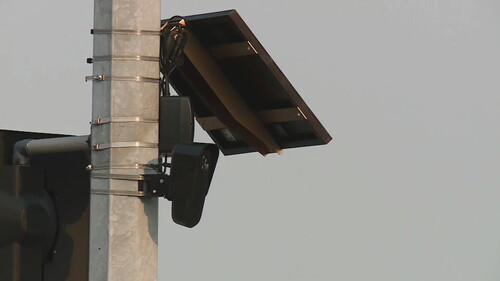
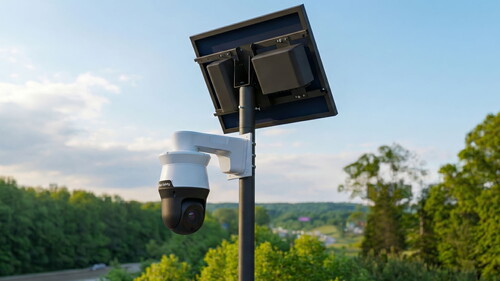
opinion automotive privacy has become a dismal prospectPrivacy has become a major concern for people as modern technologies continue growing more invasive. Nowhere is this more apparent than within the automotive realm, as driver monitoring systems and roadside surveillance have been largely normalized.There are now an estimated 100,000 Flock cameras, which are automatic license plate readers, now active in the United States, up from just a few hundred in 2020. The network has proved incredibly controversial with the public and only appears to be getting more so over time.America is likewise poised to require all new models to include driver-monitoring systems after 2026, something Europe already does.AdvertisementAdvertisementMany institutes have similarly moved to require these systems for automobiles to receive top safety accreditations. Insurance groups have likewise been lobbying for their implementation, claiming that they would save countless lives. But drivers have found them to be overbearing, annoying, and an affront to what remaining privacy they had left inside their vehicles.With public criticism falling upon deaf ears, what are regular people actually supposed to do about it?Ideally, the solution would be to petition the government and pressure the relevant companies not to use these invasive systems. But those complaints are being ignored and civilians are already starting to take matters into their own hands. Aftermarket companies are already selling OEM-looking covers for driver-monitoring cameras and are likewise developing software to help owners modify vehicles via the OBDII port.opinion automotive privacy has become a dismal prospectRepresentative Thomas Massie (R-Kentucky), who has been extremely critical of Flock cameras and previously attempted to defund federal mandates requiring automakers to install driver-monitoring systems, said previously that the only option left for civilians to was "mass noncompliance."AdvertisementAdvertisementMassie framed the monitoring devices, which are slated to go into all new vehicles sold in the U.S. starting next year, as grotesquely invasive and a clear violation of American's Fourth and Fifth Amendment rights. He stated they were tantamount to "kill switches" and a blatant affront to liberty. But he failed to get enough Congressional support to block their implementation. Having since lost to Ed Gallrein, in what was the most expensive House primary in U.S. history, Massie has taken it upon himself to issue warnings about a forthcoming surveillance state and criticize what he sees as a lack of genuine representation of the American people.However, what does noncompliance look like when the system will presumably become default equipment in tomorrow's automobiles? That likely depends on how they're implemented. Odds are good that they'll be roughly the same as the units we've already seen be mandated within Europe, which are effectively no different than the dashboard-mounted IR cameras used in most new automobiles equipped with hands-free driving features.In-cabin cameras can easily be covered with some thick tape - or destroyed, if you're not worried about the resale value of your vehicle. But the presumption is that this could result in future vehicles disabling themselves. In fact, some European models may not even start unless the camera can do a preliminary facial scan upon startup.We've seen that the cameras are mainly issuing a slew of warning chimes whenever the driver glances anywhere but straight ahead, interfaces with the touchscreen, or the computer decides you look a little sleepy. And that's when they're working properly. Testing in countries where the systems haven't been mandated, has shown that they can be disabled (in select vehicles) by navigating through menu screens or by simply covering the camera itself. Oftentimes, the car will just assume the device is broken and will typically limit access to select ADAS features (such as hands-free driving) while being otherwise fully functional.opinion automotive privacy has become a dismal prospectThat said, we don't know if that will remain the case as the years roll on and making those kinds of modifications may even be considered a criminal offense depending on your own regional laws. It also doesn't address other privacy concerns, like the potential connected vehicles listening to drivers via interior microphones (often used for AI assistance and phone pairing). For that, drivers would effectively need to disable all connectivity services or physically disconnect the relevant physical connection that makes them operational - if they want to be extra sure.AdvertisementAdvertisementOutside of hacking your own vehicle, which is something you can absolutely do, there aren't a lot of moderate options. Still, this would require businesses or particularly industrious individuals to develop the applicable software for individual models and for the laws to accommodate their continued existence.The latter takes time and the former may be a major obstacle moving forward, as we know the industry has been strongly opposed to right-to-repair issues. Hacking your own car would also open up unpaid access to already installed features that auto brands now want customers to pay subscriptions for. This could perhaps invite legal battles where manufacturers claim users are stealing from them by installing equipment that was already equipped to a product that same person paid tens of thousands of dollars to own.Then we have exterior cameras, which are now common on every new automobile that's available. While essential for many driver assistance features, exterior sensor arrays harvest an almost unfathomable amount of data for automakers and whatever third parties end up buying it from them. China even banned some foreign-made automobiles from entering military bases for this very reason.opinion automotive privacy has become a dismal prospectIt's fair to say that much of the above will be viewed as paranoid by some, especially if we assume that everything takes place under the worst-case scenario. But this doesn't make the relevant equipment any less annoying to deal with today, nor does it negate the premise that they're still poised to invade the privacy of millions of drivers around the globe.AdvertisementAdvertisementAutomakers always like to talk about how they anonymize their data and have repeatedly stressed that the cameras aren't supposed to come with any sort of facial recognition software. But that's something that could easily be pushed via a single over-the-air update by the manufacturer and doesn't really make sense when the data is being used for targeting marketing. Drivers are understandably skeptical, especially considering we have countless examples of similar tech eventually crossing the threshold of what many would deeply unacceptable.This fittingly brings us back to Flock traffic cameras, which continue to see widespread implementation within the U.S. We've covered them before, specifically regarding cases where they were abused by law enforcement. There were numerous instances where officials had used them to stalk former romantic partners or the AI-based search algorithm failed to identify the correct vehicle, resulting in wrongful arrests.Despite a surplus of public opposition, Flock cameras have continued to grow in number. The relevant AI surveillance network also very early incorporated the Ring doorbell cameras that are installed on many homes. While the deal was abandoned earlier this year, in a rare case of these businesses reacting to public criticism, rumors suggest that similar partnerships are still being planned.Sadly, Flock-related malfeasance has persisted as the number of cameras continues to grow. According to a recent report from 404 Media (h/t Michael Accardi), there have been over a dozen known cases where police were caught using the network to illegally stalk people. Most of these instances involved individual officers using the system to frequently check in on the innocent party over a period of months.opinion automotive privacy has become a dismal prospectAdditional criticisms have been made regarding how easily accessible the data happens to be. Authorities typically don't need to procure warrants to launch searches, they just need the login information, and hackers have shown that it's relatively easy to tap into the accounts or even the devices themselves. Public information requests likewise make it possible for people to know when and how data was accessed by authorities.AdvertisementAdvertisementThat last component has thankfully allowed for journalists and concerned citizens to more easily identify specific instances of abuse. But this doesn't guarantee any amount public privacy only applies to government browsing. Private Flock clients (such as corporations or something like an HOA) typically have the option to keep their search history entirely to themselves.From 404 Media:The known cases of police stalking are almost certainly a vast underreporting of the overall abuse, because they largely include only cases in which the behavior was so egregious that it led to police officers being fired, arrested, or both.Flock told 404 Media that it is "aware of 15 incidents of abuse, each surfaced because of the transparency and accountability features deliberately built into our platform.""There are also 140,000 monthly active users of Flock, so the relatively rare instances of abuse, while obviously wrong and awful, are exactly that - rare," a Flock spokesperson told 404 Media. "Humans are fallible; unlike most tools society provide law enforcement, Flock ensures that in the instances when our technology is misused, the evidence used to hold responsible parties accountable, is right there in our system. We also encourage all our customers to have a usage policy, regular training, and to implement our Audit Assistance tool, which proactively flags unintended use."It is definitely the case that Flock's audit tools have proven useful in holding police accountable, because journalists, activists, and concerned citizens from around the country have pored through Flock audit logs that they have obtained through public records requests to document abuse. But it is also the case that Flock has strenuously fought against lawsuits and potential regulations that are seeking to require police to get a warrant to use the system. And many cases of abuse have not been detected by police departments themselves but by those private citizens, journalists, and stalking victims who have found patterns of abuse in public records files they have obtained from their local police departments. In most cases of Flock-related stalking reviewed by 404 Media, the abuse occurred over the course of months or years, and the victims were subjected to dozens or hundreds of lookups.AdvertisementAdvertisementOther abuse cases have been discovered using the website HaveIBeenFlocked.com, a website that compiles Flock searches released via public records requests and turns them into a searchable database. Flock has repeatedly tried to get that website taken down, as we have previously reported.opinion automotive privacy has become a dismal prospectThe company has attempted to frame the network as nothing more than "license plate readers." But this has repeatedly been proven false. Search tools clearly allow customers to locate vehicles using nothing more than make/model, vehicle color, and any identifying characteristics (dents, stickers, etc). Citizen testing has also proven that the cameras activate whenever pedestrians approach them. However, there's been no concrete evidence that they prioritize facial recognition thus far.Suggesting that the network has been extremely unpopular with the public would be an understatement. Cities in the process of implementing Flock cameras have seen town hall meetings with attendees expressing their broad distaste. The response in America has been similar to the reception of Ultra Low Emission Zone (ULEZ) cameras in the United Kingdom.While ULEZ cameras allegedly exist to enforce regional emissions compliance, they were likewise promoted by the British government as nothing more than license plate readers. This has not appeased locals, who have taken it upon themselves to destroy the cameras en masse. There is even a loosely organized group of British citizens, known as "Blade Runners," who promote various methods of doing so over social media.opinion automotive privacy has become a dismal prospectAmericans now seem to be getting in on the action. Over the last 12 months, there have been multiple cases of individuals destroying Flock cameras in California and Oregon where the person was intentionally targeting as many devices as possible. Meanwhile, similar acts of vandalism appear to be growing just about everywhere in the country.AdvertisementAdvertisementInterestingly, 404 Media has also reported that a company known as SignalTrace, is currently developing a way for traffic cameras to tap into bluetooth devices (phones, smart watches, etc.) with the intent to identify specific individuals. This applies to persons both walking by or riding in an automobile. While this is something Flock has said it wasn't doing, numerous investigations using the camera network explicitly set out track specific people with the vehicle simply being the identifying object. It seems reasonable to assume that surveillance companies and governments will swiftly embrace additional technologies that make that easier, including whatever SignalTrace happens to be working on.Signal jammers are widely available for purchase online, typically by way of Chinese suppliers. While they would certainly be effective at preventing the cameras (and loads of other wireless devices) from operating within a given area, setup can be complicated and actually using them would be deemed a criminal act just about everywhere in the world. In fact, the resulting penalties for utilizing frequency jammers could be significantly harsher than being caught destroying a few hundred dollars of corporate-owned property.Suffice it to say, legal solutions to the problem appear to be depressingly limited. Protesting only seems to work sporadically at the local level and federal representatives look to be wholly disinterested in acknowledging public opinion.Criminal acts of vandalism and making extensive (potentially illegal) modifications to modern vehicles certainly aren't avenues the citizenry wanted to take in order to maintain a modicum of privacy. However, with the pleas of drivers going broadly unheard by governments, insurance firms, and automotive manufacturers alike, it was probably the inevitable outcome. One assumes that will remain the case as the tech sees broader implementation and new, and even more invasive, features.opinion automotive privacy has become a dismal prospect[Images: Matthew G Eddy/Shutterstock; Subaru; General Motors; SOLDATOOFF/Shutterstock; Matthew G Eddy/Shutterstock; bluestork/Shutterstock; Livvy2020/Shutterstock; Fela Sanu/Shutterstock]AdvertisementAdvertisementBecome a TTAC insider. Get the latest news, features, TTAC takes, and everything else that gets to the truth about cars first by subscribing to our newsletter.