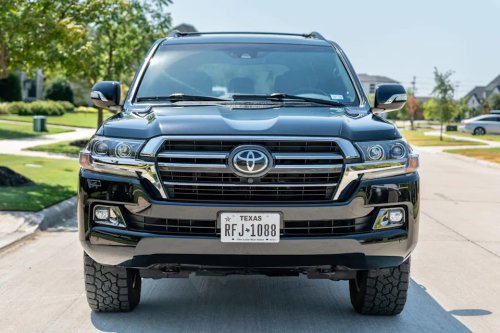
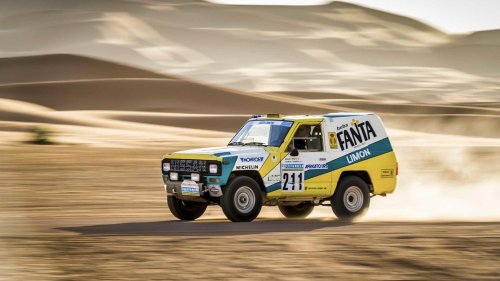
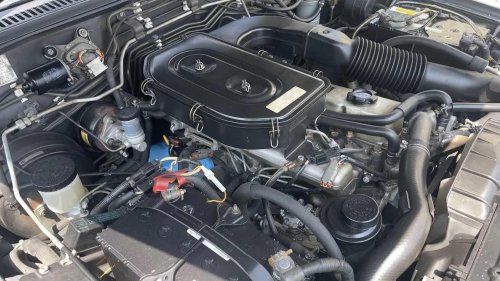
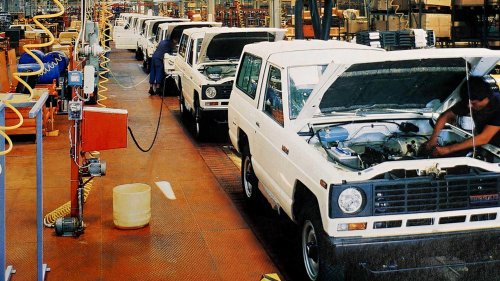
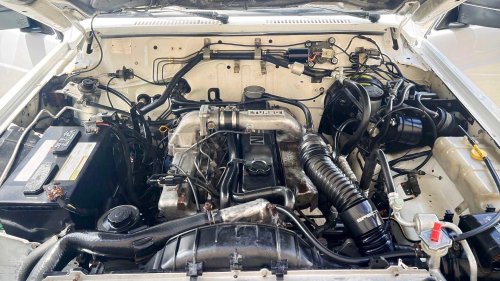
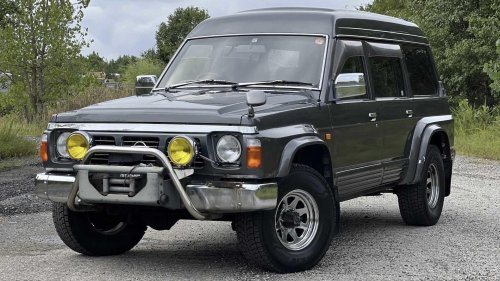
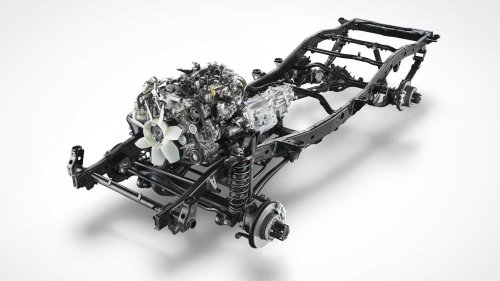
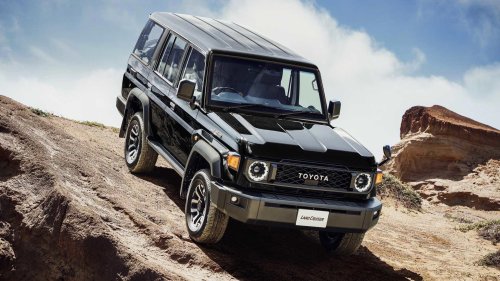
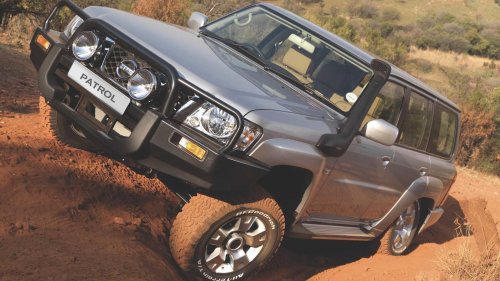
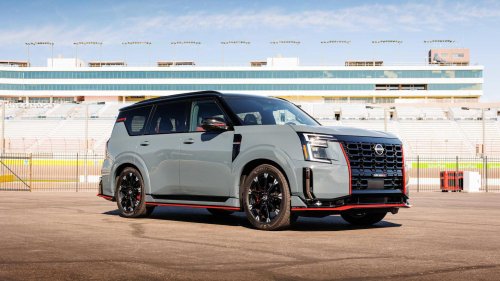
They say that only two things on this planet will survive a nuclear blast: a cockroach, and Toyota's Land Cruiser 70 Series truck. These trucks are old-school tough, seemingly made from a metal hailing from a secret iron ore mine that produces only the finest grade of steel. The engines? They are also old-school, and virtually unbreakable. Like the legendary 1HZ straight-six diesel engine. The engine was designed for use in commercial trucks and buses, with longevity a major trump card.But fellow Japanese car company Nissan, back in its heyday, also developed a straight-six diesel engine, available both in naturally aspirated and turbocharged formats, that was every bit as tough as the 1HZ. It is called the TD42. Nissan Goes Big With Diesel NissanNissan was a big player in the diesel segment in the 80s. The company produced an extensive range of diesel engines, primarily for commercial applications. But in 1987, Nissan made an audacious move: it entered a diesel-powered Nissan Patrol in the toughest off-road race in the world, the Paris-Dakar Rally.Although the Patrol could not match the outright speed of the gas-powered, 247-hp Mitsubishi Pajero factory cars, it famously finished the race in ninth position overall, winning the diesel category. The result not only boosted Patrol sales in Europe, but also demonstrated Nissan's expertise in creating a great diesel engine.Queue, the TD42 engine.Bring A TrailerOn the back of its ground-breaking result in the Paris-Dakar Rally, Nissan introduced the TD42 straight-six engine in 1987. The 4.2-liter, naturally aspirated six-cylinder engine came with a mechanical fuel injection pump and a robust, square engine design. The first-generation TD42 was known as the "Silver Top", courtesy of the unique silver finish of the tappet cover.The block was a heavy-duty, cast-iron unit with a square design, and it was designed for longevity, and not performance. Unlike the 2.8-liter turbodiesel engine in the Dakar Patrol, the TD42 was all about low-down grunt, hard work and lasting a lifetime. By 1988, the engine was installed in Nissan's Civilian bus, as well as the Patrol Y60 (or the GR and GQ, as the left and right-hand-drive models are also known).Nissan The Nissan Patrol Y60 was sold in many parts of the world, with a variety of engines in the game, including the naturally aspirated TD42. Between 1989 and 1998, you could have your Nissan GQ with a 3.0-liter or 4.2-liter straight-six gasoline engine, or a variety of straight-six diesel options, including a turbocharged 2.8-liter engine, and various versions of the TD42 engine.If you wanted to go everywhere in an utterly reliable and capable 4WD, and you were not in any particular hurry to get to your destination, the TD42 option was the obvious choice. But Nissan also realized a growing number of Patrol owners use their 4WDs as daily drivers, and to haul heavy trailers. So in 1993, Nissan revealed the TD42T engine, also known as the "Black Top" engine.This version came with a low-pressure turbocharger, and the crankshaft and pistons were upgraded accordingly, while additional oil cooling measures were included in the design. The mechanical fuel pump also had an upgrade to allow more fuel to be injected. The TD42T produces up to 160 hp of power and 280 lb-ft of torque. It was still no rocket ship, but it was a great deal more capable of towing heavy loads and maintaining reasonable cruising speeds up hills and down dales.Bring A Trailer In 2002, Nissan added an intercooler to the deal, and this engine is known as the TD42Ti. It also made around 160 hp, came with strengthened internal parts and all-round improved performance. This version of the original TD42 is said to be the most sought-after incarnation of the straight six oilburner, offering the best compromise between dependability and performance.The Nissan Patrol GR (the left-hand-drive version of the Y60), as well as its successor, the Y61 (GU), were never officially sold in the USA. This after Nissan decided to offer its premium SUV model as part of its premium Infinti brand, and the QX56 (with a big V8 gasoline engine under the hood) was essentially a rebranded and different-bodied Patrol 4WD.Bring A Trailer In recent years, a number of GRs, GQs and GUs have found their way Stateside, thanks to the Imported Vehicle Safety Compliance Act of 1988 that excludes vehicles older than 25 years from complying with federal safety and emission standards. The Big Six With A Target On Its Engine Cover ToyotaThe 1HZ was designed in the late 80s, around the time that Nissan's naturally aspirated TD42 was finding its way into the Patrol and the Civillian bus. At the time, most car companies were jumping on the electronic control units (ECUs) bandwagon, with the computer system offering more refinement, improved performance and, ideally, less fuel consumption. Nissan had bucked this trend, sticking with an old-school set-up to enhance longevity, and Toyota followed suite.And for good reason. Not only did it design the 1HZ for use in a bus, it also intended to deploy the straight-six engine in third-world countries where the diesel fuel may often be of questionable quality, and regular services in a modern facility may be a pipe-dream. An engine fitted with a complicated ECU system may not be ideal. Of course, an unrefined, old-school diesel engine would not conform to first-world emission regulations, but it would be able to run on just about anything that resembles diesel fuel.As reported by Top Speed, the 1HZ straight-six engine's secret sauce is the combination of a swirl-chamber, indirect injection, the lack of a complicated ECU system, and an unusually high compression ratio of 22.4:1. In the real world, this means the engine will ignite just about any quality of diesel, and it will run reliably, all day long. Additionally, the engine comes with a 94 mm (3.7 in) bore and 100 mm (3.94 in) stroke, a layout that ensures low-down grunt, instead of performance at higher revolutions. For the 1HZ, it's all work, and not so much play.Toyota A staggering 35 years down the line, you can still buy a Toyota Land Cruiser 70 wagon or 79 pickup powered by the 1HZ engine in some parts of the world. You can have a brand new 70 wagon in territories like Japan (reintroduced in 2024), Australia, Africa, the Middle East and in some South American countries.It remains the favored, ladder-frame platform of warlords, farmers, mining and forestry companies, and 4WD overland enthusiasts, and is far from being put out to pasture. And this is now where Nissan missed a trick.DID YOU KNOW? The Toyota Land Cruiser 70 and 79's front wheel track is around 3.8-inches wider than the rear wheel track. In 2007, Toyota widened the front axle and suspension to accommodate the 4.5-liter V8 turbodiesel engine (which has since been discontinued). The company did not adjust the rear axle width accordingly, citing high development costs. As a result, the front track of any new 70 or 79 is almost four inches wider than the rear track. Nissan Missed The Boat... By A Mile Nissan Nissan's Y61 Patrol – on sale in international markets from 1997 all the way to 2024 – is arguably the most capable and versatile Patrol ever made. Yet it never made it to the USA, since it didn't meet the required safety and emission standards. Which begs the question: why did Nissan not invest more in the mighty Patrol, updating it accordingly, and offering American 4WD enthusiasts some back-to-basics off-road magic? It may very well have been a great opportunity missed.Nissan's apparent lack of "Patrol-love" was also evident in other parts of the world. Like in Africa, the ideal Patrol playground. Although the Patrol Y61 was offered for sale on the continent, Nissan hardly seemed bothered with marketing the 4WD, and taking the fight more directly to Toyota's Land Cruiser. It sold, but in very limited numbers. It was yet another great opportunity missed.Ian Wright/CarBuzz/Valnet The latest Nissan Armada (essentially a Patrol wearing an Armada badge in the USA) is big, luxurious, highly capable and powerful. Starting from nearly $60,000, it is also expensive.One can't help but wonder what could have been if Nissan had introduced the Y61 Patrol in the States in the late 90s. Unfortunately, all the "what could have been" and less than ideal marketing strategies over the years have culminated in Nissan's ongoing financial troubles, with massive losses reported in 2025, and manufacturing plants closing down around the world.

















 +43 others