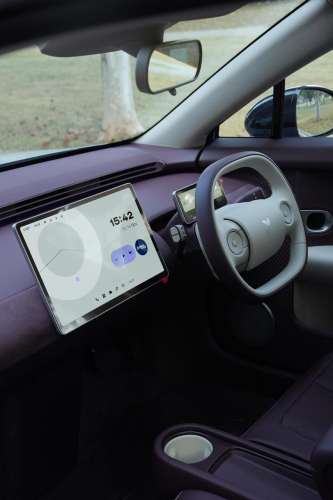
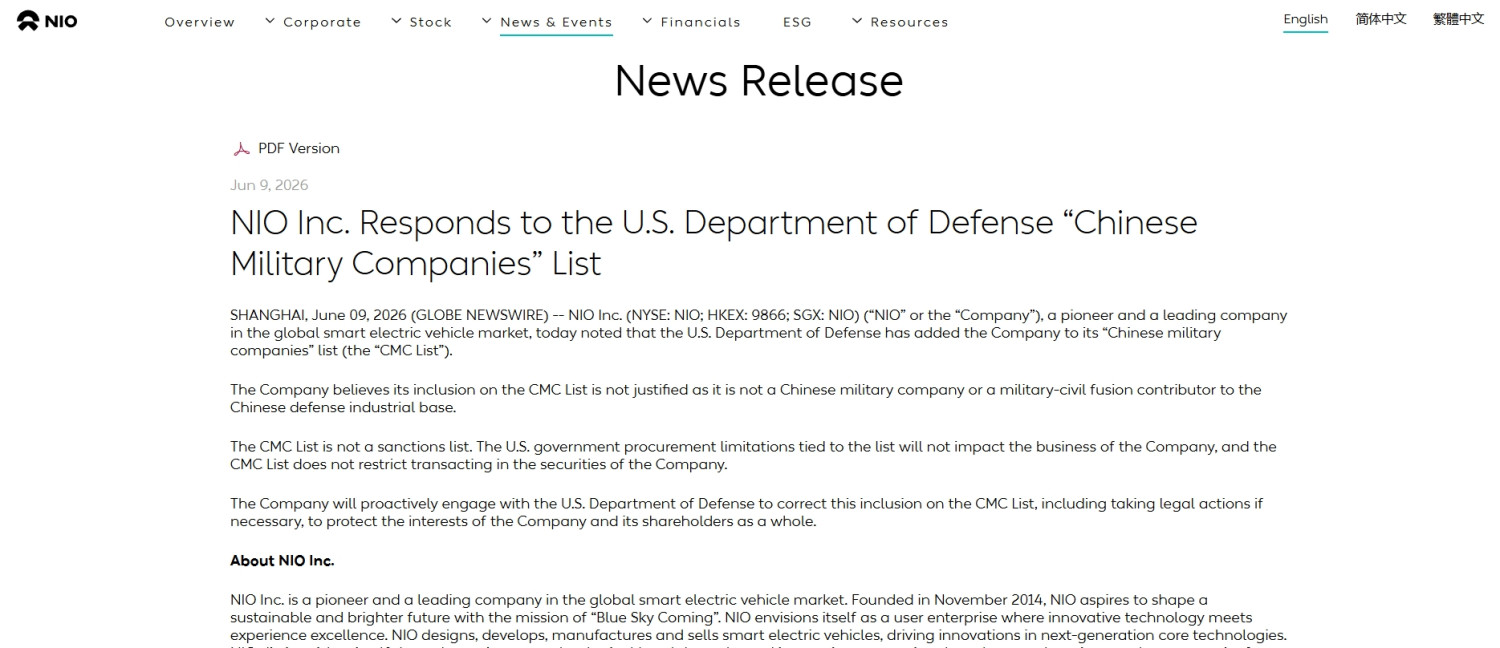
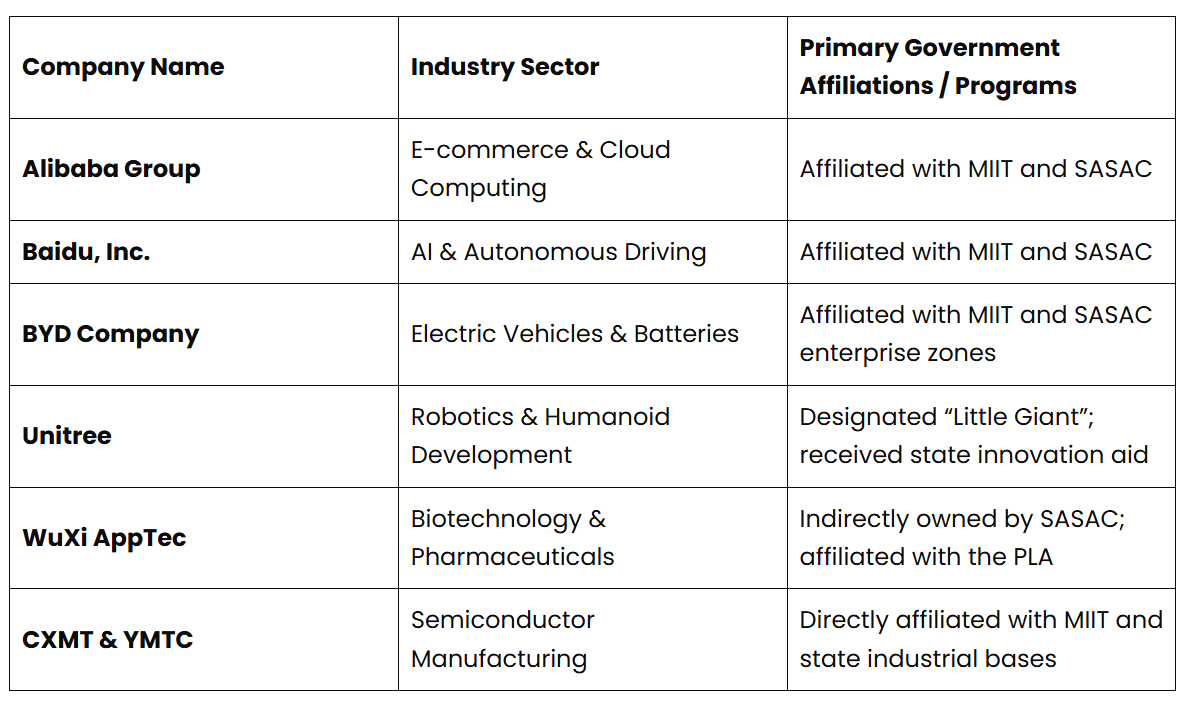
On June 9, NIO responded to its inclusion on the U.S. Department of Defense’s Chinese Military Companies (CMC) list, stating in a voluntary announcement that it believes the designation is without basis. The company said it is neither a Chinese military company nor a participant in the so-called military-civil fusion activities associated with China’s defense industrial base. NIO emphasized that its business has always focused on the development, manufacturing and servicing of civilian smart electric vehicles. NIO refutes military links after U.S. adds firm to CMC list via a voluntary announcement NIO also stressed that the CMC list is not a sanctions list and does not restrict trading of the company’s securities. It added that procurement restrictions associated with the list are not expected to have a material impact on its existing business operations. The company said it will actively engage with the U.S. Department of Defense to seek correction of the designation and, if necessary, pursue legal action to protect the interests of the company and its shareholders. The development follows an update issued by the U.S. Department of Defense on June 8 under Section 1260H of the National Defense Authorization Act, which expanded the Chinese Military Companies list to 188 entities. The newly added companies span multiple sectors, including new-energy vehicles, power batteries and internet services. Among them are NIO, BYD, CALB, EVE Energy, as well as Alibaba and Baidu. Newly added enterprises for the CMC listed by the U.S. government The primary effect of the CMC list is that the U.S. Department of Defense and related agencies are prohibited from directly or indirectly procuring products, services or technologies from listed companies. While inclusion on the list does not constitute sanctions, it has long been viewed as one of Washington’s key policy tools for restricting Chinese technology and industrial companies. Notably, the U.S. Department of Defense did not disclose the specific rationale for the latest additions. In recent years, the list has undergone multiple revisions, removals and reissuances, and its criteria and implementation have remained a subject of debate. So far, NIO, Alibaba, Baidu and WuXi AppTec have all issued statements rejecting the designation and said they would seek to protect corporate and shareholder interests through engagement with authorities or legal channels. Although BYD has not yet issued a new statement regarding the latest update, the company previously denied any connection to military activities and questioned the basis for the designation when it was added to a related list earlier this year. On the same day, Chinese Foreign Ministry spokesperson Lin Jian said at a regular press briefing that China firmly opposes what it described as the overextension of the national security concept and the use of discriminatory lists to suppress Chinese companies. He urged the United States to stop what Beijing views as unreasonable pressure on Chinese enterprises and said China would take necessary measures to safeguard their legitimate rights and interests.



















 +21 others