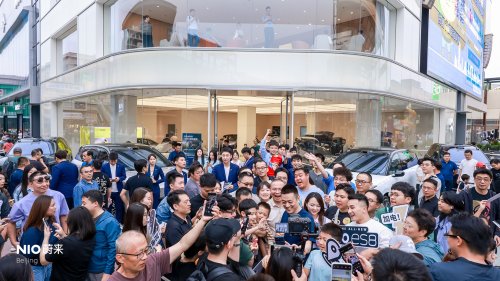
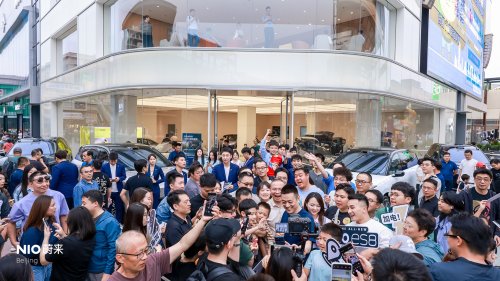
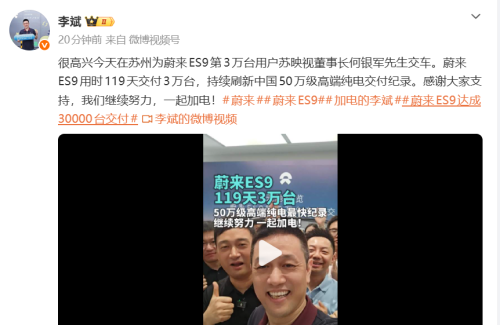
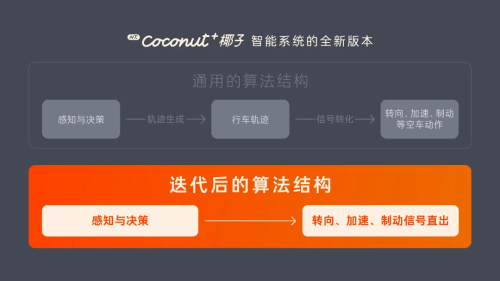
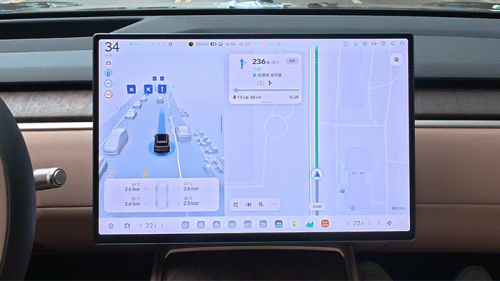
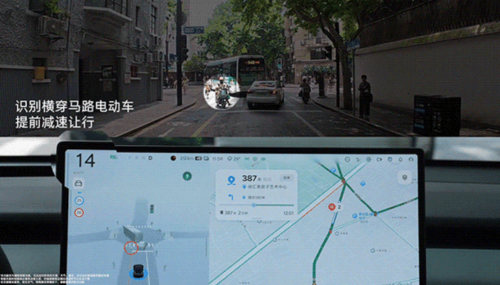
NIO has begun rolling out its NWM 2.5 World Model update, bringing the latest intelligent driving stack to more than 700K users across its vehicle lineup. Speaking at NIO House in Beijing’s Zhongguancun district on June 17, NIO Vice President Ren Shaoqing outlined the company’s latest software-hardware strategy. The key message centered on cross-generation compatibility. The update will reach vehicles built on NIO’s NT2 platform, including models launched as early as 2022. Nio executive answers media questions at Zhongguancun event. In practical terms, owners of early-production ET7 sedans will be able to access the same NWM 2.5 architecture as newly launched vehicles. Deployment has already begun in phases. Most NT2-platform models are expected to receive the update within a week. The ET7 remains pending due to regulatory filing procedures; rollout will start immediately after approval is completed. NIO’s brand ONVO also launched a full-scale rollout of Coconut+ 3.0.2 on June 18. The release marks the first ONVO intelligent driving system built on NIO’s World Model architecture. It is available on lidar-equipped ONVO vehicles; it also represents the first deployment of NIO’s World Model on the Shenji in-house automotive chip platform. ChinaEV Home staff are rolling out the Coconut+ 3.0.2 update. The update covers Max+ versions of the 2026 ONVO L90 and L80, along with higher-spec variants. Distribution has already started. Rather than introducing a single headline feature, Coconut+ 3.0.2 focuses on a major overhaul of the underlying driver-assistance architecture. One of the most significant changes lies in vehicle control. Conventional driver-assistance systems generate a driving trajectory first, then translate that trajectory into steering, acceleration, braking inputs. The new architecture removes the trajectory layer entirely. The system now outputs steering angle, throttle, brake commands directly, shortening the decision chain; improving control precision; responsiveness. Coconut+ skips trajectory planning, outputs control signals straight from perception. The training framework has also been upgraded. Building on NIO’s existing World Model and reinforcement learning framework, the company added a supervised fine-tuning layer trained on large-scale real-world driving data. The goal is to align vehicle behavior more closely with experienced human drivers. Perception capabilities also received upgrades. The system can now recognize overhead dynamic lane-control signs, including reversible lanes, variable-use lanes. It can interpret changing traffic rules in real time, even without support from high-definition maps. Onvo’s official demo shows the Coconut+ 3.0.2 can identify overhead road signs. According to NIO, one of the primary objectives of the update is addressing two longstanding challenges in driver-assistance systems: unnecessary braking, unnatural driving behavior. The upgraded system identifies risks earlier in scenarios such as blind intersections, construction zones, lane narrowing sections, complex merging traffic. It can proactively adjust speed, create larger safety buffers for nearby vehicles, pedestrians. Performance has also improved in narrow-road encounters, unprotected turns, mixed traffic environments. The system can better predict surrounding road users’ behavior; planning smoother, more efficient driving paths. Onvo demo shows Coconut+ 3.0.2 can precisely avoid pedestrians and vehicles. The result is a more human-like driving experience, along with improved baseline vehicle control performance. User adoption data suggests NIO’s World Model strategy is gaining traction. In May, vehicles equipped with NIO’s intelligent driving system accumulated 199.7M km of assisted-driving mileage, up 13.7% from April. The figure was broadly in line with the peak reached following the January World Model rollout. During China’s Labor Day holiday, average daily assisted-driving mileage exceeded 10M km. Urban Navigate-on-Autopilot usage showed particularly strong growth. Both usage duration and mileage reached record monthly highs. Since the first World Model deployment in January, urban navigation usage has expanded every month, delivering a compound monthly growth rate of more than 20%. By May, 31% of users had completed more than half of their driving mileage using NIO’s intelligent driving system. The figures indicate that adoption continues to rise under the new architecture, providing a growing data foundation for future cross-platform, cross-generation deployments of NIO’s intelligent driving technology.





















 +65 others