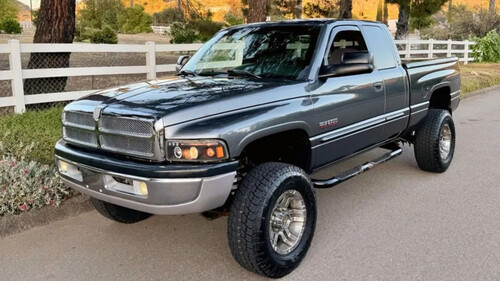
Amelia Scott · 4 months ago@ameliascott17New Study Reveals Tall Hoods Are Killing Hundreds of People Every Year Liked by+1 othersPost commentRelated PostsThe Best Cars, Trucks, and SUVs For Tall People 70 · Jackson Leblanc · 3 months agoThe Best Cars for Tall People, Selected by an Actual Tall Person 56 · Charlotte Lewis · 3 months agoAt $28,500, Is This 2002 Dodge Ram 2500 Diesel 4X4 A Tall Order? 41 · Alexander Leblanc · 3 months agoJay Leno Says Ram’s 170-MPH Rumble Bee Feels Like A Tall Challenger 11 · Jackson Wilson · 4 months agoIs the Acura ADX Good for Tall People? 15 · Zoë Hall · 4 months agoNo Legroom: 10 Cars Not Built For Tall People & 10 That Are 10 · Oliver Lavoie · 1 years agoLamborghini Lanzador EV cancelled – tall-riding battery-electric coupé to be replaced by plug-in hybrid 94 · Nicole Brown · 8 months agoAmazon Sells a $66 Car Ramp Set That’ll Save You Hundreds in Oil Changes 18 · Jacob Bouchard · 27 days agoTesla ramps Optimus to hundreds a week, but the robots can't generalize 62 · Mia Martin · 1 months agoThis Mysterious Japanese Lot Is Filled With Hundreds of Nissan Skyline GT-Rs 32 · Isabelle Morgan · 1 months ago16 Car Tricks That Save You Hundreds on Maintenance 37 · Lily Bouchard · 1 months agoSeeds | Former Li Auto AI Executive Launches Embodied AI Startup, Raises RMB Hundreds of Millions 83 · Liam Girard · 1 months agoSeeds | Wuwen AI Closes Series A Round Worth Hundreds of Millions of Yuan 65 · Amelia Lavoie · 1 months agoSeeds | QJ Robots Closes Hundreds of Millions of Yuan A+ Round Financing 24 · Charlotte Mitchell · 1 months agoSeeds | Third Round This Year, Xiaoyubot Secures Hundreds of Millions in Funding 31 · William Pelletier · 1 months agoSeeds | Differential Robotics Raises Hundreds of Millions of Yuan for Aerial Embodied AI 55 · Ava Tremblay · 1 months agoHundreds Of U.S. Car Owners Say Their Sunroofs Are Exploding — NHTSA Can't Find Defects 44 · Nicole Brown · 1 months agoSave Hundreds: Yakima and Thule Car Racks Are 20% Off for REI’s Labor Day Sale 91 · Nathan Labelle · 1 months agoAfter 1 week and hundreds of miles, YouTubers say Rivian R2 nails family life, but software needs updates 85 · Alexander Pelletier · 1 months agoSeeds | SongYing Technology Invests Hundreds of Millions in Physical AI "OS" 51 · Jacob Hall · 2 months ago




 +1 others










![Kia's new EV van is 17.5 ft long and can haul 9 people [Images]](https://cdn.topcarnews.net/en/62529/thumb/id/aHR0cHM6Ly9pMC53cC5jb20vZWxlY3RyZWsuY28vd3AtY29udGVudC91cGxvYWRzL3NpdGVzLzMvMjAyNi8wOS9LaWEtUFY3LUVWLXZhbi1pbWFnZXMuanBlZz93PTE1MDAmYW1wO3F1YWxpdHk9ODImYW1wO3N0cmlwPWFsbCZhbXA7c3NsPTE/bb4e89dbc344acb6383ed84e884bbafa.jpg)