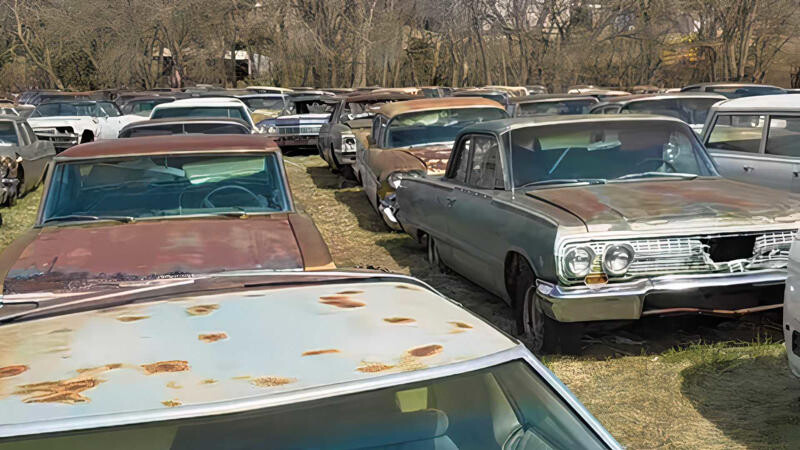
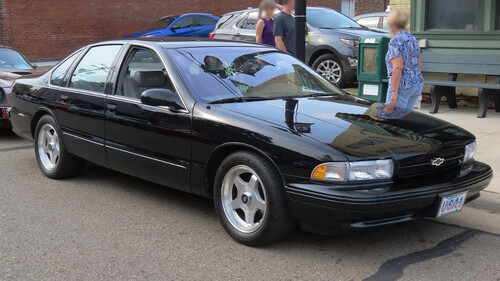
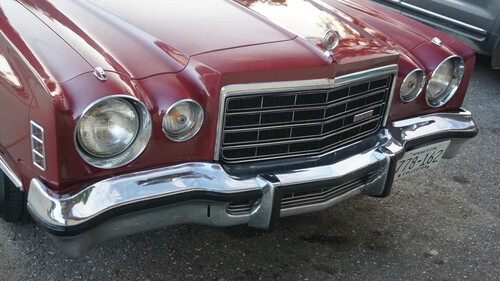
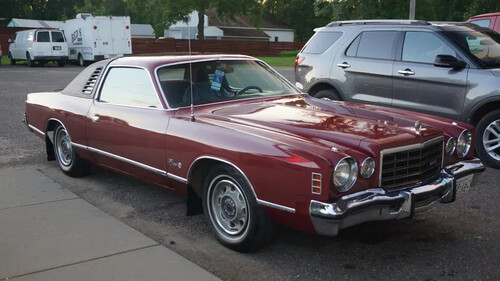
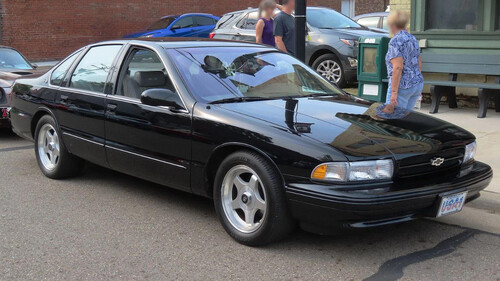
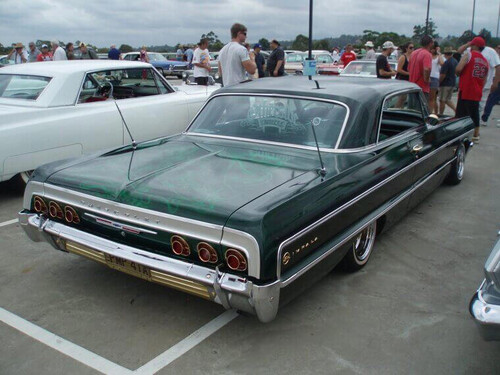
Somewhere on a Nebraska property, 250 Chevrolet Impalas are sitting in a field waiting for new owners. Not 250 cars of various makes... 250 Impalas. The same muscle carsaccumulated over what had to be decades of deliberate hunting, is now heading to auction in what may be the largest single-model Chevy collection ever liquidated in one shot.The sale, pegged to a live auction that went live around June 8, spans the full spectrum of what an Impala hoard actually looks like at this scale: time-capsule survivors with original paint still intact, restomod candidates with solid bones, and stripped parts-car shells that exist purely to keep other Impalas alive. Also on the property are Chevelles, Corvettes, and C/K pickups, but the Impalas are the headline. Two hundred and fifty of them. What 250 Impalas In One Place Actually Tells You VanDerBrinkAuctions, LLC / YouTubeCollectors who fixate on a single model tend to fall into one of two camps. The first is the purist, chasing numbers-matching examples, original broadcast sheets, and factory color combinations that show up maybe once a decade. The second is the accumulator, someone who buys every example they can find because the car means something to them personally, and because they understand that parts availability is the silent killer of any restoration project.A 250-unit Impala hoard almost certainly reflects both impulses. At that scale, you're not just buying cars you love, you're building an ecosystem. Every rough driver you pull out of a field becomes a donor for the survivor in the garage. The guy who assembled this Nebraska collection wasn't hoarding in the pejorative sense. He was hedging, ensuring that the best examples in the lot would always have what they needed to survive. Which Impalas Actually Move The Needle For Collectors VanDerBrinkAuctions, LLC / YouTubeThe Impala's collector ceiling is real, and it's defined almost entirely by generation and trim. The 1958 first-year model, introduced as a top-trim Bel Air option before spinning off as its own line, defined muscle era excess. It carries strong historical cachet but rarely commands the same numbers as a comparable '69 Camaro. The sweet spot for serious money is the 1961–1964 full-size era, particularly the 1962 and 1963 Sport Coupe body styles. A clean, numbers-matching 1963 Impala SS with a 409 cubic-inch V8 is a legitimate five-figure car at any reputable auction.The 1964–1970 generation keeps the SS badge relevant, and the 1967–1969 cars benefit from the same big-block availability that makes their Chevelle and Camaro cousins desirable. A 1967 Impala SS 427 is a car that commands attention at a show. The 1971-and-later full-size Impalas are largely overlooked by the collector market — solid drivers, cheap to buy, expensive to love — which means a Nebraska field full of them is a parts buyer's paradise and a speculator's gamble. A hoard this size almost certainly spans all of those eras. That's the gamble and the opportunity for buyers showing up to this auction. The Auction Reality: Survivors, Projects, And Shells At 250 units, the math on condition breaks down roughly the way you'd expect from any large-scale accumulation. A handful of cars will be legitimate survivors — low-mileage examples that spent most of their lives in a garage or a dry Nebraska barn, with original paint, original interiors, and documentation that traces back to the dealership. These are the lots that attract the phone bidders and the out-of-state trailers.The middle tier — solid project cars with restorable bodies, decent floors, and identifiable trim levels — is where the real value hides for anyone willing to work. A straight-bodied 1964 Impala Sport Coupe that needs a drivetrain and interior work is still a car worth chasing. The bottom tier is the parts inventory: cars that gave up their engines, transmissions, and trim pieces years ago, now serving as rolling (or not-rolling) steel donors. At a no-reserve auction, those shells can go for almost nothing — or surprise you entirely if two bidders decide they need the same quarter panel.The presence of Chevelles, Corvettes, and C/K trucks alongside the Impalas suggests the original collector cast a wide net within the GM family, which is consistent with the accumulator psychology. The Impalas were the obsession; everything else was context. Collections like this don't come apart quietly. When 250 examples of the same car hit the market simultaneously, it compresses supply and demand into a single afternoon — and the results can be genuinely unpredictable. The gearhead who shows up knowing exactly which years to target and which shells to walk past is going to eat well. The one who shows up overwhelmed by the scale might overpay for a parts car or miss the survivor buried in row four. Either way, a Nebraska field full of Impalas is exactly the kind of moment that only happens once. Don't sleep on it.