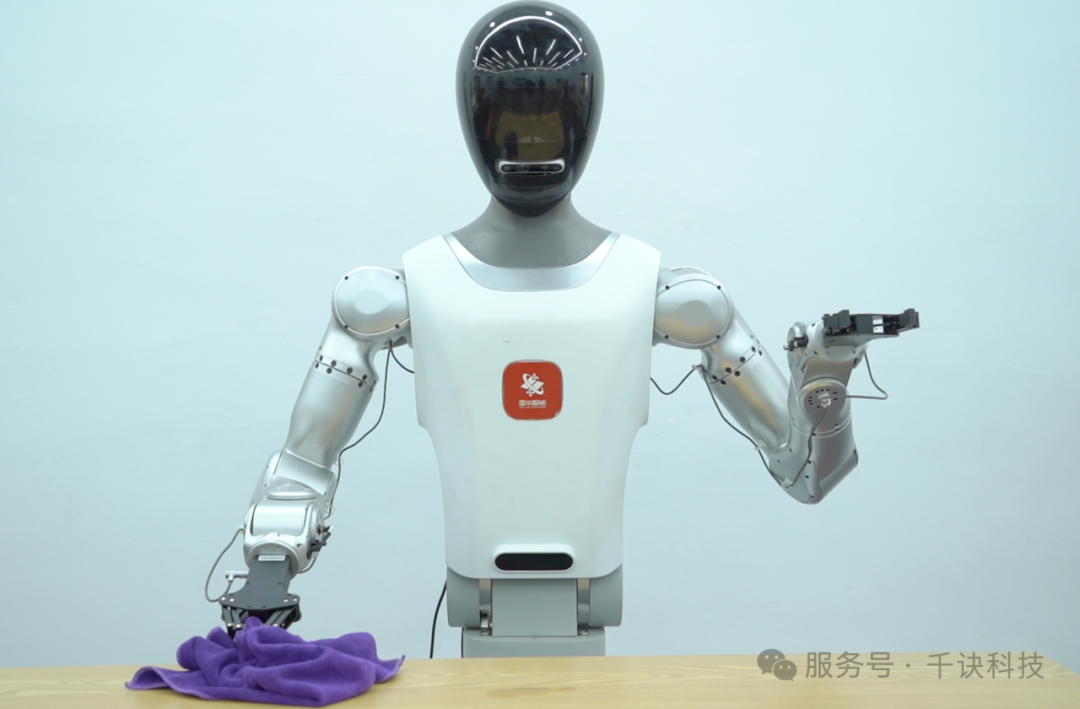
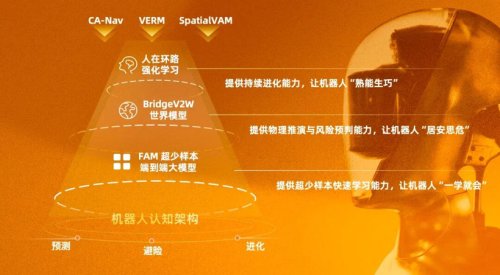
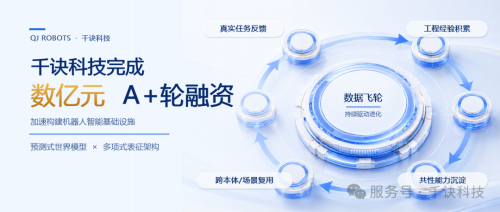
Gasgoo Munich- QJ Robots has raised hundreds of millions of yuan in a Series A round, according to Gasgoo.QJ Robots specializes in decision-making and planning for embodied AI. Its core team spun out of Tsinghua University's Center for Brain-inspired Computing Research, bringing years of research in embodied intelligence, cognitive computing, and autonomous robot decision-making. Their goal: to build an "embodied brain" capable of navigating the complexities of the real world.Image source: QJ RobotsSpecifically, the company is betting on predictive world models — understanding the future by forecasting the evolution of physical states. In Qianjue's view, robots need to predict "what happens next," not just generate "what the future looks like." To that end, its world model prioritizes learning patterns within low-dimensional state spaces over pixel-level image reconstruction. This approach helps robots grasp causality, environmental shifts, and task objectives more effectively, boosting both generalization and decision-making efficiency.Building on that foundation, Qianjue has introduced a "brain-partitioned predictive world model," inspired by the organizational structure of the human brain. This system breaks down complex environmental data into relatively independent information distributions, modeling and predicting each separately before fusing them at a high-level decision layer.To ensure the "brain" isn't tied to a single hardware body, Qianjue employs a "brain-cerebellum decoupling" design. Here, the world model handles perception, understanding, prediction, and planning, while the control system manages execution. The two communicate via a unified interface, allowing the same embodied brain to be quickly ported across different robot platforms.Qianjue has already adapted its technology for a range of robot types, including wheeled robots, quadrupeds, bipedal humanoids, drones, and cleaning units. Its embodied intelligence system is now deployed across hotel services, commercial services, smart cleaning, and precision indoor operations, with cumulative terminal installations reaching the 100,000-unit mark.