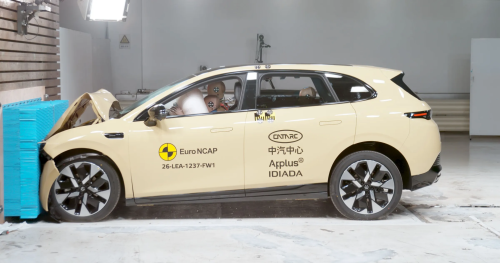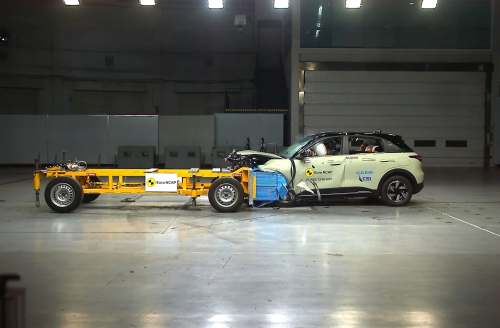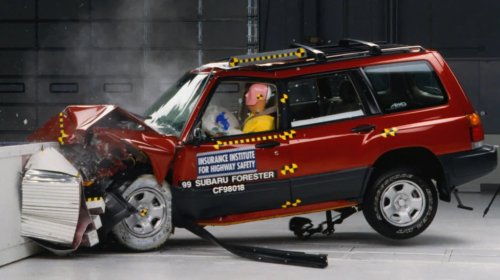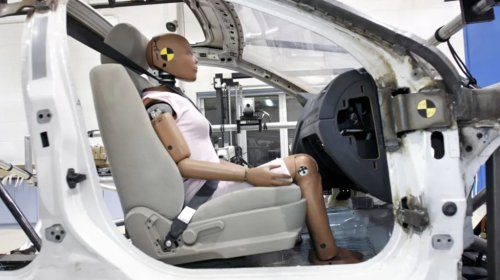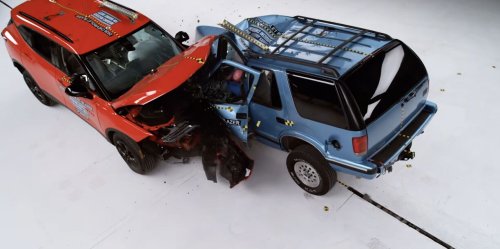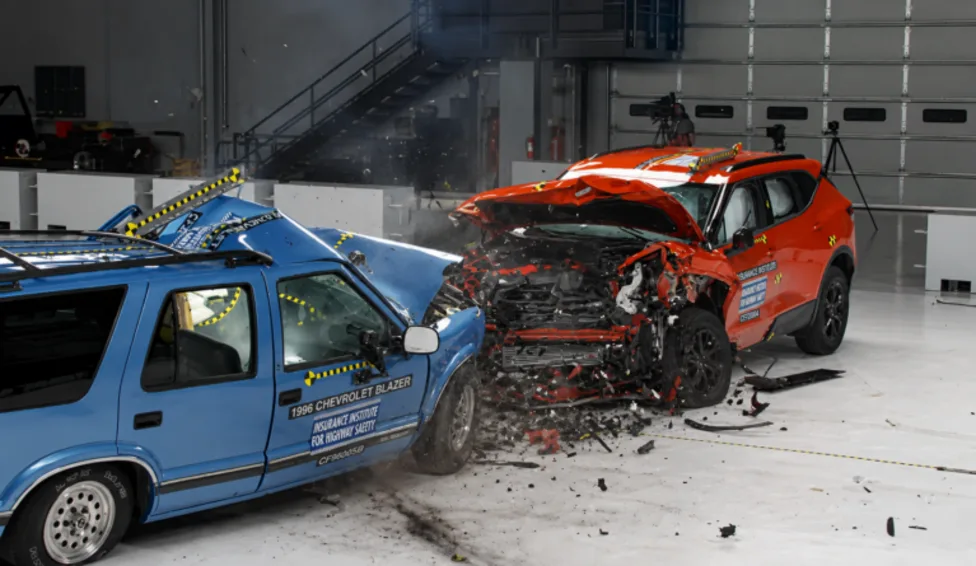



















IIHS Milestone Study Reveals Destructive Safety Ratings Have Saved Over 48,000 LivesBefore 1995, automotive safety standards were largely a game of federal bare minimums, and consumers were completely blinded by the "heavy metal" myth—the misguided belief that massive, rigid steel panels automatically meant you would survive a severe wreck.Then the Insurance Institute for Highway Safety (IIHS) started smashing cars into offset barriers, publishing the catastrophic results for the world to see, and the entire automotive landscape was forced into a massive structural reckoning.To mark 30 years since the inception of its testing program, the IIHS has dropped a detailed look at the human and economic impact of its controlled destruction. By analyzing the correlation between improved crash ratings and real-world fatality rates from 1999 to 2024, the institute estimates that its brutal testing standards have saved 48,352 lives and preserved roughly $538 billion in societal costs.Forcing the Engineering EvolutionThe real story behind those staggering numbers isn't just the data; it's how the IIHS forced the industry's hand. Automakers didn't suddenly decide to invest billions into advanced metallurgy and complex energy-dissipating load paths out of sheer goodwill. They did it because the IIHS weaponized public relations.AdvertisementAdvertisementBy creating the coveted "Top Safety Pick" designation—and publicly shaming the platforms that folded on impact—the IIHS turned structural integrity into a primary showroom selling point.To violently illustrate exactly what three decades of this forced evolution look like, the institute recently staged a generational heavyweight bout: a 1996 Chevrolet Blazer crashed head-on into a 2026 Chevrolet Blazer.The Blazer vs. Blazer Reality CheckIf you ever catch yourself feeling nostalgic for the rugged, boxy SUVs of the 90s, the footage of this specific crash test is the ultimate antidote.The 2026 Survivor: The modern Blazer did exactly what a contemporary chassis is designed to do. The front crumple zones exploded to bleed off the kinetic energy, while the passenger compartment remained completely intact. The dummy's telemetry indicated minimal injury risk—meaning a human driver would likely walk away with minor bruises and a massive adrenaline spike.The 1996 Death Trap: The vintage Blazer suffered a total catastrophic failure. Lacking modern structural routing, the kinetic energy had nowhere to go but straight into the cabin. The dashboard and steering column were violently shoved into the driver's lap, and the airbag deployment was so vicious that it actually broke the dummy's neck. In a real-world scenario, the driver would have suffered fatal head and leg trauma.The True Cost of SafetyAs IIHS COO Joe Nolan pointed out, the shattered remnants of the 1996 Blazer represent an era of engineering that simply wasn't built to prioritize the occupant.AdvertisementAdvertisementThose 50,000 lives saved over the last quarter-century are the direct result of a relentless feedback loop: the IIHS invents a harder test, automakers scramble to reinforce their chassis to protect their sales numbers, and the baseline for vehicular survival inches higher.It is a brilliant, destructive, and ultimately lifesaving cycle that proves we really don't build cars like we used to—and we should all be incredibly thankful for that.