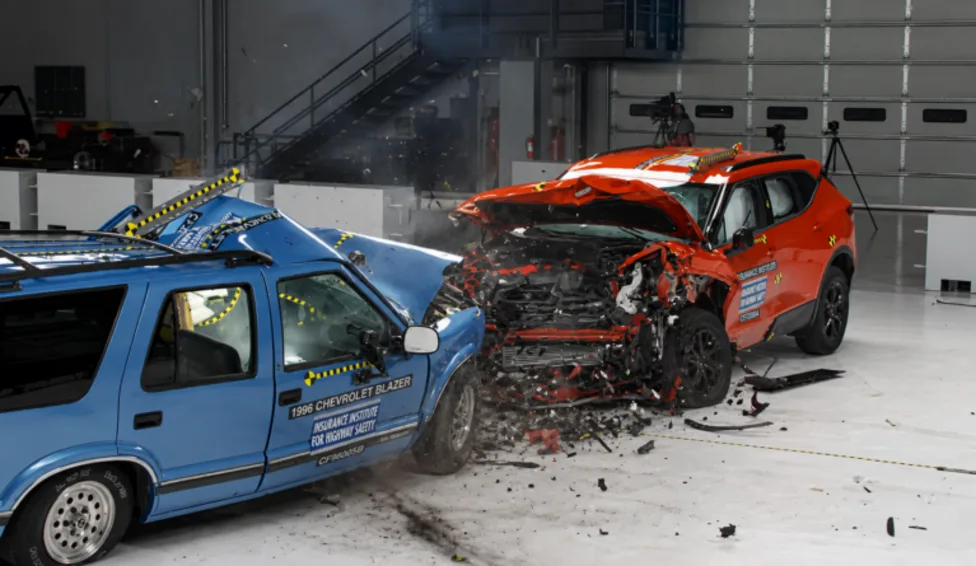
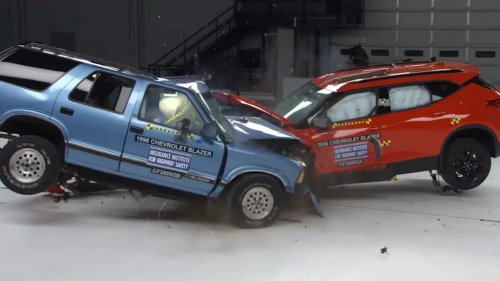
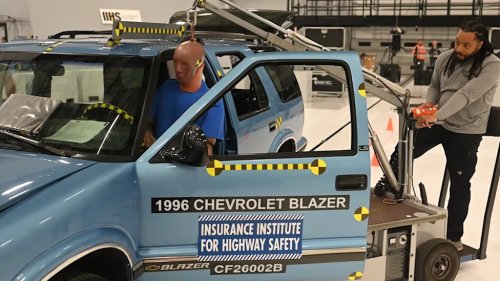
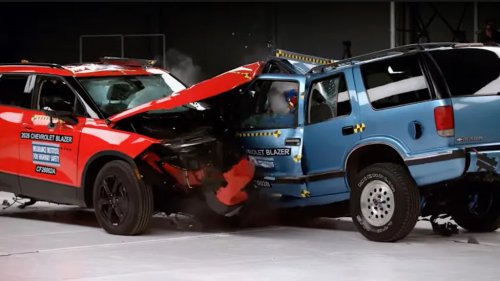
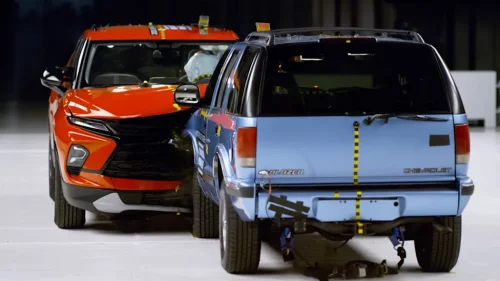
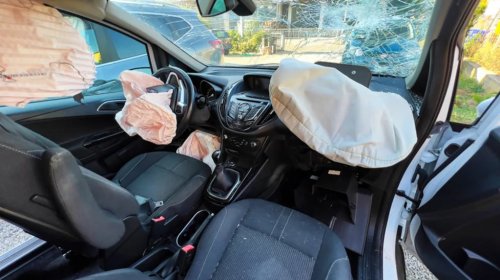
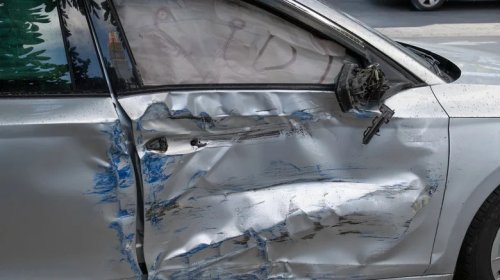
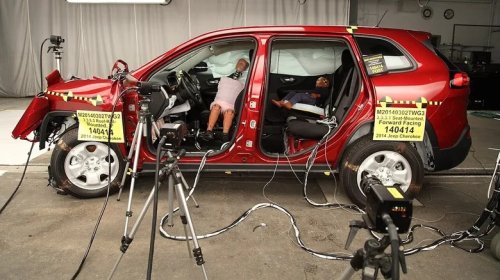
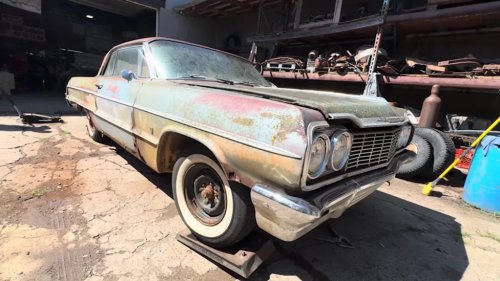
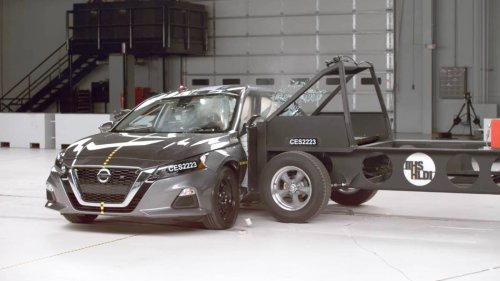
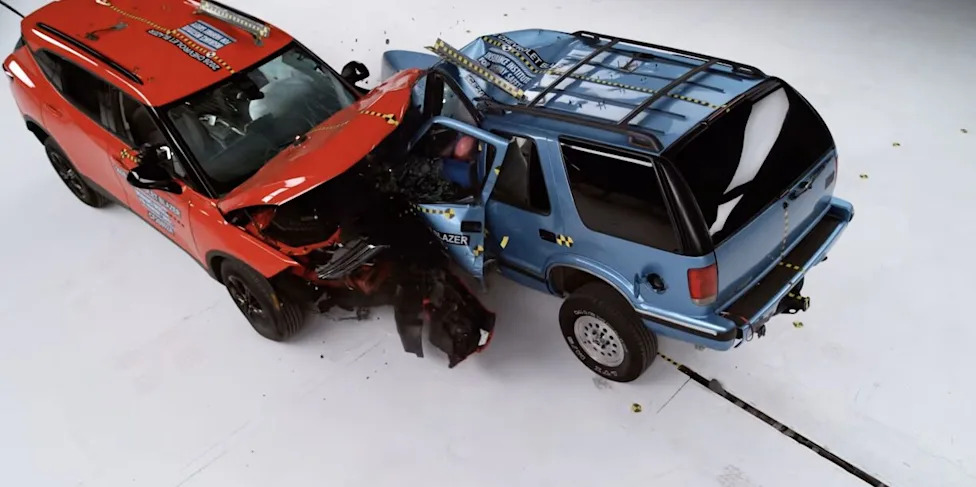
how crash testing has saved livesIf you want to understand how far automotive engineering has come in the last three decades, you don't look at horsepower figures, touchscreen diagonals, or zero-to-60 times. You look at a severed neck joint on a crash test dummy.To mark the 30th anniversary of its vehicle evaluation program, the Insurance Institute for Highway Safety (IIHS) just released a bombshell study detailing the real-world impact of its crashworthiness tests since 1995. The headline figure is staggering: consumer-driven vehicle improvements spurred by IIHS testing have saved an estimated 48,352 lives over a 25-year tracking window (1999–2024).Using the U.S. Department of Transportation's Value of a Statistical Life (VSL) metrics, that translates to a mind-boggling $538 billion saved in societal costs. Considering the insurance-backed institute operates on a cumulative budget of around $600 million for that same period, the automotive safety sandbox has yielded a nearly 900-fold return on investment.AdvertisementAdvertisementBut spreadsheets don't capture the violent reality of physics. To visually illustrate thirty years of structural evolution, the IIHS did what it does best: it smashed two vehicles together in a brutal, head-to-head offset crash.The Evolution of Impact: 1996 Blazer vs. 2026 BlazerSeventeen years ago, the IIHS famously pitted a 1959 Chevrolet Bel Air against a 2009 Chevrolet Malibu, instantly shattering the "boomer myth" that old, heavy steel cars were safer than modern ones. To celebrate three decades of modern testing, the institute brought the demonstration into the current era, staging a 40-mph, 40-percent moderate overlap crash between a 1996 Chevrolet Blazer and its brand-new, unibody 2026 counterpart.The results were visceral.In the 2026 Blazer, the safety cage did exactly what it was engineered to do. The A-pillar held, the crumple zones absorbed the kinetic energy, and the cabin remained entirely intact. Aside from an acceptable, slightly elevated risk of a right foot injury, the dummy data indicated a human driver would have walked away with little more than bruises and an adrenaline rush.AdvertisementAdvertisementThe 1996 Blazer-which earned a "Poor" rating during its original production run (spanning 1995–2004)-disintegrated upon impact. The forces obliterated the front end, driving the dashboard and steering column directly into the driver's lap. Worse still, the late-90s airbag deployment timing was so violent that it caught the dummy on the chin, snapping its head back toward the driver-side window with such severe velocity that the mechanical nodding joint in the upper neck sheared completely off, detaching the head from the body.While engineers noted that a human neck behaves differently than an aluminum dummy joint, the data left no room for interpretation: a real-world driver in the '96 model would have faced catastrophic, likely fatal trauma to the head, neck, and lower extremities.By the Numbers: Which Tests Saved the Most Lives?The IIHS arrived at its 48,000-plus saved lives figure by analyzing real-world fatality rates of vehicles rated "Good" versus those rated "Acceptable," "Marginal," or "Poor" across five core foundational metrics.IIHS Evaluation ProgramLaunch YearLives Saved (1999–2024)Current Status / Recent UpdatesModerate Overlap Front199528,697 (Combined Front)Updated in 2022 to include rear-seat occupant protection.Driver/Passenger Small Overlap2012 / 2017Included aboveCombined into a single, unified rating in 2024.Side Impact (T-Bone)200318,224Updated in 2021 with a heavier, faster barrier to simulate modern EVs and heavy SUVs.Roof Strength (Rollover)20091,432Discontinued in 2022 after federal standards finally caught up to IIHS requirements.Driving the Market via the MonroneyWhat makes the IIHS uniquely effective-and occasionally a thorn in the side of automotive product planners-is that it is not a regulatory body. Unlike the federal government's NHTSA, which moves at the glacial pace of bureaucracy to mandate laws, the IIHS uses marketing and consumer sentiment as a weapon.AdvertisementAdvertisementBy dangling the coveted Top Safety Pick and Top Safety Pick+ awards over automakers, they turned safety into a competitive luxury feature. When the small overlap test debuted in 2012, it sent shockwaves through the industry as top-tier luxury sedans failed spectacularly. Within 24 to 36 months, manufacturers were aggressively redesigning front subframes and adding high-strength steel "deflector bars" purely to ace the test.We see the exact same cycle playing out today with the updated side-impact test and stricter night-time pedestrian detection metrics.The stark contrast between those two Chevrolets is a testament to the fact that when insurance companies force automakers to compete on physics, consumers win. It's a reminder that beneath the marketing fluff of ambient lighting and autonomous driving assists, the core architecture of the modern automobile has quietly become a highly sophisticated survival capsule.



















 +9 others