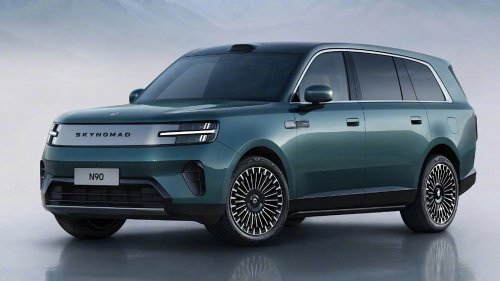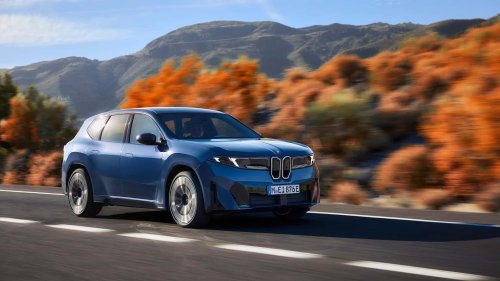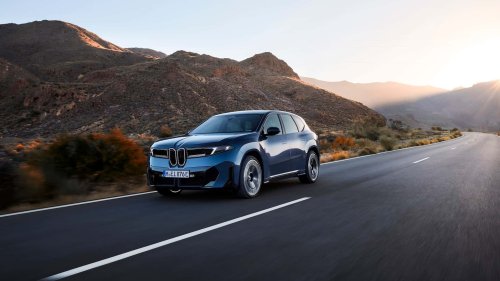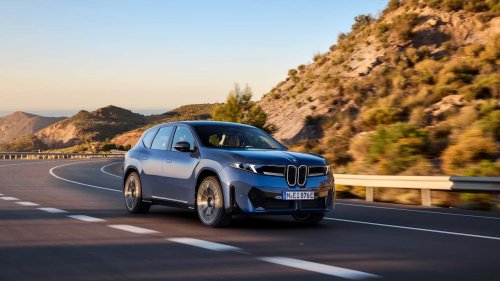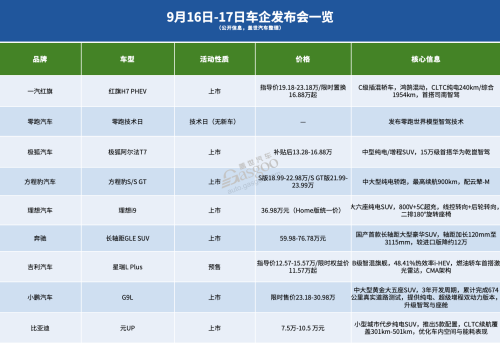
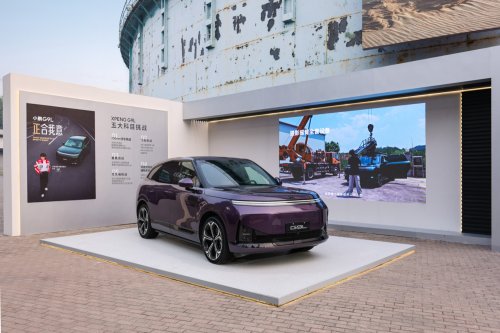
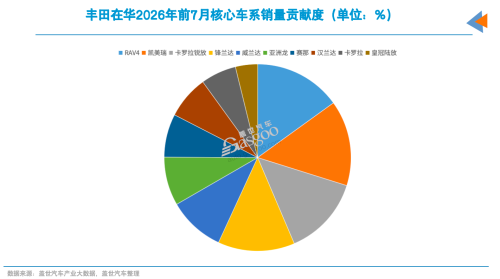
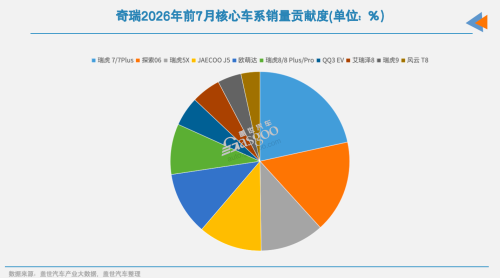
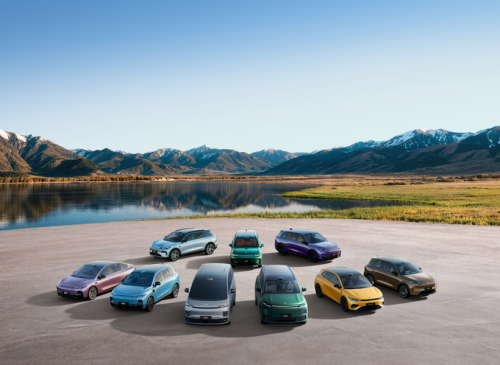



















Gasgoo Munich- On September 15, the State Administration for Market Regulation and the Ministry of Culture and Tourism held an online administrative guidance meeting for hotel booking platforms. The meeting urged platforms to "learn from cases and self-inspect," voluntarily guarding against cutthroat issues such as exclusive partnerships and "lowest price online" guarantees.By that evening, platforms like Meituan and Tongcheng had lined up to express their firm support—and their opposition to such cutthroat competition. Back in July, several platforms had already been penalized for similar issues.The automotive sector, too, has been talking a lot lately about rejecting this "involution"—or endless internal churn.From symposiums at the Ministry of Industry and Information Technology to public statements by executives, "slow manufacturing" has become a buzzword. The consensus is clear: cars are not consumer electronics. Compressing testing and validation cycles just to hit launch deadlines is not an option.Yet while executives preach patience on stage, the calendar shows no sign of a slowdown in new arrivals. That disconnect is exactly what makes today's market so fascinating.September 16 alone saw the debut of seven models: the Hongqi H7 PHEV, Arcfox Alpha T7, Fangchengbao S/S GT, Li Auto i9, Mercedes-Benz long-wheelbase GLE, and Geely Xingrui L PLUS. On the same day, Leapmotor held its own technology day. The very next day, the XPENG G9L and the 2027 BYD Yuan UP took their turn in the spotlight.It is a rhythm that hardly fits an industry clamoring to "slow down" and reject cutthroat competition.Seven Models in One Day, Hundreds in Eight MonthsZoom out, and September 16 was just an ordinary day in this year's tidal wave of new product launches.In just the first ten days, the market welcomed the SkyNomad N70 and N90, BMW X3, Geely Galaxy TT, and Denza N8L. Later in the month, the Xinghai V6 and AISTALAND GX7 were already queued up on the calendar. According to Sina Auto, September saw the launch of as many as 60 new vehicles—including all-new, next-generation, and refreshed models.Image Source: XPENGA new vehicle tracking report from Huachuang Securities predicts 10 major all-new or redesigned launches in September, potentially making it the most crowded month of the year. Automakers are concentrating releases now to drive year-end sales volumes.Even before September, the domestic market had already seen hundreds of debuts. Data from the CPCA shows that from January to July 2026, a total of 320 new passenger vehicle models—including all-new, major redesigns, annual updates, and supplementary versions—hit the market. Among them, 77 were all-new launches and 15 were next-generation models, with the rest being largely minor updates or additions.He Zhiqi, executive vice president at BYD, shared an image on social media back in July. The figures there showed 542 new models launched between January and May—an average of 3.6 per day. (The statistical scope differs from the CPCA data, accounting for the discrepancy.)"It's absolutely gone mad. We're talking about cars here. A single new model involves an investment of over 1 billion yuan and a development cycle of more than two years, yet the buzz lasts barely three months. It goes cold before it even has a chance to warm up."As He Zhiqi suggests, the excitement is largely superficial. According to Gasgoo database sales figures for January through July 2026, the sales pillars for most automakers remain those mature model lines that have already stood the test of the market.The bulk of Toyota's sales in China come from classic nameplates; the RAV4, Camry, Corolla Cross, and Frontlander alone contribute nearly half the total. For the BYD brand (covering its Dynasty and Ocean series), 60% of sales are driven by established stars like the Yuan, Seagull, Song family, and Dolphin. Chery's domestic foundation rests on the mature Tiggo series. Geely, too, derives a significant share of its volume from models that have been on the market for years, such as the Binyue, Boyue family, Xingyue series, and Emgrand.Performance among these automakers' newer models (roughly three years old or less) is clearly diverging; very few have truly stabilized at monthly sales of 10,000 units. Brands like BYD, Geely, and Chery each have around 50 model lines. Among them, BYD's Fangchengbao Titanium 7 and Seal 06 have broken out of the pack. In Geely's lineup, the Galaxy Starwish is one of the few high-volume newcomers. For Chery, the Tansuo 06 has made it into the sales rankings.Leapmotor stands out as an exception. With a smaller product portfolio, precise market positioning, and a phase of rapid expansion, models like the A10, Lafa 5, D19, and D99 have performed well overall. New products have become the primary source of growth for Leapmotor, pushing its monthly sales past the 100,000 mark. Yet as Leapmotor expands its product matrix further, the prospects for these new arrivals remain uncertain.Image Source: LeapmotorBut Leapmotor's situation also illustrates that the issue is never simply "too many new cars." As long as a product can generate sustained sales, new launches can still serve as engines for growth.Calculations by the Gasgoo Institute show that the top 20 retail models in the domestic passenger vehicle market for the first half of 2026 accounted for nearly 45% of total share. This concentration is even more pronounced in niche segments. A new launch can generate a burst of noise, but that noise must eventually translate into actual sales.For many other new models, post-launch sales stall at a few hundred units—or lower. Dozens of cars sold fewer than 10 units in total in the first half of the year. With monthly sales in the hundreds, they can't even recoup the tooling costs, ultimately ending up as "cannon fodder" in the battle for market share.This is the other side of the new-model coin. Launch events are getting denser, yet the number of products that actually achieve scale hasn't increased proportionally. Automakers are certainly aware of this math. But knowing it is one thing; hitting the brakes is another.Crying "Slow" While Racing "Fast"Even as new models flood the market, the industry is loudly calling for slower manufacturing. The discussion this year isn't just marketing spin from a few isolated players.In July, the Ministry of Industry and Information Technology explicitly demanded resistance to irrational competition and stricter product testing and safety evaluations. In August, four departments launched a one-year special campaign on production consistency and quality improvement. Regulators are focusing on product reliability, durability, the validation of new technologies, and production consistency.Executives have quickly lined up to echo these sentiments.Great Wall Motor Chairman Wei Jianjun stated on social media: "I can't speak for others, but in 36 years, Great Wall has never built a 'fast-tracked' car." At the Chengdu Auto Show, Zhao Yongpo, general manager of the WEY brand, added that a vehicle carrying the safety of a whole family allows for no shortcuts. An insider told Gasgoo that Great Wall validates its vehicles against standards that exceed national benchmarks by a factor of 10.Image Source: Great Wall MotorLi Jun of SAIC Volkswagen broke down the "fast-tracked car" into three types: those with compressed validation, those that scrape by on minimum national standards, and those with dual standards for domestic and export markets. He pledged that his company "didn't build them before, doesn't build them now, and won't build them in the future."All these statements point to a single truth: while car development can be made more efficient, the validation phase has its own immutable rhythm. It is said that one automaker, insisting on high-standard validation, saw a new model beaten to the punch by a competitor, missing the optimal launch window.Digital technology, platformization, modularization, simulation tools, and supply chain synchronization can all shorten development cycles. Yet validating vehicle durability, battery safety, chassis tuning, and autonomous driving systems in complex scenarios still requires ample time.The question is: once product development logic returns to a slower pace, will companies' product launch rhythms slow down with it?So far, the answer is no.Judging by public information, mainstream automakers still have a packed schedule of product moves for 2026.Most mainstream players have planned double-digit numbers of new models (including all-new and redesigned). Statistics show BYD launched 12 new models in the first half of the year, while Geely and Chery reached 8 each. If minor refreshes are included, the count goes higher—NIO, Onvo, and Firefly plan to release 10 all-new or updated models this year across their three brands.Joint ventures are slightly more restrained, but they haven't truly stopped either. The BMW Group, covering BMW, MINI, and Rolls-Royce, plans to launch about 20 new models in China in 2026. Volkswagen intends to introduce 13 new energy vehicles, including a burst of nine models within two months. Yet BMW, one of the main voices advocating "slow manufacturing," emphasizes a 36-month vehicle development cycle.Image Source: Volkswagen AnhuiAutomakers may pile into a trendy segment, resulting in seven or eight similar products hitting the market simultaneously. Or a single company might launch "sister models" in quick succession—tweaking the styling while keeping specs largely identical—all to chase that "one in ten thousand" chance of a hit. In the retail market, this creates a paradox: consumers have more choices than ever, yet individual model sales are dwindling.However, the number of new models and the development cycle are two fundamentally different concepts.A company can absolutely use mature platforms and efficient R&D tools to roll out more models without sacrificing validation. The real danger lies in cutting corners on necessary testing just to chase a launch deadline.As Gasgoo noted in an article titled "Can You Build a Good Car in 18 Months?", shortening the development cycle isn't the problem in itself. The key is what companies accomplish during that time—and what they choose to leave out.So, "slow manufacturing" does not equate to "fewer new cars." What truly needs to slow down is the practice of compressing validation work just to beat competitors to market.Why Can't They Stop?Automakers are well aware that more new models mean fiercer competition. Knowing this, why can't they stop the relentless pace of launches?First, many of these new models were written into the project schedule years ago.A brand-new model requires a long lead time: product definition, platform development, supplier selection, tooling investment, factory preparation, and marketing planning. Many of the models launching in 2026 had projects initiated in 2023, 2024, or even earlier.Deciding today to "launch one less" means recalculating previous R&D, tooling, supply chain, and marketing investments—and impacting suppliers along the chain. Once a project reaches the mass production stage, companies find it difficult to slam on the brakes just because the industry rhetoric has shifted toward "slowing down."Second, the market has entered an era of stock competition.CPCA data shows domestic passenger vehicle retail sales for January to July 2026 totaled approximately 11.716 million units—a 20.8% year-on-year decline, putting immense pressure on market scale. While the penetration rate of new energy vehicles continues to rise, that sector hasn't escaped the downturn (falling 12.1% over the same period). Consequently, competition is intensifying between fuel vehicles and EVs, and among different EV brands.As market growth stalls, automakers can hardly rely on legacy models alone to sustain growth. New products remain a crucial weapon for capturing share in specific segments.Image Source: Great Wall MotorDigging deeper, there is the pressure of competition among peers.If everyone else is launching and you aren't, your brand exposure gets squeezed. More importantly, the product launch itself has become a integral part of the marketing rhythm.Dong Yang, vice chairman of the China Automotive Chip Industry Innovation Strategic Alliance, once commented that excessive and frequent new model launches have become a major manifestation of "involution" in China's auto industry.Now that press conferences, pre-sales, launches, and deliveries have merged into a continuous chain of marketing actions, any company trying to drop out alone faces significant market pressure. Because what they face isn't just a sales issue for a single product, but also the expectations of their distribution channels, brand image, and the capital markets regarding their growth.Another shift comes from consumers themselves.In the past, car redesigns followed a three-to-five-year cycle. In the era of new energy, however, features like OTA updates, smart cockpits, driver assistance, and configuration upgrades have given cars certain attributes of consumer electronics. As users get used to faster functional updates and spec changes, automakers find it easier to treat new products as tools for maintaining market heat.Once this consumer expectation takes hold, it is difficult for automakers to unilaterally drag the rhythm of "fast manufacturing" back to the past. Users are waiting for new technology, competitors are pushing new products, dealers need fresh inventory, and internal teams build growth targets around these launches.With these forces stacked together, automakers naturally find it hard to suddenly decelerate their product cadence.Income Statements Don't LieBut this high-frequency launch model ultimately has to pass an economic reality check.Zhang Hong, an expert committee member at the China Automobile Dealers Association, notes that the industry's renewed focus on "slow manufacturing" in the second half stems from a shift from crude volume-chasing to high-quality development. After frequent price wars eroded industry profits, automakers are starting to look beyond sales figures at operational quality.Data from the China Association of Automobile Manufacturers shows total profits in the automotive manufacturing sector reached 195.35 billion yuan in the first half of 2026, a 19.5% year-on-year drop, with the profit margin on revenue falling to 3.8%. Specifically for listed automakers on the A-share and Hong Kong markets, while over 70% remained profitable, most suffered from "growing revenue without growing profits," with margins under widespread pressure.During the period, BYD's net profit attributable to shareholders was 12.325 billion yuan, down 20.54%; Geely's was 9.09 billion yuan, a slight dip of 2%; Great Wall's fell 61.1% to 2.465 billion yuan; and SAIC's dropped 14.4% to 5.15 billion yuan. Meanwhile, companies like Seres, GAC, and NIO reported losses for the first half of the year.Automaker profits are influenced by many factors—R&D spending, raw materials, exchange rates, overseas business, and product mix—so they cannot be simply attributed to an excess of new models. But one thing is clear: increasing the number of products has not naturally translated into profit growth.Dong Yang has suggested that policy could temporarily suspend the launch of new technologies or products that have not completed announcement reviews, or that the industry could self-regulate launch frequency based on sales volume—for instance, reaching a consensus on how many times a year a company selling 1 million units should release a new model.Image Source: DoubaoTo ensure the healthy development of the auto industry, regulatory constraints are indeed tightening.In early February, the State Administration for Market Regulation released the "Compliance Guidelines for Price Behavior in the Auto Industry." Dong Yang described the document as a regulation "with real teeth." It explicitly requires car producers and sellers to strengthen price compliance and draws risk boundaries around behaviors like selling below cost and price collusion.Entering July and August, regulators continued to plug gaps in industry rules: authorities issued documents imposing clear requirements on supply chain payment terms and parts payment, cracking down on automakers squeezing upstream suppliers. Internally, the industry also began centralized discussions on the bottom lines for product R&D and validation. Criticism of practices like compressing validation processes or scraping by on minimum standards has mounted.Now, new car prices cannot be pushed down indefinitely, nor can R&D validation be compressed without limit. The space automakers once had to trade scale for "more models, faster launches, and lower prices" is narrowing. This is exactly why "slow manufacturing" has started to garner attention.Zhang Hong predicts that automakers' supply chain logic will shift from "price is king" to "compliance is king, quality is king." Suppliers offering low prices and low quality will be eliminated, and "pseudo-automakers" without core technology will be forced out faster.Of course, a sudden halt in new car launches is unlikely in the short term. The market still has a long queue of new products waiting. Automakers' projects for 2027 are already well underway. And market competition will not cool down just because of a slogan like "slow manufacturing."What is more likely to emerge is a renewed distinction within the industry between fast and slow: software can be fast, features can be fast, marketing can be fast; but safety validation, hardware reliability, and overall vehicle quality need to slow down.Ultimately, the speed of new model launches will be held to account by sales and profits.