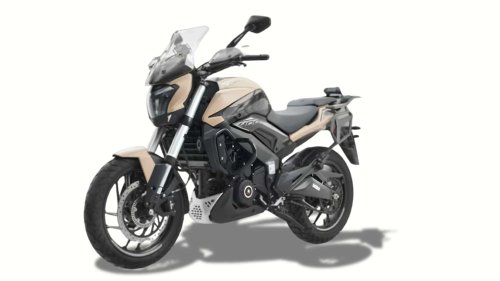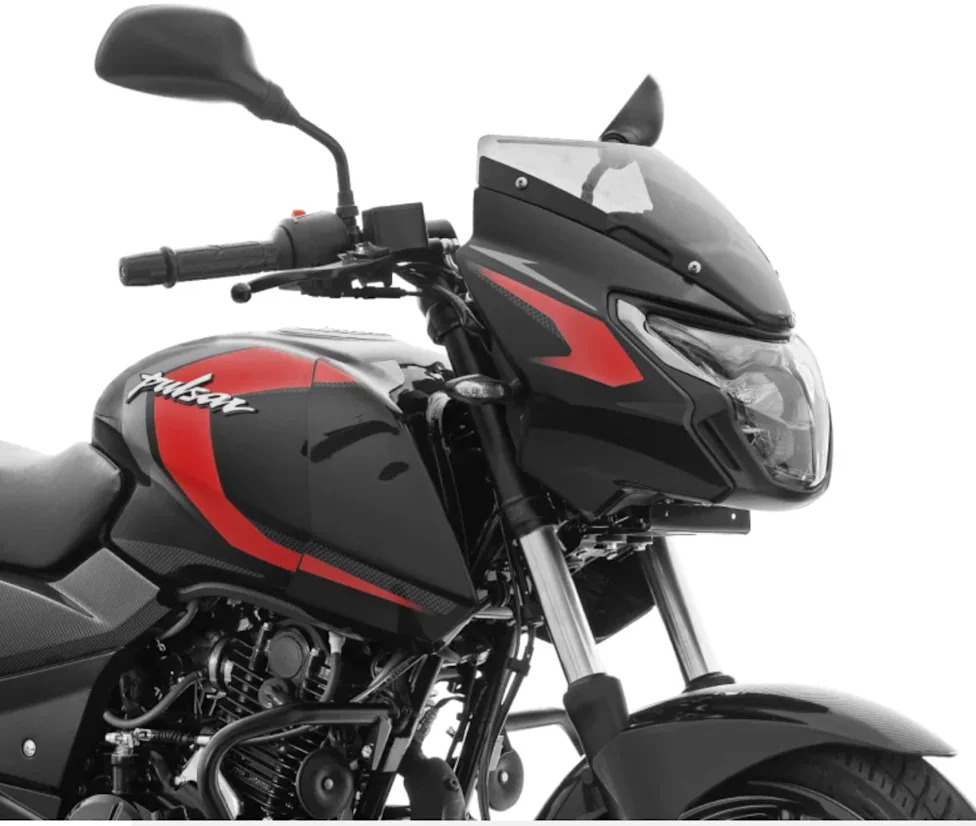


















New Bajaj Pulsar 125 and 150: What the Frame, Shock and ISG Changes Really MeanThe Pulsar 125 and Pulsar 150 have been the automotive equivalent of that one restaurant that never changes its menu because it doesn't have to. They sold. Bajaj left them alone. Meanwhile the N-series and NS-series Pulsars got the new hardware and the old ones soldiered on with a double-cradle frame and a pair of rear shocks, which by 2026 is roughly the chassis technology of a mid-1990s commuter.That ended on August 24, when Bajaj launched both bikes at introductory prices of ₹1,15,233 and ₹92,900 ex-showroom Delhi. The press material leads with the five-inch TFT screen and Google Maps mirroring, because screens photograph well. Ignore that. The three things that actually change how these motorcycles behave and what they'll cost you are the frame, the shock, and a small electrical component almost nobody is talking about.The frame change is the real headlineBajaj has moved both bikes to a diamond-type frame in which the engine works as a stiffness member. That's a genuine architectural change, not a marketing adjective.AdvertisementAdvertisementA double-cradle frame wraps steel tubing underneath and around the engine, so the motor essentially hangs inside a complete steel box. A diamond frame deletes those lower tubes entirely and bolts the engine in as a load-bearing element between the front downtube and the swingarm pivot area. The engine cases become part of the chassis.Related ArticlesSome Rivian R2s Have a Fast-Charging Connector That Can Cook Itself, and Rivian Is Calling Owners One by OneStreet Outlaws Star Chris 'Block' Gordon Dies in Crash at Ohio's 'The Hill' Drag StripThe upside is real: fewer tubes means less weight, and a well-designed stressed-member layout gives you more torsional stiffness per kilogram than a cradle. That's why nearly every performance-oriented single has gone this way. Bajaj also claims an improved power-to-weight ratio, which follows naturally.Here's what nobody tells buyers, though. When the engine is structural, the engine mounting points are structural. On a cradle frame, a hard tip-over that tweaks a mount is annoying. On a stressed-member frame, the same damage affects chassis geometry. If you're buying one of these used in three years, look hard at the mounting bosses and the alignment of the front downtube — a bike that's been down and had the frame "straightened" is a much worse proposition here than it would have been on the old chassis.AdvertisementAdvertisementThe second consequence is for anyone who works on their own bike. On a stressed-member frame you cannot simply unbolt the engine and drop it out. The chassis has to be supported first — a proper stand or jack under the frame — because removing the motor removes structure. Home mechanics who've pulled the old Pulsar 150 motor on a milk crate will need to change their approach.The monoshock is an upgrade and a future expenseBoth bikes swap twin rear shocks for a single nitrogen gas-charged emulsion-type monoshock. Better geometry, better wheel control, better composure — no argument.But understand what "emulsion" means. In an emulsion damper, the oil and the pressurised nitrogen share one chamber with no separating piston or bladder between them. It's the cheapest way to gas-charge a shock and it works perfectly well for ordinary riding. Under sustained hard work — a badly broken road, a heavy pillion, a long stretch of speed breakers — the gas and oil can aerate, and damping goes soft until it settles. That's a known trait of the type, not a defect.The ownership angle: two shocks split the load between them and cost very little to replace as a pair. One shock takes everything, and on commuter motorcycles these units are typically sealed, non-rebuildable, and adjustable only for preload. When it's tired, you're buying a complete assembly rather than a cheap pair of twin dampers. On a bike that will spend its life two-up on Indian roads, factor that into the ten-year cost, not just the sticker.ISG: the component that matters most and gets the least attentionBajaj fits an Integrated Starter Generator to the top three variants of each bike, enabling automatic start-stop.AdvertisementAdvertisementAn ISG replaces the traditional two-device arrangement — a separate starter motor with a one-way sprag clutch, plus an alternator — with a single motor-generator sitting on the crankshaft. It cranks the engine and then becomes the charging system. The immediate benefits are silent, instant starts and the ability to shut the engine off at traffic lights and restart it the moment you touch the lever.Two things follow from that. First, the good news: you've eliminated the starter sprag clutch and the starter gear train, which on cheap commuters are a classic failure point that produces the grinding whirr every Indian mechanic recognises. Fewer moving parts, fewer failures — Bajaj's own materials note the reduced mechanical complexity.Second, the part that costs you money. Start-stop hammers the battery. A conventional bike battery is asked to crank once or twice a day; a start-stop bike may ask it to crank forty times in a single commute, all while the charging system has less running time to replenish it. Fit the cheapest ₹1,200 replacement battery you can find at year three and it will die fast and take your start-stop function with it. Buy the specified battery. This is the single most likely warranty-adjacent argument these bikes will generate.And when an ISG does eventually fail, it isn't a bolt-on starter you swap in twenty minutes — it's integrated with the crank-end assembly. Budget accordingly.Three ride modes on twelve horsepowerThe Pulsar 125 makes 12 PS at 8,000 rpm and 11 Nm at 6,000 rpm. The 150 makes 14 PS at 8,500 rpm and 13.7 Nm at 6,500 rpm. Both now get Road, Rain and Sport modes.AdvertisementAdvertisementLet's be honest about what that can physically do. With 12 PS on tap there is almost nothing to withhold — these modes are altering throttle response mapping, not meaningfully changing output. Sport isn't unlocking hidden power because there isn't any hidden power.That said, it isn't pointless. A softened initial throttle opening genuinely helps on a wet road, and these bikes are bought in enormous numbers by people on their first motorcycle. A rain map that takes the abruptness out of the first ten degrees of throttle is a real safety feature for a new rider in a monsoon. Just don't expect it to feel like a different bike.The same pragmatism applies to Crawl Tech, which lets the bike move at low speed without throttle input. Useful in gridlock. Worth remembering that creeping through traffic is exactly the condition that cooks clutch friction plates, so keep an eye on lever free play and clutch feel if you use it constantly.Why this offensive is happening nowLook past the motorcycles at Bajaj's Q1 FY27 filing and the strategy becomes obvious.AdvertisementAdvertisementFor the quarter ended June 2026, Bajaj exported 636,005 two-wheelers and sold 586,547 domestically. Read that again — the company now sells more motorcycles outside India than inside it, and exports grew 52% year-on-year against 11% at home. Electric vehicles are approaching 30% of the domestic business. Revenue hit ₹17,244 crore, up 37%, with EBITDA margin at 20.9%.Related ArticlesStellantis Is Already Building the Next Jeep Cherokee, and This One Barely Has Floor Mats YetFord's Bronco Family Is About to Get a Truck Bed, and the Timing Is No AccidentThe domestic 125–150cc ICE motorcycle, in other words, is no longer where the growth is. It's where the installed base is. The same filing states plainly that upgrades across 125–160cc are coming to strengthen competitive positioning — this is a company defending a legacy franchise with cash generated elsewhere, and it flagged the plan to investors a month before it flagged it to riders. The Pulsar N160 S and N160 SS arrived on August 7. These two landed on August 24. That cadence is not an accident.Worth noting, too, that when Bajaj wants to attack a new space it has recently preferred to invent a nameplate rather than stretch an old one — Freedom 125 for CNG, then GoGo, Riki and WEGO across three separate three-wheeler categories in under two years. Four brand-new badges in twenty-four months is a pattern, not a coincidence.The practical read for buyersIf you're shopping: the frame and monoshock are the reasons to choose the new bike over old stock, and they're worth the walk. The TFT is nice and irrelevant to how it rides. The ISG is worth paying up for if you sit in traffic daily and worth skipping if you don't, because it adds a consumable dependency your old Pulsar never had.AdvertisementAdvertisementAnd note the word Bajaj used — introductory prices. That is manufacturer language for "these go up." If you want one at ₹92,900, the window is now, not after the festive season.Images Via: Bajaj