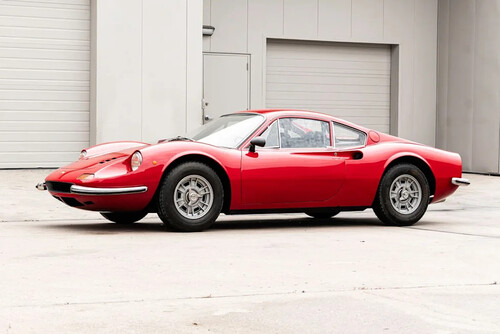
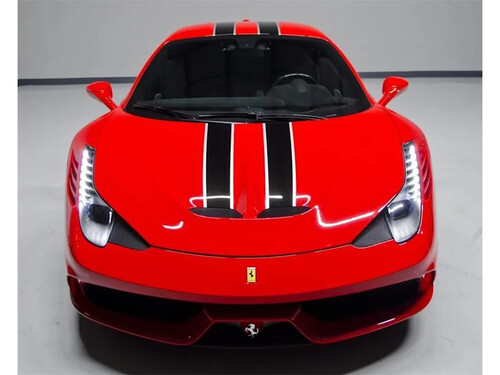
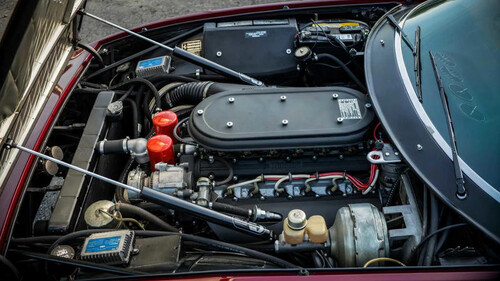
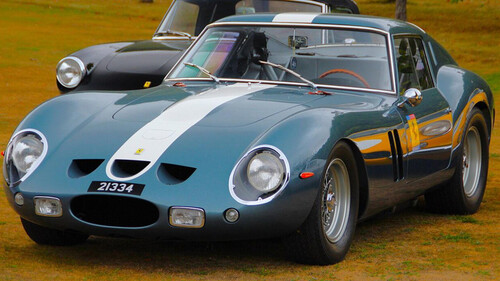
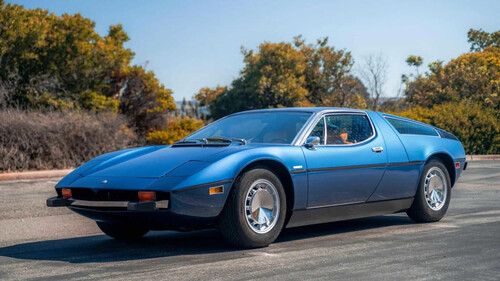
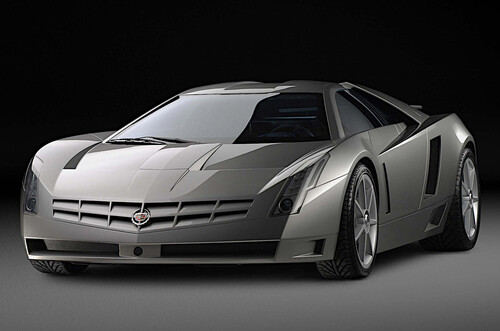
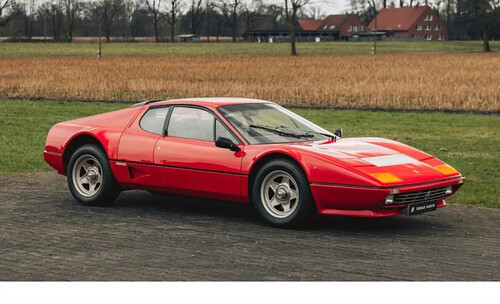
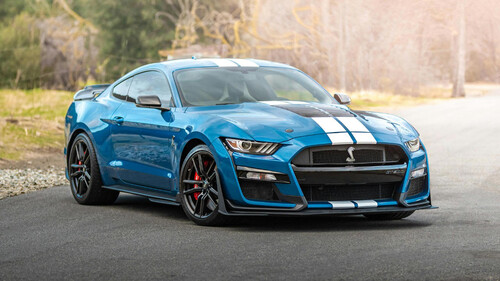
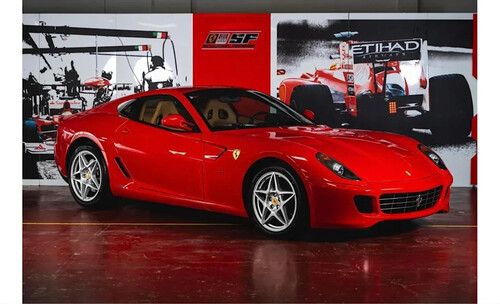
In the automotive world, carmakers are always searching for ways to inject pure excitement into their machines. While dropping a powerful engine under the hood is standard practice, giving a vehicle a legendary name can create an allure of success that lasts forever. A memorable name can connect a road car to a famous racing victory, an iconic circuit, or an important moment in motorsport history. When that name reaches the road, it carries a sense of speed, competition, and achievement that goes far beyond a simple badge. Naming a road car after a famous race track is a tribute to the asphalt where motorsport legends were born. These vehicles carry the racing identity of iconic turns, high-speed straights, and celebrated circuits directly to enthusiast drivers. Some were created with serious track performance in mind, while others used their names to honor victories and important moments from racing history. From Ferrari and Ford to Dodge, Nissan, Lexus, Bentley, Maserati, and Pontiac, these cars show how a famous racetrack can become part of a road car’s identity and leave a lasting mark on automotive history. 1. Ferrari 356 GTB/4 Daytona Perhaps the quintessential of classic Ferrari Gran Turismo cars, the Ferrari 365 GTB/4 Daytona is adored by countless vintage car enthusiasts. Pininfarina stylists created a sexy Italian body, powered by a dual overhead-cam V12 which was good for 350 HP & 318 lb-ft of torque. The transaxle system, which puts the gearbox right on the rear axle, contributes to the near perfect weight distribution of the car, giving it a handling balance during fast driving conditions which all agree was outstanding. Ferrari 356 GTB/4 Daytona Highlights: Pininfarina-designed striking body Twin-cam V12 engine 350 horsepower and 318 lb-ft Rear-mounted gearbox improved balance Built for high-speed driving Designed for maximum top speeds rather than drag racing to the 60 mph mark at a stop light, the Daytona could hit 0 to 60 miles per hour in just 5.6 seconds, making it one of the quicker cars offered during the 1970s. As one of those little bits of interesting information about the car technically, the Daytona designation was never a factory production nameplate, the name stuck to the car after Ferrari was victorious on the Daytona track in 1967. 2. Ford Mustang Boss 302 Laguna Seca With the Mustang Boss 302 making its return in 2012, just 42 years after its original departure from the lineup, Ford just couldn’t resist adding a dedicated Laguna Seca version. Named after California’s iconic Mazda Raceway Laguna Seca and its revered Corkscrew turn, the package was designed to go hard at the track, making the Mustang all about circuit dominance. Ford Mustang Boss 302 Laguna Seca Features: Revived after 42 years Named after Laguna Seca Rear seats were removed Massive X-brace improved rigidity Track-tuned suspension system The Laguna Seca came with an enlarged splitter upfront and sport seats from Recaro that kept the people inside glued. Under the hood was 444 HP’s Coyote V-8 that revved all the way to 7,500 RPM. Some owners opted for the side exit exhaust, which gave the car an absolutely brutal soundtrack. This hardware also makes the car a very capable track day machine that is good enough to take on a higher priced car. “ NASCAR Dodge Charger Daytona ( year 1969) – 1998 Goodwood Festival of Speed ” by PSParrot is licensed under CC BY 2.0 3. Dodge Charger Daytona The 1969 Charger Daytona was built specifically to make Dodge’s car perform better on NASCAR racing tracks, it’d had lost to the Ford Torino Talladega in the previous charger 500. As a result of this the new Charger Daytona received a more aggressive design compared to before. In addition it had an pointed nose cone and a enormous 23 inches high wing at the rear of the car. Dodge Charger Daytona Racing Features: Built specifically for NASCAR Massive 23-inch rear wing Pointed aerodynamic nosecone Only 503 units manufactured 70 received 426 Hemi V8 Aerodynamic expertise from Chrysler missile engineers was applied and in-house components were validated using Lockheed Martin’s wind tunnel. Production numbers were cut down to a minimum of 503 to meet homologation rules, and 70 received the desirable 426 Hemi V8. Driver Buddy Baker made history when driving one to become the first NASCAR driver to exceed 200 mph at Talladega in 1970. 4. Ferrari 599 GTB Fiorano 599 GTB Fiorano Fiorano The name of Ferrari’s in-house test track just outside Maranello, the Fiorano Circuit is 1.86-miles of testing road against which every road car Ferrari produces has to prove its worth before it reaches the showrooms. It’s on this circuit, too, that Ferrari’s Formula 1 cars are tested, so the name lent something truly special to this performance car. Ferrari 599 GTB Fiorano Details: Named after Ferrari’s test track Fiorano Circuit is 1.86 miles Naturally aspirated V12 engine Produced 611 horsepower Reached 60 mph in 3.7 seconds In addition to being blessed with a 611hp, V12 naturally-aspirated power-plant that catapulted it to 60mph in a mere 3.7secs. The front-engined V12, grand tourer packed enough performance to cruise hundreds of miles or to sprint with genuine purpose. To adopt the moniker “Fiorano,” proved the car would be related to the circuit that’s vital for Ferrari to research and perfect all of its racing products. 5. Nissan Skyline GT-R Nür Released in 2002 and it marks the special limited-edition finale of the legendary R34 Skyline GT-R range with just 1000 units built. The unique ending for the celebrated era of the Nissan Skyline GT-R was christened with the name of the Nürburgring Nordschleife in Germany, one of the more famous racing and testing tracks across the globe. Nissan Skyline GT-R Nür Highlights: Released in 2002 Limited to 1,000 units Named after Nürburgring Improved race-derived RB26 engine Factory-tuned for reliability The original car was given a more radical race car bred RB26 engine, upgraded turbos, more powerful (said by some people to produce much more then claimed 276hp and closer to 330hp), aerodynamics, stiffer suspension and unique badges. The extra factory mods gave car engine a better reliability and a lot of easy tuning up to 400+ hp. “ File:1969 Ford Torino Talladega coupe (6713335767).jpg ” by sv1ambo is licensed under CC BY 2.0 6. Ford Torino Talladega Built specifically as a NASCAR homologation Special, designed to tear around the fastest of superspeedways; NASCAR’s, was this 1969 Torino. Set to prove how production cars were truly production racing cars in this age of racing, it would need to shave through the wind in excess of 190 mph! This was addressed with a longer, streamlined nose, an inset grille, and a fastback roof. Ford Torino Talladega Racing Credentials: Built for NASCAR homologation Named after Talladega Superspeedway Designed for over 190 mph 754 street examples produced Powered by 428 Cobra Jet Named exactly after the giant Talladega Superspeedway racetrack in Alabama, the Torino Talladega took NASCAR racing by storm in 1969 and 1970. Only 754 street “homologation models” were built and are still considered highly collectable. All roadgoing Talladegas used a Ford 428 Cobra Jet V8, but the 429 V8 used in the NASCAR Talladegas was racing hardware only. Its victories prompted Dodge to release the Charger Daytona. 7. Lexus LFA Nürburgring Package This is a track focused package specifically made to provide the lowest possible lap times around the legendary Nrburgring racetrack in Germany. Lexus opted not to take the path of drastically increasing engine power and instead focused on tweaking the aerodynamics and suspension along with reducing the vehicle’s weight to improve steering and general handling. Lexus LFA Nürburgring Package Features: Designed for faster lap times 4.8-liter V10 produced 562 hp Added carbon-fiber bodywork Larger front splitter Fixed rear wing added downforce The 4.8-liter V10 gained just a 10-horsepower jump, for a total of 562 horsepower, but added bespoke carbon-fiber bodywork, including a larger front splitter and an enormous rear wing that would generate significant downforce. The vehicle also featured revised electronics and tighter transmission programming. This, combined with the screamin’ high-revving V10, made it one of the most exclusive versions of the LFA. 8. Bentley Mulsanne The Bentley Mulsanne is so called due to Bentley’s success in the 24 Hours of Le Mans on which the 3.7 miles Mulsanne Straight is one of the defining features. With five overall wins in the famous race between 1924 and 1930, the name links the car to the golden era of Bentley’s racing exploits, and to the deeds of the fabled Bentley Boys of the 1920s. Bentley Mulsanne Nameplate Legacy: Named after Mulsanne Straight Linked to Le Mans history Bentley won five victories Produced from 2010 to 2020 Flagship luxury sedan Built from 2010-2015, the modern Bentley Mulsanne focused on plush comfort instead of lap times. Its twin-turbo 6.75 liter V8 made over 500 hp. Even at nearly three tons, this handcrafted luxury sedan could do 0-60 mph in just 5.1 seconds, and in excess of 180 mph if it had the road. The name stuck the brand’s endurance racing history to its latest luxury car. 9. Maserati Kyalami The car derives its name from Maserati’s win of the 1967 South African Grand Prix on the Kyalami Grand Prix Circuit using a Cooper chassis powered by a Maserati V12 engine. Around ten years later, the name found its way on the back of a 2+2 grand tourer the road car born in 1976 linking up race and production versions directly. Maserati Kyalami Highlights: Named after Kyalami circuit Linked to 1967 victory Designed by Frua Powered by 4.9-liter V8 Around 200 units produced The Kyalami, which was created by Frua, was propelled by a 4.9-liter V8 that propelled it to a top speed of 150 mph. The Kyalami ran between 1976 and 1983, and around 200 were constructed. The model embodied authentic racing heritage combined with the flair of a distinctive Italian grand tourer. With only around 200 examples being constructed, it is currently a scarce commodity in the Maserati and Italian car world. 10. Pontiac LeMans In 1962 it was offered as a higher trim package on the Tempest (compact) and then it grew to become its own car line. The name refers to the famous 24 hours of Le Mans endurance race and imported to American muscle cars some of European Sports car flash! A name that tied a standard road car by Pontiac to one of the great long-distance races of the world! Pontiac LeMans Key Details: Debuted as Tempest trim Named after Le Mans Became a standalone model Later supported the GTO Offered potent V8 packages By the middle 1960s the Le Mans forms the basis for the legendary GTO. With available specification models buyers could specify the Le mans and Tempest Le Mans as a choice and buy the car with the most muscular V-8 package. An example would be the Tempest Le Mans, available in 1964 with a 326 HO V8 of 280hp, therefore securing its place in the illustrious history of performance Pontiacs.