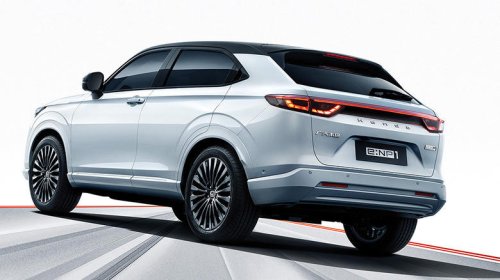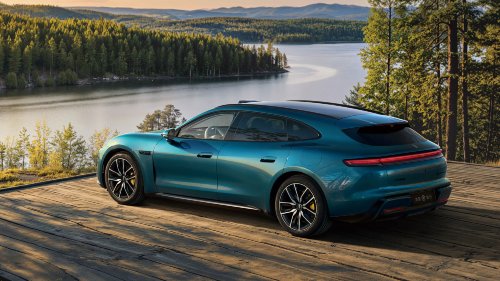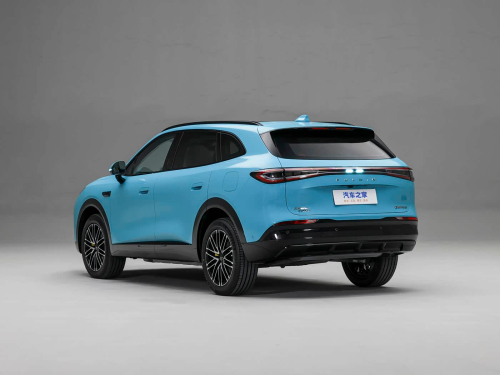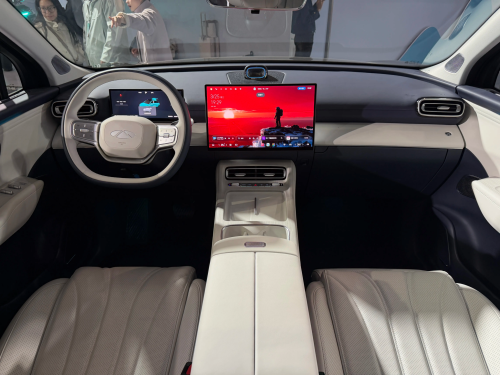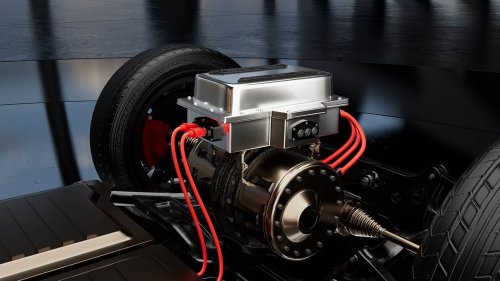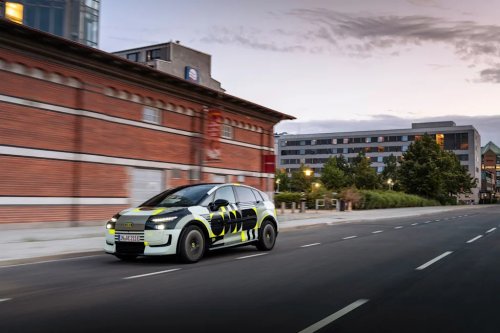
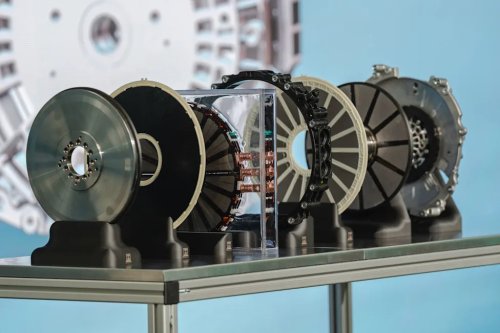
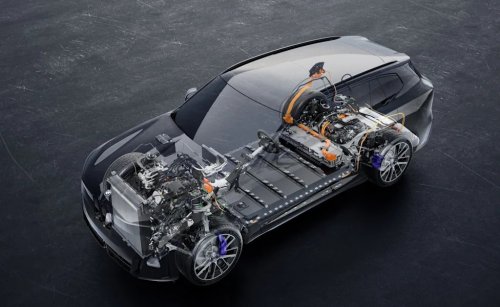
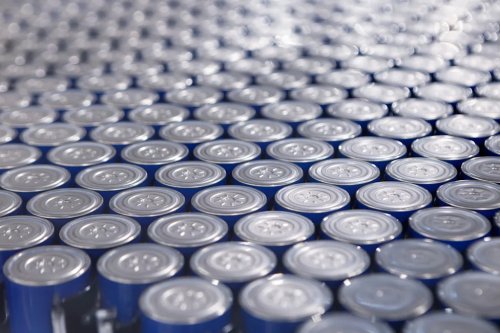
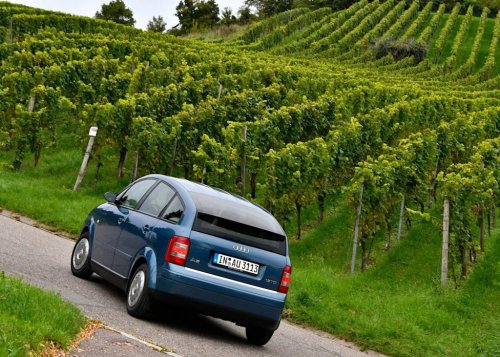
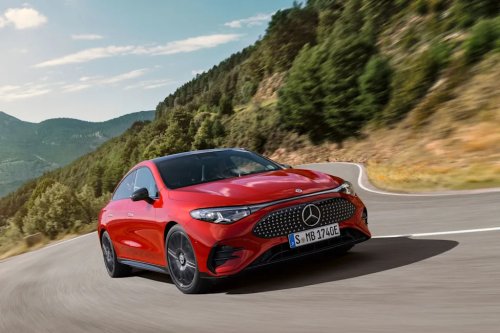



















Electric cars have revived an interest in aerodynamics that goes back to the 1930s. A slippery shape improves drag efficiency, which results in more range from a given battery-pack size. The new Audi A2 is a good example of the new approach. Audi AG/dpa-tmnApply gentle, minimal pressure to the accelerator and brake, keep a watchful eye on the flow of traffic, and above all, don't accelerate too hastily.Typical advice like this to avoid draining your electric car's battery isn't the focus when driving Audi's new A2.More than 25 years after the launch of the pioneering original A2, Audi aims to apply to electric mobility the same principles that applied to the ultra-fuel-efficient petrol-driven small car.AdvertisementAdvertisementThe new Audi model is significantly larger than the narrow little car from the late 1990s, which used only 3 litres of petrol per 100 kilometres. It also comes with a more comprehensive range of clever features.According to the manufacturer, the new A2 is set to be one of the most efficient electric cars on the European market. To prove this, Audi has been sending the vehicle on a real-world driving test through Denmark and Sweden before its market launch.At a modest average speed of just over 50 km/h and after more than 200 km, the on-board computer shows an average energy consumption of 12.3 kWh. This puts the Audi A2 among the most energy-efficient small cars on the market.The 61 kWh battery in this 4.30-metre-long five-seater enables a range of just under 500 kilometres under these conditions.AdvertisementAdvertisementNot only Audi is playing the efficiency game. Squeezing maximum range from every kilowatt-hour has become the current trend across the industry.This is because batteries are still too expensive to allow their capacity to grow indefinitely, says Marcus Zacher, editor-in-chief of an electric mobility trade magazine in Germany. Rather than simply buying more range by adding more and more cells, manufacturers are focusing on efficiency and looking for ways to reduce consumption.Just as the efficiency of internal combustion engines has been optimised over decades, carmakers are drawing on their growing experience with electric motors, battery components and control electronics to gain a few percentage points with each new generation.With the A2, for example, Audi is focusing above all on low aerodynamic drag, says Moni Islam, who heads up aerodynamics at the German manufacturer. Of course this is nothing new. The original Audi A2 was streamlined too and its soap bar smooth shape has now become standard among electrics.AdvertisementAdvertisementThe basic shape is inspired by the original, featuring a high roof, a strikingly sloping and slightly recessed rear end, and a small spoiler at the crease in the boot lid. And it culminates in details such as the almost completely enclosed underbody and a gap reducer in the wings, which reduces turbulence in the wheel arches.The result: "Although it is fitted with 19-inch wheels, for example, rather than the original 14-inch ones, the drag coefficient has actually fallen from 0.25 to 0.24 compared with the first A2," says Islam, putting the efficiency gain from the aerodynamic measures at 0.9 kWh per 100 kilometres. The new A2 is not, however, made of aluminium which saves weight, but makes it harder to repair after crash damage.BMW has just demonstrated what is possible with other key components, particularly in the New Class and, most recently, in the iX5.This model is significantly larger and heavier than the smaller iX3. However, there is still not unlimited space in the underbody. According to the company, this is why the Bavarian manufacturer has, amongst other things, developed a new battery cell which boosts the battery's power density. Put simply: more power in less space.AdvertisementAdvertisementAnd when Mercedes launches the new AMG GT four-door model later this year, the manufacturer's primary focus will be on electric performance and fast, usable power delivery, says AMG boss Michael Schiebe. But there is also active aerodynamics for greater efficiency and, for the first time, so-called axial-flow motors, which are more compact and lighter than conventional electric motors.Developers of electric cars now find it much easier to achieve fuel economy than in the past, says Axel Heix, who is in charge of the new Mercedes CLA. With a power consumption of 12.3 kWh, it's the electric version of the three-litre car - in the eyes of the manufacturer.And Heix has invested heavily in efficiency: "For every kilometre we gain in this way, we need to fit fewer battery cells. This means that, for us as manufacturers, efficiency can be calculated in euros and cents, and every investment in a component can be recouped from the battery itself."Naturally, there are also plenty of money-saving tips specifically for driving electric cars. They're good and sound advice. But saving money can start even before you set off. Audi's chief aerodynamic engineer Islam, reminds customers of his approach: "Manufacturers offer many different wheel-tyre combinations for each model," he says, referring to the detailed specifications in the configurator for the respective models.AdvertisementAdvertisement"There's often a difference of up to 20 kilometres between what might be the most attractive combination and the most efficient one in the wheel arch." And that's without even taking into account whether the tyres in question have low-rolling-resistance properties or not.An air suspension or sports suspension can also improve range by lowering the car's ride height, reducing its frontal area and, in turn, aerodynamic drag.Tip: In the long run, it's better to switch on the air conditioning than to leave the windows open. "Four open windows can quickly cost you five hundredths of a second due to air turbulence, causing the drag coefficient to rise from 0.24 to 0.29 – and all our efforts to improve efficiency are literally out the window," says Islam.Detailed work on the car's side panels: by incorporating better aerodynamics into the wheel arch trims with gap reducers, Audi aims to reduce the gap between the wheel and the wheel arch, smooth the airflow and minimise turbulence. Audi AG/dpa-tmnWith new electric cars such as the Audi A2, developers are still trying to squeeze out every last metre of range. Audi AG/dpaAxial-flow motors promise to be both more compact and lighter than conventional electric motors. Mercedes-Benz AG/dpaIn the BMW iX5, too, the battery is situated deep within the car's floor – but even here, space is not unlimited. BMW AG/dpaAdvertisementAdvertisementIf you follow the right driving advice, you should be able to get a little closer to the manufacturers' stated ranges in real-world conditions. Audi AG/dpaBMW claims to have significantly increased the power density of batteries thanks to a new battery cell. BMW AG/dpaAround 25 years ago, Audi launched the A2 1.2 TDI, the first four-door, 3-litre production car and a pioneer in energy efficiency. Daniel Roeseler/Audi AG/dpaMercedes is also looking at ways to avoid making the batteries bigger by making the whole car more efficient. Mercedes-Benz AG/dpaAdvertisementAdvertisement