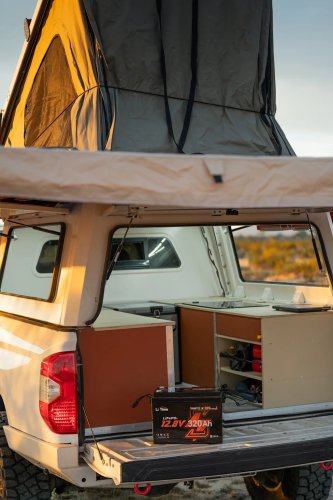
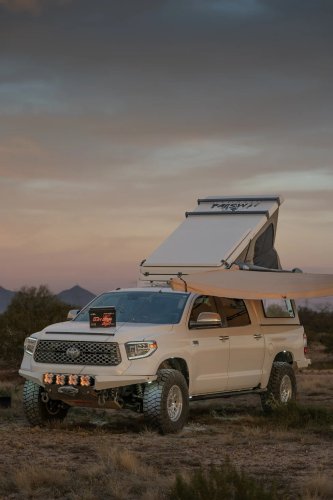

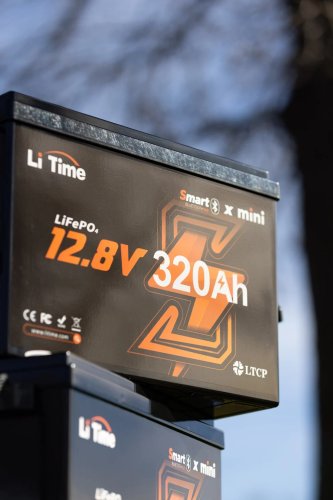
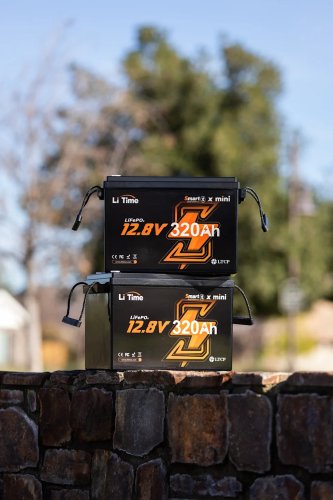
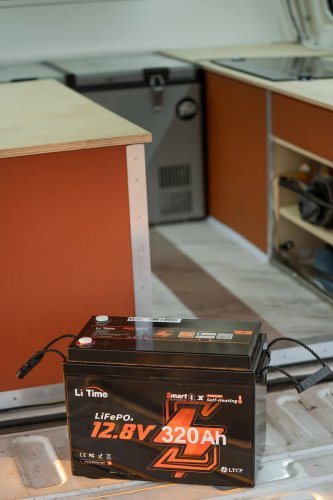




















The Power Math That Ends a Trip EarlyDay three is usually when the math catches up with you. You are two hours down a forest road with no cell signal, the fridge has been cycling since Thursday, you charged your headlamp and your GPS and your camera batteries off the same tired battery, and now the fridge compressor is starting to hesitate. The voltage is sagging. You do the arithmetic in your head and realize you either drive out early or you start eating warm food. Neither one is the trip you planned. This is the quiet problem behind a lot of overlanding builds. People spend real money on suspension, tires, a rooftop tent, a nice dual-zone fridge, and then hang all of it off a single 100Ah battery that was never going to make it through a long weekend. The gear got serious. The power system did not keep up. This piece is about whether a compact, high-capacity LiFePO4 setup can actually stretch your time at camp before that math forces you home, specifically in the rigs most of you are running: a Tacoma, a 4Runner, a Bronco, a Jeep, or a pickup carrying a truck camper. It is sponsored content produced in partnership with LiTime, and the specs I cite come from the manufacturer, not from a bench I ran myself. What I can do is put those numbers against the real loads and real constraints you deal with in the backcountry, and let you decide if the tradeoff fits how you travel.Why Lead-Acid and 100Ah Setups Fall Short in the BackcountryStart with lead-acid, because a lot of rigs still run it. The problem is not that it fails to work. The problem is what it costs you to make it work. Lead-acid is heavy, it eats up compartment space, and you never get to use all of the capacity you paid for. Draw a typical lead-acid battery down past roughly half its rated capacity on a regular basis and you shorten its life fast, which means a 100Ah lead-acid battery is really more like a 50Ah battery you can safely touch. You are hauling the weight of the full number and living off half of it. Now layer in the load. A 12V fridge, interior and camp lighting, a communications radio, phone and camera charging, maybe a small fan on a hot night. Individually none of these are dramatic. Together, over 24 hours, they add up quickly, and the fridge alone runs on a duty cycle that never really stops in warm weather. A single 100Ah battery, lead-acid or lithium, can cover a night or maybe two if you are careful. It does not comfortably cover a multi-day stay where you are parked in one spot and actually using the rig as a basecamp. Then there is the space itself. Off-road vehicles and truck campers do not give you a garage full of room to solve this. You have a battery box, an under-seat cavity, a tight cabinet, or a corner of the bed you would rather use for something else. The obvious answer, just add more batteries, runs straight into the reality that you do not have anywhere to put them. So you end up choosing between capacity and space, and most people quietly accept less runtime because the bulk of a bigger bank is a non-starter.Capacity Without the Bulk: The 4096Wh Mini FootprintThat space-versus-capacity conflict is the exact problem the 12.8V 320Ah Mini Smart RV battery (Model A180)is built to attack, at least according to LiTime's own numbers. The headline figure is 4096Wh of energy from a 320Ah LiFePO4 cell, and the reason it matters here is the case it comes in: 15.12 by 7.64 by 9.76 inches, weighing 57.17 pounds. Put that against the earlier math. Four thousand-plus watt-hours is a different conversation than a 100Ah battery. Where a single 100Ah setup gives you one careful night, this litime 320ah battery is carrying enough on paper to run a fridge, camp lighting, and your electronics across an extended stay rather than a single evening. And because LiFePO4 chemistry lets you use most of the rated capacity without punishing the battery the way lead-acid punishes you for deep draws, the usable number is far closer to the number on the label. The "Mini" part is the point that will land with anyone who has fought a battery into a tight box. A footprint that small, at under 58 pounds, means you are getting that 4096Wh into a space where a lead-acid bank of equivalent usable capacity simply would not go. You are not trading your bed storage or your under-seat room to get there. That is the whole pitch: high capacity that respects the compartment you actually have.AdvertisementAdvertisementRunning the Fridge, the Inverter, and Everything ElseCapacity is only half the story. The other half is how hard you can pull from the battery at once, and that comes down to the battery management system and the continuous output rating. LiTime lists a 200A BMS and 2560W of continuous output, with peak discharge stated up to 1000A. Here is the short version of what that means at camp. The BMS is the brain that protects the battery from things like over-discharge, short circuits, and overload, and a 200A rating gives you room to actually use the pack. The 2560W continuous figure is the one to think about when you add an inverter. That is enough headroom to run higher-wattage vehicle appliances off an inverter without the battery being the limiting factor: think a coffee maker in the morning, a laptop and camera charging setup, camp lighting, and the fridge all drawing at the same time. The distinction worth holding onto is between what a rating tests and what it guarantees in the field. A continuous output number tells you what the battery can sustain under its own protection logic. It does not tell you how your specific inverter, your wiring gauge, or your fuse setup behaves under load. Those are your build decisions. What the 2560W figure buys you is margin, so that a realistic camp load is comfortably inside the envelope instead of pushed up against the edge of it. That margin is what keeps the system from tripping or sagging at the worst moment, which is usually when you are cooking dinner in the dark.Seeing Inside a Hidden Battery With BluetoothNow for a problem nobody talks about until they have lived it: you cannot easily see the state of charge on a battery you have buried in a compartment. You built the system to be clean and tucked away, and the price of that is that the one number you most want to know is the one you cannot read without pulling things apart. So you guess. You listen for the fridge to struggle. You wait until something browns out. That is a terrible way to manage power in a place with no recharge for miles. The A180 addresses that with Bluetooth 5.0 and the LiTime app. The pitch is real-time monitoring from your phone: state of charge, voltage, power draw, and other status data, without opening a single latch. Instead of guessing whether you are at 60 percent or 20 percent on the morning of day three, you glance at your phone. I want to be clear about what this is and what it is not. This is a monitoring convenience, and I am reporting it as a manufacturer feature rather than something I have stress-tested through a season of cold mornings and dead phone signal. But the operational value of it is easy to see. Knowing your true state of charge is what lets you make a rational call in the field. Do you run the inverter for coffee, or do you conserve because you know the next sunny recharge window is a day out? You cannot make that call on a hunch. Being able to read the pack from your phone turns power management from a guessing game into a decision, and that is the difference between planning your exit and being surprised by it.Cold Nights and Keeping the Charge ComingCold changes the rules. Lithium batteries do not like being charged below freezing, and forcing a charge into a cold LiFePO4 cell is how you damage it. That is why the low-temperature charging protection on this model matters for anyone camping in the mountains or in shoulder-season conditions. LiTime lists it as a low-temp protection feature, and the plain-language version is that the battery guards itself against accepting a charge when it is too cold to do so safely. For a rig that lives outside overnight in the 20s and 30s, that protection is not a nicety. It is what keeps a cold morning from quietly killing your investment. The battery is also rated IP65 for water and dust resistance and quoted at 4000-plus cycles, both of which speak to living in a vehicle that sees weather and vibration rather than a climate-controlled shelf. Again, those are ratings, and a rating describes a test, not a promise about your exact conditions. But they point at a battery meant for the environment we actually put gear through. None of the capacity helps if you cannot put charge back in, and remote camps do not have shore power. This is where the system thinking comes together. The A180 supports recharging from solar, from your vehicle's alternator while you drive, from a wall charger when you are back near power, and from a generator if you carry one. In practice you combine them. Solar tops you up during a lazy day at camp. The alternator does real work every time you move between spots. A generator or shore charge becomes the backstop for a long stretch of clouds. Layered together, those sources are what turn a big battery into an actual off-grid power system that can sustain a long trip instead of just delaying the inevitable.What This Actually Buys You at CampStrip away the spec sheet and here is the payoff. The whole trip-ending problem from day three is a runtime problem and a recharge problem stacked on top of each other. A 4096Wh pack that fits a Mini footprint attacks the runtime side without stealing the space you need for everything else in your rig. Solar, alternator, charger, and generator support attacks the recharge side. Bluetooth monitoring keeps you from flying blind between the two. That combination is what buys you more days at camp before the math forces you back to the trailhead. Just do not treat capacity as the only number that matters. The right build is a match between three things: how much energy you actually burn in a day, how you plan to put it back, and how honestly you can track where you stand. A giant battery with no recharge plan is a heavy paperweight by day four. A great recharge setup on a battery you cannot monitor is still a guessing game. Size the litime 12.8v 320ah pack, or any pack, to the way you really travel, plan your recharge sources around where you actually go, and give yourself a way to read the state of charge without tearing the rig apart. Get those three in line and day three stops being the day the trip ends. It becomes the day you settle in, because you already know you have the power to stay. This is sponsored content produced in partnership with LiTime.AdvertisementAdvertisementSources:LiTime 12V 320Ah Mini Bluetooth Lithium Battery