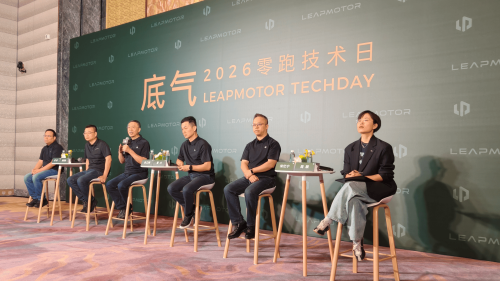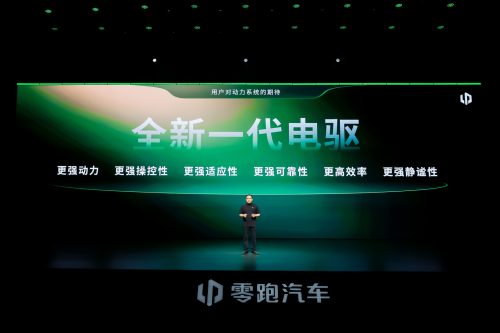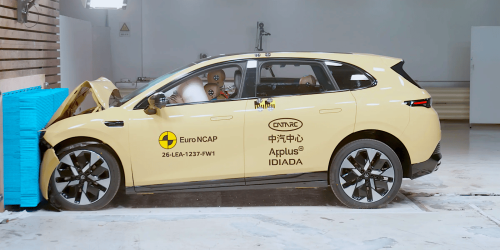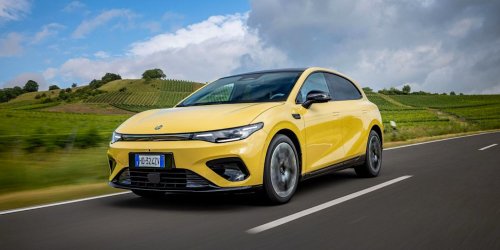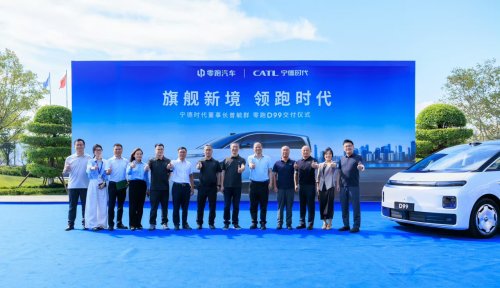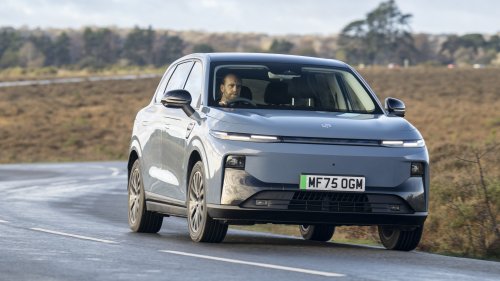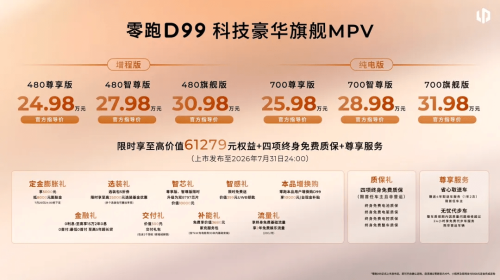
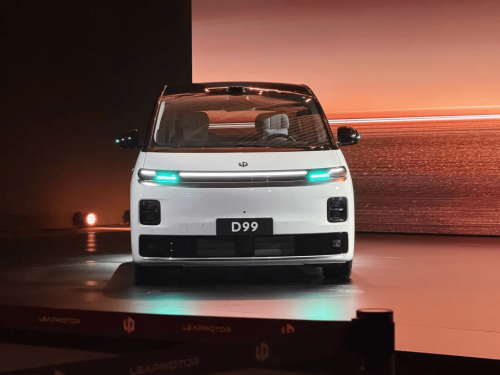
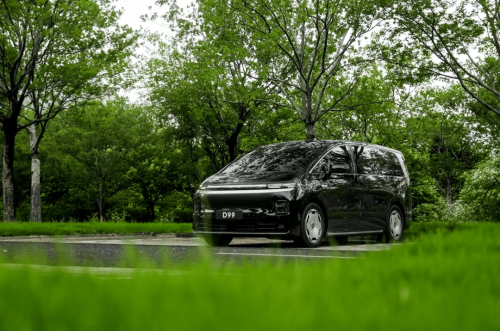
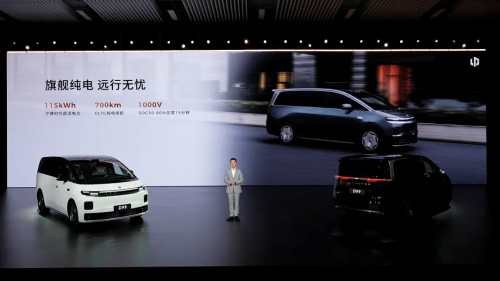
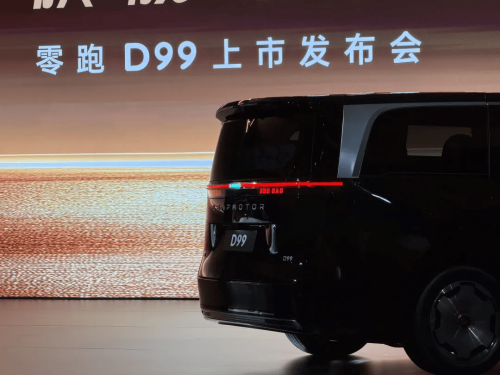
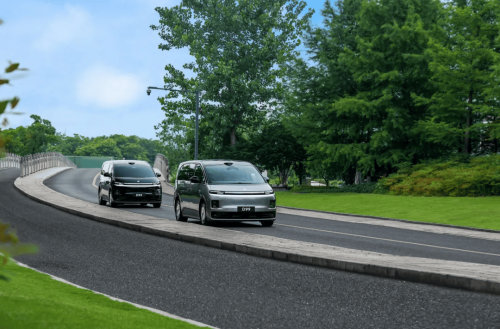
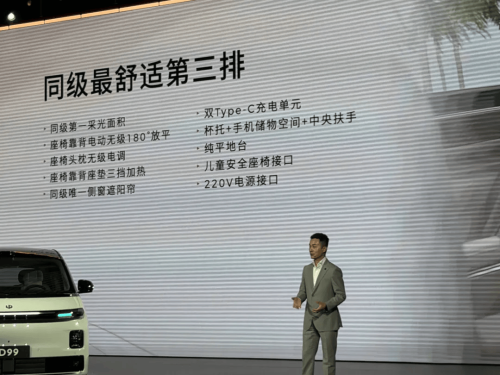
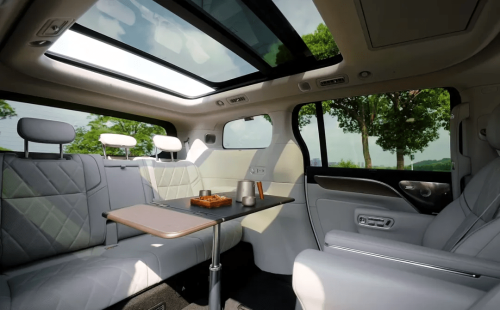
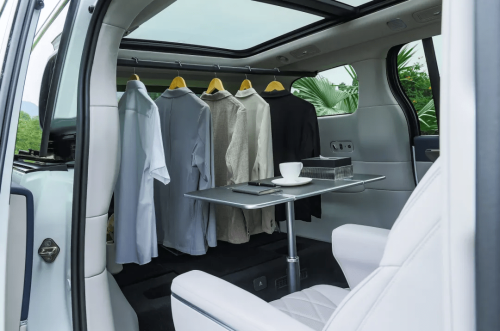
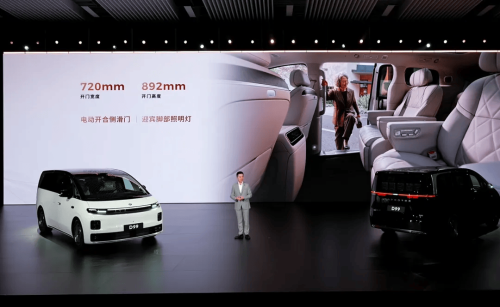
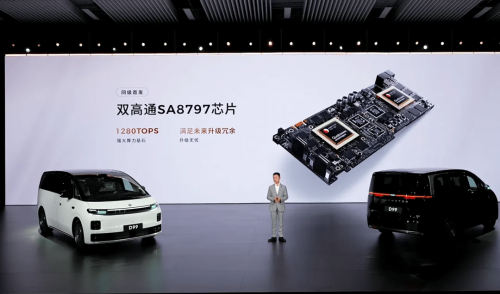
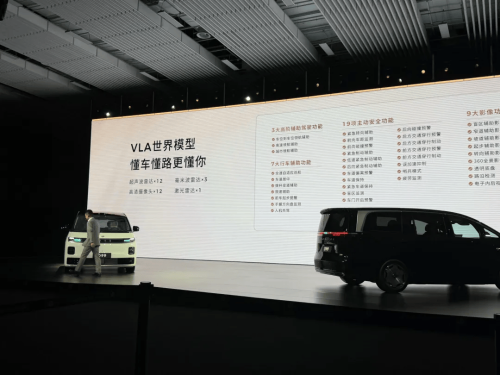
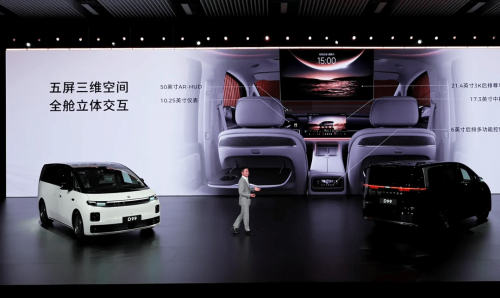

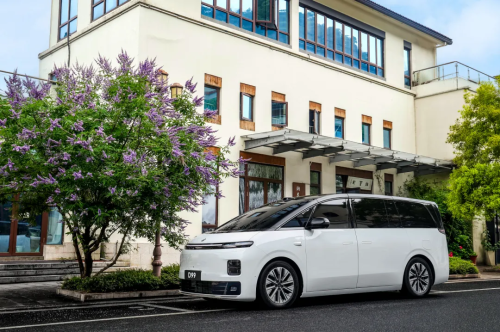


















After six months of pre-launch buildup, Leapmotor’s D-series flagship MPV, the D99, was officially brought forward for an accelerated market launch tonight. The model is offered in both range-extended and battery-electric variants. Pricing for the range-extended lineup spans three trims at RMB 249,800 ($36,800), RMB 279,800 ($41,200), and RMB 309,800 ($45,600). The battery-electric version also comes in three trims, each priced RMB 10,000 ($1,470) higher than the corresponding range-extended variants. Leapmotor D99 pricing Beyond differences in electric driving range, configuration levels step up progressively with pricing, primarily in comfort and intelligent features. Key hardware such as dual-motor all-wheel drive and an 80.3 kWh range-extended battery pack comes standard across the range. At its tenth-anniversary event last year, Leapmotor clearly positioned the D99 as a “new luxury benchmark for the RMB 300,000 ($44,200) MPV segment”. In effect, this positioning closely mirrors the concept of “redefining” the segment. From a product perspective, the D99 emphasizes bringing down premium features—large battery packs, high-voltage architecture, intelligent cockpit systems, advanced driver assistance, air suspension, and comfort-oriented seating—to below the RMB 300,000 price band. Leapmotor D99 at launch event However, redefining a market cannot be achieved through positioning alone. Before the D99 can prove itself as “new luxury” or a “benchmark”, Leapmotor must first demonstrate whether it can sustainably move into higher price segments. A useful reference is the earlier D19, which led the way. In its first full delivery month (May), it recorded 7,021 units in sales based on CPCA data, with an average transaction price of around RMB 250,000 ($36,900), according to the company. As an initial test of Leapmotor’s premium push, the result was solid. That said, the MPV market differs significantly from SUVs. SUV buyers are often swayed by space, battery capacity, and configuration density, whereas MPV customers are typically more demanding in terms of brand perception, comfort, and overall experience. Against this backdrop, the key question is where the D99’s core competitiveness lies within the sub-RMB 300,000 segment, and how it supports Leapmotor’s brand upmarket transition. After the launch event, Leapmotor executives also outlined expectations for the model during a group interview session, alongside broader questions about the company’s product roadmap once its A/B/C/D lineup is largely completed. Benchmark of Premium Engineering How does the D99 aim to justify its “new luxury benchmark” positioning in the RMB 300,000 MPV segment? The answer largely depends on its configuration package. The D99 measures 5,280 mm in length, 1,995 mm in width, and 1,880 mm in height, with a 3,110 mm wheelbase. Leapmotor D99 Compared with models such as the Voyah Dreamer and Denza D9, it sits within the large MPV category. On the powertrain side, the D99 largely inherits specifications from the D19 flagship. The range-extended version uses an 80.3 kWh battery paired with an 800V high-voltage architecture, delivering up to 480 km of CLTC electric range. The battery-electric variant is equipped with a 115 kWh CATL battery pack and a 1,000V high-voltage platform, with front and rear motors rated at 180 kW and 230 kW respectively, delivering up to 700 km of CLTC range. Leapmotor D99 range performance Compared with Denza D9 and Voyah Dreamer, the D99 shows a clear advantage in electric architecture and range. Even the latest Denza D9 “Fast Charging Edition” (plug-in hybrid) trails the D99’s pure-electric range by nearly 80 km on paper. As Leapmotor’s largest flagship model to date, the D99 also brings over CDC continuously variable damping, dual-chamber closed air suspension, and four-piston brake calipers, closely mirroring the D19’s hardware package. Leapmotor D99 launch event Design-wise, the D99 largely continues the D19’s styling language, adopting a streamlined aerodynamic profile to reduce drag. Even so, Leapmotor still offers both range-extended and battery-electric options. Founder Zhu Jiangming noted during the interview that MPVs are more frequently used for long-distance and multi-passenger travel, making range-extended systems the primary choice. Leapmotor D19 and D99 Additional technology features include a megapixel DLP projection headlight system and ISD intelligent interactive lighting, reinforcing its positioning as a tech-focused flagship. Although much of the D99’s underlying technology is aligned with the D19 on the same platform, this also reflects Leapmotor’s intent to build the model strictly to flagship standards in both specification and perceived value. A Fully Reconfigurable In-Car Living Space If the D99 has a competitive hardware foundation relative to RMB 300,000 MPVs, its cabin experience is arguably even more critical. As Leapmotor executive Cao Li has noted, comfort is the defining value of the MPV segment. The interior can be broken down into seating and spatial flexibility. Leapmotor D99’s cabin features The D99 adopts a 2+2+3 seven-seat layout. The second row features two zero-gravity aviation seats with 124-degree recline, 3D wraparound heating, heated leg rests and armrests, dual tray tables, seat ventilation, and 10-point massage functions. In addition, the third-row seats support backrest and cushion heating, while the front seats also feature 10-point massage functionality, extending comfort beyond the second row. In the broader MPV segment, seat comfort is no longer a differentiating factor, as most competitors already offer relatively rich features. The more distinctive advantage of the D99 lies in spatial flexibility and seating reconfiguration. Leapmotor D99’s seating reconfiguration The third-row seats can be folded forward electrically by up to 90 degrees or stowed into a recessed floor compartment, significantly expanding luggage capacity and improving floor flatness. Even with all seven seats occupied, the D99 can still accommodate up to 10 carry-on suitcases in the trunk. Thanks to its premium chassis integration, this level of packaging efficiency is notable. The second-row seats can rotate up to 180 degrees and support a 45-degree welcome orientation. Combined with the third row and deployable tables, the cabin can be configured as a “mobile lounge” or even a “mobile dressing room”. Leapmotor D99’s spatial flexibility Such configurations have previously been seen only on models such as the Li Auto MEGA Home and Lynk & Co 900. Beyond seating and space, Leapmotor also emphasizes perceived premium cues. Cao Li described two dimensions: a sense of hospitality and tangible luxury. The hospitality experience includes wide door openings of 720 mm and 892 mm respectively, enabling easier entry without bending. This is complemented by welcome lighting and air suspension integration. Leapmotor D99’s hospitality experience Tangible luxury elements include 29 m² of soft-touch cabin surfacing and semi-aniline leather with specialized coating treatments. The D99 also features a 23-speaker PSS audio system with 2,304W output, a “vehicle-grade oxygen cabin” system carried over from the D19, and an intelligent hot-and-cold refrigerator, among other features. Intelligent Systems Remain Competitive On the intelligent driving and cockpit front, the D99 adopts a dual-domain architecture similar to the D19, powered by two Qualcomm SA8797 chips. Leapmotor D99 is powered by two Qualcomm SA8797 chips. These chips jointly handle computing demands for both the cabin and advanced driver assistance systems, leaving room for future upgrades. The D99 comes standard with LiDAR and a “VLA world model” system, supporting urban and highway navigation-assisted driving, as well as 44 parking-related functions. Leapmotor D99 comes standard with LiDAR and a “VLA world model” system The cockpit integrates a multimodal on-device AI model capable of route planning, in-vehicle feature search, and cross-device service integration. Hardware includes a 50-inch AR-HUD, a 17.3-inch central display, and a 21.4-inch 3K rear ceiling screen, running the latest Leapmotor OS. Overall, the D99’s intelligent experience is positioned on par with its hardware and spatial offerings. Leapmotor D99’s hardware features From a product standpoint, the D99 does not simply pack luxury MPV features into a single model. Its spatial design and premium feature density are expected to help build early market attention. However, the MPV segment differs structurally from the SUV market. According to China Passenger Car Association data, China’s MPV retail sales in 2025 are projected at 1.058 million units, down 2.3% year-on-year, indicating no clear expansion trend. Moreover, MPV consumers tend to be more conservative in purchasing behavior, which explains the sustained popularity of models such as the Toyota Sienna/Granvia, Buick GL8, and Toyota Alphard. Models like Denza D9 and Voyah Dreamer have also gradually established strong consumption inertia over recent years. In other words, as Zhu Jiangming noted, MPVs are a relatively slow-moving market. This implies that even a highly equipped product like the D99 may not see immediate strong market response. Nevertheless, Zhu remains optimistic. Leapmotor D99’s media breifing He cited two reasons: first, the D19 has already validated Leapmotor’s ability to move into higher price segments with strong sales at a RMB 250,000 average price point; second, the D99 brings a level of configuration density not previously seen in the sub-RMB 300,000 MPV segment. Zhu even expressed hope that the D99 could become the “Alphard of the electric era”. But in such a slow-moving segment, its success will depend on longer-term delivery performance, user feedback, and word-of-mouth. With the D99, Leapmotor’s A/B/C/D product matrix is now largely complete, and the company describes it as its most premium offering to date. Leapmotor D99 This does not mean the product strategy ends here. In the group interview, Leapmotor also revealed plans for a technology day in the third quarter and developments related to a second brand. In simple terms, Leapmotor plans to introduce new technologies at its upcoming tech event to lay the groundwork for future products that differ from its current architecture. On the second brand, the company only indicated that “significant changes” are expected. As such, the D99 can be seen as a pivotal point in Leapmotor’s transition—either the culmination of its current RMB 60,000–300,000 ($8,800–44,200) product ladder, or the starting point of a further move upmarket.