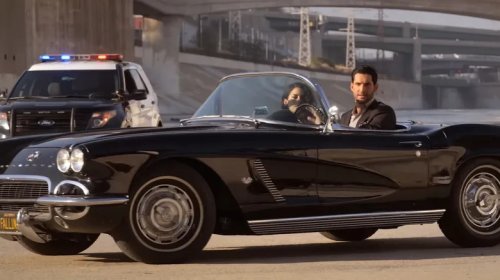
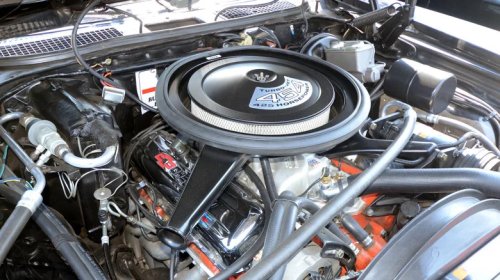
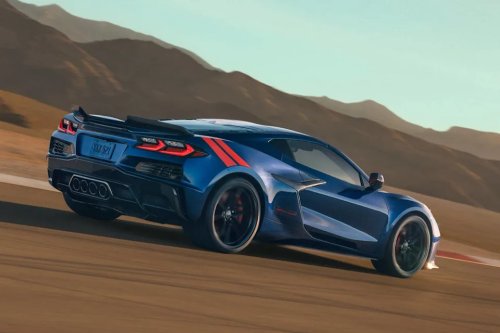
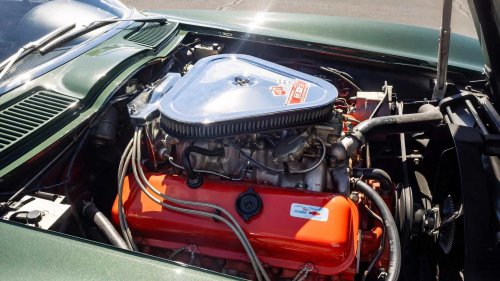
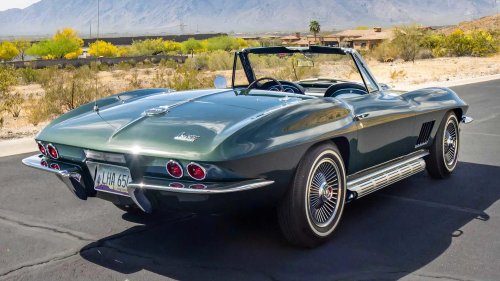
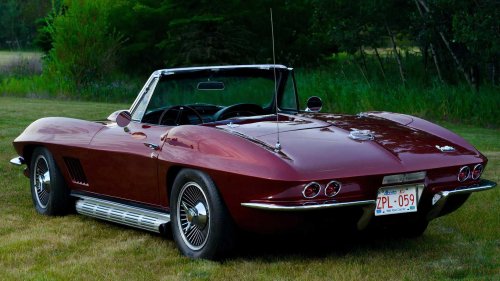
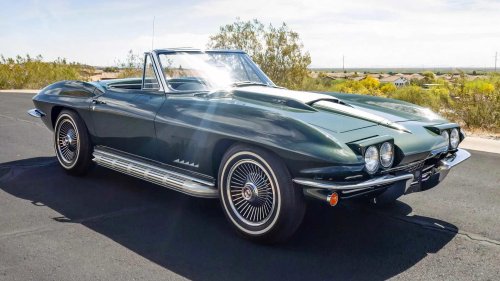
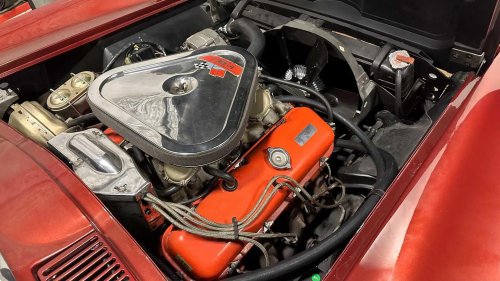
Jay Leno getting behind the wheel of one of the most powerful American performance cars of its era tells you a lot because, as we know, he’s driven everything, owned everything, and still gravitates toward cars that actually make sense to use. That’s what makes this one interesting, because it wasn’t built to be delicate or rare or difficult; it was built to be driven. So driven it shall be.At 435 horsepower, this Chevrolet was playing in a space that, at the time, was reserved for machines that usually came with trade-offs. You could have the power, but you had to accept the downsides that came with it. Rough drivability, limited comfort, constant attention. This car delivered the performance people wanted, but it didn’t make ownership feel like a commitment you had to plan your life around. You could drive it across town, take it on a long trip, or just enjoy it without worrying about what might go wrong or how difficult it might be to handle. That made it stand out then, and it’s exactly what still stands out now. A 435-HP Big Block That Delivered Power Without The Tradeoffs The 1967 Corvette 427, specifically the L71 setup, is one of those combinations that sounds intimidating until you actually understand how it behaves. A 7.0-liter big block V8 with three carburetors feeding it doesn’t sound like something that would be easy to live with. It feels like it should be aggressive, unpredictable, and constantly on edge, but in reality, it’s not.What makes this engine work is how accessible the power is. There’s torque everywhere, not just at the top of the rev range, and that changes how the car feels from the moment you start driving it. You don't have to push it hard or constantly think about what gear you're in; this Corvette just responds.Bring a TrailerThat’s a big part of why this car doesn’t feel like work. A lot of high-output engines from this era demand your attention because they don’t give you much margin. This one gives you room to breathe. You can drive it casually, and it still feels smooth and controlled. Then, when you want to lean into it, the power is there in a way that feels predictable instead of overwhelming.Chevrolet also made a conscious decision not to turn this into a stripped-down performance special. You could option the car with power steering, which makes a huge difference at low speeds, especially with a big-block up front. Power windows, a more comfortable interior, and details that made the car easier to live with weren’t afterthoughts. They were part of the package. That combination didn’t really exist at this level. You either got performance or you got comfort. The 427 Corvette made a case for having both without turning either into a compromise.Fun Fact: The 435 horsepower rating was likely conservative. Many believe the L71's real output was closer to 460+ horsepower, as manufacturers often underrated engines during this era. It Took On The Shelby Cobra And Felt Like A Real Car Doing It Bring a TrailerTo really understand what this Corvette was doing, you have to look at what it was being compared to at the time. The Shelby Cobra 427 was the benchmark for American performance. It was lighter, more aggressive, and built with a very clear goal. Be as fast as possible, with as few compromises as possible, and it absolutely delivered on that goal.But living with it was a completely different story. The Cobra feels raw in a way that never really turns off. It’s loud, it’s intense, and it constantly reminds you of what it is. That can be exciting, but it can also be exhausting. It’s not something most people would want to spend hours in, and it’s not something you just casually take out without thinking about it.Bring a Trailer Performance Comparison: Corvette 427 vs Shelby Cobra 427 The Corvette didn’t try to match that experience. Instead, it focused on delivering performance without overwhelming the driver. It had the power to stay in the same conversation, especially in a straight line, but it gave you something the Cobra didn’t. Stability, predictability, and a sense that the car was working with you instead of against you. You don’t have to fight the car to enjoy it. You don’t have to constantly correct it or manage its behavior. You can actually settle into it, drive it, and focus on the experience instead of the effort. That’s what makes it feel like a real car, not just a fast one. It Was Built To Be Used, Not Just Admired This is where the Corvette really separates itself, and it’s something you don’t fully appreciate until you think about how these cars were actually used. You could drive this car long distances without it feeling like a challenge. The seating position, the cabin space, even the way the car handled at highway speeds, all worked in its favor. It didn’t feel like something that needed constant input or attention just to stay composed.Bring a TrailerThere was also a level of practicality that most cars in this category didn’t offer. You had space for luggage, which sounds basic, but it made a difference if you actually wanted to take the car somewhere. You weren’t limited to short drives or specific conditions. Because it was a Chevrolet, everything around the car was easier to handle in terms of ownership. Parts availability, service, and general familiarity. You weren’t dealing with a niche product that required specialized knowledge or limited support. That lowered the barrier to actually using the car. And people did use them. These weren’t cars that disappeared into collections right away, they were driven, maintained, and enjoyed.Fun Fact: It didn’t run all three carbs all the time. The outer two only activated under heavy throttle, which helped keep the car surprisingly manageable at low speeds. Chevy Priced It Like A Corvette, Not An Exotic Bring a TrailerThe pricing strategy is a huge part of why this worked as well as it did. A well-optioned 1967 Corvette 427 landed somewhere in the high-$6,000 range. That’s still a serious amount of money for the time, but it wasn’t positioned as something out of reach. It was attainable for buyers who wanted performance without having to step into a completely different category.The Cobra didn’t operate in that space. It was more expensive, built in much smaller numbers, and carried a level of exclusivity that changed how people approached it. It felt like something you had to commit to, not something you could just decide to own and use.Bring a TrailerChevrolet understood that difference, so they didn’t try to turn the Corvette into something exclusive. They kept it accessible, and that decision shaped how people interacted with the car. It wasn’t about owning something rare. It was about owning something that delivered. That’s what made it such a strong value, not because it was cheap, but because of what you got for the money. Performance that could compete with the most extreme cars of the time, without the downsides that usually came with that level of speed.Fun Fact: You could get the full 427 in a convertible. In 1967, there were no restrictions or detuning, so you got the same performance with the top down.You can tell where this car sits today just by looking at its value. Prices have climbed, especially for clean, well-documented L71 cars, but they haven’t gone into a completely different category. Most examples sit within a fairly defined range, with driver-quality cars on the lower end and top-tier ones pushing much higher, depending on originality, documentation, and spec. It’s not cheap anymore, but it’s still a car people buy to own and use, not just park.Most L71 cars fall into a pretty tight range, and the differences usually come down to originality, documentation, and whether it’s a convertible. The top cars push higher, but you’re not looking at a market that’s all over the place. It still feels tied to what the car actually is, which is exactly what you’d expect from something that was built to be driven in the first place. Why This Still Defines What Corvette Is Today Bring a TrailerThe idea of the Corvette was never to be the most extreme or the most exclusive option. It was to deliver performance that felt competitive at the highest level, while still being something you could actually use. That balance is what sets it apart early on, and it’s what continues to define it.Bring a TrailerModern Corvettes have taken that formula further, with performance numbers that rival cars costing significantly more. But the core idea hasn’t changed: you can still drive them every day, maintain them without dealing with unnecessary complexity, and you still get performance that feels like it belongs in a different category. The 1967 427 laid that foundation. It showed that you didn’t have to choose between speed and usability. You could have both, and you could actually enjoy it. That’s why it still matters, not just because of what it was, but because of what it set in motion.






















 +19 others