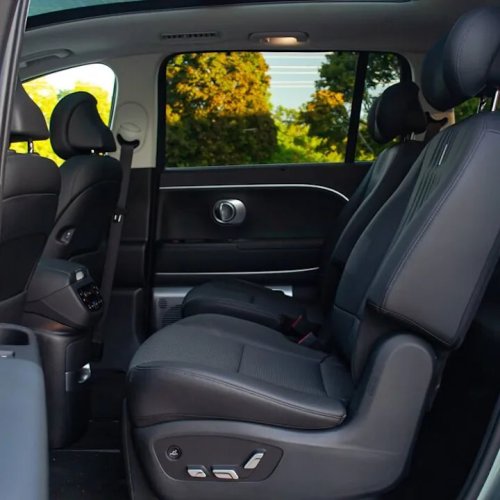
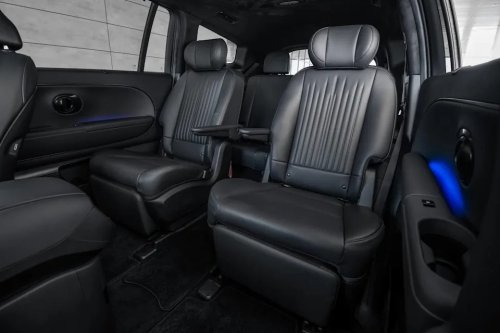
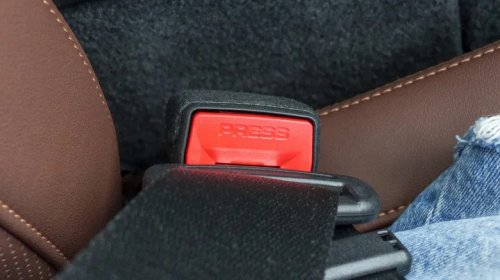
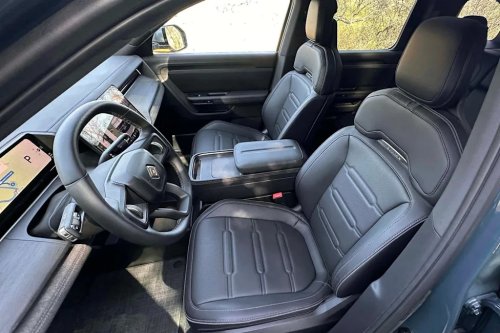
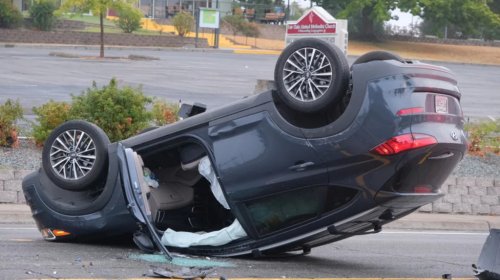
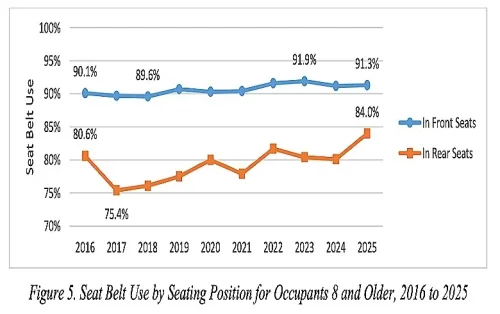
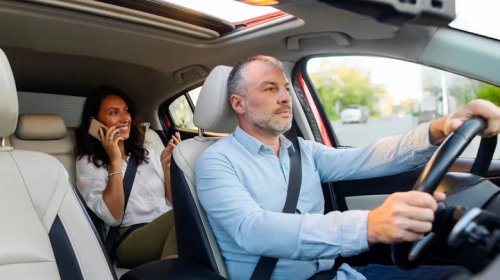
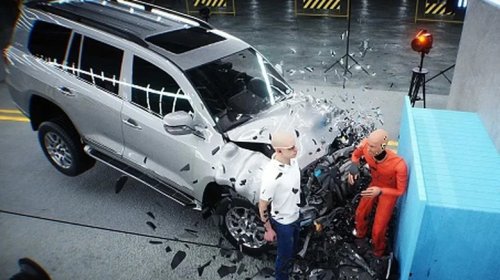
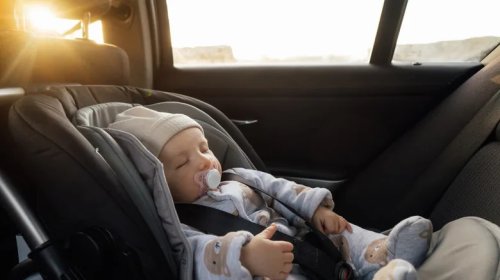
A rolled Hyundai SUV. - Slobo/Getty ImagesIt seems intuitive that the safest seat in a five-passenger car or SUV would be the center perch of the second row. That spot's most protected by the car's structure. In fact, according to a 2017 National Highway Transportation Safety Agency (NHTSA) study, in the 1960s and '70s, outboard rear seats were 26% safer than the fronts, and sitting in the middle of the second row was 37% safer. But the huge disparity between front- and rear-seat safety — for adult passengers — has nearly evaporated for two key reasons. First, according to Jessica Jermakian, senior vice president for vehicle research at the Insurance Institute for Highway Safety (IIHS), whom we reached by phone, modern cars in general are safer than they've ever been, both structurally and technologically. So, essentially, as the entire car has gotten less deadly, there's a lower disparity between individual seats and between the front row and second row.Second, Jermakian said the biggest leap in accident survival for every passenger in the car, but especially people up front, is that front passengers are far more likely to buckle up. "Half of the people who are fatally injured in crashes are unrestrained," she said. "It points to the likelihood of being fatally injured when you're unbelted versus when you're belted.USDOTAccording to that NHTSA study, using a three-point belt in the middle back seat cuts your chance of death by 58% in sedans and 75% in SUVs. However, as more airbags are packed into the fronts of cars, and seat belt tech improves for front passengers, and front passengers use seat belts more often than folks riding in back, sitting in the center rear seat may only confer a very slight safety advantage. Save for one very important kind of passenger: children.AdvertisementAdvertisementRead more: These Are The Deadliest Cars On The RoadHey, Uber passenger: You still need to buckle up!A passenger belted in the second row of a car. - fast-stock/ShutterstockNot all safety gains can be attributed to increased seat belt use. Jermakian also credited increased rigidity standards for side collision advances, as well as the adoption of side curtain airbags. These reduce the likelihood of a passenger ejection, and if you're not flung out of the car during a crash you obviously are less likely to die. But the best way of not being ejected in the second row is belting. And you should be especially mindful of doing so on your next Uber ride. Jermakian's research showed that only 57% of passengers in hired cars say they always buckle up, versus 74% of rear-seaters in private cars. Why? Because we believe it's safer in the second row, and somehow, illogically, think that's more true when riding with a stranger. Yet there's only a slight safety edge for riding in back. A 2024 Society of Automotive Engineers analysis of NHTSA crash data shows that for every type of accident, your chance of being hurt was 2.59% as the driver, and 2.52% riding shotgun. Your odds improve when riding in back, at 1.7%. But if that car's rear-ended, you're much safer riding shotgun, at 0.63%, than the nearly 1% chance as a back-seater. "When we get in our cars," Jermakian pointed out, "we're not picking what type of crash we're in, so we can't make our restraint decisions and our seating decisions based on what crash we think we're going to get into."AdvertisementAdvertisementTranslation: Riding in back can still kill you, especially if you're not wearing a seat belt. Among 7,000 rear-seat accident passengers in a 2014 Columbia University study published by the National Center for Biotechnology Information, people who were belted were one third as likely to be killed.The front seat catches upA frontal crash test into a fixed barrier. - Pavel_chag/Getty ImagesJermakian cautioned that the rear seat hasn't gotten less safe over time, "it's that the front seat has gotten safer." She pointed to both NHTSA and IIHS crash testing, and public awareness of these tests, driving safety improvements and technological advancements more for the front of the car than the rear. "The rear seat hasn't had the same incentivizing structure," she said. And she noted that even the information scientists have access to is muddied, because only 12% of crashes tracked in government databases include accidents with passengers in the rear seats. As a result, researchers have to look at car accidents over a bigger time period, which means mixing cars with technological advances and cars lacking them. Jermakian said that these factors make it tough to be definitive and say, "This is the state of rear seat safety."She also explained that accident reenactments and testing have mostly focused on improving front passenger safety, in part because so few accidents involve rear seat passengers. "We've had a rear dummy in our side impact test since 2003," she said of IIHS, but the nonprofit only added a rear passenger to its frontal crash test in 2022. AdvertisementAdvertisementHowever, there is enough data to show that being unbelted in back isn't just more deadly for you: It can kill the driver. A 2015 University of Virginia study found that when you're a crash-test dummy floating around back there, you can as much as double your chance of killing the driver. Yes, that's by smacking yourself into their seat and forcing them forward. "When you make the decision to not buckle up, you're not just putting your own life at risk, you're putting other people's life in the vehicle at risk," Jermakian said.Your kid is safest in the rear middle seatAn infant in a rear-facing middle child seat. - Okrasiuk/ShutterstockAccording to Jermakian — and according to the IIHS – you want to avoid common mistakes that put your kid at risk during a car crash. So, nope, they should never ride up front. And they definitely need to be in a properly secured rear-facing child seat until at least the age of 1, and in a properly anchored booster seat until they reach near-adult height and weight. If you're not aware of the child seat rules in your state, IIHS offers this convenient compilation.Jermakian said that when children are belted into these specialized seats the added reinforcement — which spreads force across the toddler's entire back and supports their head — is especially protective. And she added, "Even when you move to a child who is forward-facing, you have ... a snug restraint that's on both shoulders and on both hips, coupling that child to the vehicle." As for where to place your toddler or infant in the back of your car, Jermakian said that most parents have been educated that the center rear seat is safest, and she pointed to a 2008 study from the Journal of the American Academy of Pediatrics, which focused on injury outcomes for newborns to children 3 years old who were riding in rear-facing child seats. They found a 43% lower risk of injury for kids anchored in the rear middle seat versus either outboard position. AdvertisementAdvertisementSo there you have it. Yes, the middle seat is the safest in the car, but especially if you suck your thumb, can put your big toe in your mouth, and still believe in the tooth fairy. Want more like this? Join the Jalopnik newsletter to get the latest auto news sent straight to your inbox, and add us as a preferred search source on Google.Read the original article on Jalopnik.


















 +43 others