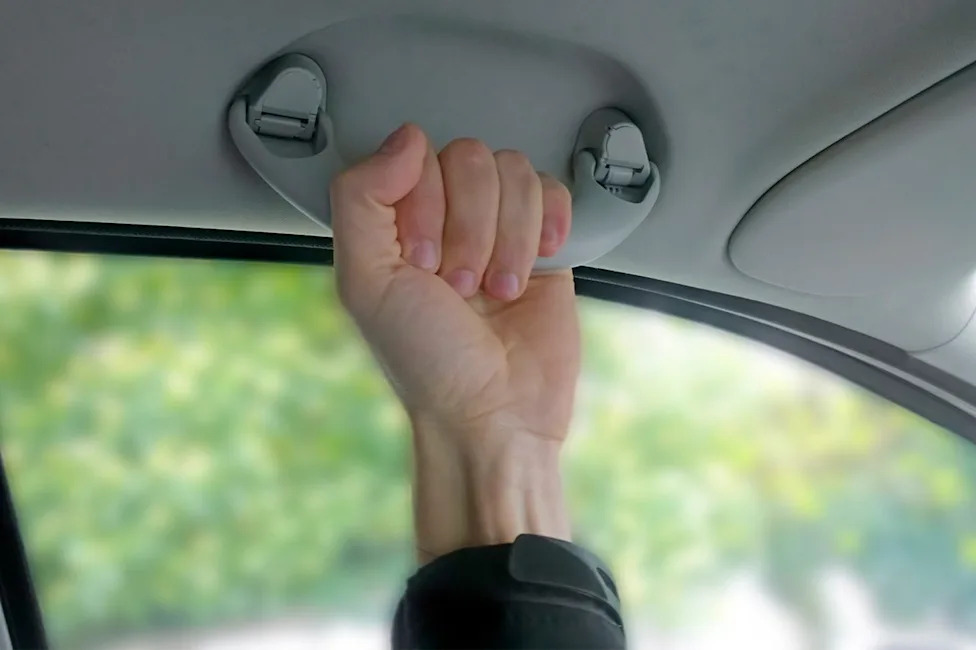
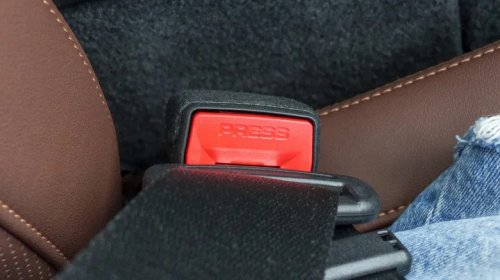
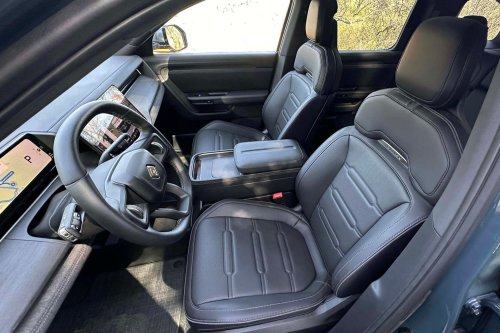
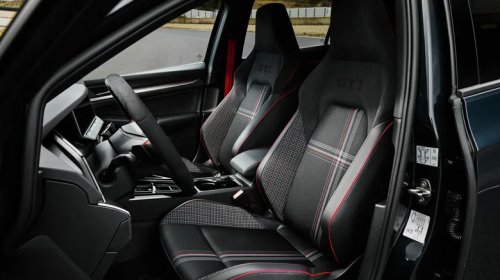
It's easy to start slumping, or get in the habit of driving with one arm out of the window or resting on the gearstick. But keep both of your hands on the steering wheel as much as possible to stop one shoulder from having to work harder than the other, and the likelihood of twisting your spine, say specialists. Sven Kaeuler/dpaYou might be just driving to the shops or dropping your kid at school and may be tempted to skip adjusting your seat position.But it is always worth it, for safety reasons and to prevent aches and pains.Many of us figure we know the correct driving position, though it is not as straightforward as we may assume.Seat adjustment is a highly individual matter, as not everyone's body is built the same, says the ADAC, Europe's largest motoring club, and a German association that promotes back health (AGR).AdvertisementAdvertisementIn the past, car seats could be adjusted mostly for inclination and amount of foot room, but much more is possible nowadays. You can adjust modern car seats for height, inclination and surface area. Many also come with bolsters and lumbar support built into the seat.The more precisely that a seat can be adjusted to fit a driver, the better. That said, better seats usually cost more money. However, all those options are useless if the driver doesn't use them properly.Where the seat should beMake sure your seat is high enough to give you good vision of the road while still allowing clearance above your head. Your hips should be at least as high as your knees, Britain's RAC motoring association says.AdvertisementAdvertisementThere should always be a hand's width of space between the head and the roof. The ADAC driving association says set your seat height so your eyeline is about the halfway point of the front windscreen.Move your seat until you can easily push down the pedals fully.If your seat is adjustable, make sure your thighs are supported without pressure around your knees, say driving ergonomics specialists at Britain's Loughborough University and the Royal Society for the Prevention of Accidents.Check the angle of the back. If you recline too far you'll have to bend your neck too much to face forward. Then adjust the lumbar support where possible so it comfortably fills the arch of your back, which can help with lower back pain.Lumbar support means ensures the spine is supported in its natural shape. Depending on the model, switches, joysticks or wheels often found at the bottom left of the seat are used to adjust support.AdvertisementAdvertisementThe adjustment should always be made from the bottom up; according to the AGR, the pelvic area is the most important for support.If you don't have such adjustments, the solution is not to stuff a cushion between the back and the backrest, as this can become extremely dangerous in an accident, according to the ADAC.Instead, drivers should look for accessories that allow them to retrofit the seat; they just have to be installed in a way that they can't slip.Check the headrest or risk injuryCheck your headrest should be as high and steep as possible, and adjusted so that it protects the head but does not support the neck.AdvertisementAdvertisementIf you set it too low, you risk serious head and spinal injuries in an accident.The AGR says the upper edge of the headrest should be flush with the upper edge of your head.So adjust the head rest so it's as high as the top of your head and as close to the back of your head as possible to avoid any potential whiplash injuries.Both hands on the wheelIf your steering wheel is adjustable, make sure you can reach it easily and that it doesn't obstruct your view of anything vital on the dashboard, the specialists say.Try to have about 25 to 30 centimetres between the torso and the airbag steering wheel, specialists say. The steering wheel is well-adjusted if you can rest your wrist on top of the rim with your shoulders resting against the backrest while your arm is stretched.AdvertisementAdvertisementNow, put on your seatbelt and check it is tight with the lap belt over the pelvic region and the diagonal strap over the shoulder, not the neck – adjusting the height of the fixing if possible. Pregnant women should place the lap belt flat on the thighs – beneath the abdomen.When driving, your hands should be at the 9-and-3-o'clock positions on the steering wheel. Your arms should always be bent, not straight, and the shoulders should always be pushed up against the backrest.Avoid bad driving habitsUnfortunately, all too often you see cars where the driver's seat is pushed back as far as it will go, until it's almost in a reclining position. A driver may have their eyeline at the same level as the window and rest a hand lightly on the steering wheel.AdvertisementAdvertisementSome may see this as cool, but an incorrectly adjusted front seat is not only bad for your back but also dangerous for others.Driving with one hand is risky too. A low-seated driver could well be overwhelmed in an emergency situation and any evasive manoeuvres they attempt risk being "unpredictable pulling without any accuracy," says the ADAC.And if the airbag is deployed, the force of one's own arm can become a danger if it's resting on top of the steering wheel at the time.Symptoms and dangersTry and avoid bad habits. It's easy to start slumping, or get in the habit of driving with one arm out of the window or resting on the gearstick.AdvertisementAdvertisementBut keep both of your hands on the steering wheel as much as possible, as this prevents one shoulder from having to work harder than the other, and the likelihood of twisting your spine, the RAC says.If you get arm pain from driving, take note and see if you can better position your arms, relax your shoulders or adjust your seat to improve things. Your palms should be just lower than your shoulders.Many drivers struggle with lower back pain, stiff shoulders and neck or cramp in the foot or leg.Your back is particularly at risk. Prolonged exposure to driving has shown to be a risk factor for back pain, with the risk increasing for anyone who drives for more than 20 hours a week, say experts.AdvertisementAdvertisementBut other issues can include sitting for long periods, especially in the wrong position, poor posture and twisting your body awkwardly, says the RAC.Specific symptoms of common driving injuries can range from mild to severe pins and needles, cramp, stiffness, shoulder or neck ache, chronic back pain and spinal problems or degeneration of the spinal discs.Many drivers report aches and pains from driving such as lower back pain, stiff shoulders and neck, cramp in the foot or leg, headache or eye strain so adjust your seat, say experts. Michael Ukas/dpa





















 +56 others