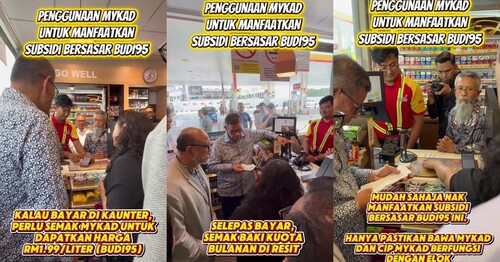
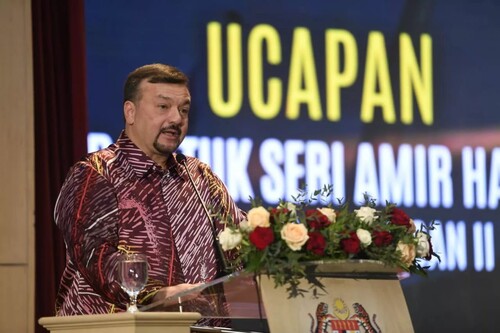
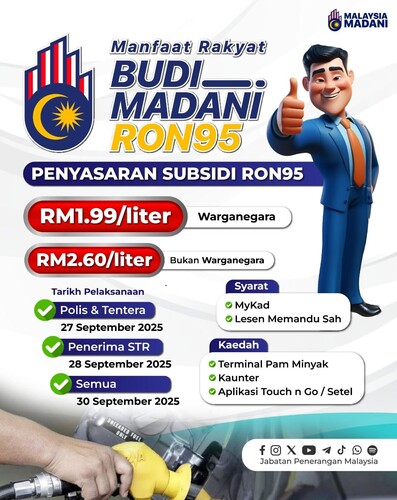
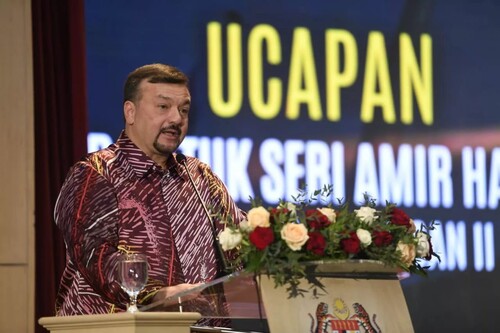
Abigail Lee · 4 months ago@abigaillee81RON95 subsidy adjustment is last resort: PMO adviser Liked by+65 othersLocal NewsPost commentRelated PostsBudi95 starts for all Malaysians today – we fill up with RM30 worth of RON95 petrol at each major oil brand 83 · Jenna Fortin · 1 years agoGov’t sets unsubsidised RON95 petrol at RM2.60 a litre – all eligible Malaysians pay RM1.99 from Sept 30 25 · Ryan Johnson · 1 years agoBudi95: RM3.7 mil worth of RON95 petrol purchased on first day by PDRM/ATM personnel – Amir Hamzah 51 · Connor Lavoie · 1 years agoBudi95: Receipt issued will show how much the gov’t is subsidising RON95 and remaining monthly quota 76 · Noah Harris · 1 years agoCaltexGO adds Budi95 RON95 subsidised petrol payment and quota info – link with verified TnG eWallet 111 · Mia Walker · 1 years agoBudi 95: No restriction on how many times you can pump RON95, but gov’t will monitor scheme for abuse 67 · Parker Fortin · 1 years agoSubsidised RM1.99 RON95 for all will cost govt up to RM15 billion, and it’s not fair to the M40 – Rafizi Ramli 78 · Lucas Pelletier · 1 years agoHome minister visits petrol station to see MyKad verification being used for RM1.99 subsidised RON95 81 · Charlotte Brown · 1 years agoGov’t to strictly monitor e-hailing drivers’ usage of subsidised RON95 petrol, prevent misuse – FM2 27 · Adam King · 1 years agoMyKad holders driving foreign registered vehicles not eligible for RM1.99 subsidised RON95 price – MKII 14 · Jacob Morgan · 1 years agoSetel confirms app can be used for RM1.99 RON95 subsidised price – must be verified Setel account 76 · Victoria King · 1 years agoRM1.99 RON95 starts on Sept 30 for all Malaysians, PDRM/ATM Sept 27, STR recipients Sept 28 – PMX 12 · Carter Roy · 1 years agoHere's How To Adjust Your Headlights (And How To Know If They're Too High)Annabelle Hall · 21 days agoTesla Patents ‘Thinking’ Active Rear Wing That Adjusts Mid-Corner – and Could Debut on the Next Roadster 49 · Audrey Lee · 1 months agoI'm an Insurance Adjuster: These Car Safety Considerations Affect Auto Buys 58 · Charlotte Roy · 1 months agoDongfeng Motor and Huawei hold executive talks; Chery adjusts executive positions; NIO ES9 deliveries exceed 30,000 units 84 · Henry Mitchell · 27 days agoHIMA: AITO Cooperation Model Adjusted, Does Not Affect Other "Four Realms" 75 · Aiden Lavoie · 1 months agoAudi Finalizes China Brand Adjustment Plan! 44 · Olivia Morgan · 1 months agoRare 'Cat, Non-Adjust' 1991 Ferrari F40 Heads to RM Sotheby's Zurich Sale 64 · Owen Tremblay · 1 months agoLiu Songbo: No Need for Excessive Anxiety Over AI, Many "AI Layoffs" Are Essentially Business Adjustments 54 · Noah White · 1 months ago



 +65 others