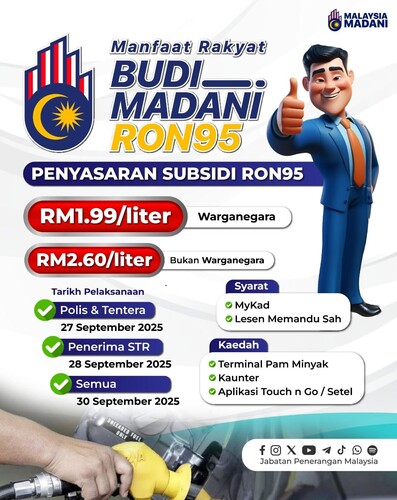
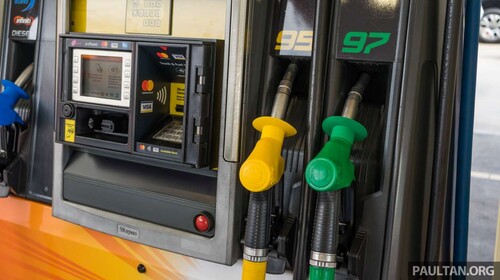
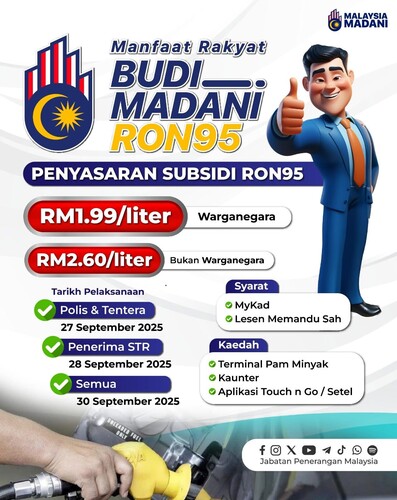
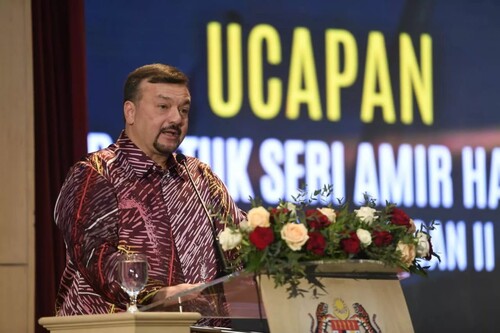
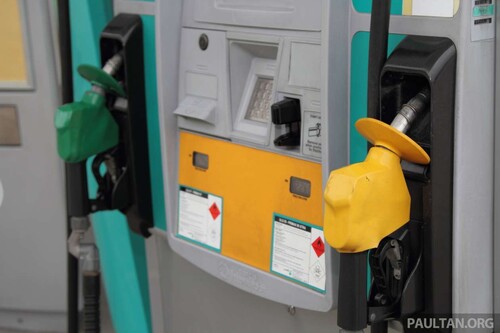
Thomas Girard · 5 months ago@thomasgirard39Removing RON95 petrol subsidies from T15, T20 can lead to inflation, economic slowdown – Yeo Bee Yin Liked by+23 othersLocal NewsPost commentRelated PostsSubsidised RM1.99 RON95 for all will cost govt up to RM15 billion, and it’s not fair to the M40 – Rafizi Ramli 78 · Lucas Pelletier · 1 years agoHome minister visits petrol station to see MyKad verification being used for RM1.99 subsidised RON95 81 · Charlotte Brown · 1 years agoGov’t to strictly monitor e-hailing drivers’ usage of subsidised RON95 petrol, prevent misuse – FM2 27 · Adam King · 1 years agoAfter years of talks, everyone gets full RON95 subsidy; what happened to cutting costs and taxing the rich? 54 · Amelia Hall · 1 years agoMyKad holders driving foreign registered vehicles not eligible for RM1.99 subsidised RON95 price – MKII 14 · Jacob Morgan · 1 years agoSetel confirms app can be used for RM1.99 RON95 subsidised price – must be verified Setel account 76 · Victoria King · 1 years agoRM1.99 RON95 starts on Sept 30 for all Malaysians, PDRM/ATM Sept 27, STR recipients Sept 28 – PMX 12 · Carter Roy · 1 years agoGov’t in final stages of fine-tuning RON95 fuel subsidy criteria and delivery mechanism – PADU, MyKad, quota 74 · Aiden Hall · 1 years agoCompressed-Gas Storage Demonstrators Got Bigger. The Economics Didn’t Get Better. 64 · Henry Brown · 1 months agoThis 2017 Tecnam P2006T Is an Economical ‘AircraftForSale' Top Pick 98 · Leo Bouchard · 1 months agoAI May Be on Verge of Causing Internet Chaos, Economic Catastrophe — Warning from Top AI CEO 16 · Abigail King · 1 months agoClimate Change Presented China With A New Potential Shipping Route For These Stressful Economic Times: The Arctic 88 · Victoria Young · 2 months agoTesla discontinues its Solar Roof tiles, not economically viable 57 · Logan Hall · 2 months agoWRC 2026 | Hotel Prices Surge Within 6 Km: How Strong Is Robotics' Economic Pull? 14 · Logan Brown · 2 months agoAnother R&D and Manufacturing Base Lands in Wuhan Economic & Technological Development Zone 23 · Matthew Leblanc · 2 months agoHyundai Steel’s Potential Economic Costs, Mercury Pollution & Drinking Water Threats Must Be Fully Evaluated Under Louisiana Public Trust Doctrine 11 · Alexander King · 2 months agoVolkswagen T-Roc review: Economical and good to drive, but not as much fun as before 47 · Justin Fortin · 3 months agoYipai Technology's Xu Yuhan: Embodied Intelligence Entering Factories Must First Overcome Three Hurdles of Data, Reliability, and Economic Viability 29 · Amélie Girard · 3 months agoEconomics of Air Transport in Europe 89 · Carter Martin · 4 months agoEconomic Growth No Longer Guarantees Fuel Growth 89 · Nathan Anderson · 4 months ago




 +23 others