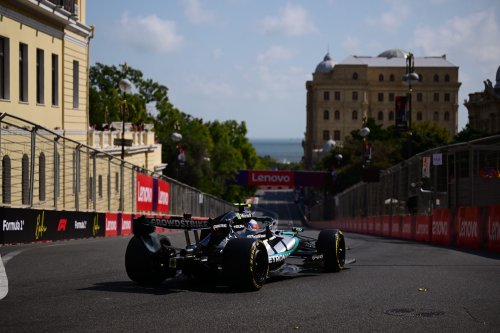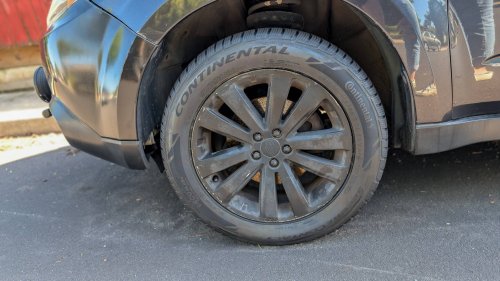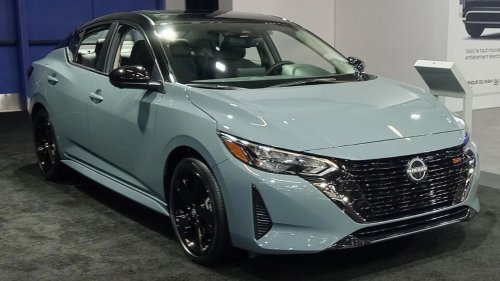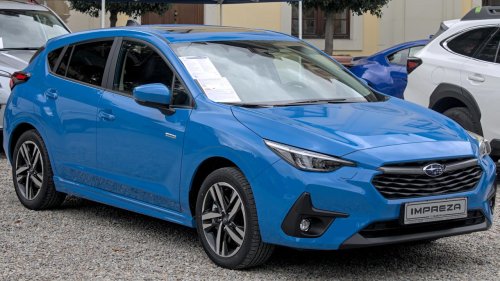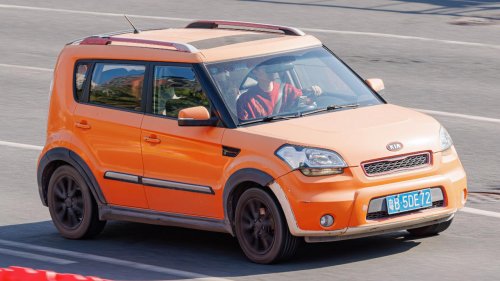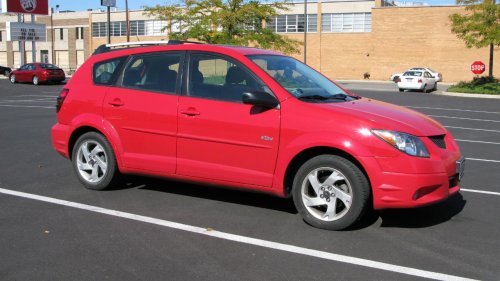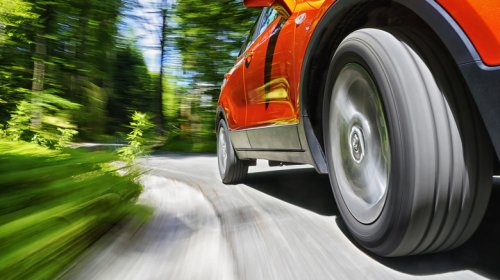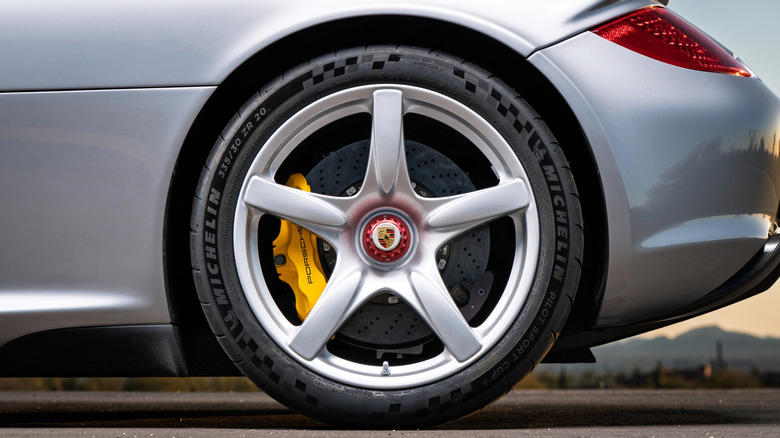
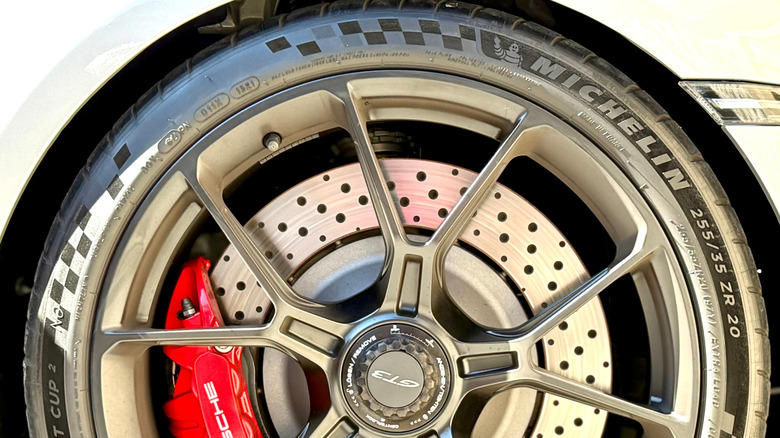



















JoshBryan/Shutterstock Before we jump into how they handle punctures, it's important to understand what low-profile tires are. Let's take a Michelin 225/40 R18 tire, for example. The "40" denotes the sidewall measurement, which, as you may know, is defined as a percentage. For those unaware, a 40-series sidewall means the distance from the rim to the tread is 40% of the tire width, which, according to our example, is 225 millimeters. This percentage is also referred to as the aspect ratio. Generally speaking, tires with aspect ratios of 50 or less are considered to be low-profile. Visually, you can tell these apart from regular tires by their relatively slim appearance when viewed from the side. Because of their shorter sidewall height, low-profile tires are more susceptible to damage from sharp bumps and potholes. Depending on how severe the hit is, they might deflate right away or simply unseat themselves. Understand that a higher sidewall ratio means there's more rubber to cushion the hit, which is generally not the case with low-profile tires. As a result, in addition to possible blowouts, you also increase the chances of damaging the wheel when paired with these kinds of tires. Sure, tires with a 60-series sidewall may offer better puncture resistance (from potholes) than those running 40 or less. But low-profile tires do not automatically mean they go flat more often. Understand that road conditions play a bigger role here than tire profiles alone. And it's not like one tire design is better than the other. All come with their fair share of pros and cons. Pros and cons of low-profile tires Yousef Osman 8/Shutterstock Realize that low-profile tires are there for a reason. While the lower aspect ratio presents its fair share of problems, it does benefit from less sidewall flex. This unlocks better road feel, agility, and overall stability, especially around corners. Since the contact patch is relatively wider than standard tires, you also get the benefit of improved traction, which you might notice in the car's acceleration and braking. Something else that you cannot discount is how much they add to your car's overall curb appeal. Installing low-profile tires gives you the option to upsize the rims and maybe even run bigger brakes without facing any clearance issues, which is worth pursuing if you're looking to further improve your car's braking performance. Cars with low-profile tires generally offer a bumpier ride, owing to their relative lack of sidewall to absorb the many road shocks. Not only that, but they are nosier too. Price and treadlife are important disadvantages as well. Low-profiles aren't typically cheap, and fixing any rim damage will only add to the overall cost. These low-profile tires usually wear out faster, too, lasting about 40,000 miles, although that depends on a variety of factors, of course. Generally, though, you have to be a bit careful with these "low-pro" tires. Realize that choosing the right kind of tire for your daily driver (or any car, rather) boils down to your requirements, budget, where you live, how often you track, and so on. Sometimes, the discussion may center around all-season versus all-weather tires, or something else entirely. It's not always about performance, you know.