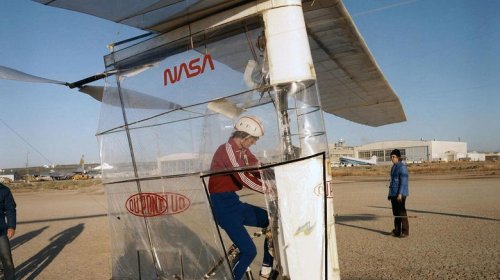
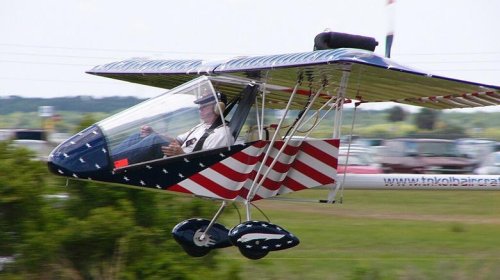
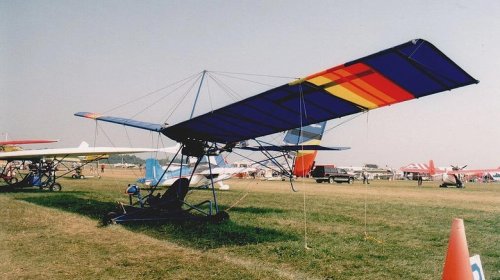
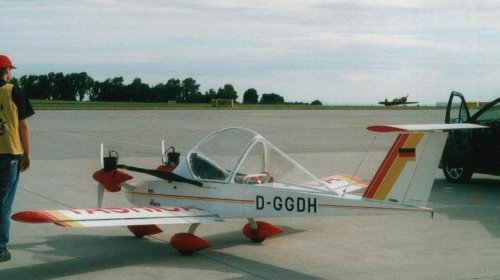
Gossamer AlbatrossIn terms of horsepower, you probably can't get much lower than the power a single human can generate, which makes the Gossamer Albatross an honorable mention. Sure, it didn't have an engine, but it did accomplish takeoff speeds of up to 15 MPH and flew across the English Channel. The nearly three-hour flight spanned 22.5 miles and was entirely powered by pilot Bryan Allen, who pedaled the wood-and-carbon plane.Although there's no official data on the Albatross for its horsepower ranking, the earlier yet similar Gossamer Condor is cited as reaching 0.33 horsepower. Thus, we can assume the Albatross reached something similar through the pilot's pedaling. Although the Albatross didn't necessarily catch on in aviation, it was a prize-winning aircraft. Not only that, but early planes like the Albatross paved the way for larger and better planes over the years, even if many still have hardly any horsepower to speak of.Kolb FireflyA more modern aircraft that you can still buy today, the Kolb Firefly is an ultralight plane that takes a strikingly low amount of horsepower to propel. The plane also clocks in at only 254 pounds when empty, and about 500 pounds when fully loaded. This slight aircraft has 40 horsepower, a level of power you could theoretically reach with two lawnmower engines (though we're not recommending you add wings to your lawnmower).Despite the low horsepower, Kolb promises that the engine propels the plane effortlessly, reaching top speeds of 63 MPH. For takeoff, the plane is said to have a rate of climb of 750 feet per minute, which is a low figure compared to much more powerful planes. However, for a lightweight plane you can essentially build in your garage, there's not much to complain about with the Kolb kit.One potential drawback of the Firefly, however, is also one of its perks. The fact that it comes in a kit might be daunting for some, but you can own one of these planes for around the same cost as a car. Would-be pilots need to pay around $20,000 for the complete kit, then assemble the aircraft themselves.Eipper QuicksilverIn the early days of ultralight airplane manufacturing, the Eipper Quicksilver had some pretty impressive specs. The original Eipper Quicksilver offered 35 horsepower, and although modern ultralights have much more power, it was plenty to get the plane off the ground. That's not to say the flight experience was exactly magical, though.Photos show that the Eipper Quicksilver's cockpit was anything but. The pilot's seat wasn't actually in a cockpit, but instead was open to the air. Compared to the J-3 Cub, the Quicksilver hardly resembled a plane in terms of design. It also couldn't travel any faster than 52 MPH, with a cruise speed of 40 MPH. Yet the aircraft offered a padded seat for "long flights," which came in handy when Peter Burgher decided to go for what was planned as a seven-day flight.Burgher actually flew from Michigan to Florida in a record-breaking five and a half days. After that, he retired his plane, which had been modified specifically for the flight. You can no longer buy an Eipper Quicksilver as it used to be, including the original 35-horsepower engine, but you can visit the Quicksilver MX-1 at the EAA Aviation Museum in Wisconsin.Aerolite 103Another kit ultralight airplane with staggeringly low horsepower is the Aerolite 103. With as little as 28 HP from a Hirth F33 engine, an Aerolite 103 can apparently manage a maximum speed of 63 MPH. However, you might not want to push the plane to its top speed, as it's a single-seat build with not much in the way of a cockpit.Another option for pilots who want to test out low-horsepower planes for themselves, the Aerolite 103 kit gives you the option to DIY. But if you want a fully assembled airplane, that'll cost you around $30,000 — 28 HP engine included. Looking at it, the plane doesn't seem very small. The Aerolite 103 weighs about 235 pounds empty, but it has a wingspan of almost 27 feet.If you have any reservations about flying this homemade aircraft beyond its engine power, those worries might be unfounded. The Aerolite 103 was designed in 1996 and eventually earned multiple design awards for being both lightweight and rugged. It's still produced today, so if you have the cash and storage space, you can test out the limits of its horsepower rating yourself.Rutan QuickieInspired by other homebuilt airplanes, the designers of the Rutan Quickie were trying to stick to a budget while making the flight experience fun. The result was the 22-horsepower Quickie, a kit aircraft that wound up winning design awards. Though dated these days, the original Quickie was manufactured in the late 1970s with a single engine and single seat.Although it's lightweight like similar planes, the Quickie has a fully enclosed cockpit, something not typical for lower-horsepower planes, especially home builds. Yet horsepower concerns did lead to design changes in the Quickie. At first, the plane was manufactured with a 22-horsepower engine, landing it a spot on our list. Builders reportedly found that the motor wasn't strong enough for the plane, which led to the development of a 64 HP version and, later, an 85-horsepower option.Based on descriptions of the early Quickie's build, it did fly with the 22-horsepower engine. At a weight of 246 pounds empty, the plane was around the same weight as other home builds like the Kolb Firefly and Aerolite 103, but with far lower horsepower. This might be one airplane you're happy to know is now housed in a museum.Colomban Cri-CriThe Colomban Cri-Cri was recognized as the smallest twin-engined crewed aircraft in the world, and like others on this list, it also started out as a home build. In the early 1970s, an aeronautical engineer named Michel Colomban designed the plane, naming it after his daughter Christine.The Cri-Cri used two 15-horsepower engines, which doesn't sound like much to propel a 375-pound aircraft at maximum takeoff weight. The plane had a range of 310 miles and, by all accounts, was a great build. Its rate of climb was 850 feet per minute, faster than similar, higher-horsepower planes like the Kolb Firefly. The difference was that the Cri-Cri was made of aluminum, while many other home builds were not. It also had an enclosed cockpit, which wasn't a given in every ultralight airplane design.While the Colomban Cri-Cri was sold in kits around the world and was apparently successful, it didn't last. Production eventually stopped due to an abundance of crashes. Apparently, the company faced lawsuits over the incidents. Those lawsuits led to the plans no longer being available (and builders no longer being supported) in North America, although builders say they are still available elsewhere in the world.