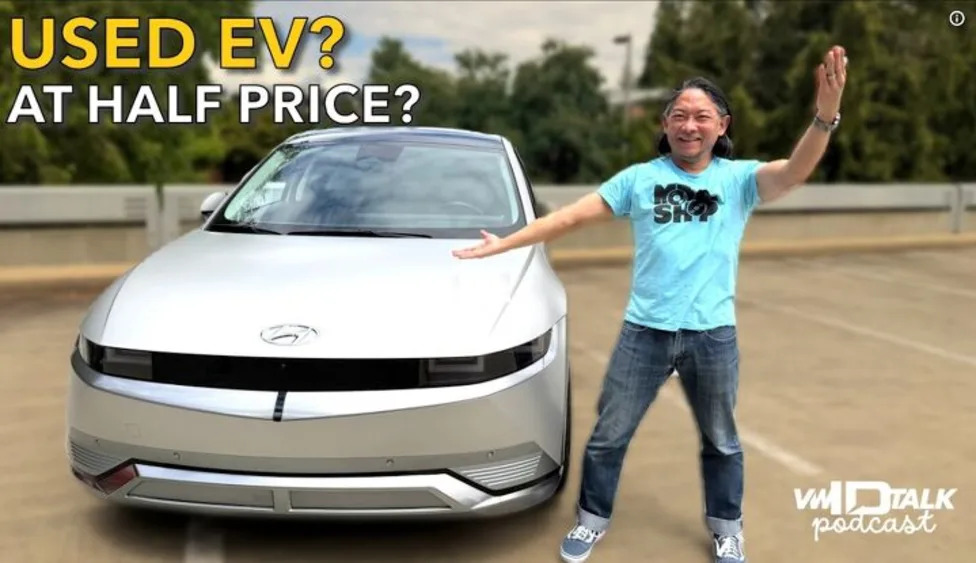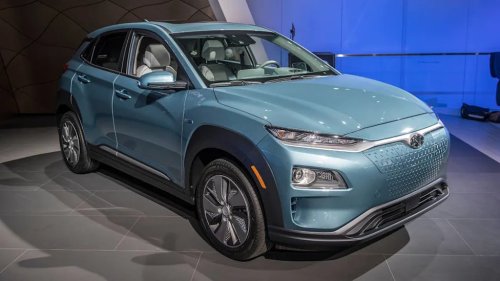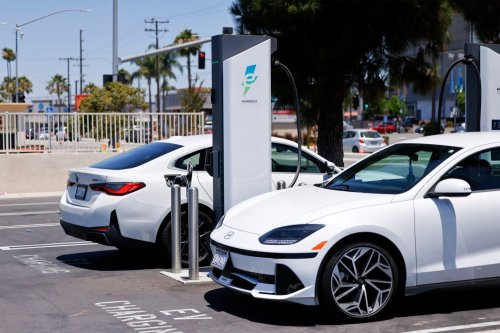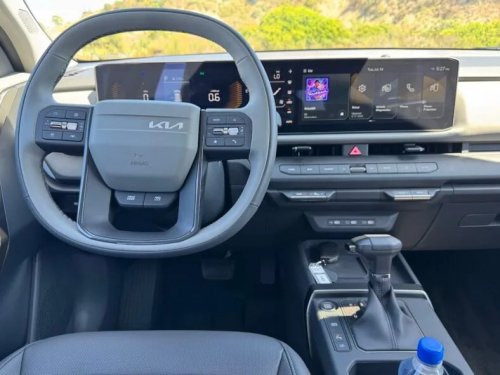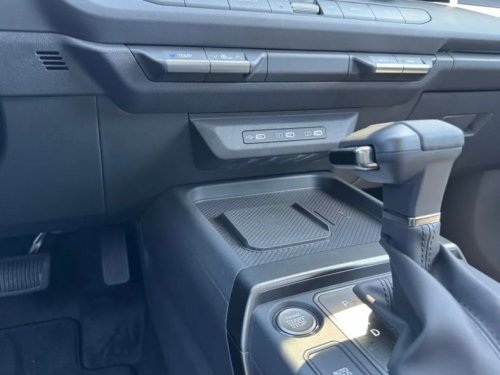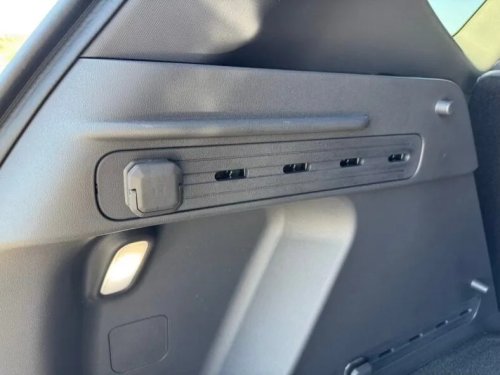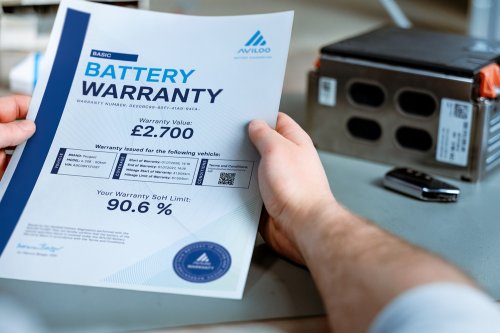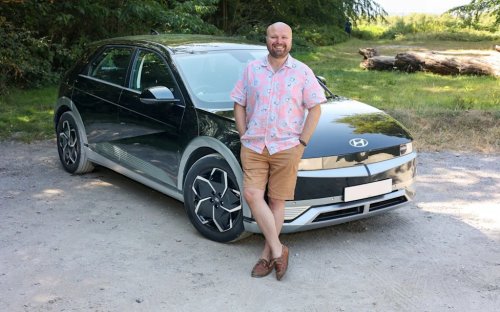


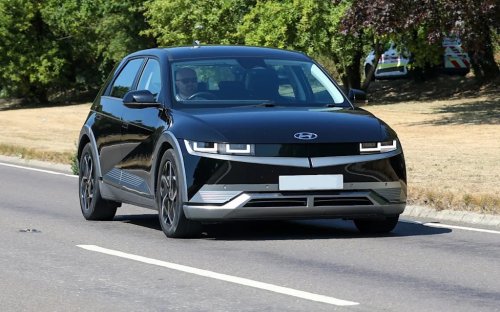
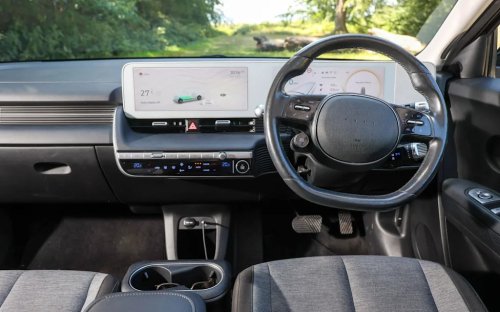



















The Hyundai Ioniq 5 that Robbins bought used three years after it was first registered - John LawrenceOnly an idiot would buy a used electric car… wouldn't they? Although I am employed as The Telegraph's automotive expert, it is fair to say that I learned my craft the hard way. There was the Toyota MR2 with sills that consisted mostly of rust and newspaper, the Volkswagen Golf that lasted precisely two days before it died, never to be revived; and, most recently, the Citroën D Special that's spent about three weeks of my three-year ownership on the road.So when I decided to buy a used EV as a family car, it was 50-50 as to whether this would be one of my brighter ideas – or another bad decision. A year on, here are my findings in response to the key questions regarding used EV ownership.Jump to:AdvertisementAdvertisementWhat is the real-world range?Do they take longer because you have to stop to charge?Has it gone wrong?How much does it really cost to run?Would you buy another used EV?Why did you choose an electric car?Primarily because it made sense. One of the benefits of an EV is that it can save a lot of money, with the caveat that you only get the full benefit if you have a charging point at home.I'm fortunate enough to be in that position. The savings compared with running our previous family car, a Skoda Superb estate, mitigated the extra cost of financing a newer EV. What's more, if I were clever, I could get one that was new enough to still have some of the original manufacturer warranty remaining.There was another reason: EVs looked like great value at the time. And having made the case for buying one in a Telegraph article, I felt I should find out whether the theory held true in the real world.What did you buy?I've long been a fan of the Hyundai Ioniq 5's retro-futuristic styling, comfortable ride and airy interior, while the sliding rear seats add versatility. It has enough boot space for our dog and family holidays, while the three-year-old example I could afford would have a couple of years of warranty remaining.The sliding rear seats are a welcome addition to the Ioniq 5 - John LawrenceWhat was the buying process like?Remarkably easy. I had visited main dealer Marshall Gatwick with the intention of trying a Kona, but in the end deemed it too small.AdvertisementAdvertisementI asked our salesperson, Jasmine, to look out for any likely Ioniq 5s that might come into stock and emailed a list of requirements, expecting to hear nothing back. But only an hour later, she had found a suitable car – offering to buy it into group stock if I'd put down a deposit, which would be fully refundable.My family and I tried the car and did a deal that included a three-year warranty extension, giving five years in total. It was a no-brainer, and we drove away in the Ioniq 5. Crucially, it drove like a new car.Had the battery degraded with age?I insisted on a battery health test before taking delivery, which all buyers of used EVs should do. The results showed 99 per cent of the original capacity remaining, which is very low degradation over three years. I have not tested it since, but there hasn't been a noticeable drop in the range it can cover.What is the real-world range?Officially, my 73kWh Premium model can do 298 miles; in practice, that translates as about 240 miles of real-world motorway range in the summer months, dropping to about 200 miles in the winter.AdvertisementAdvertisementOn one particularly frosty morning, with the outside temperature less than minus 10C, the car predicted it could only manage 160 miles – although this jumped to about 190 once on the move.Do you do long trips in it?All the time. We take regular 200-mile round trips, with a 460-mile journey to see family twice a year.The Ioniq 5 can manage about 240 miles on the motorway in summer, dropping to around 200 miles in winter - John LawrenceDo they take longer because you have to stop to charge?Yes, but not by much. One of the attractions of the Ioniq 5 is that it can charge very quickly, at up to 221kW. While you only ever see that speed in perfect conditions, it will still pull 150kW from a suitable charger with regularity.In practice, if we stop for a toilet break, a coffee and a 10-minute playground excursion, the car has usually finished recharging before we get back to it – meaning it's usually us, not the car, delaying the journey.Have you ever had range anxiety?A couple of times. Once my wife arrived home with the battery level reading 2 per cent, having been fixated on getting back late at night without stopping to charge.AdvertisementAdvertisementLonger journeys in the winter sometimes require one more charging stop than they do in the summer if you want to arrive home with a comfortable level of charge remaining.Has it caught fire yet?Oh, several times. I'm joking, of course. Not yet.Has it gone wrong in any other way?During the pre-delivery inspection, the dealer found the charging door wouldn't open when pressed. This was fixed under warranty.The air-conditioning fan refused to work for the entirety of one journey. But it worked perfectly the next time the car was started and has continued to do so.Otherwise, it has been faultless.Is public charging a big hassle?By and large, the network is good enough now that (if you're willing to accept the high cost of charging on motorways and trunk roads) you can be pretty confident in finding a working charger without having to use an app to check.AdvertisementAdvertisementYet to find the cheaper chargers, or the quickest, it's still worth using an app such as ZapMap to check for chargers along your route, while having a few back-up options in mind.The Hyundai Ioniq 5 that Robbins bought used three years after it was first registered - John LawrenceHow much does it really cost to run?During about 12,000 miles, the Ioniq 5's trip computer has recorded an average of 3.4 miles per kilowatt hour (mpkWh).Charging it exclusively at home, using my Ohme smart charger and an Octopus Intelligent Go tariff costing 8p per kWh, would have cost £282 for those 12,000 miles.Using public charging alone would have cost 10 times that, at today's average cost of 80p per kWh.With about 10 per cent of my charging at public sites, I estimate that I have spent about £540 on electricity over 12,000 miles.AdvertisementAdvertisementFor comparison, my previous Skoda Superb averaging 50mpg would have cost about £1,822, given the high diesel prices during that time.Servicing the Ioniq 5 hasn't been as cheap as expected, because it needs a battery coolant change every four years (or 40,000 miles), making the first service surprisingly costly, at £431. However, the next few services will be much cheaper.What do you like about it?The fact that it's so cheap to run. The Ioniq 5 is also relaxing to drive, especially on a long trip, due to the comfortable suspension and lack of road noise.During cold weather, pre-conditioning the interior – and getting into a car that's warmed up with the ice on the screen melted – is a joy. In summer, the same set-up means the air-conditioning can cool the car before you enter.Any regrets?Only a reservation about the type of car rather than how it is powered. We miss the enormous boot of our old Superb; I also miss its solidity. The Ioniq 5's interior is roomy and airy, but it feels flimsy by comparison.AdvertisementAdvertisementAmong the traits I least like is how the indicator stalk will self-cancel too far if you spin the steering wheel back to its central position too quickly, causing the indicators to switch sides rather than switch off. It's a consequence of the stalk being damped too lightly, and while it's far from the end of the world, it niggles at me disproportionately every time.The indicator stalk can self-cancel too far, causing the indicators to switch sides rather than switch off - John LawrenceWhat about depreciation?When I bought the car, I did a basic valuation using Motorway.co.uk to act as a yardstick. At the time, with 23,000 miles, Motorway reckoned it would fetch £17,051.Interestingly, that value had fallen to £15,025 by April, by which time the mileage was 33,000.However, as the Iran war and the ensuing fuel crisis stoked renewed interest in used EVs, the value rose again. At the time of writing, Motorway valued it at £16,725 with 35,000 miles.Would you buy another used EV?Yes – with a couple of provisos. A battery state-of-health check is essential, since certain EV models seem to be suffering greater degradation than others. That reassurance would be invaluable.AdvertisementAdvertisementI would also want the peace of mind of a long vehicle warranty, in case some of the heavier-duty electrical components went wrong; an on-board charge control unit, for example, can be costly to replace (and wouldn't be covered by the battery warranty).If a used EV met those two conditions, I would certainly consider another.Try full access to The Telegraph free today. Unlock their award-winning website and essential news app, plus useful tools and expert guides for your money, health and holidays.