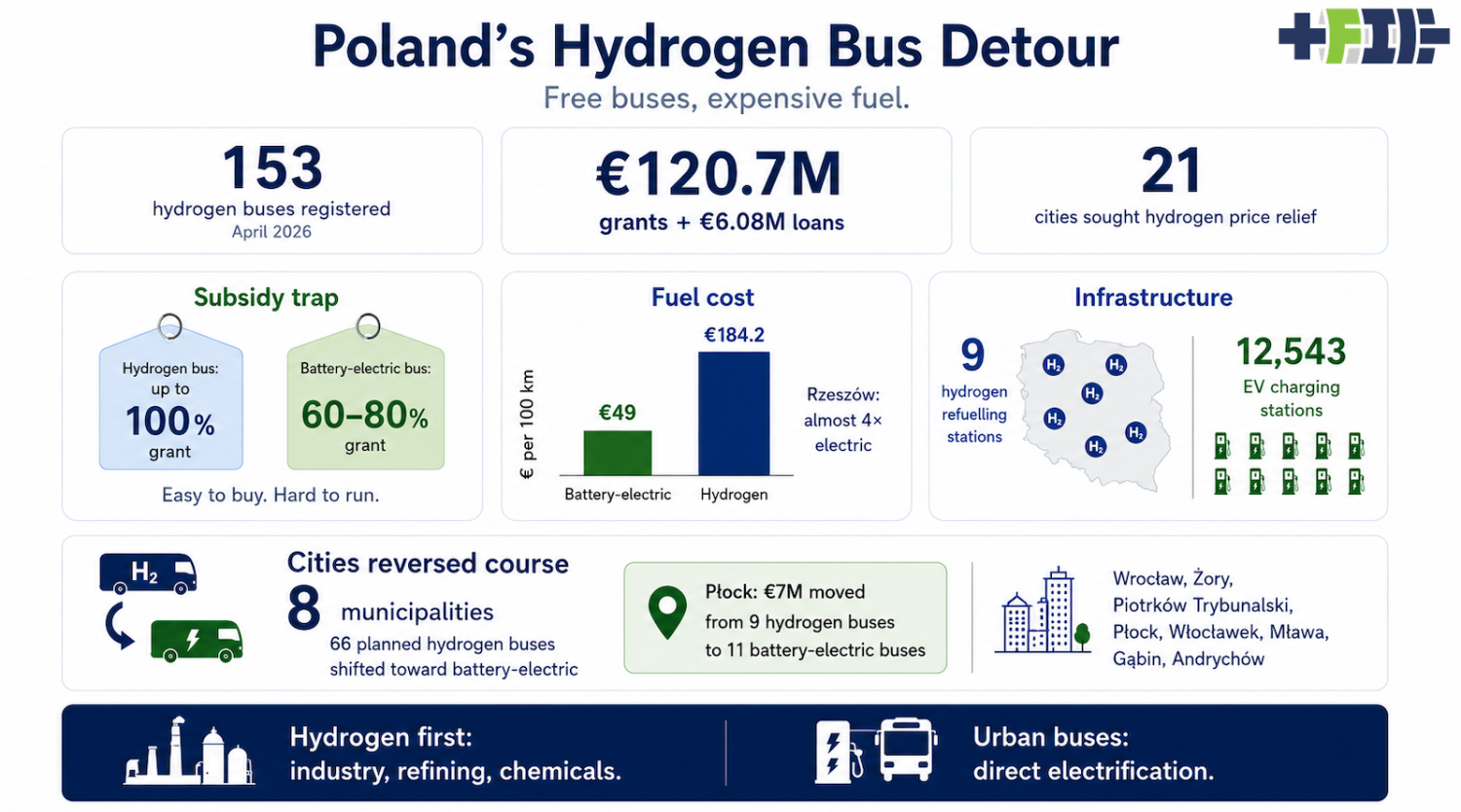
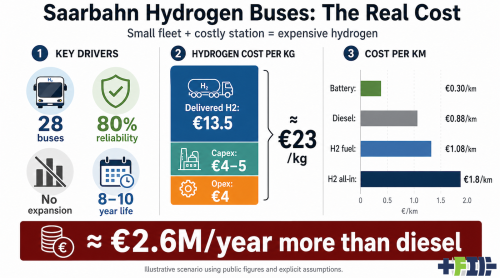
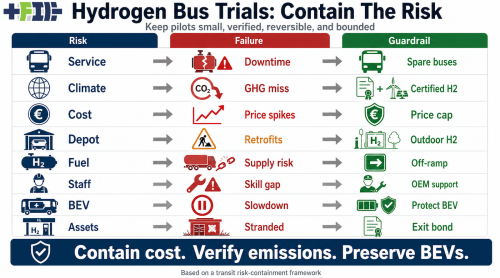
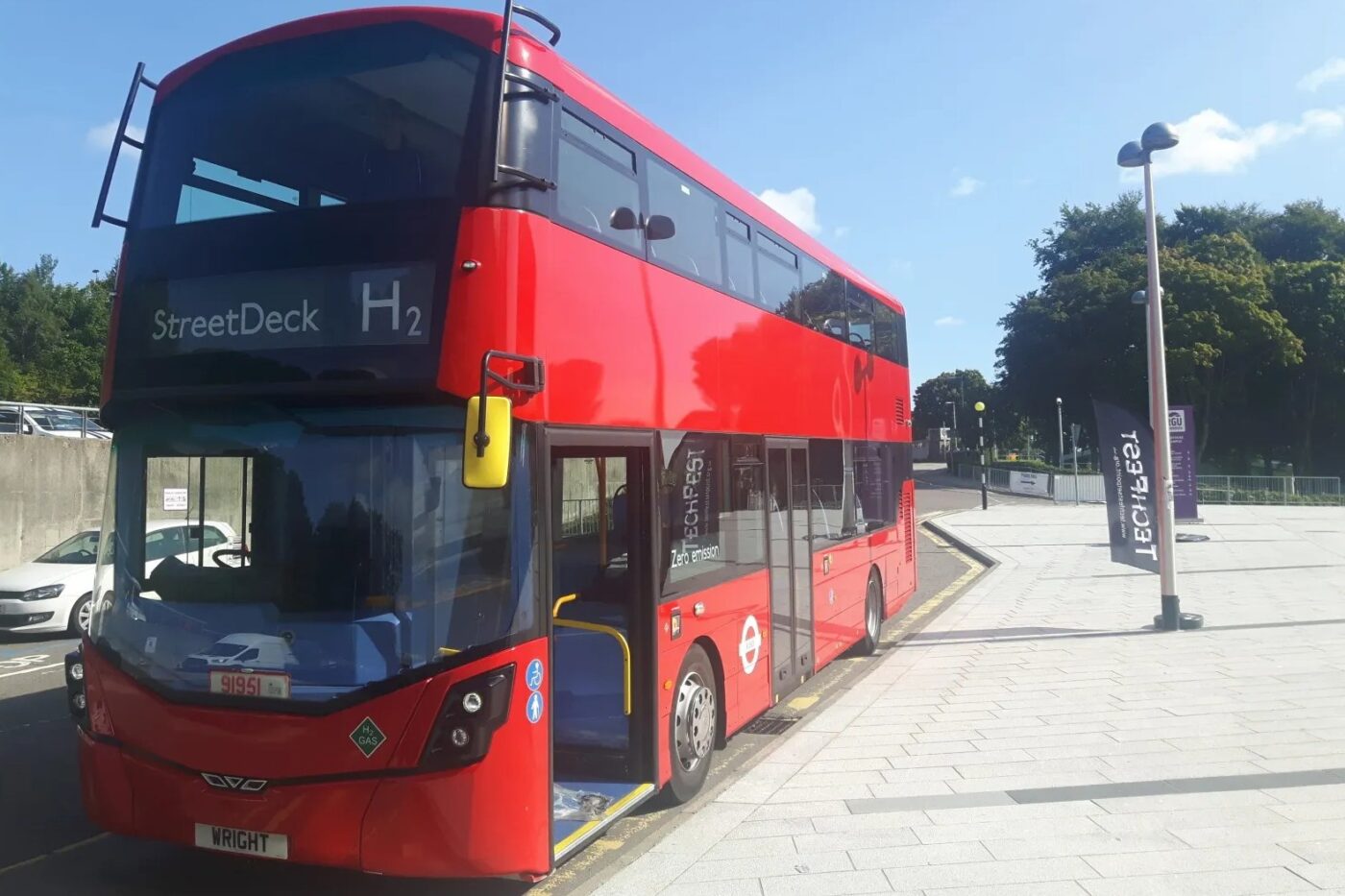
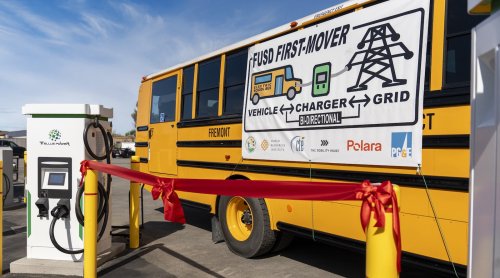
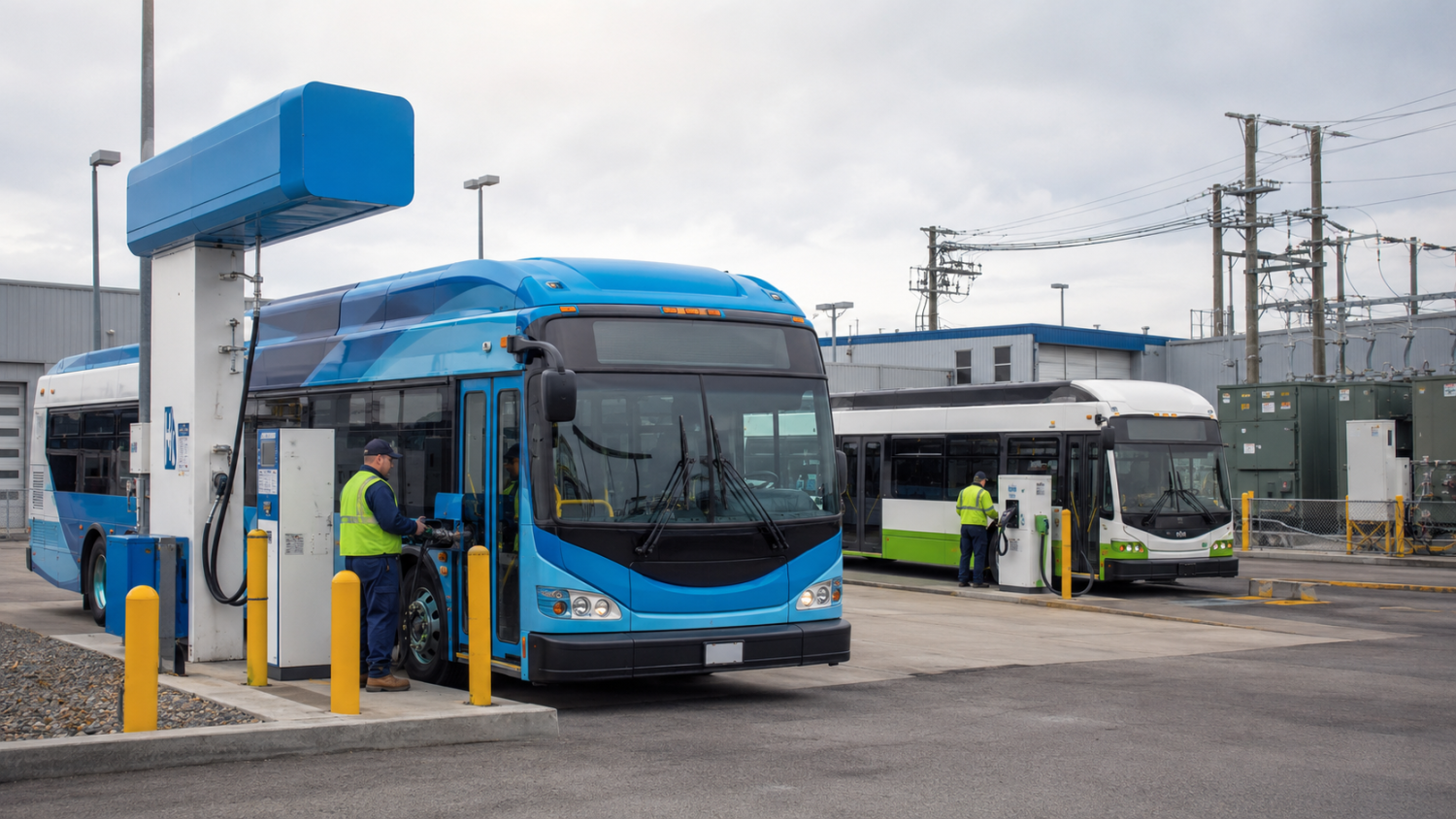
Hydrogen buses are real. They can carry passengers, complete routes, refuel, and operate in public transit fleets. That much has been demonstrated often enough that it is no longer the useful question. The useful question for transit agencies is whether hydrogen is a better procurement choice than battery-electric buses once the full system around the vehicle is included. A transit agency is not buying a demonstration route, a technology press release, or a zero-emissions label on the side of a bus. It is buying 12 to 15 years of service reliability under operating-budget pressure, political scrutiny, maintenance constraints, and rider expectations. That is why the relevant comparison is not fuel-cell bus versus diesel bus in isolation, but hydrogen bus system versus battery-electric bus system over the life of the fleet. That is the core of my deeper TFIE Strategy Briefing assessment of hydrogen bus procurement risk. The vehicle is the visible part of the decision, but the risk sits in the operating model around it. Hydrogen has to be made or sourced, compressed or liquefied, delivered, stored, and dispensed safely. The agency also has to deal with fuel quality, station maintenance, technician capability, stack warranties, parts supply, supplier durability, emergency procedures, contract terms, fuel carbon intensity, and eventual decommissioning. None of those are theoretical concerns, and all of them matter when buses are expected to be available every day. Hydrogen bus advocates usually lead with range, fast refueling, zero tailpipe emissions, and less dependence on depot charging windows. Those claims are not imaginary. Battery-electric planning is harder on some routes and in some depots, especially where long blocks, short layovers, winter performance, constrained depot space, or weak grid connections make the transition more complicated. Those conditions can make hydrogen look attractive in planning documents and pilots, before the full fuel-supply and infrastructure burden is visible. That distinction matters. A technology that can be made to work somewhere is not automatically a mainstream decarbonization pathway. Engineers can make many things work with enough money, bespoke infrastructure, and public-sector risk absorption. The professional test is whether the approach is economic, repeatable, maintainable, insurable, and scalable against alternatives that are improving at the same time. Battery-electric buses do require serious work. Depot electrical design, utility coordination, route analysis, charger scheduling, winter planning, maintenance retraining, and service-continuity planning all have to be done properly. Poorly executed deployments should be treated as implementation failures, not as proof that direct electrification is structurally unsuited to transit. The agencies that succeed with battery-electric buses are not avoiding complexity; they are moving it into the power system, depot planning, and operational scheduling where there is a rapidly expanding base of experience. Hydrogen has to beat that pathway as it exists now and as it continues to improve. It has to compete with depot charging, in-motion charging, managed charging, targeted opportunity charging, better battery warranties, expanding OEM support, declining battery costs, grid decarbonization, and the practical advantage of using the electricity system instead of creating a parallel fuel chain for a relatively small fleet class. That is a high bar, and it keeps getting higher as batteries and charging systems improve. The difference between extending the electricity system and adding a specialized molecule supply chain is often underweighted in procurement debates. A transit agency may not own the electrolyzer, the reformer, the compression equipment, or the delivery truck, but it still carries the operational consequences when fuel prices rise, a station is unavailable, delivered fuel carbon intensity falls short of the procurement case, or the maintenance ecosystem turns out to be thin. Outsourcing parts of the chain does not make the exposure disappear. Station utilization is one of the clearest places where the denominator shows up. A hydrogen station can be announced, funded, opened, photographed, and counted as progress while still being expensive infrastructure serving too few buses. If the fleet is small, the capital and maintenance burden is spread over too few kilograms. If the station is unreliable, the transit fleet loses resilience. If the hydrogen is expensive, the operating budget absorbs the cost. If the fuel is fossil-derived or only partly low-carbon, the emissions claim weakens. If the agency does not buy more hydrogen buses, the station becomes underutilized infrastructure looking for a reason to exist. The market evidence is also noisier than it should be for a pathway that is supposed to be scaling. Announcements, options, grants, framework agreements, pilot kilometres, station openings, and component orders are often treated as if they all point to the same conclusion, but they do not. The cleaner evidence would be active fleets, high utilization, transparent operating costs, strong uptime, repeat orders, and declining subsidy dependence after several years of service. That record is much harder to assemble. This is not a pedantic distinction once operating budgets are involved. A cleanly scaling pathway becomes easier to count over time because buyers, deliveries, utilization, maintenance costs, warranty claims, uptime, and repeat purchases converge into a clearer market record. Hydrogen buses still require too much sorting between what was announced, what was funded, what was ordered, what was delivered, what is running regularly, and what faded after the demonstration phase. Some jurisdictions will keep buying hydrogen buses for a while because they support industrial policy goals around electrolyzers, fuel cells, station operators, domestic manufacturing, or local hydrogen-economy narratives. That does not make the transit case strong. Aberdeen is a useful example because its hydrogen buses were tied to an attempt to create a local hydrogen economy to replace a fading oil and gas base, and the city ended up trying to sell them when the refueling station they depended on was not refurbished by its owner. The issue was not whether a hydrogen bus could move passengers. The issue was whether the system around the bus remained durable. There may still be narrow cases where hydrogen buses are defensible. An agency with unusually long routes, limited electrical capacity, constrained depot space, genuinely cheap low-carbon hydrogen, strong station guarantees, robust maintenance support, and transparent lifecycle emissions might be able to justify a portion of a fleet. That is a niche argument, not a general transit strategy. Transit decarbonization already has enough work in front of it. Agencies need to replace diesel fleets, upgrade depots, coordinate with utilities, train staff, manage charging, protect service reliability, and explain the transition to boards and the public. Adding hydrogen only makes sense if it reduces total cost or total risk. It makes much less sense when it functions mainly as another demand anchor for a hydrogen strategy that has failed to find enough better uses. The procurement test should be blunt. What is the delivered hydrogen cost over the life of the fleet, and who carries the risk if it rises? What utilization rate does the station need, and what happens when it is unavailable? What maintenance costs appear after the pilot period? What warranties apply to fuel-cell stacks and storage systems? What is the lifecycle carbon intensity of the fuel, not just the tailpipe story? How many agencies have returned for repeat orders after several years of service with lower subsidy dependence and transparent operating performance? Strong answers to those questions can justify hydrogen in specific fleets. Weak, vague, confidential, or subsidy-dependent answers should be treated as warning signs. A vehicle that works technically can still be a poor procurement choice if the system around it is expensive, fragile, opaque, or dependent on continuing public support. Vienna’s sidelined hydrogen buses are a reminder that the support ecosystem matters as much as the propulsion system, because ordinary parts, service depth, and supplier responsiveness become operational facts very quickly. That is where the evidence keeps pointing. Hydrogen buses are real machines, but that is a low bar for public procurement. The serious comparison is between two operating systems: one that extends a rapidly scaling electricity system, and one that requires a dedicated hydrogen fuel chain for a limited transit application. Transit agencies should not reject hydrogen because it is hydrogen. They should reject weak procurement cases because weak procurement cases become expensive operating problems. If a hydrogen bus proposal cannot beat battery-electric buses on delivered cost, reliability, emissions, infrastructure utilization, maintenance depth, warranty quality, and repeatability, the simpler answer is also the cleaner one: electrify the buses directly and leave the molecule supply chain for the narrow cases where it can defend itself. The full procurement-risk assessment is available at TFIE Strategy Briefing: Hydrogen Buses Are A Procurement Risk Premium, Not A Transit Decarbonization Shortcut. It goes deeper on the operating-system comparison, delivered fuel risk, station utilization, maintenance exposure, lifecycle emissions, repeat procurement, and the evidence that would change the verdict. For more reality-based analysis of transport decarbonization, hydrogen claims, infrastructure strategy, and climate-tech denominators, subscribe to TFIE Strategy Briefing.


















 +32 others