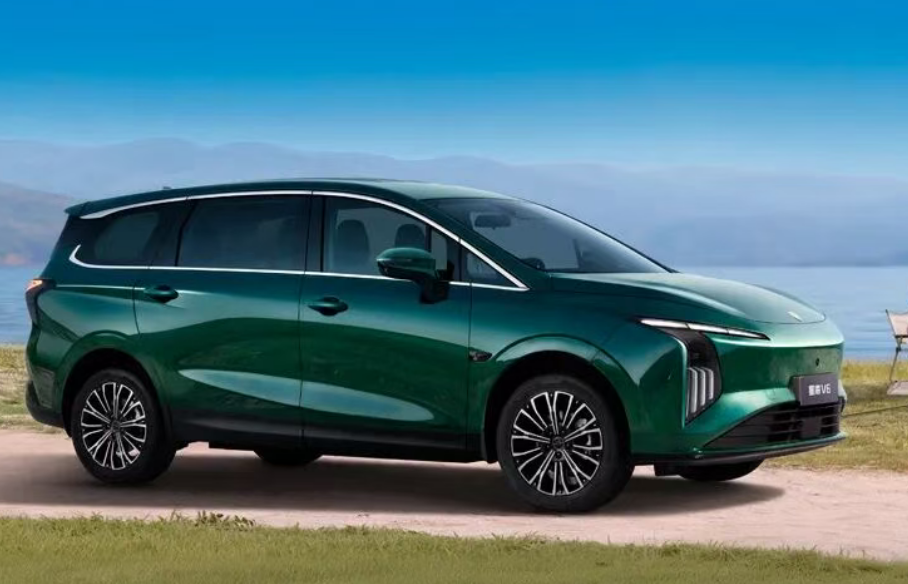
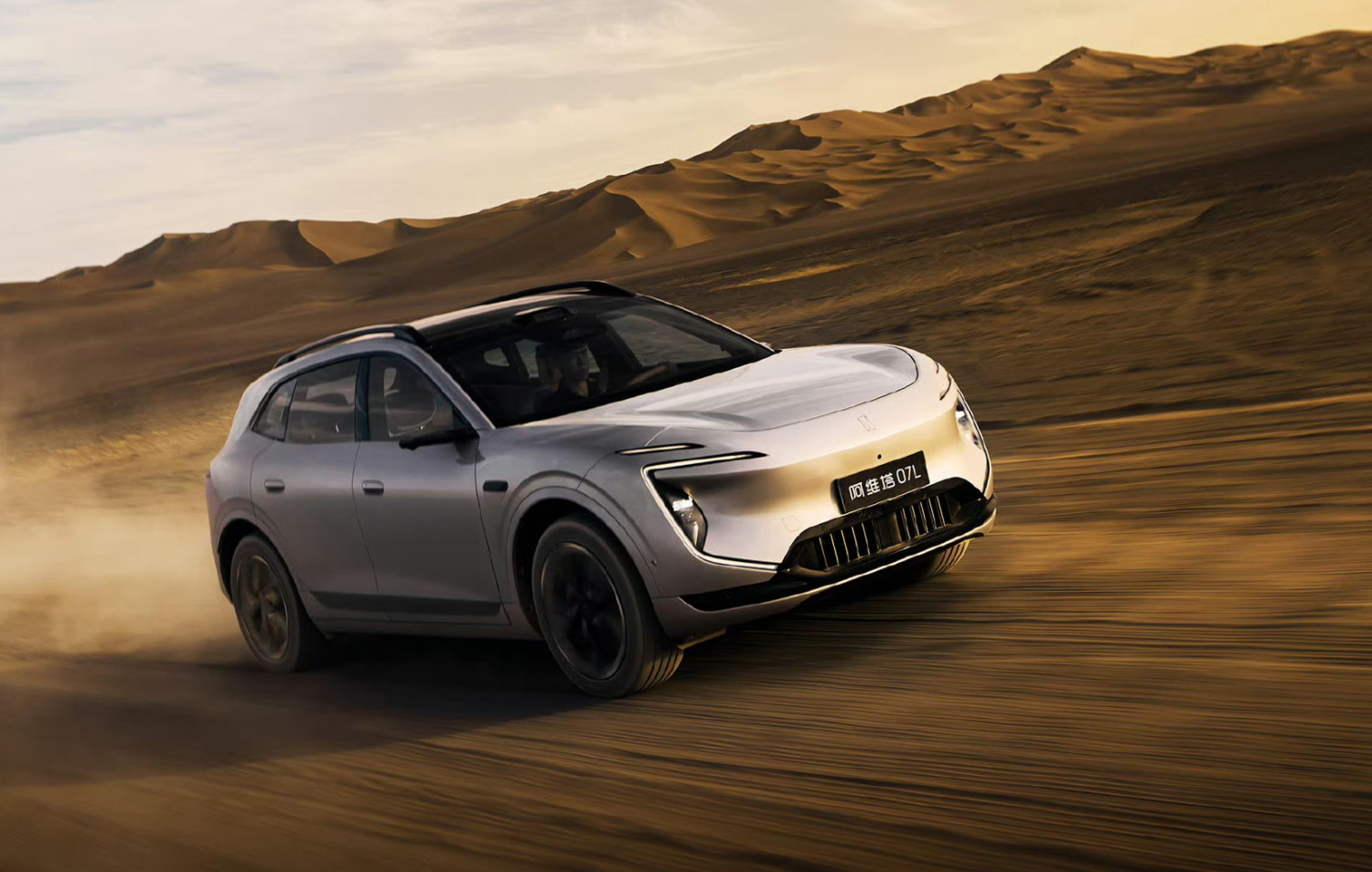
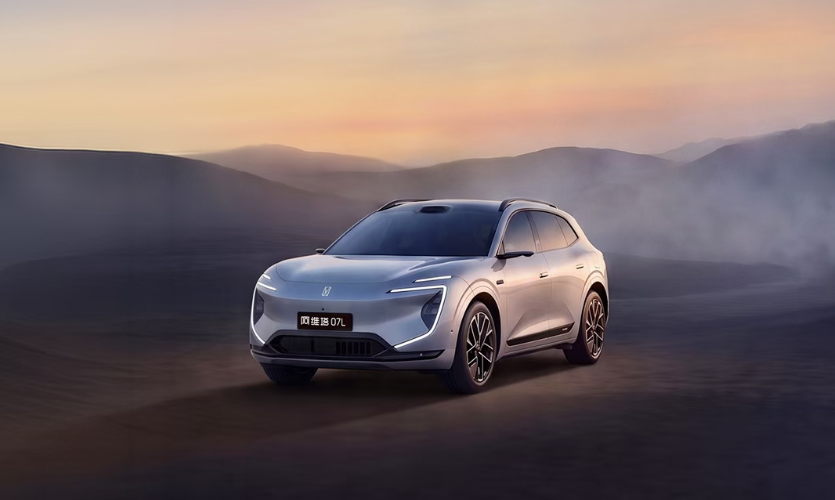
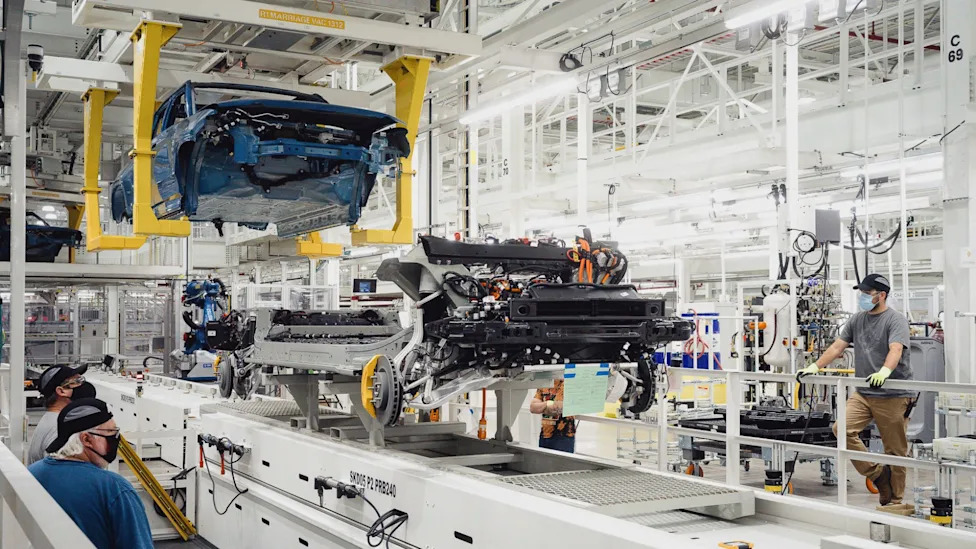
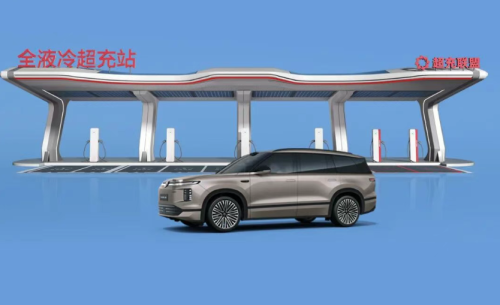
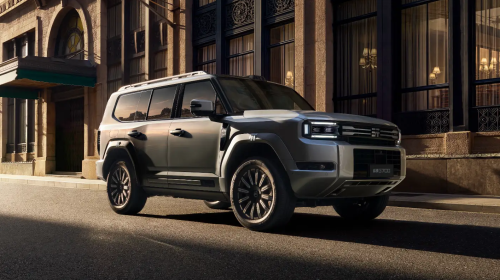
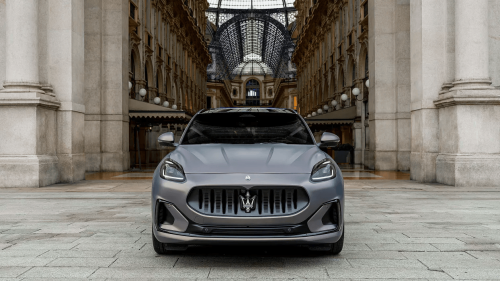
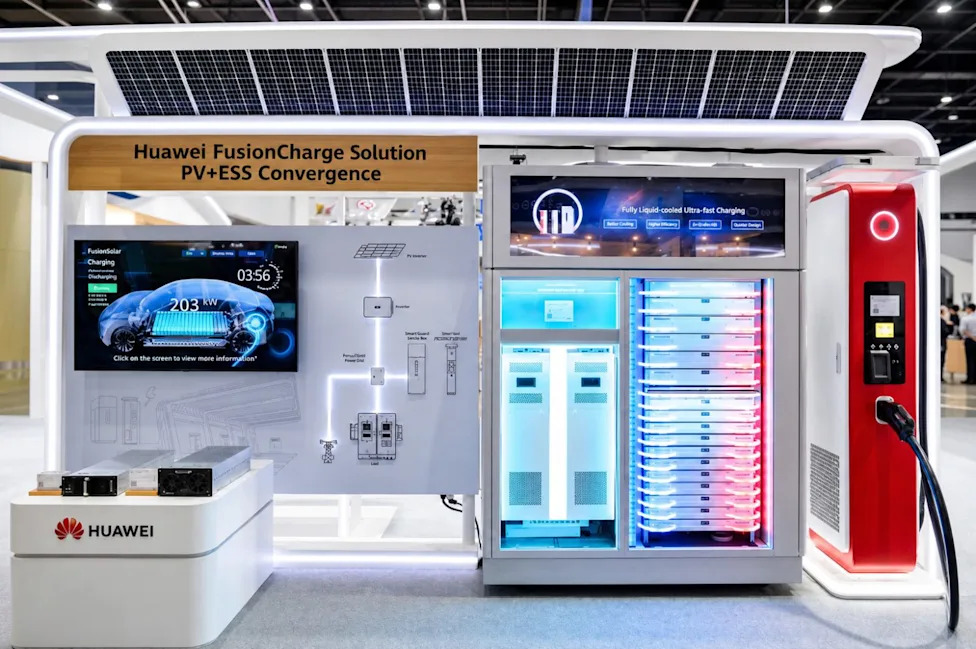
Image: HuaweiYou pull into a fast charger, plug in, and settle in for 35 minutes of doom-scrolling. That's the current EV charging experience for most drivers. At Power2Drive Europe in Munich this June, Huawei claimed its FusionCharge platform can add 200 km (125 miles) of range in five minutes. There's always fine print — and this has some — but the architecture underneath that number is solving a genuine infrastructure problem right now.The Clever Part Isn't the Speed – It's the Grid MathHuawei's DC-coupled battery system lets ultra-fast charging sites run on roughly 50 kW of grid connection — a fraction of what conventional hubs require.Conventional ultra-fast charging hubs need massive grid connections. That means permits, construction queues, and months of delays. Huawei's platform sidesteps all of that by connecting its battery storage directly to a DC bus — removing a conversion stage, cutting losses, and letting the internal battery deliver peak bursts while the grid sips quietly in the background. Permit timelines that typically run several months compress to weeks.AdvertisementAdvertisementThe hardware specs reflect that ambition:Total output reaches up to 720 kW, distributed across up to 12 connectorsAutomated power-sharing allocates capacity based on what each vehicle actually needsCurrent runs up to 500 A per connector (800 A in some configurations)Voltage range of 150–1,000 V covers everything from compact passenger EVs to heavy commercial vehiclesThe efficiency numbers hold up:System efficiency reaches up to 96%Battery storage round-trip efficiency around 92.1%Noise stays below 55 dB at 25°C — quieter than a normal conversationHardware is rated for roughly a decade of serviceCarries TÜV prime-level safety certificationAdvertisementAdvertisementThe platform is also fully modular, meaning operators can start with fast charging and upgrade to ultra-fast without replacing core equipment.The liquid cooling is what makes those current levels survivable. Huawei's enclosed system spans power units, dispensers, and cables — sealing electronics against wet dust and salt fog, keeping noise at a manageable level, and extending hardware life toward that ten-year target. For fleet depot operators running cost-per-session math, that longevity translates directly to the bottom line.The Other Half of the Equation Is Still in a LabA 720 kW charger only matters if the car on the other end can actually absorb the power — and most current EVs can't.Think of it like a phone camera's "100x Space Zoom": technically real, practically conditional. The 5-minute figure requires a vehicle whose battery can accept that charge rate. FAW's Hongqi brand, working with Lishen Battery, has tested a prototype that reportedly charges from 10% to 70% in 3 minutes 41 seconds at peak rates around 12C — meaning an 80 kWh pack could theoretically pull close to 960 kW under ideal conditions. Impressive numbers. Also: still a prototype, with no announced production timeline.AdvertisementAdvertisementFor fleet managers, the more immediate story is deployment speed and scalability. Huawei is also field-testing a 1,500 kW megawatt-class variant in China, targeting logistics hubs and heavy trucks ahead of European market entry. The TÜV certification covers equipment safety. It does not cover the separate question of how European regulators view Huawei hardware inside critical transport infrastructure — a tension worth watching as deployments scale.The 5-minute charge is a destination, not a train that's arrived. But the grid-smart foundation underneath FusionCharge is operational today — and it's already reshaping where ultra-fast charging can realistically be built.From the coolest cars to the must-have gadgets, GadgetReview's daily newsletter keeps you in the know. Subscribe - it's fun, fast, and free.



















 +59 others