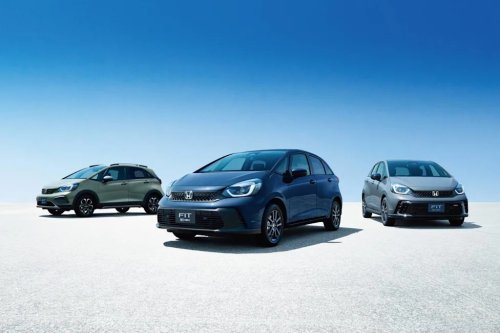
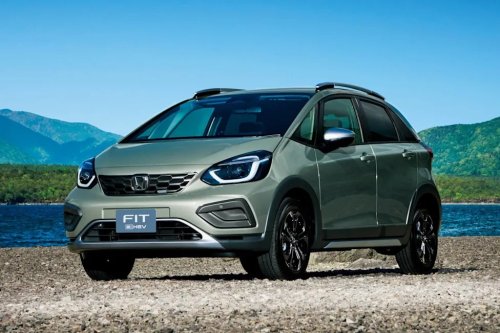
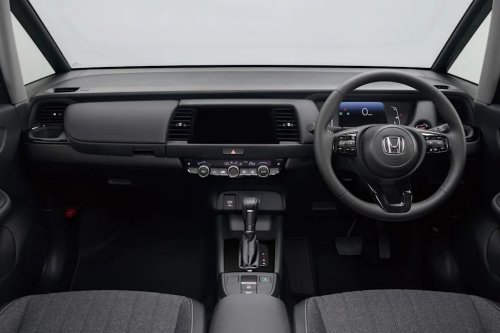
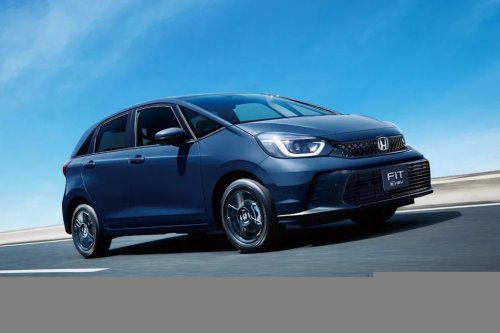
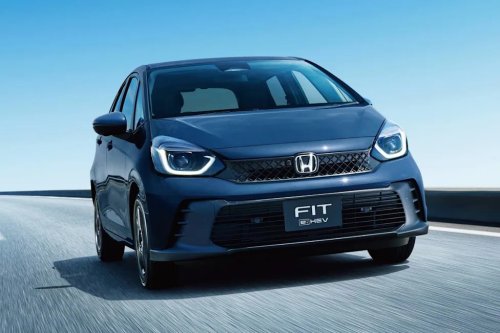
Autoblog and Yahoo may earn commission from links in this article.Miss the Fit?Subcompact hatchbacks and sedans are extinct in the U.S, and there are no more sub-$20,000 brand-new cars in the market today. But if you wind the clock back 10 to 15 years, there were a lot of great choices available. One of those was the Honda Fit, and it was quite a packaging miracle.Beyond that, the Fit was a surprisingly fun car to drive. It's far from a hot hatch, but its chassis felt dynamic, and the manual was a joy to shift. Despite its talents, it was discontinued in the U.S. at the end of the 2020 model year. That also means America didn't get the fourth-gen model and is unlikely to ever come back. Still, the car has a strong fanbase, one that quite possibly borders on rabid.HondaThe JDM Model Gets an UpdateThe current generation Fit is no spring chicken. Introduced in 2019 for the 2020 model year, the little hatchback is creeping up on its seventh year. It was updated in 2022, but it's been updated yet again this year. One can say that it's all part of Honda's plan to extend its vehicles' lifespans beyond midsize models into large models.AdvertisementAdvertisementUnlike the Chinese model, which has a completely different face, the JDM version retains the more familiar look with its large, non-aggressive headlights. It's a refreshing sight to see given that everything is trying to look angry and aggressive. Aside from that, there are revisions to the trims and equipment list, along with some styling changes.HondaWhat's New?Honda got rid of the themed trims for the Fit. From Basic, Home, and Luxe, it's now X, Z, and the Luxe has been dropped, with the sporty-looking RS inheriting some of the premium touches from the discontinued variant. The high-riding Crosstar remains for those who'd rather have the Fit over an HR-V.As for exterior changes, the Z gets some sportier trimmings to make it look closer to the RS. The Z also gains heated seats, UV- and IR-cut glass, and a new clearcoat formulation. As for the RS, it comes with a factory body kit and gloss-black exterior highlights, while the cabin gets suede seats, red contrast stitching, and sports pedals.HondaOther HighlightsIt wouldn't be a Fit if it didn't have those clever rear seats, and that's been retained for this model update. Dubbed the ULT, the back seats still flip and fold to maximize cargo space and versatility, rivaling those of larger crossovers. Also unchanged are the powertrain and drivetrain choices. Standard models use a 1.5-liter engine producing 119 hp and 107 lb-ft of torque, while the hybrid e:HEV also makes 119 hp but delivers higher torque at 187 lb-ft.AdvertisementAdvertisementBut whether it's gas or hybrid, the Fit can be equipped with all-wheel drive in Japan. All trims can also be specified with that option, which should prove useful in snowier regions.As for price, it starts at 1,806,200 yen for the most basic non-hybrid model and goes up to 2,955,700 yen for the top-spec all-wheel-drive hybrid trim. Convert that at current exchange rates, and that's about $11,200 to $18,300. With pricing like that, it's no wonder these are all over Japan.HondaHondaView the 6 images of this gallery on the original articleThis story was originally published by Autoblog on Jul 10, 2026, where it first appeared in the News section. Add Autoblog as a Preferred Source by clicking here.



















 +39 others