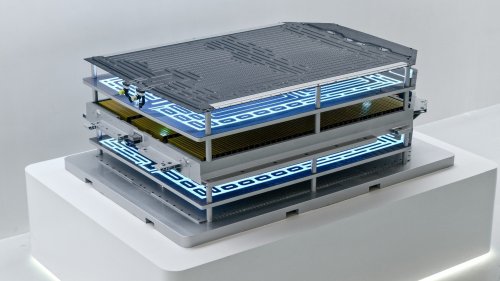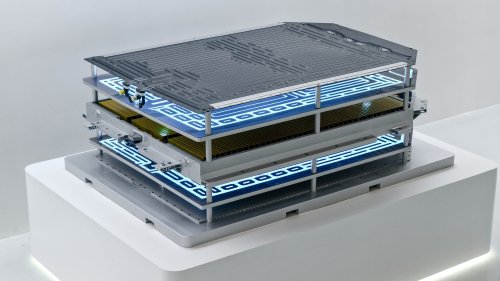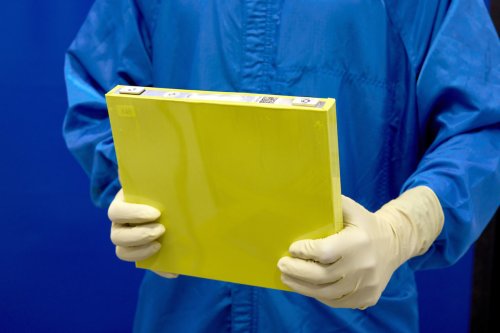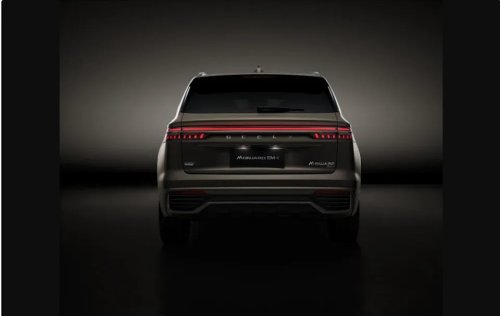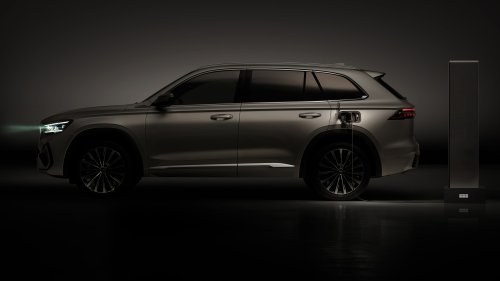



















Geely's Solid-State Battery Promise: The Numbers Behind the 500 Wh/kg HeadlineGeely Holding says it will begin pilot deployment of solid-state batteries across its brand portfolio in 2027, with real-world validation already running this year. The company's stated target is up to 500 Wh/kg, a range figure comparable to diesel-powered cars, and packs that could stretch across Geely, Zeekr, Lynk & Co, Volvo, Polestar, Lotus, Smart, Proton and Farizon. A service life approaching a million kilometers has also been attached to the claim. CarNewsChinaYahoo!Those are enormous numbers. They're also numbers that need unpacking, because the single most important qualifier — whether 500 Wh/kg describes a cell or a finished pack — changes whether this is aggressive but credible or borderline impossible.Cell versus pack is the entire argumentGravimetric energy density is measured at two levels. Cell-level counts the electrodes, separator, electrolyte and can. Pack-level counts everything: modules, busbars, cooling plates, the enclosure, the BMS, the crash structure. Real-world cell-to-pack ratios typically land somewhere between 65 and 80 percent depending on how aggressive the packaging is.Related ArticlesColorado Finally Figured Out How Long Teen Driver's Ed Should Take. Every Other State Just Shrugged.O'Reilly TCPA Settlement Explained: Reassigned Numbers, Do-Not-Call Rules and Claim DeadlinesAdvertisementAdvertisementRun the arithmetic both ways. If 500 Wh/kg is a cell figure, a well-integrated pack lands somewhere around 350 to 400 Wh/kg — extraordinary, roughly triple what most production EV packs deliver today, but within the range of what lithium-metal chemistry can theoretically support. If it's a pack figure, the underlying cells have to be running somewhere north of 620 Wh/kg. Nobody has demonstrated that at automotive scale in a cell that survives meaningful cycling. Geely hasn't clarified which it means, and until it does, everything downstream of that number is provisional.Where the energy actually comes fromHere's the part most coverage skips: the solid electrolyte isn't what makes the battery denser. It's what makes the anode possible.Conventional lithium-ion cells use a graphite anode because graphite safely hosts lithium ions between its layers. It's also heavy and volumetrically inefficient — graphite's theoretical capacity sits around 372 mAh/g. Lithium metal comes in around 3,860 mAh/g. You'd use lithium metal every time if you could.You can't, with a liquid electrolyte, because lithium metal plates unevenly and grows dendrites — needle-like structures that punch through the separator and short the cell. A rigid solid electrolyte is supposed to physically block that growth. That's the whole thesis. Swap graphite for lithium metal, delete a chunk of anode mass, and the energy density climbs.AdvertisementAdvertisementThat's the promise. The engineering reality is harder.The three problems nobody solved yetDendrites still happen. Solid electrolytes aren't perfectly uniform. Lithium finds grain boundaries, voids and defects and grows through them anyway, particularly at the high charge rates anyone actually wants. Slow charging suppresses it. Nobody's buying a 621-mile EV to charge it slowly.Sulfide chemistry is manufacturing-hostile. Most high-performance solid electrolytes in development are sulfide-based, and sulfides react with atmospheric moisture to produce hydrogen sulfide. Building these cells requires dry rooms an order of magnitude drier than a conventional cell line, which is a capital cost problem, a throughput problem and a yield problem all at once.Lithium metal breathes. The anode expands and contracts with every cycle. To maintain contact between anode and solid electrolyte, the cell stack has to be held under sustained mechanical pressure — real pressure, the kind measured in megapascals. That means the module and pack become a structural clamping fixture, and every kilogram of that fixture comes straight back out of your pack-level energy density.AdvertisementAdvertisementWhich is why the most technically revealing detail in Geely's announcement isn't the 500 Wh/kg figure at all. It's the named materials partner: Dow, whose technical lead described an adhesive for solid-state cells stable from -40 °C to 120 °C. Dow already supplies structural bonding chemistry for conventional EV pack assembly, having launched a high-bonding adhesive line for cell-to-shell bonding several years ago. Naming a bonding partner for a solid-state program is a quiet admission that stack integrity under thermal cycling is a live engineering problem, and that Geely is solving it with adhesives rather than mechanical hardware. That's a real detail. It's also a reminder that a solid-state pack is a bonded, preloaded assembly — which has implications for whether anyone will ever repair one at module level. CarNewsChina"Pilot deployment" is doing a lot of workThis isn't Geely's first solid-state commitment. In its five-year blueprint published in January, the group stated it would gradually realize the industrialization of semi-solid and solid-state batteries alongside pushing its existing battery safety standards.That's a roadmap, not a production date. And in Chinese industrial usage, a demonstration or pilot deployment typically means a small validated fleet — sometimes fleet-operated, sometimes internal — running instrumented cells under monitored conditions. It proves you can build the cell repeatably in low volume. It says nothing about cost per kilowatt-hour, yield rate, or whether the chemistry survives five winters in Harbin.Worth remembering: solid-state batteries have already been commercially deployed. Bolloré's polymer-electrolyte buses ran for years in European cities. They worked. They also had to be held at 60 to 80 °C continuously to keep the polymer conductive, which is fine for a bus that never sleeps and useless for a car parked at an airport for a week. Solid-state has always been real. What's never been real is solid-state that's simultaneously dense, fast-charging, cold-tolerant, cheap and manufacturable.Why American buyers shouldn't rearrange their plansEven a total success here lands on a market that's been deliberately walled off. The U.S. Trade Representative's Section 301 determination put Chinese-built electric vehicles at 100 percent duty and Chinese lithium-ion EV batteries at 25 percent. The first number is prohibitive by design. The second one matters even for Volvo and Polestar models assembled in South Carolina, because the tariff attaches to the cells, not the car.Related ArticlesInside Tesla's 64-Stall Queens Supercharger: Power, Utility Costs and Rideshare DemandTesla's Cybercab Has No Steering Wheel and No Backup Plan — Which Is Why Employees Ride First, Not YouAdvertisementAdvertisementThere's a genuine irony in the current policy stack, too. The battery-sourcing rules that used to punish Chinese content did so through the clean vehicle tax credit — and that credit is gone. The IRS states plainly that the Section 30D credit is not allowed for any vehicle acquired after September 30, 2025, along with the used and commercial versions. The carrot that shaped supply chains for three years has been removed. Only the stick remains, and the stick is a customs duty.Practical takeawaysFor owners of current EVs: don't let this change a purchase decision. Pilot fleets in 2027 mean customer cars no earlier than the back half of the decade, and probably in China first. Your car's residual value is far more exposed to charging-network changes and lease-return volumes than to a battery that doesn't exist yet.For anyone eventually buying one: read the warranty carefully. A million-kilometer figure is a cycle-life claim. Lithium-metal cells still degrade calendar-wise regardless of use, and every production battery warranty is written in years and miles, with the shorter one governing. Ask which number binds.On insurance: solid-state removing the flammable carbonate solvent is a real safety gain, but "non-flammable electrolyte" is not "inert battery." Lithium metal is chemically aggressive, and a breached sulfide cell releases toxic gas rather than flame. More immediately, insurers total EVs over pack damage that would be a cosmetic repair on a combustion car, and early solid-state packs will be more expensive per kilowatt-hour, not less. First-generation buyers should expect their total-loss threshold to be closer than they think.AdvertisementAdvertisementWhat would actually prove this: third-party cycle data at real charge rates across a real temperature band, a named cell plant with a stated gigawatt-hour capacity and a commissioning date, and a homologated production vehicle. Announcements are cheap. Yield curves aren't.Geely has earned some benefit of the doubt — this is a group that moved four million vehicles globally last year and has a track record of executing on hardware other people were still whiteboarding. But the correct posture toward any solid-state timeline, from anyone, remains the one the industry has learned the hard way over a decade: believe the plant, not the press conference.Images Via: GeelyJoin our Newsletter, follow our Instagram page, and connect with us on Facebook.