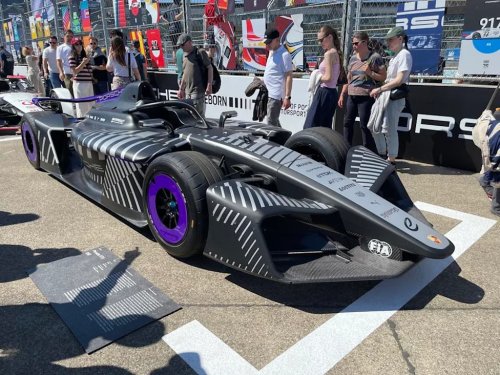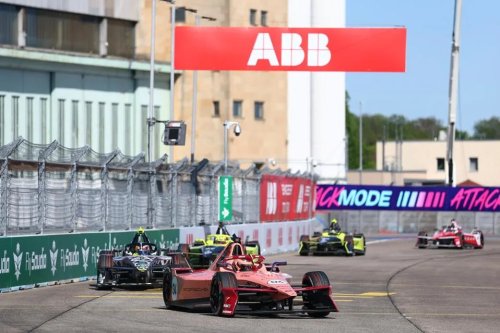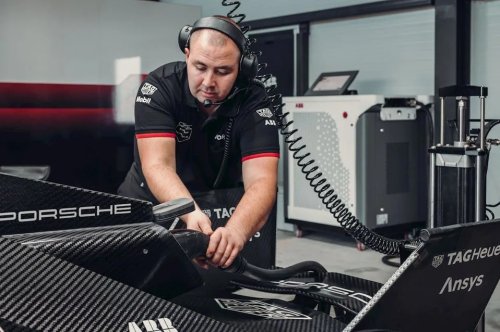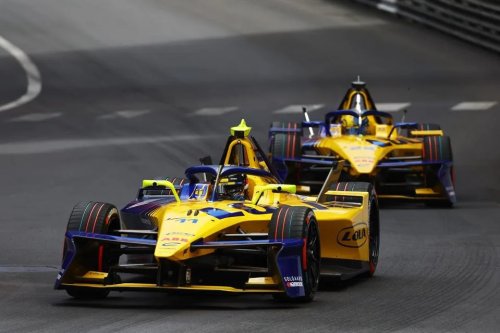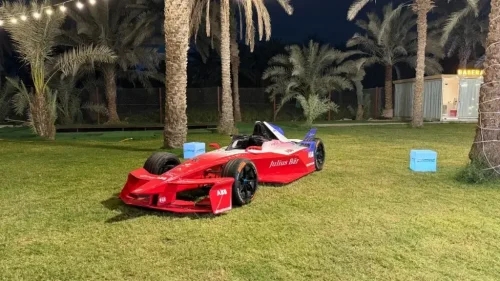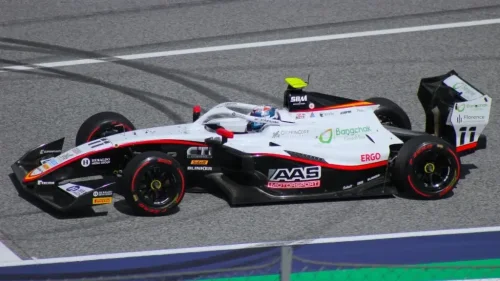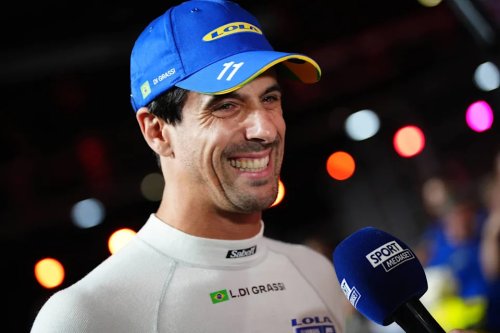
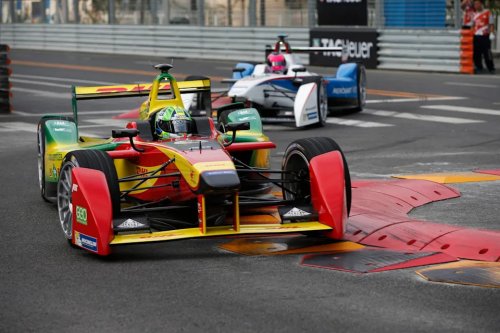
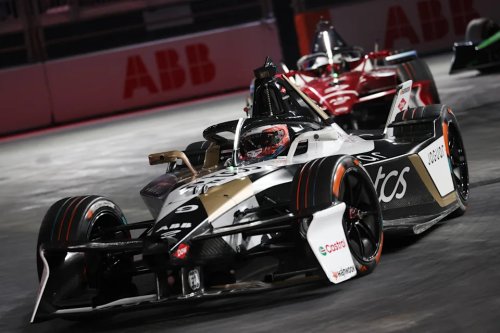
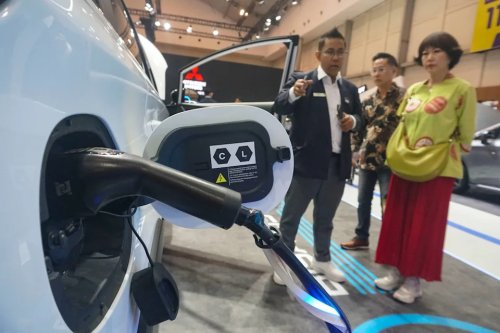



















Racing is RacingThere is something inherently strange about trying to explain the future of the automobile from inside a race car. In its purest form, motorsport has always been about excess — there is always a will and a way to extract more power, more speed, more noise, more grip and more of everything. For automakers both big and small, the racetrack has traditionally acted as a no-holds-barred laboratory where factory-backed engineers could throw efficiency out the window in pursuit of a better result on the stopwatch.Formula E was created to turn that formula on its head. When the championship held its first race in Beijing in 2014, electric cars were still a novelty to much of the public. The series' first-generation car made about 200 kW (~268 hp) of power, used five-speed gearboxes, and required drivers to swap cars midway through races because battery technology simply wasn't capable of completing an entire E-Prix on a single charge.Lucas di Grassi was there for all of it. He won that first race, won a championship during the 2016–17 season, and spent more than a decade watching Formula E develop from a curious experiment into a genuine manufacturer-backed racing series. After 12 seasons and 165 E-Prix starts, the Brazilian driver has moved into an advisory role with the championship. And when he looks at where Formula E began compared with where it is going, the numbers are almost difficult to comprehend.Bradley Collyer - PA Images / Getty Images"We started with 200 kilowatts of power," Di Grassi says. "Now we're going to 600 kilowatts (~804 hp) of power."The progression isn't limited to horsepower. The motors have gone from around 90 percent efficiency to roughly 98 percent. The five-speed gearbox disappeared because, as Di Grassi points out, electric motors don't need one. The calendar has expanded from 11 or 12 races to a championship stretching across 21 races and 13 weekends.More importantly, the electric car itself has gone from being the point of the experiment to becoming the technology behind the experiment. That distinction is at the heart of Formula E's current identity. The championship is no longer simply trying to prove that electric cars can race. It is trying to demonstrate what racing can teach the automotive industry about making electric cars better. And with the arrival of Formula E's Gen 4 era, the racing is about to get more extreme.Glenn Dunbar / Getty ImagesThe Experimental Glow UpFormula E arrived at a particularly interesting moment in the history of the automobile. Electric cars existed, of course, but the modern EV boom was still in its early stages. Tesla had demonstrated that an electric vehicle could be desirable rather than merely practical. Nissan had put the Leaf into mass production. Traditional manufacturers were beginning to invest seriously in electrification.But for many, the idea of electric motorsport was a difficult sell. Why should anybody watch a race car that didn't sound like a race car, nor anything at all? However, Formula E only saw that the technology mattered. The championship was deliberately built around cities and manufacturers, placing electric racing in front of an audience that didn't necessarily need to travel to a traditional racing circuit to see it. It was also designed from the beginning as a technological competition, a mission that has become easier to understand as the cars have evolved.The first-generation Formula E car was effectively a proof of concept. Its battery limitations were impossible to ignore, as the drivers famously had to change cars halfway through the race. In its inception, pit stops consisted of the driver jumping from one machine to another with the help of engineers and mechanics. It seems primitive compared to today's cars, but the technology was developing in front of everyone. The same thing happened with the powertrains. As battery technology, power electronics and electric motors improved, Formula E became faster and more efficient at the same time.Di Grassi saw that evolution from the driver's seat."The car is way faster," he says. "The technology has evolved so much."The fact that an electric race car can now deliver several times the power of those early Formula E machines isn't just a bragging point. It is evidence of how quickly electric propulsion has developed when engineers are given an environment in which they can relentlessly optimize it. That is where the relationship between Formula E and the road becomes particularly interesting.Alastair Staley / Getty ImagesWhat Happens at the Track Doesn't Stay at the TrackJulia Palle, Formula E's vice president of sustainability, doesn't describe the championship's relationship with the automotive industry as just manufacturers putting their names on race cars. The tech in Formula E flows both ways, and Palle points to Jaguar as one of the clearest examples, as according to her, Jag's Formula E operation developed software tech that was subsequently transferred to its road cars. The resulting update could be delivered over the air to customer vehicles, with Palle saying it provided an additional 10 percent of battery life.Usually, motorsport technology gets onto road cars when manufacturers figure out how to manufacture certain components cheaply, which may take years before anything makes it to series production. In today's software-laden electric age, the technology is software, which can be implemented quickly. The race team discovers something on Friday, the engineers refine it through the weekend, the technology moves back to the manufacturer, and eventually, a customer can receive the result through an over-the-air update. It doesn't require any new hardware, a dealership visit or even a giant marketing campaign — it just results in a better electric car. Bloomberg / Getty ImagesPalle also points to Nissan, which has competed in Formula E while simultaneously developing its consumer EV business. According to her, experience in Formula E contributed to significant improvements in the battery capacity of the Nissan Leaf, while Indian firm Mahindra transferred weight reduction tech on its race car onto its consumer EVs, which has real-life benefits for the end-user consumer including range, efficiency and performance.But no matter how much technology improves, much of the public conversation surrounding electric cars tends to focus on batteries and what they can do. Consumers obsess over how big they are, how far they can go on a single charge and how much time they will have to spend watching it charge. Despite this, Palle notes that Formula E' has found that the battery is only one piece of the puzzle, as she argues that the next frontier for electric vehicles may have as much to do with charging infrastructure as it does with the battery itself.According to her, the series has been working with Fortescue Zero and its ultra-fast charging technology, which can add a significant amount of energy to a race car during a seconds-long pit stop — a major step up from physically getting into another fully charged car during the sports' early days. Although we are a long way from charging cars in 30 seconds, the technology exists and racing is the kind of environment for exposing technological limitations very quickly. If a race car's battery can't charge quickly enough, gets too hot, or its software can't efficiently manage energy deployment, it loses. Losing technology doesn't make it onto the roads.NurPhoto / Getty ImagesThe Complicated Challenge Beyond The Racetrack: ConsumersBut for all this commitment to pushing the envelope with EV technology, however, they feel that getting everyday people and consumers onboard with electric mobility is the real challenge. Although Di Grassi has spent years advocating for electric mobility, but he is surprisingly pragmatic when discussing why some consumers remain skeptical. His argument isn't that people need to be lectured into buying EVs, they need to experience the technology."Technology moves faster than human behavior," he says.It's a deceptively simple observation. An engineer can develop a new technology in months, but a consumer can take years or decades to change a habit. Oddly, the former Formula E driver used the microwave as an example, candidly noting that while the technology existed long before it became an ordinary part of American kitchens, ordinary people didn't immediately abandon familiar cooking methods simply because a new appliance was available.The same thing applies to cars. Someone who has spent 30 years driving a gas-powered car has developed an entire routine around them. Gas stations are everywhere and filling up takes five minutes. An EV changes that; charging is way different from pumping gas and it takes longer. To add to the fun, electric range is calculated differently than that of a gas-powered car, and battery degradation is something EV owners have to consider. None of those things disappear because an engineer has made the electric powertrain objectively better."Consumer behavior is very hard to change," Di Grassi says. "The best way to convince a consumer is actually to give the consumer better value or lowest price."Kevin Carter / Getty ImagesThat is where the EV conversation becomes less about climate policy and more about economics. Di Grassi points to rideshare drivers as an example. For someone who spends enormous amounts of time behind the wheel, fuel and maintenance costs aren't abstract concepts; they're business expenses. If an electric vehicle is cheaper to operate per mile, that difference eventually becomes impossible to ignore, no matter whether the driver is an environmentalist.That doesn't mean Di Grassi believes government intervention is always the answer. In fact, he is skeptical of consumer tax incentives for expensive EVs."If you give somebody $100,000 to buy a car," he says, "I would prefer to get this money and build more hospitals or schools."Further, he feels that governments are better pushed toward electrifying public transportation, buses, trucks and other high-mileage applications where the benefits of lower operating costs and reduced emissions can potentially accumulate quickly.There is an important distinction there. In his view, electrification doesn't have to be treated as a single switch that gets flipped across the entire automotive industry on a predetermined date. Different vehicles have different use cases, and different infrastructure challenges. An electric city bus that follows a predictable route is a fundamentally different problem from an electric pickup truck towing a trailer across rural America, or a delivery van that returns to the same depot every night is different again. Formula E's philosophy is essentially to treat those challenges as engineering problems rather than ideological ones.Bloomberg / Getty ImagesA Race With No Finish LineFormula E's evolution over the last decade has changed the question the championship is trying to answer. In 2014, the question was whether an electric race car could be entertaining. However, the question had evolved to whether it could be fast, complete a race on one battery and whether manufacturers could use racing to accelerate the development of road-car technology.These days, the questions around Formula E cars are becoming considerably more ambitious, especially as technology evolves and gets applied to consumer-grade electric vehicles. People want to know how quickly an EV can charge up, how efficiently it uses energy and how can software make them more efficient after they leave the dealership?Formula E is in an interesting place because at the end of the day, it still has to function as a sport and nobody watches racing because they want to attend an engineering seminar. They watch because the cars are fast, the racing is dangerous and somebody is going to win. While the challenge of making the racing exciting enough to attract fans while also making the technology bold enough to justify the championship's existence beyond entertainment may seem like a balancing act, Palle doesn't see that as a problem to be solved. She sees it as the point.Formula E's sustainability mission isn't something that exists alongside its racing. It is supposed to be integrated into it and that philosophy leads to an appropriately motorsport-like conclusion. Simply put, the work isn't finished."The technology will continually improve," Palle says. Batteries will become more energy-dense. Charging will get faster. Cars will become more efficient. Materials will change. The environmental impact of the championship itself can continue to decrease.There is no final specification. No ultimate battery. No perfect electric race car. As Palle puts it, there is no finish line.