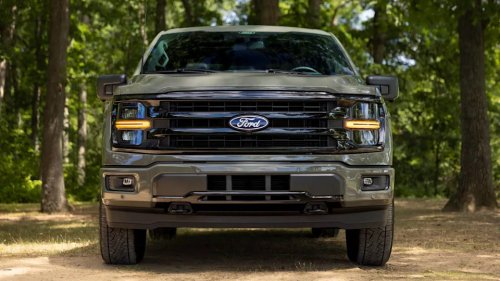



























Price creep has become a part of American life, whether we're talking about the price of eggs, beef, car insurance, semiconductors, or gasoline. Average car prices have gone up about 30% since 2019, a year before the COVID-19 pandemic disrupted supply chains and sent frantic shoppers to horde as much toilet paper as they could.Meanwhile, the overall impact on pricing of just about everything started a climb that remains unmitigated today. What goes up apparently doesn't always come down. While a growing number of consumers can't afford the new car they really want, there are multiple factors driving up car prices in the US, especially destination and handling charges. What's Going On With These Fees? Ford Destination and handling fees have risen sharply, with some automakers cranking them up way more than others. And while the law requires these fees to be clearly shown on new vehicle window stickers, the costs are seldom included in marketing materials, television commercials, or when a company wants to brag about a starting price "under" a certain figure.Sam Fiorani, vice president of Global Vehicle Forecasting at AutoForecast Solutions, offers some insight. Transportation costs are rising along with the cost of fuel for ships, trucks, and trains, while a severe shortage of containers to move goods is hurting shipments of many items."Finding the vehicles and the personnel to move goods is becoming more difficult."–Sam Fiorani, vice president of AutoForecast SolutionsPlus, stiffer regulations for drivers and trucks are decreasing the number of vehicles available and raising the prices for the compliant vehicles that remain, he says. Detroit Trucks Getting Close To $3,000 Fees Stellantis As COVID forced automakers to pivot with their product strategies, it appears that Detroit-based automakers either faced more supply challenges than their competitors, or they started using higher destination charges to pad the bottom line. CarBuzz dug into the trendline for destination charges, comparing those assessed in 2019 compared with those in play today.The discrepancies are most apparent when looking at full-size pickup trucks. Before COVID, destination charges in 2019 ranged from $1,495 for a Chevy Silverado to $1,645 for a Ram 1500. In the span of seven years, those charges have ballooned 81% for the Chevy, 58% for Ram, and 75% for the F-150. America's best-selling vehicle now comes with a destination fee of $2,795.Toyota Meanwhile, fees for a Toyota Tundra have climbed 31% to $2,095, a savings of at least $500 compared to Detroit trucks. All those trucks are built in the US, by the way, though GM also has truck plants in Canada and Mexico. Each region carries a different destination charge: $2,595 from Mexico and $2,795 from the US and Canada.Ford spokesman Said Deep tells CarBuzz destination charges "reflect factory-to-dealer vehicle shipping costs," and that they "are reviewed and adjusted as necessary to keep consistent with the industry.""We average the charge so no matter where a customer lives in America, the destination and delivery is the same."–Ford Spokesperson Said DeepHe says Ford's destination charges vary by vehicle type, size, and weight, and that the Lincoln Corsair and Ford Escape compact crossovers, for example, carry a charge of $1,495. That's up from $1,095 in 2019.Still, this doesn't account for the higher cost of destination charges for Detroit-bred pickups, and that includes the smaller midsize trucks. Toyota charges $1,595 to deliver a Tacoma (the bestseller in the segment), representing a savings of at least $300 compared to Detroit's midsize trucks. The Chevy Colorado's $2,095 destination charge is up 91% since 2019.CarBuzz asked General Motors about its destination fees. A spokesperson simply said the company reviews and adjusts "destination and freight fees in relation to market conditions and costs." Luxury Cars With Lower Shipping Fees BMW We extended our study beyond Detroit and Toyota and found generally lower destination charges, even for German luxury cars priced in line with many Detroit pickups.Mercedes-Benz and BMW have destination charges of $1,350 for the Mercedes C-Class assembled in Germany and the BMW 3-Series built in Mexico, while the larger, more expensive BMW X5 assembled in South Carolina has a $1,450 destination charge. Honda has kept the Civic's shipping fee to a mere $1,195, representing a 28% increase since 2019 for this Indiana-built sedan.It's possible these fees will be adjusted – perhaps down – as automakers designate vehicles for new manufacturing assembly locations. But considering the extensive rise in these fees over the years, not to mention the continued uncertainty regarding tariffs in the US market, we aren't holding our breath for delivery fee relief anytime soon.