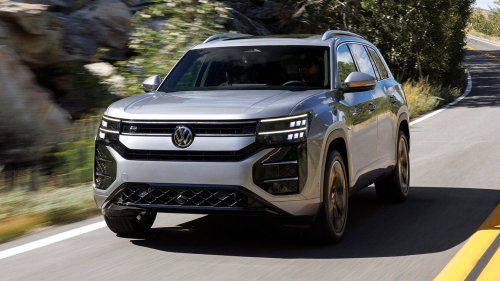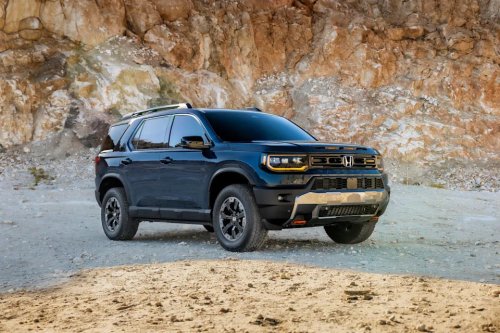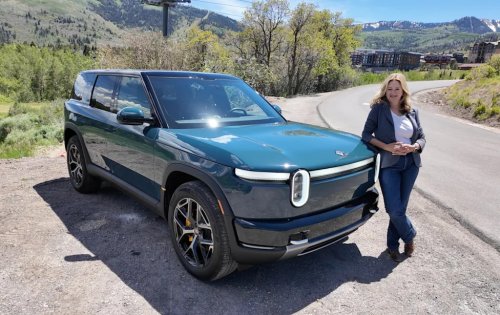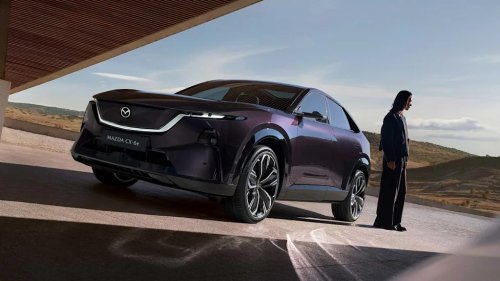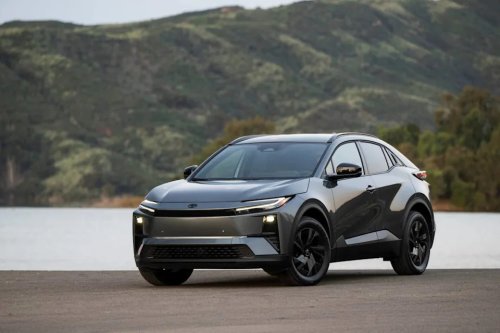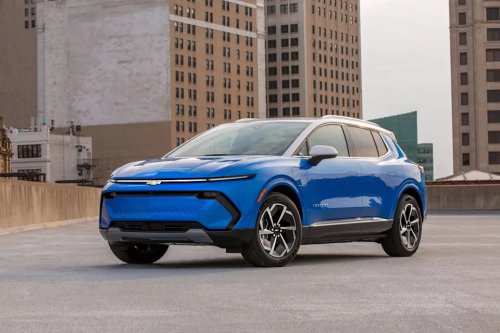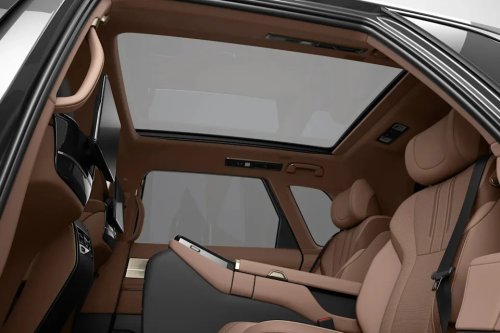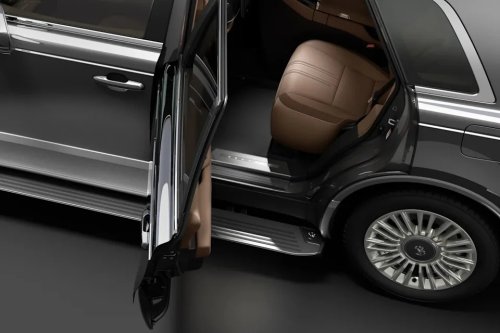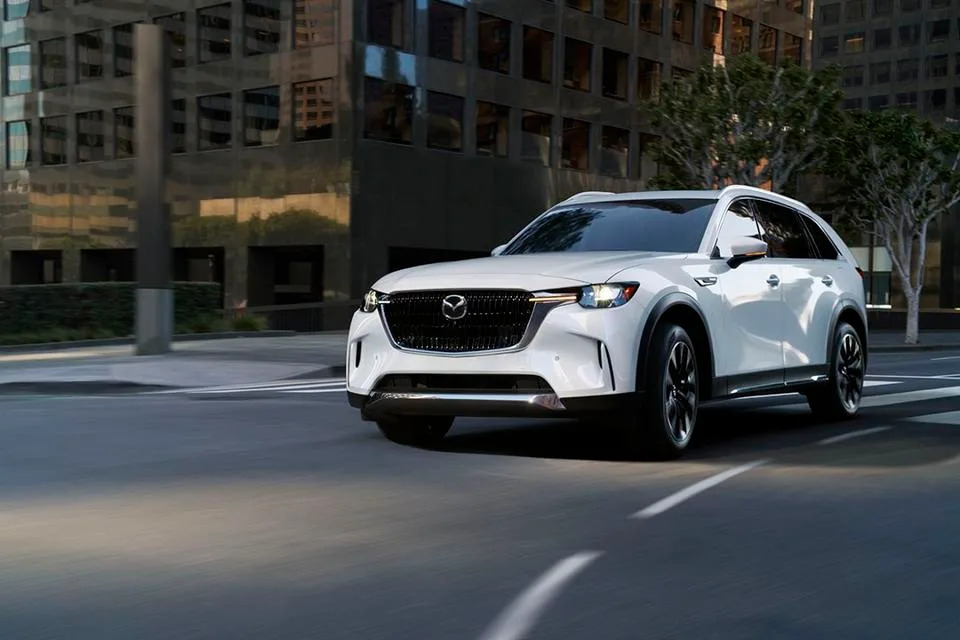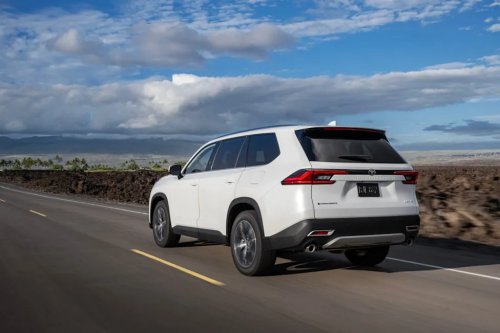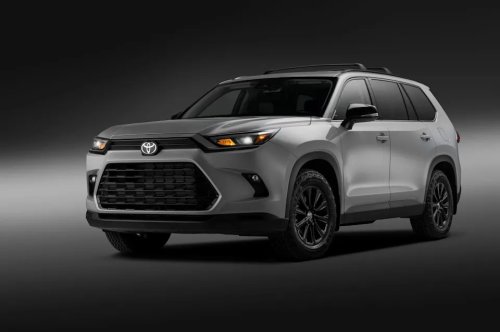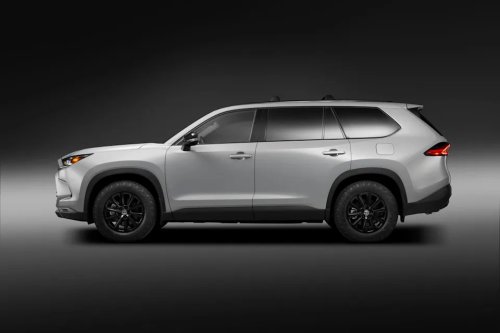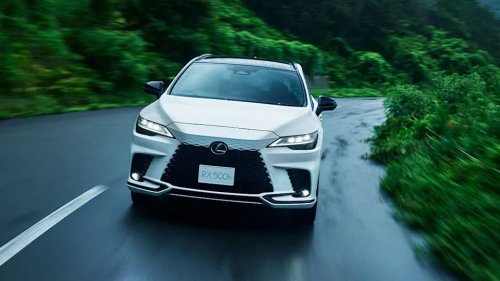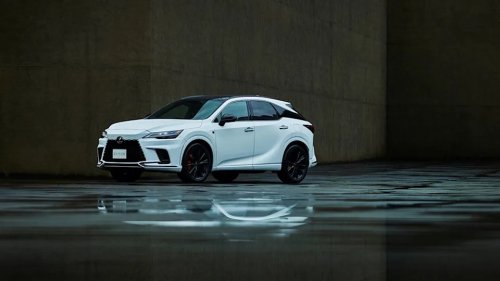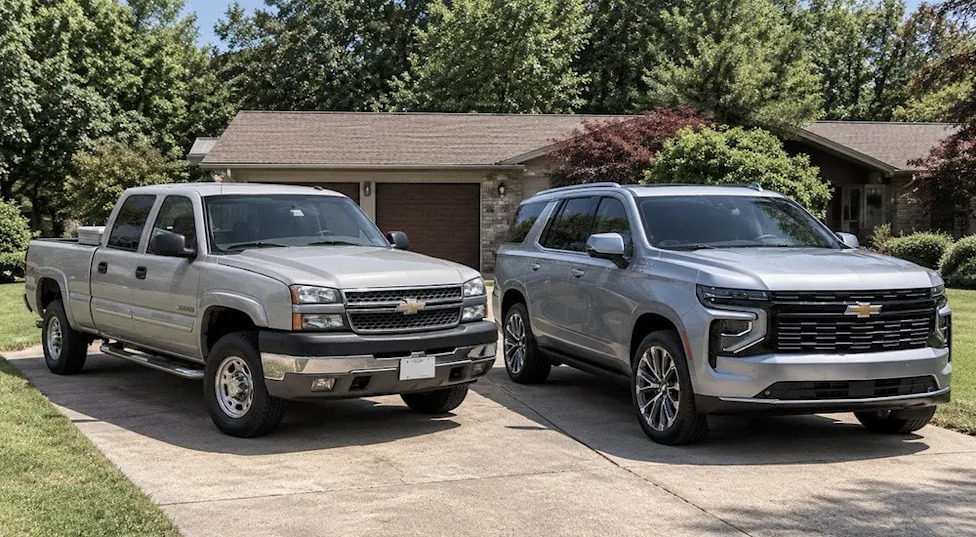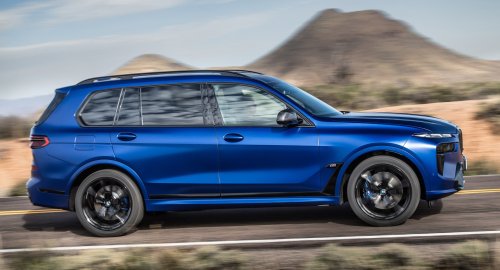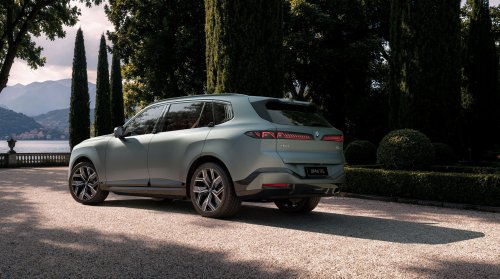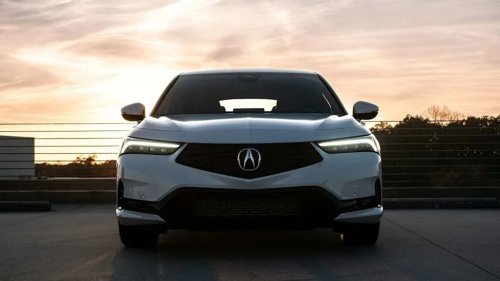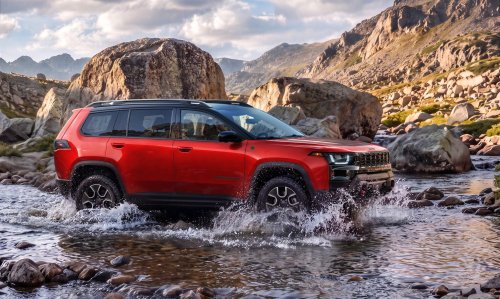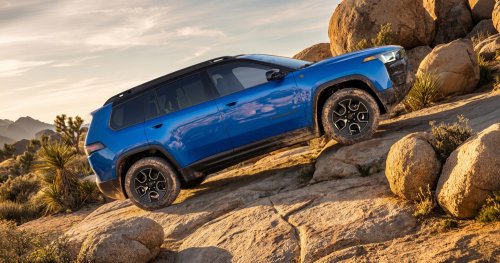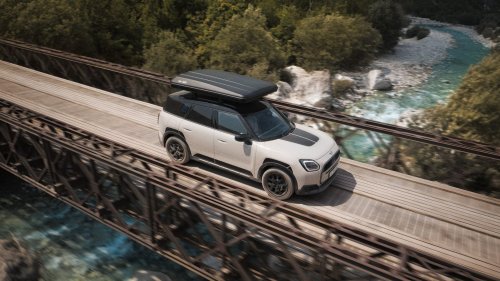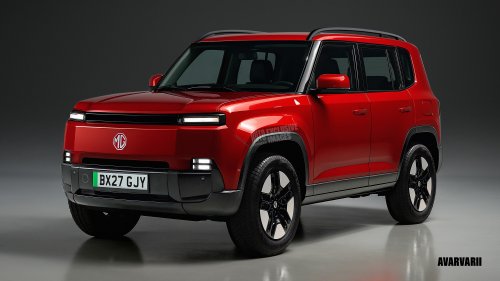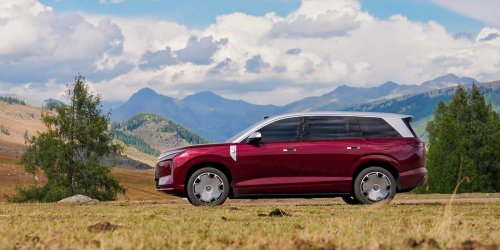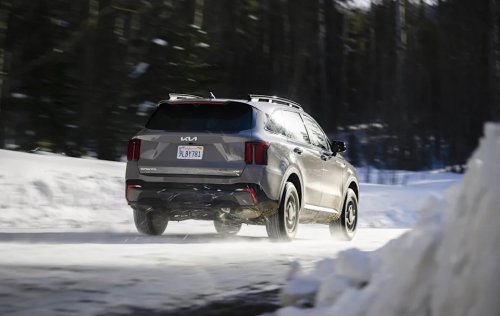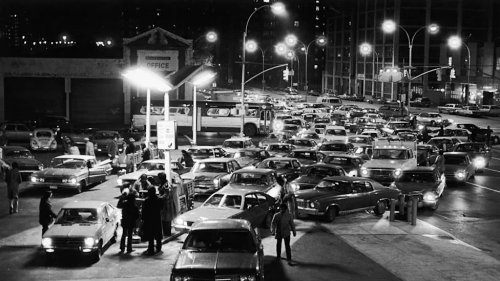

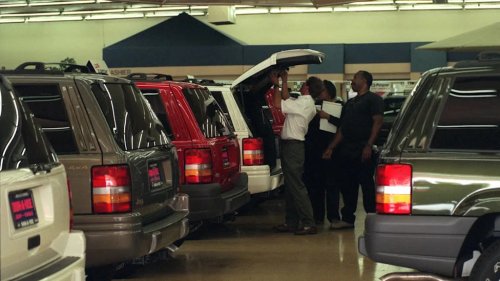
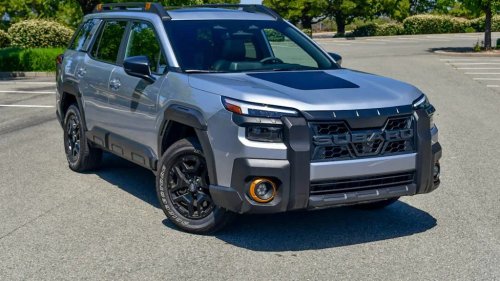



















Autoblog and Yahoo may earn commission from links in this article.Let's Play a GameHere's a challenge for you; If you live anywhere in the United States, go to your nearest grocery or big-box store or shopping mall and try to find a four-door sedan. Go ahead, have a look, I'll wait. You might find one, eventually, sandwiched between two crossovers, a pickup truck, or a huge Yukon, Tahoe, Suburban, Expedition or other tall SUV that needs running boards to get into. Sedans are still out there, but they're outsold, outnumbered, and in some cases, filled off entirely by automakers who need to show shareholders that they're still profitable. Ford doesn't sell the Fusion anymore. Chevy killed the Impala. Dodge just revived the Charger as a four-door after a long hiatus. Even Honda, whose Accord was once as reliable a fixture of American life as a grocery store or a mailbox, is currently outsold by none other than the CR-V. This didn't happen by accident, nor did it happen because consumers suddenly decided that they want SUVs.AdvertisementAdvertisementIt happened because of a piece of legislation passed in 1975 that nobody outside of the automotive and regulatory industries paid much attention to for about a decade, until car companies figured out a way to print money from it. That piece of legislation was the Corporate Average Fuel Economy standard, or CAFE, for short. And understanding what it was, what it missed, and what it accidentally created is the key to understanding why the car in your driveway looks the way it does today. Allan Tannenbaum/Getty ImagesThe Oil Embargo That Changed EverythingAlthough we are seeing the effects of the CAFE standard today, the makings of these rules go back more than half a century ago. In October 1973, the Organization of Arab Petroleum Exporting Countries (OAPEC) announced an oil embargo against the United States and other industrialized nations in response to their support for Israel during the Yom Kippur War. Almost overnight, oil prices quadrupled and a once robust system started to unravel at the seams. Lines to fill up gas stretched around city blocks, while some stations ran dry. A country that had been built from the ground up around the car suddenly found itself confronting the reality that its cars were drinking fuel at a rate that the supply chain couldn't maintain.In 1974, the average American passenger car got less than 13 miles per gallon, which became a national security problem that got Congress to respond. In 1975, the Energy Policy and Conservation Act was signed into law, which established the Corporate Average Fuel Economy standards; a regulatory framework that required automakers to achieve a minimum average fuel economy across their entire fleet of vehicles.Photo by Scott McPartland on Getty ImagesThe mechanics were straightforward enough. Each manufacturer's vehicles were averaged together, weighted by sales volume, and the result had to hit a government-mandated minimum. Miss the target and you paid a fine; $5.50 per one-tenth of a mile per gallon below the standard, multiplied by every vehicle in your fleet for that model year. The passenger car standard started at 18 mpg for model year 1978 and climbed steadily, hitting 27.5 mpg by 1985, where it essentially froze for the next two and a half decades.AdvertisementAdvertisementBy most measures, it was a genuinely effective piece of regulation. Seeing competition by newfanled imports from both Europe and Japan, Detroit was pressured to make its cars more fuel efficient. Though the industry adapted, the law also created a separate, lower standard for a different category of vehicle, which would eventually turn the entire passenger car market inside out.Blame The Jeep CherokeeIn the early 1980s, American Motors Corporation, or AMC, was working on a revolutionary new vehicle. AMC's new creation was designed on a car-like unibody platform, but positioned as a utility vehicle. It would have available four-wheel drive, room for a family, and a compact, maneuverable footprint. Internally, AMC called it the "SportWagon," but when it launched in 1984, it was called the Jeep Cherokee (XJ), and the rest is history.With its distinctive styling and available four-wheel drive, the XJ Cherokee became the first vehicle in what we currently know as the modern SUV. These vehicles were adopted by suburbanites who were attracted to its outdoorsy, rugged vibe, even if they kept it on pavement 99% of the year. In his 2002 book "High and Mighty: The Dangerous Rise of the SUV, Keith Bradsher wrote that AMC execs made an effort to push the Cherokee to urban buyers, even though its engineers and executives knew that buyers would never use its full capabilities. But to get an edge, they managed to convince the federal government to categorize Jeeps as "light trucks;" a classification reserved for work vehicles like pickup trucks, which had looser fuel economy standards compared to passenger cars. AMC's former chairman Gerald Meyers told Bradsher, "We made damn sure [Jeeps] were classified as trucks, and we lobbied like hell." Because the Cherokee was classified as a light truck, it only had to meet the truck standard, and not the passenger car standard. Although it was being sold to families as a bonafide family car for school runs, road trips, and weekend errands, for the purposes of federal fuel economy law, it was a "light truck," which was legally indistinct from a contractor's pickup. The rest of the industry noticed immediately. If you could build a passenger vehicle that people wanted to buy, classify it as a light truck, and face a significantly lower regulatory burden while doing so, why would you build sedans?Gina Ferazzi/Los Angeles Times via Getty ImagesThe Profit Motive Here's where the regulatory story becomes a business story, because the CAFE loophole alone doesn't fully explain the SUV explosion. What accelerated it was the fact that SUVs and trucks were simply more profitable to build and sell than cars. AdvertisementAdvertisementA sedan, particularly in the small and midsize segments where fuel economy standards hit hardest, had thin margins. The engineering required to hit 27.5 mpg meant smaller engines, lighter materials, and design compromises that squeezed profitability at every turn. An SUV, classified as a light truck and facing looser standards, could carry a bigger engine, a taller body, and more content, which could be sold for a higher sticker price and result in higher profits.U.S. manufacturers realized they could face fewer roadblocks by producing vehicles that could qualify as these so-called light trucks. Through the late 1980s and 1990s, the American auto industry pivoted its product strategy around the loophole and expanded their truck-based SUV lineups. By the mid-90s, SUVs and light trucks were not just a niche, they became the center of the American auto market.Kristen BrownView the 3 images of this gallery on the original articleThe Crossover: A Loophole Within a LoopholeBy the late 1990s and into the 2000s, the SUV was becoming culturally dominant, but a new problem was emerging. Traditional body-on-frame SUVs were enormous, thirsty, and increasingly out of step with a market that was beginning to care about fuel costs again. Automakers needed a way to offer SUVs in a smaller, more efficient package.AdvertisementAdvertisementThe answer was the crossover; an SUV built on the platform of a sedan or compact car rather than a truck frame, but engineered to qualify for classification as a light truck under CAFE rules. Although these were often smaller than traditional SUVs, they could be classified as light trucks and face the more relaxed standard if they met certain criteria around ground clearance, all-wheel drive availability, and vehicle dimensions.Today, vehicles like the Toyota RAV4, Honda CR-V, and Subaru Outback; cars that are, for all practical purposes, taller station wagons, are classified as light trucks under the CAFE ruleset. What this means is that the "light truck" classification is a big tent that includes not only genuinely huge vehicles like the Chevy Suburban, Cadillac Escalade, and Ford F-150, but also vehicles like the Outback, RAV4, and CR-V. In turn, this regulatory loophole created for actual working trucks now covers the majority of passenger vehicles sold in America.Where Things Stand TodayThe CAFE standards have evolved considerably since 1975. The Obama administration pushed for aggressive increases, targeting a combined fleet average of 54.5 mpg by 2025, a goal the industry never fully met. The Biden administration then tightened the screws further, setting targets that would have required passenger cars and light trucks to collectively approach 50.4 mpg by 2031.Then, in December 2025, the Trump administration moved to unwind it. Flanked by the CEOs of Ford and Stellantis at the White House, the President unveiled a new proposal that would dramatically lower these requirements to about 34.5 miles per gallon for the 2031 model year and would also reclassify crossovers and small SUVs as passenger vehicles instead of light trucks. Trump noted that the actions taken are a "victory" for what he deems "common sense and affordability," adding that the move was "[...] historic action to lower costs for American consumers, protect American auto jobs, and make buying a car much more affordable for countless American families, and also safer." AdvertisementAdvertisementAs of early 2026, the rollback remains a proposed rule, means the regulatory fight is still playing out. But the direction of travel is clear: the gap between passenger car and light truck standards that has defined the industry for fifty years is not closing anytime soon, and may well widen further. As long as that gap exists, the economics that built the SUV market will keep feeding it. However, the consequences are visible in any parking lot in America. The car that your parents drove; the sedan, station wagon, the hatchback, is starting to become a rarity. The vehicle that replaced it was not a product of pure consumer preference. It was a product of a regulatory system that accidentally made one type of vehicle far more attractive to build and sell than another.This story was originally published by Autoblog on Jun 6, 2026, where it first appeared in the Features section. Add Autoblog as a Preferred Source by clicking here.