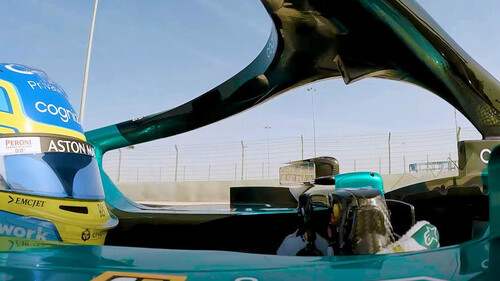
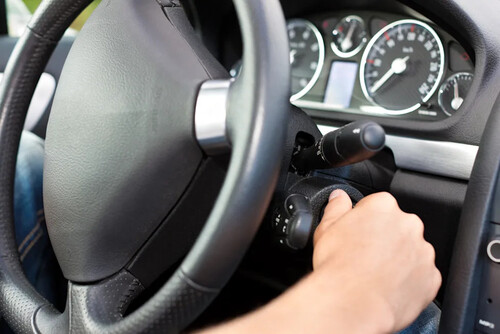
The centerpiece of the technology is an infrared camera, mounted on the steering column or near the instrument cluster, that watches the driver's face.gettyEuropean regulators have quietly crossed a line that completely reshapes how drivers and occupants interact with their vehicles. As of July 7, 2026, every new car and van registered in the EU must have an interior, driver‑facing camera as part of an Advanced Driver Distraction Warning (ADDW) system—the vehicle will be carefully watching the driver's every move.The stated goal is clear: reduce crashes caused by distraction and drowsiness. Yet the implications reach a lot further.The mandate, part of the EU's broader General Safety Regulation framework, eliminates more than 125 years of privacy—up to this point, a vehicle owner could assume that their actions within their vehicle were private. But not anymore. All new vehicles will be equipped with a camera‑based driver‑monitoring system engineered to track eyes, head position, and attention level in real time.AdvertisementAdvertisementConsider this step one of a multi-part, multi-year rollout of advanced driver assistance and crash-mitigation technologies. These will eventually feature improved automatic emergency braking, advanced cyclist and pedestrian detection, and stricter visibility standards—regulations that require automakers to make it easier for drivers to see their surroundings (e.g., thinner A-pillars, larger side windows, etc.).First up is driver monitoring. The centerpiece of the technology is an infrared camera, mounted on the steering column or near the instrument cluster, that watches the driver's face. The system is designed to watch the driver's eyes, measuring gaze direction and blink patterns. If the algorithm determines that the driver isn't paying attention—maybe taking a long glance at their mobile phone—it will initiate a subtle visual warning. When ignored, that warning will escalate to an audible (or haptic) alert.Ignore the warning, and those alerts are nothing more than an annoyance. The first-generation ADDW system is only required to "assess the driver's alertness through vehicle systems analysis and warn the driver if needed." Of course, there is an escalation curve: the visual and audible warnings get louder and more frequent, but the law does not currently mandate automatic braking, lane‑keeping intervention, or forced stopping solely due to distraction. (Keep in mind that several of those intervening systems are already bundled in advanced driver assistance systems, such as adaptive cruise control.)On that note, the ADDW alerts cannot be permanently disabled, but some automakers will allow them to be muted (the law requires that the system re‑arms at each ignition cycle). It is also interesting to note that early user tests and consumer research suggested that many drivers tried to switch off or minimize these features because they found the alerts intrusive, so Euro NCAP (European New Car Assessment Program) is under pressure to penalize false‑alarm‑prone implementations.AdvertisementAdvertisementFor those concerned about privacy, note that the cameras are infrared. The ADDW infrared (IR) cameras use active IR illumination—nearly invisible to the human eye—so they work both day and night without being distracting. The camera data is required by law to be processed in a "closed loop" inside the vehicle—there is no transmission to third parties and no biometric identification, meaning the driver is not identified. And all data must be "immediately deleted after processing." (The system is very different from Tesla's popular Sentry Mode parked-car security camera footage, which is recorded with standard visible‑light cameras and video clips are saved locally to a USB drive or SSD connected in the glovebox/center console.)On paper, everything about Europe's implemented ADDW system appears carefully framed to calm privacy fears (the legislation explicitly bars the use of these cameras for greater surveillance, commercial profiling, or law‑enforcement fishing expeditions), but it still raises consumer alerts.First, if all new automobiles are equipped with the physical hardware to monitor drivers via IR cameras, it's only a matter of changing some software and adding a storage device to record driver behavior (it's no secret that insurers, fleets, and governments all have powerful incentives to turn safety data into behavioral scoring). And since most vehicles are already configured with cloud services for remote connectivity, it wouldn't be a challenge for automakers (or others) to download the data. Second, while current ADDW legislation only specifies visible, audible, and haptic feedback and warnings, it's easy for automakers (and legislatures) to expand the system's capabilities to include physical intervention with steering and braking. Mission creep is a big concern.Drivers in the United States should have concerns. With the IR camera hardware and software already tested and baked into vehicle architecture to satisfy EU regulations, the incremental cost of offering the same systems in U.S.-market vehicles drops significantly (car companies do not like building dramatically different electrical architectures for different regions). And as U.S. regulators signal growing concern over distraction and drowsiness, it is not hard to draw a straight line from Europe's mandate to future NHTSA proposals that treat driver‑monitoring as a necessary counterweight to ever-more-digital cabins and more capable driver‑assist systems.AdvertisementAdvertisementThe question for American drivers isn't whether in‑car cameras are coming, but if they'll arrive framed strictly as a safety system, or as the opening act in a new era of privacy-ending automotive surveillance.This article was originally published on Forbes.com