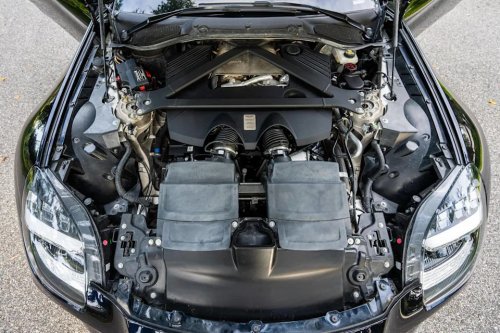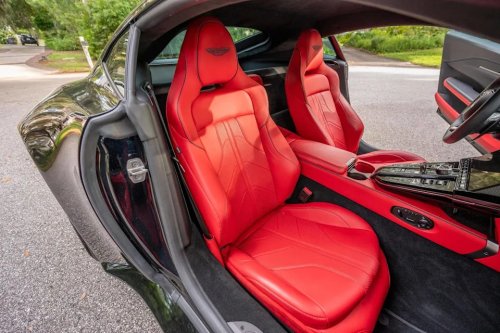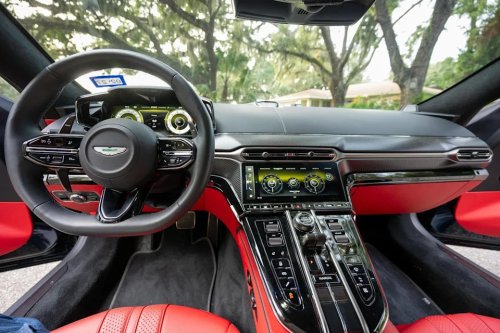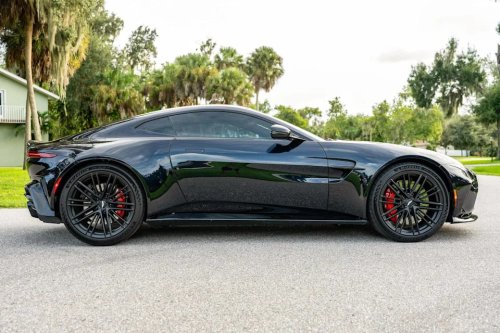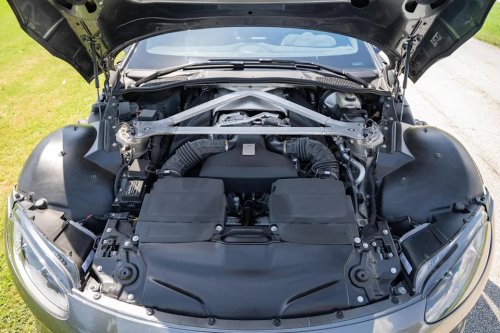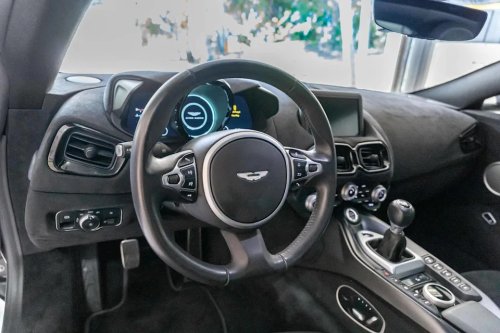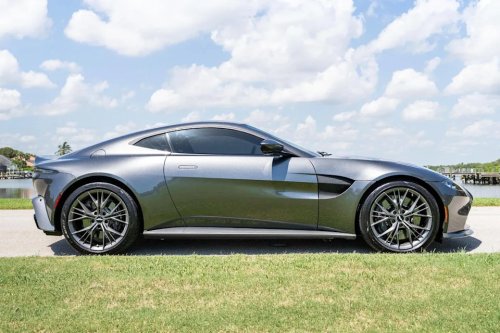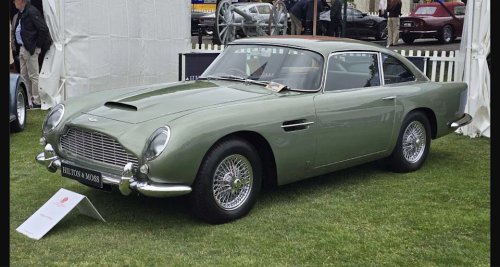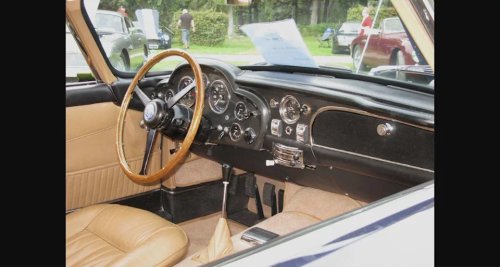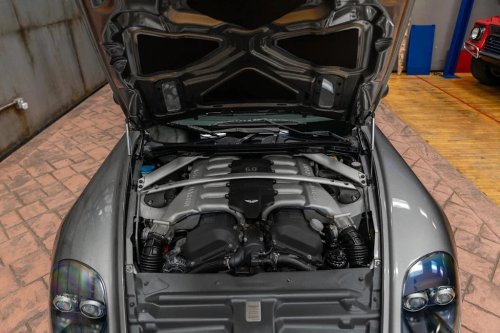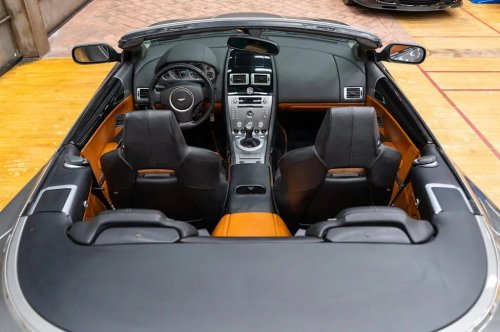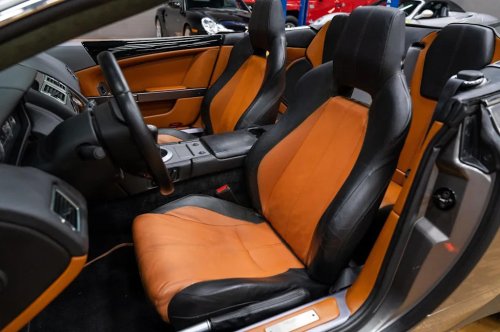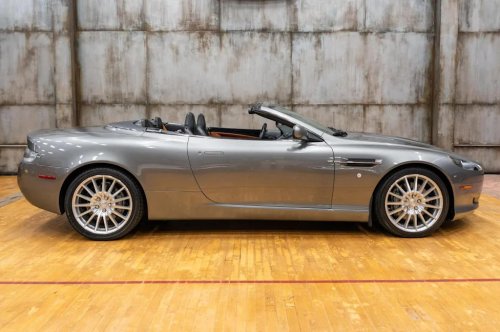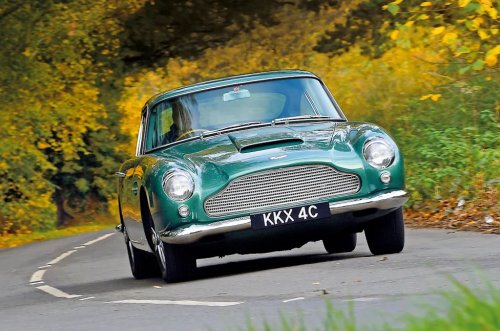
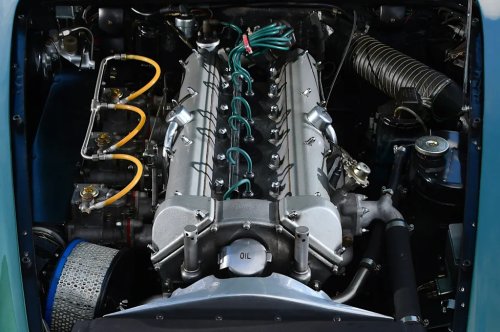
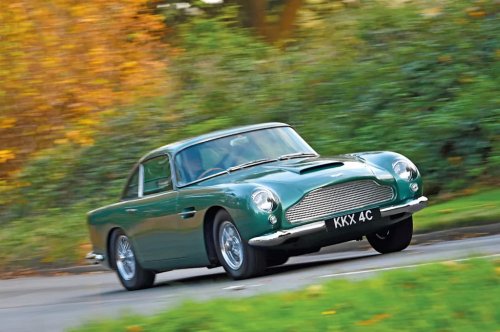
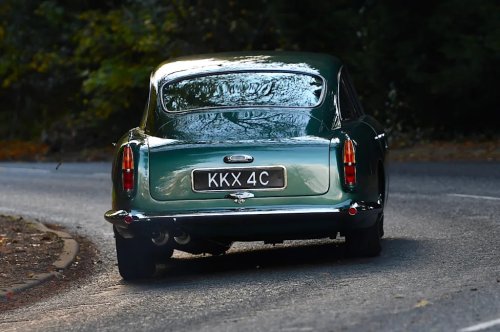
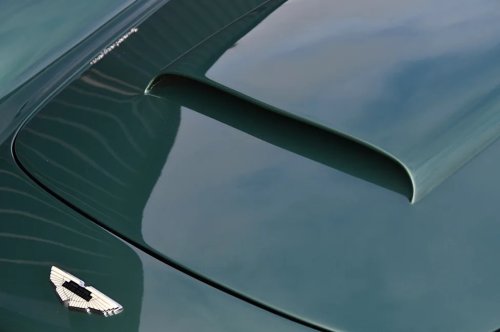
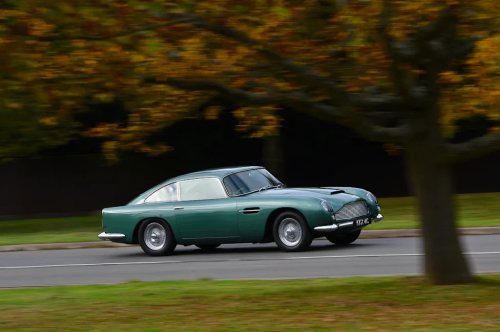
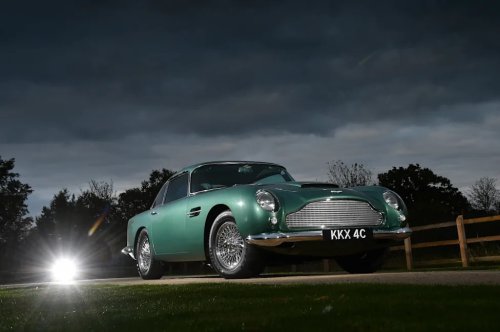
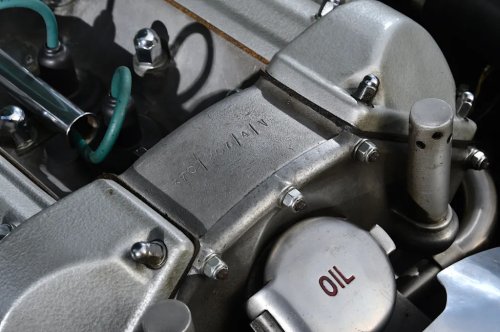
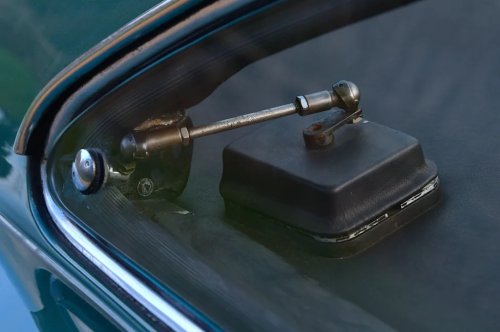
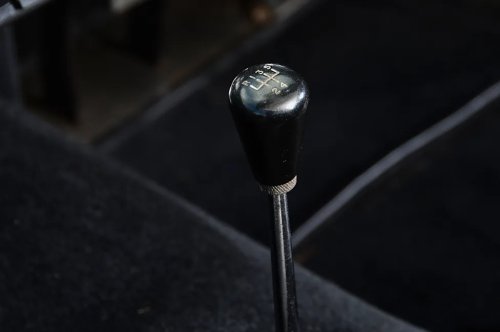
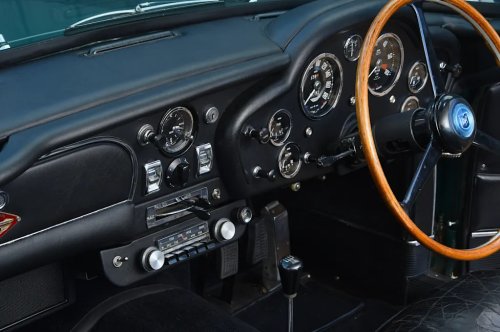
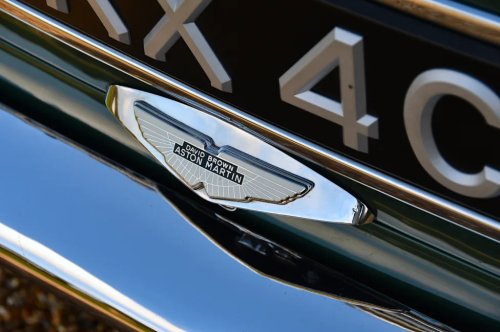
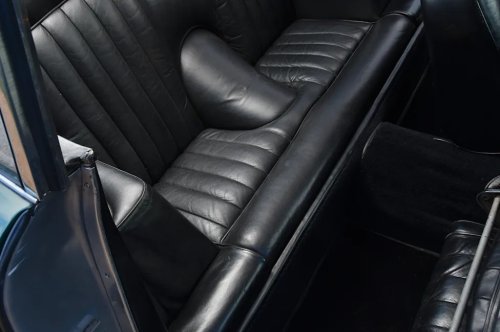
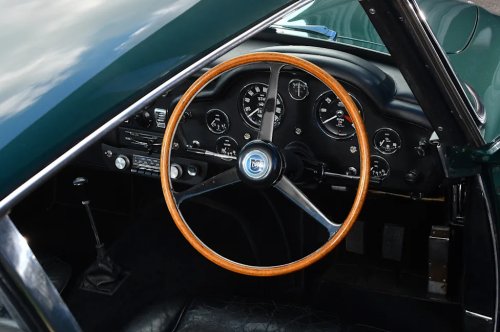
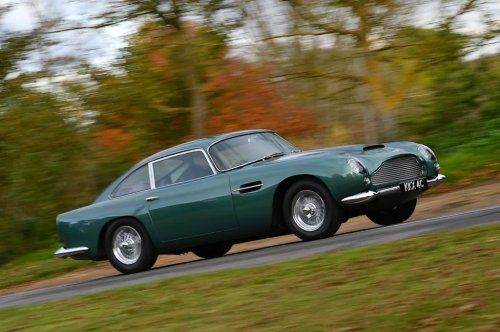
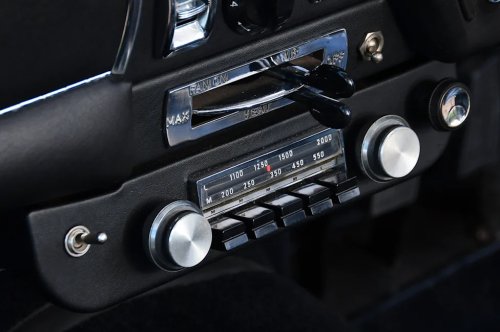
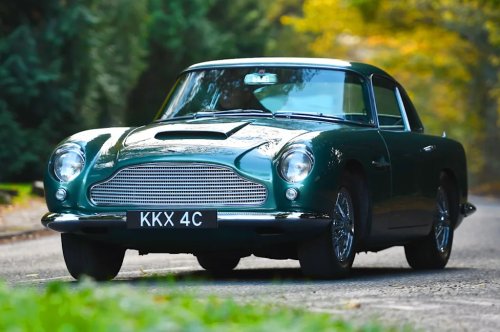



















Classic & Sports Car – Driving Tadek Marek’s unique Aston Martin DB4Tadek Marek, designer of the DB4's straight-six engine, is one of the cornerstones of Aston Martin's success during the golden age of David Brown's stewardship of this great, British marque. After serving as a factory development mule, chassis DB4/170/L became Marek's own car in 1965, subsequently upgraded and massaged to suit the whims and fancies of the Polish engineer who was also a very good, quick driver.So, even if it's not one for the purists, this 'Director's cut' Aston Martin, with the registration plate KKX 4C, must be one of the most interesting DB4s around. AdvertisementAdvertisementNot that there is such a thing as a boring DB4. Classic & Sports Car – Driving Tadek Marek’s unique Aston Martin DB4Launched at Earls Court in 1958, this was the car that established the products of David Brown's Feltham works as the ultimate in wholesome, high-quality grand touring machinery.It was a British supercar. With 240bhp and running a 3.54:1 rear axle ratio, the 3500lb (1588kg) DB4 was, for a while, the fastest four-seater production car in the world, able to top 140mph. Very British in conception, yet clothed in the latest Italian style from Touring of Milan, it was powered by an engine that would take Aston Martin through to the early 1970s, latterly alongside Marek's even longer-lived four-cam, 5.3-litre V8.Classic & Sports Car – Driving Tadek Marek’s unique Aston Martin DB4Born in Kraków in 1908, Marek arrived in Britain in 1941 as part of the Allied forces, following some colourful wartime adventures that included internment by the Germans and a daring escape to Britain via the Moroccan city of Casablanca. AdvertisementAdvertisementFor a while he settled in Finchley, north London and met a local girl called Peggy, whom he married.He moved to Aston Martin in 1953 (when it was still based in Feltham), fresh from a job helping to create an amphibious version of the Centurion tank and, before that, a posting with Austin at Longbridge. There he had designed the 2.6-litre C-series and a stillborn V8 based, intriguingly, around a pair of A40 engines.Classic & Sports Car – Driving Tadek Marek’s unique Aston Martin DB4A highly talented draughtsman who preferred to work alone, Marek had worked for General Motors and trained at Fiat's Polish outpost before the war, and later spent time working for the Italian firm in Turin. AdvertisementAdvertisementHe was unusual among his pencil-wielding peers in that he really could drive, having won tough events in Poland in the past and completed the '37 Rallye Monte-Carlo, although his motorcycle racing was curtailed after a huge accident at Berlin's Avus circuit.Marek was a highly resourceful individual: in 1953, when he thought David Brown had turned him down for the job as chief engineer, he went up to Huddersfield to tell the gearbox magnate to his face what a mistake he was making, only to discover that the letter of rejection had been a clerical error.Classic & Sports Car – Driving Tadek Marek’s unique Aston Martin DB4His first task at Aston Martin Lagonda, working under John Wyer and Jock Stirling, was to devise an improved 2.9-litre version of the WO Bentley-designed straight-six – first seen in the DB2 – for the new DB MkIII.Even before this DB4, Marek had form when it came to running secondhand Astons for his own use: one of his MkIII engines found its way into his personal DB2, which was also fitted with a Maserati five-speed gearbox.AdvertisementAdvertisementWork on the DB4 began in 1955, and Marek's first all-new engine ran on the bench in 1956. It was making 170bhp the following year, a far cry from the somewhat spurious 240bhp Aston Martin claimed for the first of the DB4s: it was thought to be more like a true 202bhp.Classic & Sports Car – Driving Tadek Marek’s unique Aston Martin DB4The engineer, who did not like to be rushed and wasn't happy about his new engine being tested in the DBR2 racer, had designed the block in cast iron but had to accommodate a late change of material specification to aluminium: team boss John Wyer wanted a lighter engine to race.Marek had never designed an engine with an alloy block before and, evidently, had not fully taken into account that when the engines were run at high revs for long periods – as was possible on certain Continental roads, and Britain's soon-to-be-opened M1 – the clearances could triple, leading to a dramatic drop in oil pressure and predictably unhappy cars and customers.Classic & Sports Car – Driving Tadek Marek’s unique Aston Martin DB4The fact that the 15-pint sump was on the shallow side did not help matters, either. AdvertisementAdvertisementSome have suggested that Marek relied too heavily on his development engineers but, given the circumstances – and the small engineering team at the car manufacturer – it seems unfair to lay the blame for these mistakes entirely on him.The Aston Martin DB4 was developed through five series up to 1963 to address these and other, less serious, problems, and this particular car, pictured here, was at the heart of that process between 1960 and '65.It didn't start life as a prototype or a development mule, however.Classic & Sports Car – Driving Tadek Marek’s unique Aston Martin DB4In late October 1959 it had been delivered new – in left-hand drive with fully chromed wire wheels and painted ICI Ice Blue – to a customer in St Tropez called Dr JC Roy.AdvertisementAdvertisementAccording to Marek, the car was returned to Newport Pagnell from the Paris agent after Dr Roy, having unwittingly put a hole in the sump, continued to drive it until the engine seized.The factory bought the car from the Parisian agent, Mirabeau, for £700; Dr Roy had apparently bought himself a new DB4.In its official capacity, DB4/170/L then served mainly as a development car for the 4-litre DB5 engine, although it's difficult to tell what was an official factory modification and what was done by order of Marek himself for his own use.Classic & Sports Car – Driving Tadek Marek’s unique Aston Martin DB4An engineering department memo from John Wyer, dated 2 January 1961, suggests that chassis 170/L was earmarked for testing a dry-sump version of the 4-litre engine, an overdrive gearbox (with a 4.09:1 rear axle) and even de Dion rear suspension.AdvertisementAdvertisementThe factory was also experimenting, according to the memo, with single- and twin-plate clutches and pendant pedals.The lower bonnet and GT dashboard mentioned can still be seen on the car today, but it is not known when the DB4 was converted to right-hand drive.Wyer estimated the cost of these experimental modifications to be £3000: a new DB4 was listed for £3800 at the time.Classic & Sports Car – Driving Tadek Marek’s unique Aston Martin DB4Visually, this DB4 retains the early-type grille but with GT-style, faired-in headlamps and bumpers without overriders, front and rear.The wire wheels are 15in rather than the original 16in size, while the doors feature chromed frames, a modification brought in on the Series 2 DB4 to cure the wind-noise problems suffered by earlier cars.AdvertisementAdvertisementThe 1965 C-suffix numberplate was its first British registration (not age-related to the car, which had been run on trade plates by the factory since 1960) when Tadek Marek – then deeply involved in the design of the four-cam V8 motor – became its first official keeper in the UK.Classic & Sports Car – Driving Tadek Marek’s unique Aston Martin DB4Marek had his own workshop at home.It was here that he invested seven months of his time turning KKX 4C into his idea of a perfect Ason Martin DB4.In went a DB5 Vantage-specification engine (with special cams, a raised compression and an extra-large oil cooler), a five-speed ZF gearbox and a DB5 rear axle, among many other upgrades.AdvertisementAdvertisementBeing an early and lighter DB4, it was, Marek claimed, the fastest of its type in Britain – indeed, quicker than a GT Zagato – with a shattering 13.7 secs 0-100mph time. Although it has the shallower air intake of later DB4s, the bonnet still hinges at the rear. Classic & Sports Car – Driving Tadek Marek’s unique Aston Martin DB4It opens, crocodile-style, to reveal an engine that does not skulk under plastic fairings and warning stickers, but stands as a proud sculpture. All alloy castings and carburettors, something about its shape gives you an instinctive feel for the inner workings of its spooling camshafts, its snorting Webers, and the lunging thrust promised by its four litres and half-a-dozen brawny cylinders.Inside this DB4's cabin, it still wears the black leather upholstery Marek specified for it as a retrim before taking the car on in 1965. The electric windows and Selectaride dampers are DB5 additions, as are the sunvisors. Classic & Sports Car – Driving Tadek Marek’s unique Aston Martin DB4The ashtrays are of the Aston Martin DB6 type, but the thinner, Nardi-style, wood-rimmed steering wheel seems to be unique to this car, as are the electrically operated rear quarterlight hinges, something akin to what Rolls-Royce used on the Corniche coupé. Modifications to the throttle pedal could be due to Marek's crash at Avus.If you accept that the GT engines are wilder than you might need – and that the Brico-injected, six-cylinder units were only a qualified success – then the 4-litre motor found in this car is possibly the optimum version of Marek's engine.It is both virile yet refined.Classic & Sports Car – Driving Tadek Marek’s unique Aston Martin DB4The engine whips the Aston Martin up the road with a long-striding urgency and emitting a throaty burble that is the essence of what is expected of an expensive, straight-six motor.The torque available in second and third gears is superb, and the Weber carburettors never spit or stumble; in fact, this special, bespoke DB4 is so well mannered it could easily be mistaken for running SUs.You quickly warm to the strong, four-wheel disc brakes – more than a match for the car's weight and power output – as well as the short, precise and no-nonsense action of the gearbox with its closely stacked ratios.Classic & Sports Car – Driving Tadek Marek’s unique Aston Martin DB4The relative heft of the car's clutch and the steering is also soon forgotten.This unique DB4 steers so precisely and with such a high-geared faithfulness – sometimes revealing itself with kickback through the steering wheel – and there is no understeer to speak of.You subliminally negotiate medium- and high-speed corners employing a combination of buttock cheeks and right foot in a car that could never be described as dainty, but one that is definitely forgiving, stable and satisfying.As if in tribute to Tadek Marek himself, the engine is intrinsic to this special car's distinctive character.Classic & Sports Car – Driving Tadek Marek’s unique Aston Martin DB4The engine is the product of an age when a single individual could be trusted to assume responsibility for the most complicated and expensive element of a motor car that is already just that.Tadek Marek retained this example, KKX 4C, until he retired to Italy, aged 61, in 1969.Ownership then passed to his business partner, James Nicholson, and eventually to its most recent long-term custodian, Robin Cook, in 1974.At any point since then Cook could have turned this car into yet another boiled-sweet restoration.Instead, he understood and respected its history by simply maintaining it fastidiously.Classic & Sports Car – Driving Tadek Marek’s unique Aston Martin DB4How you put a monetary value on that history is open to debate (the phrase 'only original once' springs to mind).But whatever judgement Cook came to feel for the car's intrinsic worth was spot-on, because KKX 4C was sold before Aston Martin specialist Nicholas Mee even had a chance to advertise it.And we can understand why.Images: John BradshawFactfileAston Martin DB4 Series 1 (standard S1 specification)Sold/number built 1958-'63/1204Construction steel chassis, tubular steel body frame and aluminium panelsEngine all-alloy, dohc 3670cc straight-six, twin SU carburettorsMax power 240bhp @ 5500rpmMax torque 240Ib ft @ 4250rpmTransmission four-speed manual, RWDSuspension: front independent, by wishbones, telescopic dampers, anti-roll bar rear live axle, trailing arms, Watt linkage, lever-arm dampers; coils f/rSteering rack and pinionBrakes discsLength 14ft 9in (4496mm)Width 5ft 6in (1676mm)Height 4ft 4in (1334mm)Wheelbase 8ft 2in (2489mm)Weight 3070Ib (1393kg)Mpg 150-60mph 8.5 secsTop speed 141mphPrice new £4084We hope you enjoyed reading. Please click the 'Follow' button for more super stories from Classic & Sports Car.