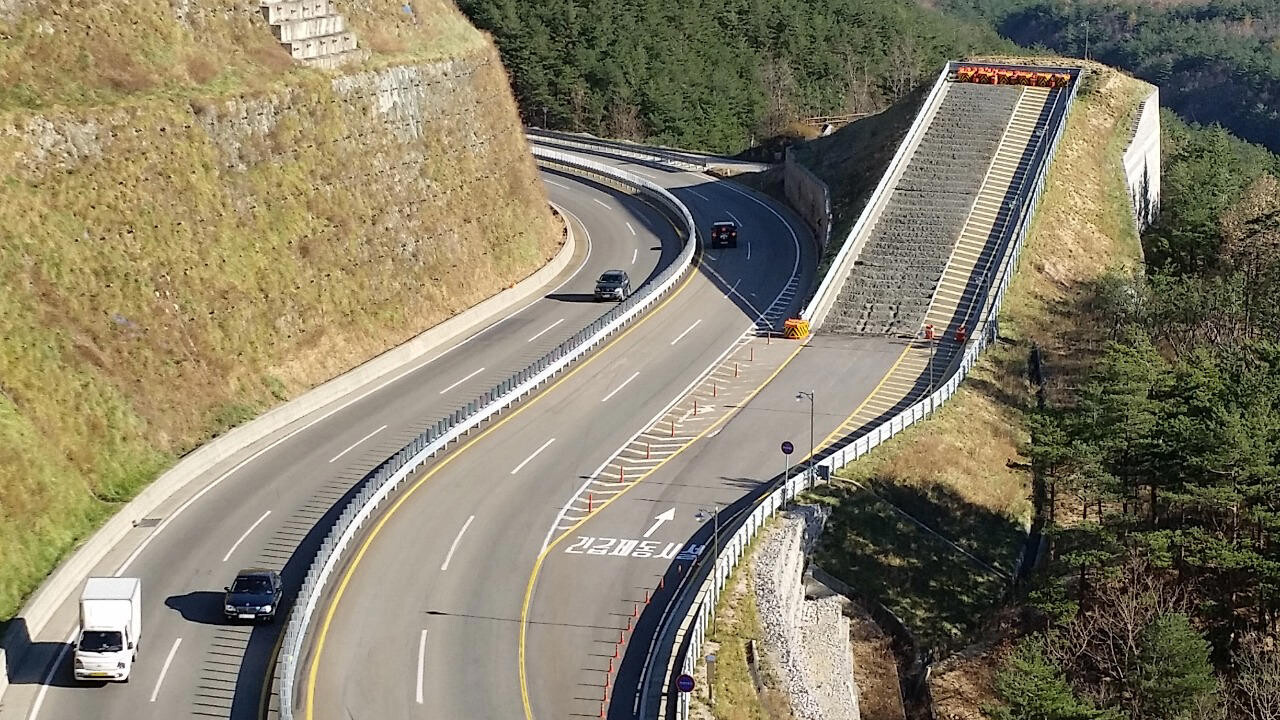
Drivers are noticing these highway sand ramps and they’re not what you thinkIf you have ever driven through Colorado’s mountains or descended into Nevada’s Virgin River Gorge, you have probably noticed them: steep gravel lanes branching off the highway at odd angles, marked by oversized yellow signs. Most passenger-car drivers glance at them and move on. For the men and women piloting 80,000-pound tractor-trailers, those lanes can be the difference between a rough day and a fatal one. They are called runaway truck ramps, and they exist for a single purpose: to stop heavy vehicles whose brakes have failed on long downhill grades. As of early 2026, hundreds of these ramps line mountain highways across the United States, quietly preventing disasters that most motorists never hear about. What Runaway Truck Ramps Actually Are A runaway truck ramp is an engineered escape route built adjacent to a steep downgrade. It gives a driver whose brakes have stopped working a place to bring the vehicle to a controlled halt, rather than careening into slower traffic, guardrails, or worse. State agencies use various names for them: truck escape ramps, emergency escape ramps, arrestor beds, safety ramps. The function is always the same. They are positioned near the bottom of long, steep grades where a truck’s speed and momentum are highest, and they are signposted well in advance so a driver has time to commit. From a passing car, the design looks almost crude: a rough strip of gravel or sand angling away from the road. That simplicity is deceptive. The slope, length, material depth, and aggregate size are all calculated to absorb the kinetic energy of a fully loaded commercial vehicle without flipping it or launching it off the side of a mountain. Why They Are Placed on Steep Grades The core problem is physics. A loaded semi descending a 6% grade for several miles converts enormous potential energy into speed. Drivers manage this with a combination of low gearing and service brakes, but sustained braking generates heat. When drum brake temperatures climb past roughly 500°F, friction material loses its grip, a condition called brake fade. Beyond that threshold, pressing the pedal harder does almost nothing. The Arizona Department of Transportation describes runaway truck ramps as a vital safety feature on highways where the combination of heavy trucks and steep slopes makes brake failure a persistent risk. Colorado’s I-70 corridor west of Denver, one of the busiest mountain freight routes in the country, has multiple ramps on a single grade for exactly this reason: brake conditions can deteriorate progressively, and a driver who passes one ramp may need the next. These are not optional extras bolted onto the highway as an afterthought. They are part of the core safety infrastructure for any freight corridor that threads through serious elevation changes. How a Gravel Bed Stops an 80,000-Pound Truck Stopping a vehicle that heavy at highway speed requires converting a massive amount of kinetic energy into something harmless. Engineers use three main ramp designs to do it, sometimes in combination: Gravity ramps angle uphill. The truck fights gravity as it climbs, bleeding off speed while loose aggregate adds rolling resistance beneath the tires. Arrestor beds are long, flat or gently sloped lanes filled with deep, loose gravel or sand. The tires sink in, pushing material aside and converting forward motion into mechanical work. Mechanical arrestors use cable nets or barriers, typically at the far end of a bed, to catch vehicles when available space is limited. The Nevada Department of Transportation explains that these ramps provide an emergency stopping area for out-of-control trucks near the end of long, steep downgrades. The aggregate depth and particle size are chosen carefully: too fine, and the truck bogs down so abruptly it risks tipping; too coarse, and it will not generate enough drag to stop in the available distance. Ramp width matters, too. A driver entering at 60 mph or faster with compromised steering is unlikely to hit the center line perfectly. Engineers build in lateral tolerance so a truck that enters slightly off-angle still stays within the bed. What It Looks Like in Practice Dashcam and bystander footage of ramp entries circulates widely online, and for good reason: the events are dramatic. In one widely viewed clip, a semi with failed brakes veers off the highway into a sand-filled lane and grinds to a stop in a massive cloud of dust. The truck shudders, rocks forward, and settles. The cab is intact. The driver walks away. That violent deceleration is the point. The ramp trades cosmetic and sometimes structural damage to the truck for the survival of the driver and everyone sharing the road. Tires may blow, axles may bend, and cargo may shift, but the alternative is an uncontrolled descent into traffic, intersections, or mountainside drop-offs. Truckers who have used ramps describe the experience as jarring but survivable. The gravel grabs the wheels hard, the cab pitches forward, and everything loose in the interior flies toward the windshield. It is not gentle. It is not supposed to be. The Physics in Plain Terms A loaded truck traveling at 60 mph carries roughly 12 million foot-pounds of kinetic energy. That energy does not vanish when the truck enters the ramp. It gets converted: into heat as gravel grains grind against each other, into the mechanical work of displacing aggregate, and into gravitational potential energy if the ramp climbs uphill. Loose gravel increases rolling resistance by a factor of roughly 10 to 20 compared to pavement. That is why a truck that would need a mile of flat road to coast to a stop can be halted in a few hundred feet of deep aggregate. The engineering principle is straightforward: dissipate kinetic energy through controlled resistance, not a sudden impact. Stability is a constant design concern. If the aggregate is too deep at the entry point, the front axle digs in while the trailer keeps pushing from behind, which can jackknife or tip the rig. Many ramps use a graduated depth, shallower at the mouth and deeper further in, so deceleration ramps up progressively. Where You Will Find Them Runaway ramps are concentrated in mountainous states. Colorado, with its high-altitude passes and heavy freight traffic, has some of the most heavily used ramps in the country along I-70 and US-6. Arizona’s I-17 between Flagstaff and Phoenix features several. Nevada, Utah, California, West Virginia, and Pennsylvania all maintain ramps on their steepest freight corridors. Internationally, the concept appears under different names, from South Africa’s arrester beds to similar installations in the Alps and Andes, but the engineering logic is universal: steep grade plus heavy vehicles equals a need for a failsafe. On some routes, ramps are spaced a mile or two apart on the same descent. That redundancy is intentional. A driver whose brakes are fading may still have partial control at the first ramp and choose to keep going, only to lose braking entirely further down. The second or third ramp catches what the first one missed. Why Passenger-Car Drivers Should Pay Attention You will almost certainly never need to use a runaway truck ramp in a sedan or SUV. But the signs marking them carry useful information. A consumer guide from J.D. Power notes that runaway truck ramps are an essential part of highway safety on hilly terrain, even for drivers who will never steer into one. When you see ramp signs, you are on a grade steep enough to cause brake failure in heavy trucks. That is a cue to increase your following distance behind semis, stay alert for trucks using engine braking (the loud, staccato exhaust note), and watch for any truck that appears to be gaining speed or trailing brake smoke. If a truck suddenly changes lanes toward a ramp, give it room. The driver is making a split-second decision that may save your life along with theirs. Why Some Truckers Hesitate to Use Them Given that ramps exist specifically to prevent catastrophe, it might seem obvious that any driver with failing brakes would take the first one available. In practice, some hesitate, and the reasons are a mix of financial pressure, pride, and misjudgment. Using a ramp almost always means the truck has to be towed out. Recovery from a deep gravel bed requires specialized equipment, and the bill can run into thousands of dollars. The truck itself may sustain axle, suspension, or frame damage. For owner-operators, that is money out of their own pocket, and some will gamble on nursing the rig to the bottom of the grade rather than face the cost. There is also a psychological factor. Brake fade is progressive, not instantaneous. A driver who still has some braking may convince themselves they can manage, not realizing how quickly the remaining friction can disappear on a sustained grade. By the time they accept the brakes are gone, the last ramp may be behind them. The consequences of that gamble can be catastrophic. In April 2019, a semi that did not use an available ramp on I-70 near Lakewood, Colorado, plowed into stopped traffic at over 80 mph, killing four people. The case drew national attention and underscored a blunt reality: the ramp is always the better choice. Truck damage and towing bills are recoverable. Lives are not. The Bottom Line Runaway truck ramps are one of the most effective and least appreciated safety features on American highways. They are not decorative. They are not unfinished construction. They are engineered last resorts that have stopped countless runaway trucks and saved an unknown number of lives on mountain grades across the country. Next time you pass one, take a second look. That rough strip of gravel is doing more for highway safety than most drivers will ever realize. More from Fast Lane Only Unboxing the WWII Jeep in a Crate 15 rare Chevys collectors are quietly buying 10 underrated V8s still worth hunting down Police notice this before you even roll window down *Research for this article included AI assistance, with all final content reviewed by human editors. The post Drivers are noticing these highway sand ramps and they’re not what you think appeared first on FAST LANE ONLY.