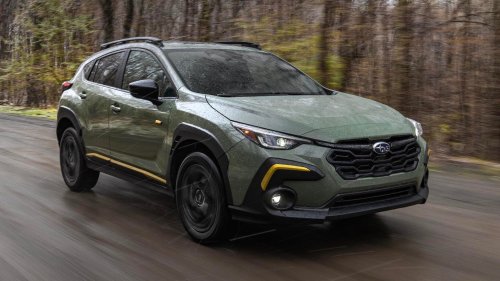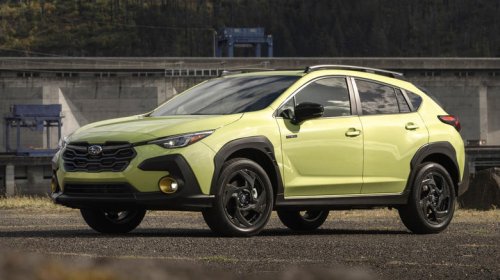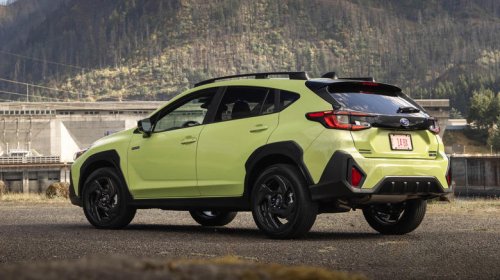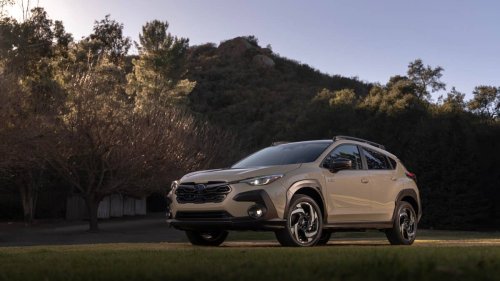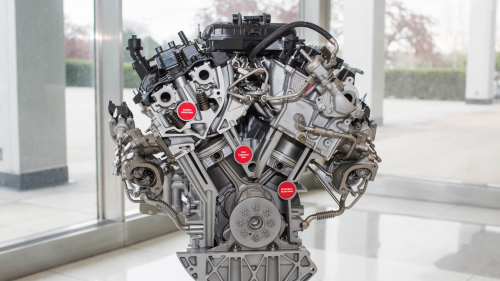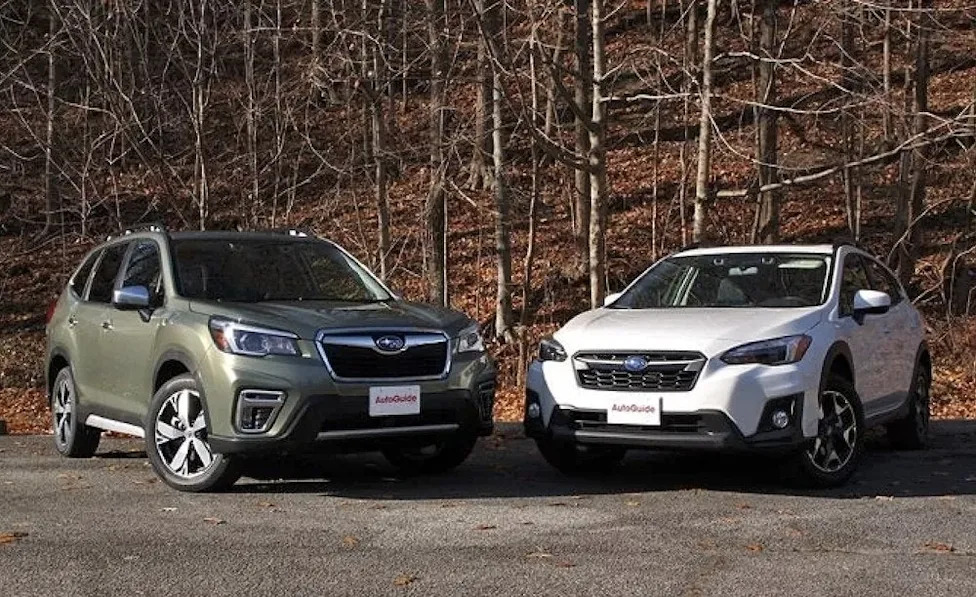



















Crosstrek or Forester? Why $3,000 Buys You RoomOff-Road.comAlta MLFri, September 18, 2026 at 9:00 AM UTCAdd us on GoogleCrosstrek or Forester?If you are shopping for a rig to haul camping gear, run gravel roads, and take on light trails, the short answer is that the extra outlay for the Foresteris worth it when interior and cargo volume rank high on your list. If you want a tighter footprint for parking and slightly more responsive road manners, the Crosstrekloses very little in capability while saving you the money.What the two SUVs shareBoth vehicles run the same 2.5-liter SUBARU BOXER engine, rated at 180 horsepower and 178 pound-feet of torque. The horizontally opposed cylinder layout keeps the engine mass low in the chassis, which lowers the center of gravity and helps balance on uneven ground. Both also come with standard Symmetrical All-Wheel Drive, the drivetrain that puts drive to all four wheels through a layout arranged symmetrically along the vehicle's centerline. This is the system that gives both SUVs their footing off pavement, and it is one of the reasons either car is worth a look for dirt-road and light-trail duty. Ground clearance is identical at a minimum of 8.7 inches on the standard trims, which is enough to clear rough two-track and deep snow. Step up to the off-road-focused Wilderness versions of either model and clearance rises to 9.3 inches, along with a standard front skid plate and other trail-ready hardware. The Wilderness trims of both cars also add rugged wheel-arch cladding, lower body cladding, and improved underbody protection. Towing is where the Wilderness trims separate from the rest. Most Crosstrek and Forester models are rated to tow up to 1,500 pounds. The Forester Wilderness raises that to 3,000 pounds, while the Crosstrek Wilderness rates highest of the group at 3,500 pounds. If a small trailer or a pair of dirt bikes is part of your plan, the Crosstrek Wilderness holds a real advantage over the larger Forester's off-road trim. Inside, the two are nearly interchangeable. They use the same electronics and the same EyeSight driver-assist suite, which has helped both earn the IIHS Top Safety Pickaward. Both also come standard with Apple CarPlay and Android Auto. And both use the same hard-wearing fabrics and plastics rather than premium materials, a deliberate choice for buyers who load muddy boots, dirty gear, and a wet dog into the back without worry.Where the extra money goes: interior and cargo spaceThe clearest reason to spend more is room. The Forester is 6.9 inches longer overall at 183.3 inches, slightly wider, and taller, even though it rides on the same wheelbase as the Crosstrek. That boxier body pays off inside. Compared with the Crosstrek, the Forester adds 1.4 inches of front headroom and 1.6 inches in the rear, plus 0.4 inch of front legroom and a meaningful 2.9 inches of rear legroom. Add it all together and the Forester musters 140.4 cubic feet of total passenger volume by CarBuzz's figures, against 100.5 cubic feet in the Crosstrek. Subaru's own numbers list the figures a little differently, at up to 110.8 cubic feet for the Forester and up to 100.5 for the Crosstrek, but both accounts agree the Forester holds the clear advantage. Cargo capacity follows the same pattern. The Forester offers up to 29.6 cubic feet behind the rear seats and 74.4 cubic feet with them folded flat. The Crosstrek makes do with 20.0 cubic feet behind the seats and 54.9 cubic feet folded. For anyone packing a full weekend of overland kit, coolers, and recovery gear, that difference is the deciding factor. The Forester's taller, boxier greenhouse also brings practical benefits on the trail. CarBuzz reviewers noted outward visibility that is excellent in every direction, which matters when you are picking a line over rocks or judging where a tire will land. Specced with the large moonroof, the Forester was described as having one of the best greenhouses of any new SUV, letting in a great deal of natural light. Editor Jared Rosenholtz called that roof "either the smallest panoramic roof in the industry, or one of the largest regular moonroof designs, depending on your outlook," adding that "the area that opens is enormous, letting in a ton of fresh air."The trade-offs of choosing the ForesterThe larger body is not free of downsides. The Forester carries more curb weight, with a base range of 3,510 to 3,675 pounds against the Crosstrek's 3,296 to 3,369 pounds. Extra mass costs a bit at the pump and blunts the sense of agility. Subaru itself notes that the Crosstrek's hatchback layout delivers slightly more responsive highway driving, while the shorter body gives it a minor edge in extremely tight parking. The Forester counters with a higher seating position that gives the driver a more commanding view of traffic, useful both in town and when scanning terrain ahead on a dirt road. Design is the other point where opinions split. CarBuzz's critics found the current Forester generic, with a conservative, boxy shape. Rosenholtz went as far as to say the Forester Sport "looks a bit Honda-ish," noting the design "could just as easily come from Ford or Honda, and lacks any distinct Subaru DNA to help it stand apart." The Crosstrek, which reads as a compact hatchback with a suspension lift, holds onto more of Subaru's traditional character. If styling weighs on your decision, that leans toward the Crosstrek.The tech both cars shareNeither SUV escapes Subaru's infotainment shortcomings. Both the Crosstrek and Forester carry the same STARLINK system, which CarBuzz described as dated. Because the two use identical electronics, this is not a reason to pick one over the other. If in-car software matters to you, it is a compromise you accept with either.Hybrid optionsBoth models are also offered as hybrids, the Crosstrek Hybrid and Forester Hybrid, for buyers who want better fuel economy. The two hybrids share the same powertrain as each other, so the interior-space calculus that separates the gas models applies to the hybrids as well.How to decideStart with how you use the vehicle. If your priority is hauling people and gear, and you want the roomiest cabin and largest cargo hold in this pair, the Forester earns the extra $3,000. Its added rear legroom, greenhouse, and folded cargo volume are real gains for camping and overland trips. Choose the Crosstrek if you value a tighter, more distinctive package, slightly sharper road manners, and easier parking, and if you can live with less space behind the seats. And if towing sits near the top of your list, look hard at the Crosstrek Wilderness, whose 3,500-pound rating tops even the Forester Wilderness. From there, build both configurations with the online tools and take each on a test drive, ideally over the kind of surface you plan to use it on, before you commit.