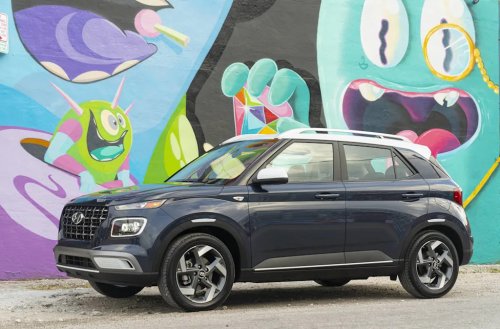
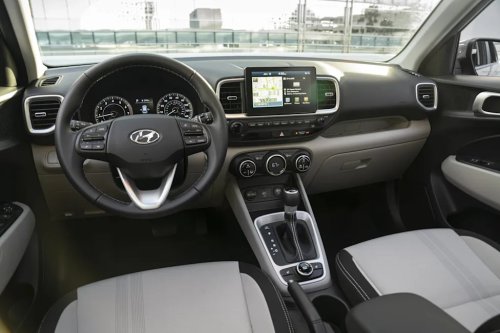
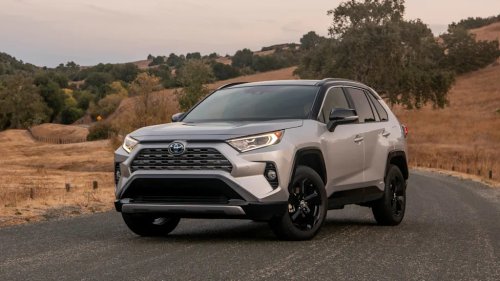
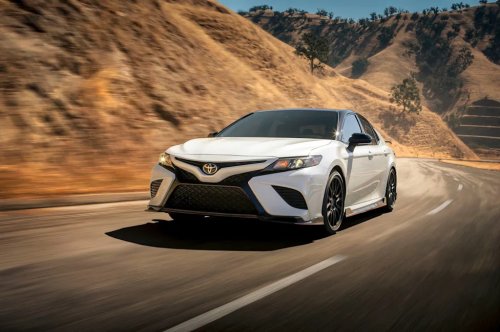
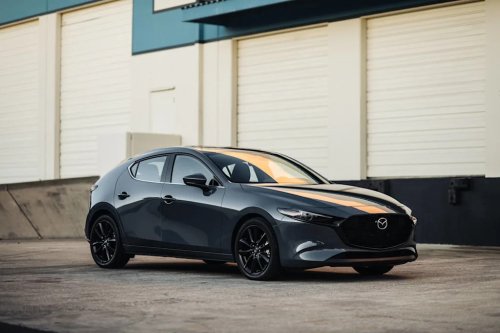
Autoblog and Yahoo may earn commission from links in this article.The floor of the American new car market is currently occupied by the Hyundai Venue. With a starting MSRP of $20,550, it represents the absolute bare minimum required to secure a brand-new crossover with a factory warranty. It is functional, unobtrusive, and relatively uninspiring; it will also inevitably depreciate like every other new economy car.Stepping onto a dealership lot with around $20,000 cash presents a critical financial divergence. Buyers can get themselves into a Venue and immediately absorb the steepest part of its depreciation curve, or they can leverage that same capital on the used market. The automotive landscape in 2026 is one that requires a little understanding to make sure you buy right.Understanding Your OptionsBuying a slightly used vehicle means the first owner already paid for the initial depreciation hit. You are purchasing an asset whose value has stabilized, and more importantly, you are buying a fundamentally superior machine. Here is how the bare-bones Venue stacks up against the used market's most reputable stalwarts:The Baseline: The New Hyundai VenueHyundaiTo understand the 2026 Hyundai Venue, we must acknowledge its primary selling point: peace of mind. Buying new means zero miles, a pristine interior, and Hyundai's 10-year/100,000-mile powertrain warranty.HyundaiView the 2 images of this gallery on the original articleAdvertisementAdvertisementBeyond the peace of mind, the spec sheet reveals the compromises required to hit that $20,550 base price. The Hyundai Venue is powered by a naturally aspirated 1.6L four-cylinder engine producing 121 horsepower and 113 lb-ft of torque, this means that it takes nearly nine seconds to reach 60 mph. Front-wheel drive is mandatory, all-wheel drive is not available at any trim level. The interior relies heavily on hard plastics, and highway noise is intrusive. The positive is that considering how simply engineered the Hyundai Venue is, it is going to be predictable and reliable to own, especially when combined with Hyundai's impressive warranty, which takes us to our most practical used alternative.The Pragmatic Favorite: Toyota RAV4If a crossover body style is non-negotiable, a $20,000 budget easily secures a previous-generation Toyota RAV4. Unlike the Venue, the RAV4 offers true AWD capability, vastly superior cargo capacity, and a 203 horsepower powerplant that easily outpaces the Hyundai.ToyotaView the 4 images of this gallery on the original articleFrom a financial perspective, a used RAV4 operates as you would expect. Toyota crossovers hold their value extremely well. While the Venue will shed thousands in equity the moment its tires hit public asphalt, a $20k RAV4 will likely retain the vast majority of its value over the next four years.The Midsize Kings: Honda Accord & Toyota CamryBuyers willing to forego the elevated seating position of a crossover can tap into the midsize sedan market. A $20,000 budget buys a heavily optioned, 5-7 year old Honda Accord or Toyota Camry.ToyotaView the 4 images of this gallery on the original articleAdvertisementAdvertisementThe gap in build quality, ride comfort, and driving dynamics between these sedans and the Venue is staggering. The Accord's turbocharged powertrains and mature chassis provide actual driver engagement, while the Camry delivers class-leading highway isolation. Both offer rear-seat legroom that dwarfs the subcompact Hyundai. A used Accord or Camry has already absorbed its 20-30% initial depreciation hit, leaving you with a comfortable, depreciated asset that will easily clear 200,000 miles with basic maintenance.The Premium Option: Mazda3For those who prioritize cabin quality and refinement over sheer space, a lightly used Mazda3 exposes the Venue's economy-car roots. Mazda's interior materials and noise insulation rival entry-level luxury marques.MazdaView the 2 images of this gallery on the original articleA 2020 or 2021 model fits perfectly into the $20,000 bracket, bringing available all-wheel drive, a sharply tuned suspension, and a traditional automatic transmission that feels vastly superior to the Venue's continuously variable unit. It is the driver's choice, proving that a strict budget does not require punishing driving dynamics.To SummarizeThe appeal of a brand-new car is undeniable. For buyers who cannot stomach the idea of unexpected repair bills, the Hyundai Venue serves its purpose as a reliable appliance under warranty. To contrast that, automotive value encompasses more than just the purchase price; it is defined by the cost of ownership, equity retention, and product quality. The Venue forces owners to swallow the heaviest years of depreciation in exchange for a compromised, albeit reliable subcompact crossover. Deploying that same $20,000 on a used RAV4, Camry, Accord, or Mazda3 means letting someone else pay the depreciation tax. In return, you secure a vehicle with better materials, superior driving dynamics, more power, and proven longevity.AdvertisementAdvertisementThis story was originally published by Autoblog on Aug 10, 2026, where it first appeared in the Features section. Add Autoblog as a Preferred Source by clicking here.



















 +23 others



















![Cybertruck, Man Buys Cybertruck. Then It Starts To Rust: 'I Thought Magnets Didn’t Stick [To] Stainless Steel'](https://cdn.topcarnews.net/media/id/aHR0cHM6Ly9jZG4ubW90b3IxLmNvbS9p-bWFnZXMvbWdsL0FrbmVROS9zMS9tYW4t-YnV5cy1jeWJlcnRydWNrLmpwZw/675942d4162d04de8e0cdd9c36ebc142.jpg?t=20261010&post_id=4823)