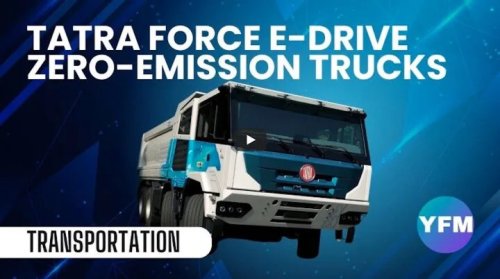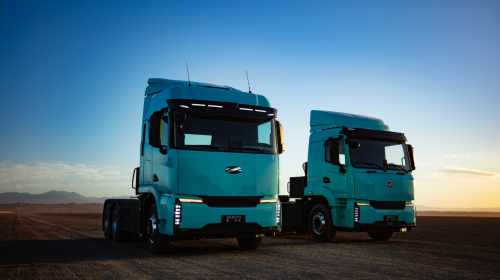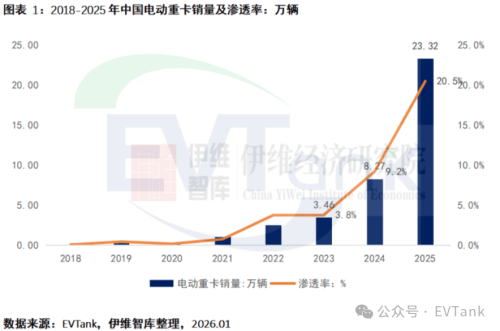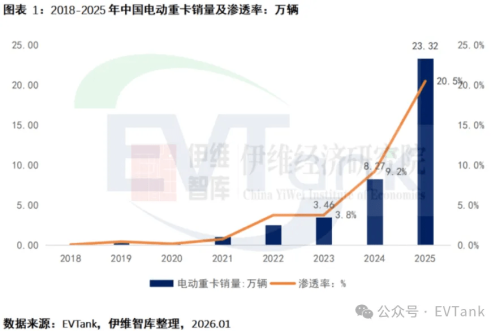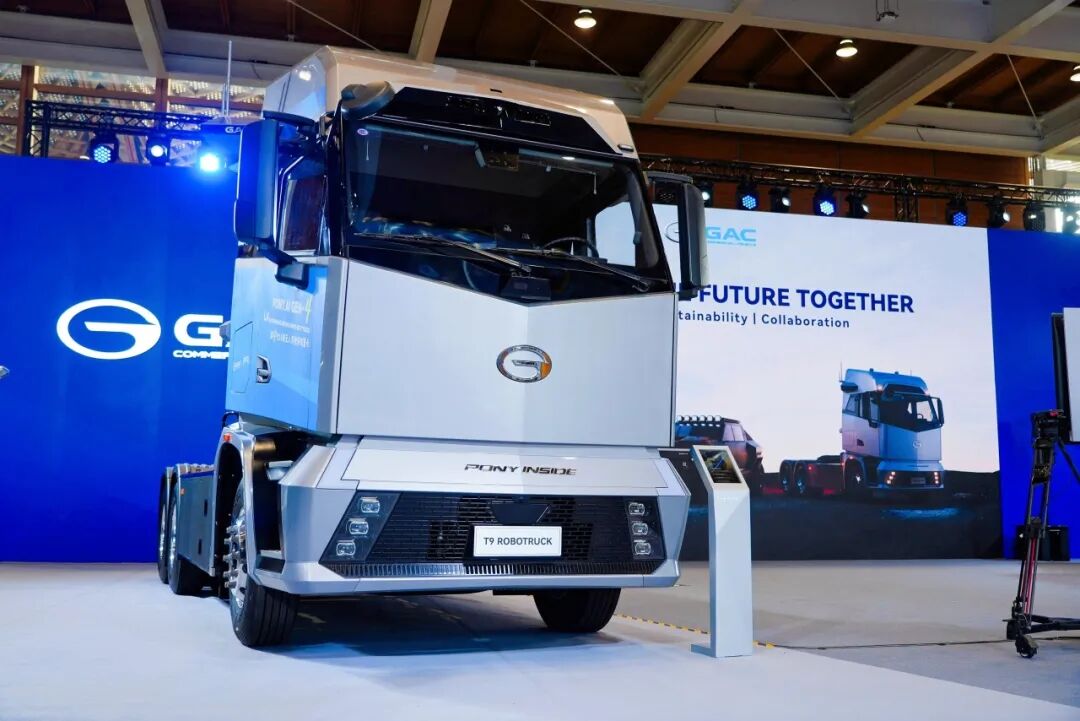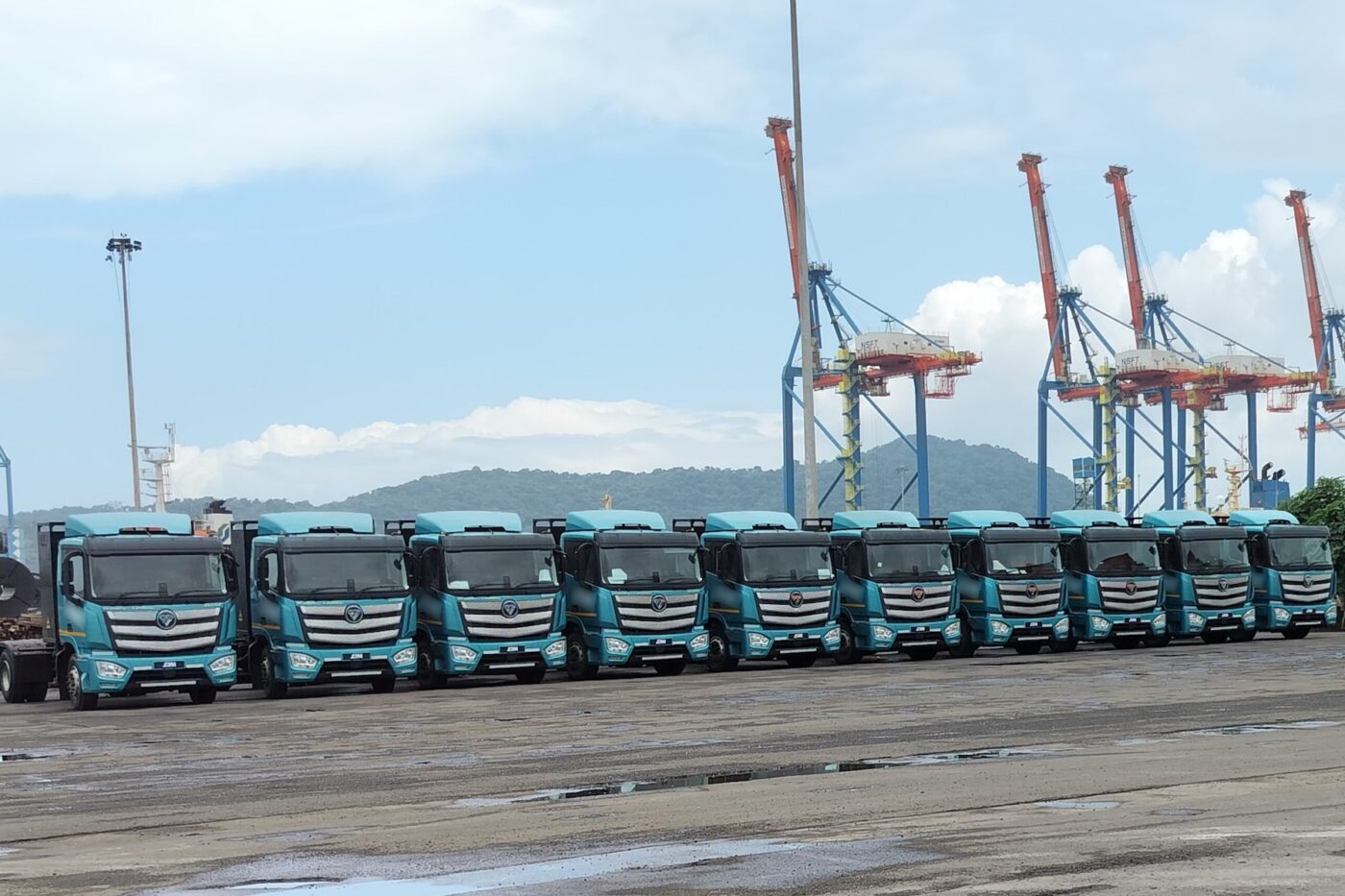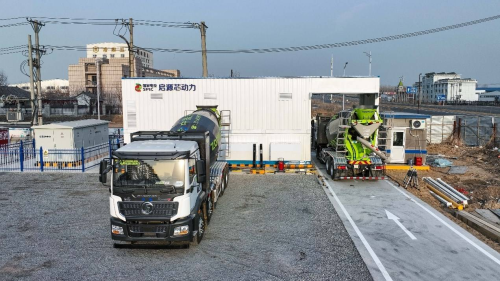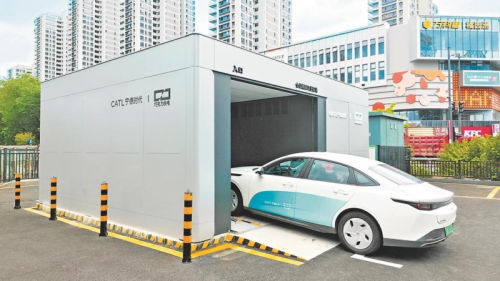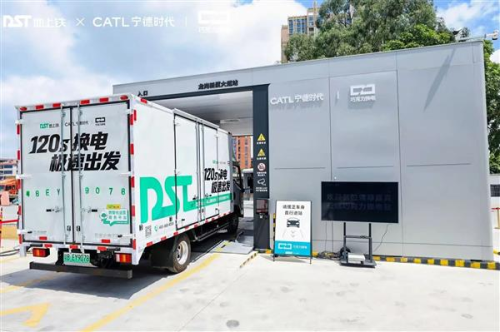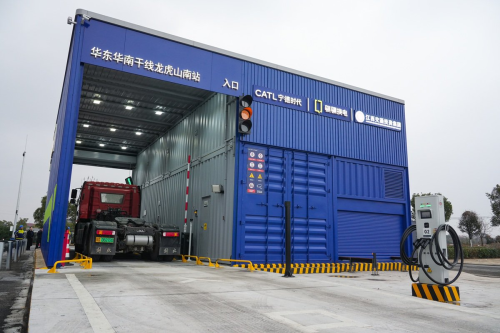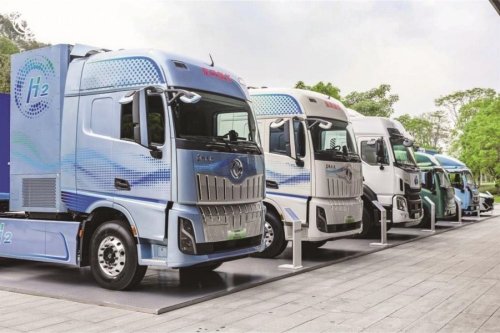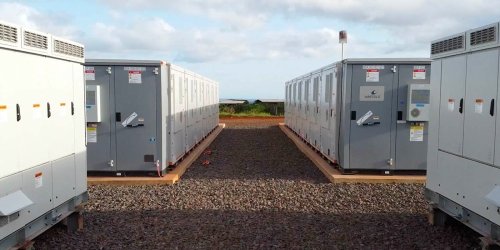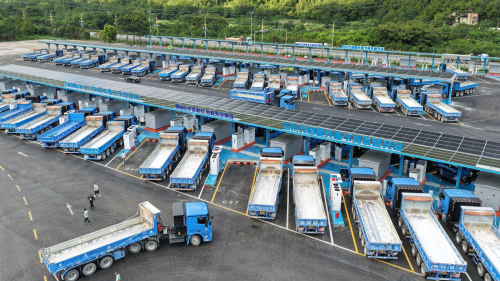
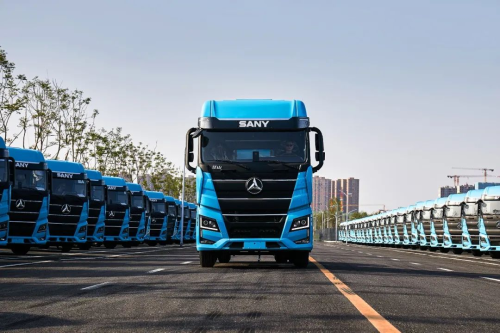
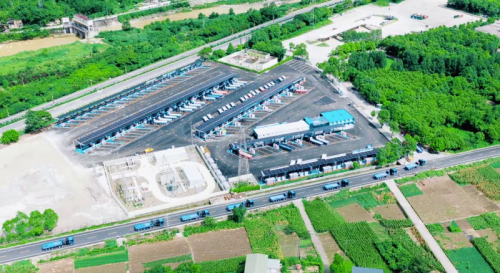
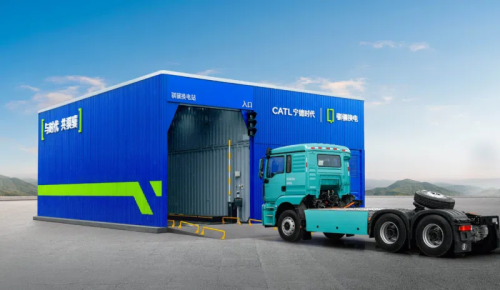



















NE-HDTs at Huawei's megawatt charging station. Credit: CTN Understand China EV’s Market Real-time notifications when critical EV data is released All important data in one place 2,000,000+ data points Become a member In a major push to accelerate the green transformation of the transportation sector, 11 Chinese government departments, including the Ministry of Transport and the National Development and Reform Commission, have jointly released an implementation plan to scale up the application of new energy heavy-duty trucks (NE-HDTs). The policy sets an ambitious target: by 2030, the market penetration rate of NE-HDTs in China is expected to reach 40%, with the total fleet size exceeding 1.6 million units, accounting for approximately 20% of all heavy-duty trucks, as reported by Caixin. A key pillar for decarbonization Transportation remains a critical sector for carbon emissions, contributing roughly 10% of the national total. Within this, heavy-duty trucks account for approximately 40% of transport-related emissions. Officials emphasise that scaling up NE-HDTs – defined as heavy-duty vehicles with a gross weight of 12 tons or more powered primarily by new energy sources – is essential for reducing pollutants like nitrogen oxides and particulate matter. Economic viability drives adoption While the initial purchase cost of electric heavy-duty trucks remains higher than that of traditional fuel-powered counterparts, their total cost of ownership (TCO) is significantly lower. According to market research firm CIC Consulting, the annual TCO for a fuel-powered heavy-duty truck in 2024 was 797,000 yuan (117,200 USD), whereas an electric model cost only 620,000 yuan (91,200 USD). This economic advantage has fueled rapid growth. Liang Linhe, a director at Sany Group and chairman of Sany Heavy Truck, noted that the market penetration rate for new energy heavy-duty trucks surged from just 0.9% in 2021 to 28.9% by 2025. An NE-HDT by Sany Heavy Duty Truck. Overcoming operational hurdles Currently, electric heavy-duty trucks are primarily used for short-haul transport in closed environments like coal mines, steel plants, and ports. Wang Jianyu, Vice General Manager of FAW Jiefang and Dean of the Commercial Vehicle Development Institute, stated that by 2025, the penetration rate of electric heavy-duty trucks in these short-haul scenarios exceeded 60%. For long-haul logistics, the industry is tackling two major challenges: battery energy density and charging infrastructure. Because current regulations cap the total gross weight of heavy-duty trucks at 49 tons, increasing battery capacity to extend range often results in “weight loss” for cargo. The world’s first 100MW heavy-duty truck supercharging station by Huawei. Credit: Huawei To solve this, the industry is pursuing two main paths: Megawatt charging: Huawei Digital Power is promoting megawatt-level supercharging technology, which can fully charge a truck within the mandatory 20-minute rest period required for drivers after four hours of continuous driving. Battery swapping: CATL is championing battery swapping to lower purchase barriers and mitigate battery asset depreciation risks. By the end of 2025, CATL had established 305 battery-swapping stations for NE-HDTs, with plans to increase this to 900 by the end of 2026. The company aims to cover 80% of major logistics corridors with its swapping network by 2030. CATL’s battery swap station for heavy-duty trucks. Credit: CATL Government support and infrastructure The new implementation plan calls for the construction of approximately 3,000 charging and swapping stations for heavy-duty trucks, with a goal for new energy trucks to account for 18% of highway freight volume by 2030. To support this infrastructure, the government has pledged to provide land and energy security, financial incentives, and preferential electricity pricing. These measures are designed to encourage the development of “zero-carbon” highway transport corridors and foster innovation in commercial business models, ensuring that the transition to new energy is both sustainable and economically viable for fleet operators.