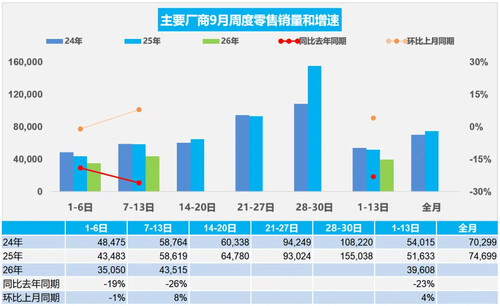
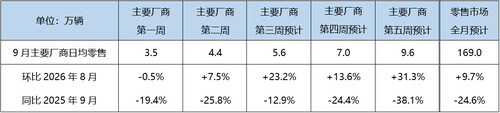
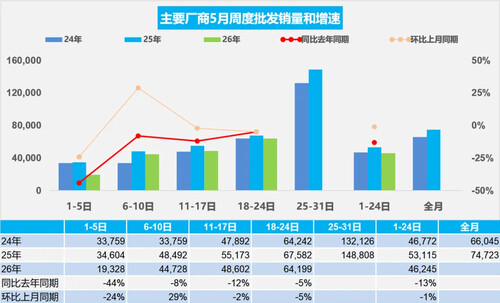
Logan Brown · 4 months ago@loganbrown46China NEV Passenger Car Retail Sales Fall 12% to 400K Units in May 1–17 Liked by+30 othersPost commentRelated PostsSix-Seat Tesla Model Y L May Arrive In The U.S. This Fall 45 · Owen Hill · 3 months agoChina NEV Transaction Prices Rise 0.71% Month-on-Month to $23.6K in May 14 · Nicole Pelletier · 3 months agoBAIC Group sales top 1.167 million units in first 9 months, overseas markets post 9 consecutive months of double-digit growthConnor Poirier · 1 days agoChina’s Used-Car Supply Tops 770k in May, HIMA Resale Values Fall 38 · Claire Pelletier · 4 months agoChina Passenger Car Retail Sales Fall 23% in First Three Weeks of June, NEV Penetration Hits 63.8% 15 · Claire Girard · 3 months agoSmart #1 to drop charging time from 30 to 12 minutes due to 800V system 42 · Daniel Anderson · 2 months agoBugatti Boss to Euro Car Brands: Ditch Screens and Focus on Luxury, Not ChinaEvan Johnson · 8 days agoNIO CEO warns: Auto industry enters final stage, domestic retail sales may fall 15%-20% 86 · Grace Lee · 3 months agoChina’s NEV Exports Jump 59% in May, Led by Strong Demand in Brazil 13 · Benjamin Turner · 3 months agoChina's Aug. NEV Passenger Vehicle Wholesale Sales Estimated at 1.51 Million, Up 16% YoY 16 · Thomas Green · 1 months agoBYD expects Formula S series sales to reach 15,000 units monthly 28 · Benjamin Harris · 11 days agoChina EV global sales in May 2026: Leapmotor new historical record, BYD stopped falling YoY 34 · Evan Anderson · 4 months agoChina NEV Retail Sales Fall 13% in Early May Despite Sequential Recovery 25 · Gabriel Johnson · 5 months agoXiaomi YU7 GT in China – 1,003 PS EV SUV smashes Nürburgring record again by 12 secs; from RM227k 36 · Henry Brown · 4 months agoChina Floods The 2027 World Car Of The Year Field With 27 Contenders 70 · Adam Lavoie · 10 days agoAnalysis: China’s CO2 Emissions Fall in Q2 2026 Due to Plummeting Oil Use 51 · Samuel Girard · 1 months agoMay NEV Average Prices Hit 169K RMB as China’s Market Shifts Upscale 82 · Owen Fortin · 4 months agoChina's passenger vehicle export overview (Jan.-Jun. 2026): NEVs accelerate global expansion丨Gasgoo Automotive Research Institute 57 · Lauren Rogers · 2 months agoAugust Pickup Truck Sales Reach 54,000 Units; Exports Account for 71% 20 · Charlotte Lee · 12 days agoChina NEV Passenger Car Retail Sales Fall 5% to 883K Units in April 23 · Carter Côté · 5 months ago




 +30 others