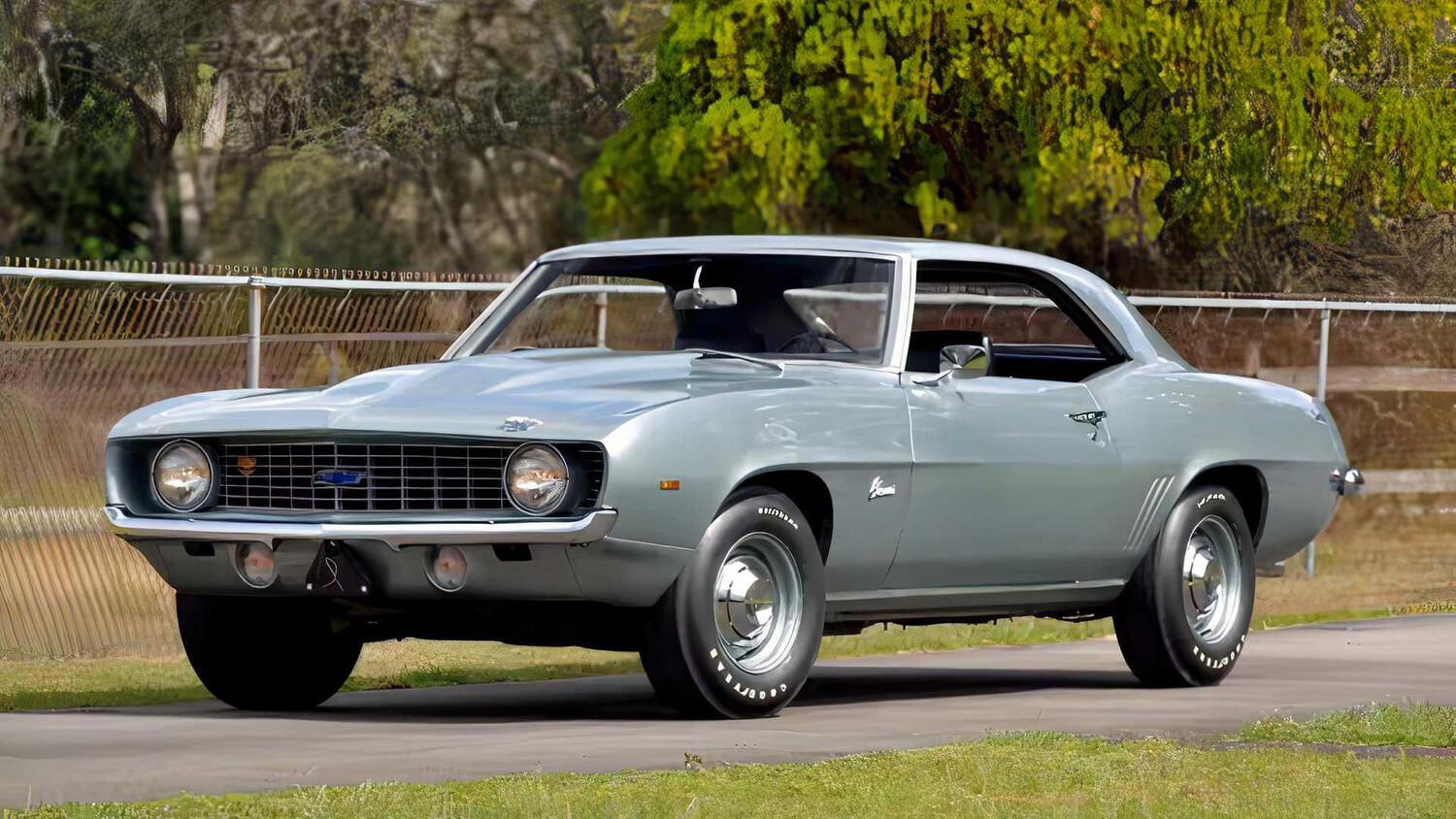
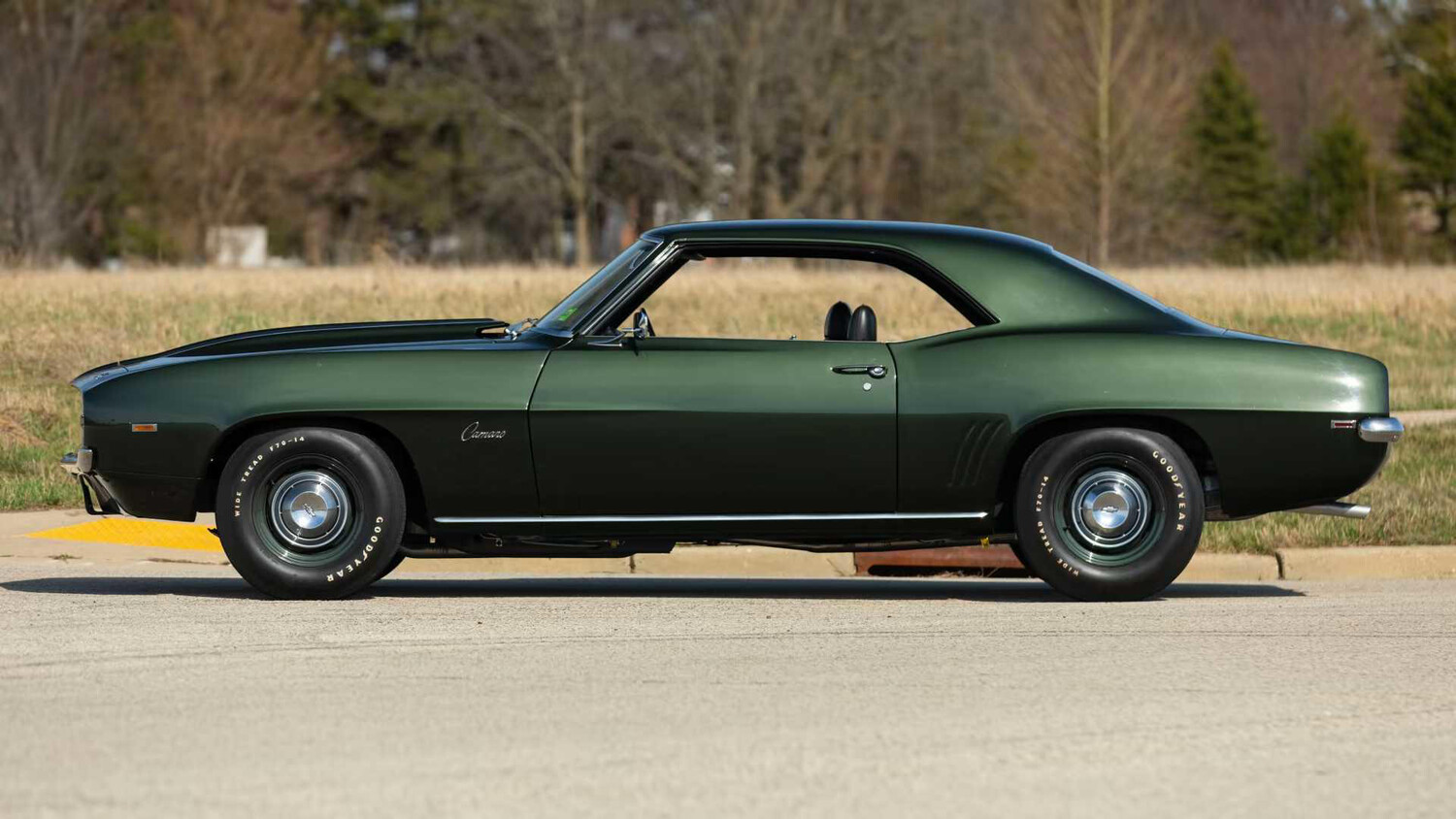
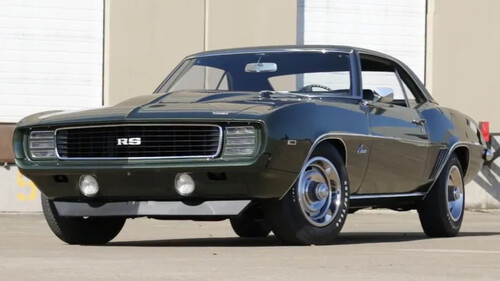
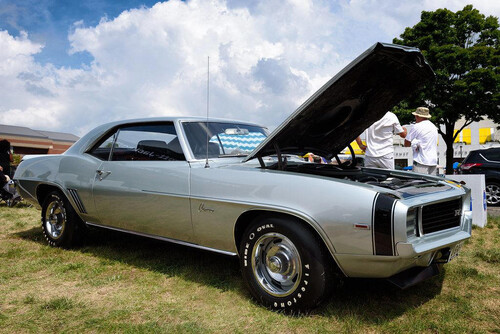
There’s a version of the muscle car era that doesn’t get talked about enough, and it’s not the one filled with instant hits and sold-out showrooms. Some of the most extreme cars of the time didn’t land the way you’d expect when they were new. They were too expensive, too specialized, or just didn’t make sense to the average buyer walking into a dealership.That’s exactly what happened with one of the rarest Camaros Chevrolet ever built. It looked like something far more serious than anything else on the floor, and instead of creating a rush of buyers, it created hesitation. People didn’t quite know what they were looking at, and more importantly, they didn’t know why they should spend that kind of money on a Chevy. However, the same car that once sat unsold is now one of the most valuable factory-built drag cars to ever come out of Detroit. Imagine that. The Backdoor System That Let Dealers Build Cars Chevrolet Wouldn’t MecumThe only reason this Camaro exists in the first place comes down to a system that wasn’t meant for performance cars at all. COPO, short for Central Office Production Order, was designed for fleet and commercial use. It gave large buyers a way to request specific configurations without going through the normal retail ordering process.But the fun part is that COPO didn’t follow the same internal guardrails that shaped Chevrolet’s public lineup. It didn’t care about marketing strategy or positioning between models. If the order was valid and approved, the car would be built, creating a dangerously fun opportunity.MecumAt the time, General Motors had internal restrictions around engine sizes in certain vehicles. The Camaro wasn’t supposed to carry the biggest engines Chevrolet had available. That space was reserved for other models, at least officially. But COPO didn’t enforce that rule in the same way.Dealers like Fred Gibb saw exactly what that meant. Instead of waiting for Chevrolet to offer something more aggressive, they used COPO to order it themselves. They weren’t asking for a slightly quicker Camaro. They were pushing for something that leaned much closer to a purpose-built race car. What came out of that process wasn’t part of a typical product plan. It was a workaround that turned into one of the most extreme factory Camaros ever produced.Fun Fact: The ZL1 engine alone cost more than an entire base Camaro in 1969. That’s a huge part of why the final price shocked buyers. They weren’t just paying for a faster version, they were paying for one of the most advanced engines Chevrolet had ever built. The 1969 Camaro ZL1 Was Built Like A Drag Car First The car that came out of that system was the 1969 Camaro ZL1, and it wasn’t built with typical buyers in mind. At a glance, it doesn’t look dramatically different from other Camaros of the era. It carries the same shape, the same proportions, and the same general presence as other big-block cars. But the details under the surface change everything.Instead of using the iron-block 427 found in other Chevrolet performance models, the ZL1 was fitted with an all-aluminum version of that engine. That decision wasn’t about refinement or efficiency. It was about weight and performance. Dropping significant weight from the front of the car gave it a clear advantage in acceleration and overall responsiveness. But the ZL1 felt far more focused than anything else in the Camaro lineup because it wasn’t trying to balance comfort and performance, it was built with a specific goal in mind: crazy power.MecumEven the official horsepower number didn’t reflect what the car was actually capable of. Like many engines from that period, it was rated conservatively. In real-world conditions, the ZL1 was producing far more power than advertised. That kind of performance didn’t really have a place in a typical showroom environment, and that became obvious almost immediately. Why These Cars Didn’t Sell When They Were New MecumFor all of its capability, the ZL1 didn’t move the way Chevrolet or its dealers might have expected. It wasn’t because the car lacked performance. It was because it didn’t fit what most buyers were looking for at the time. The biggest issue was the price. A ZL1 Camaro could cost more than $7,000 in 1969, which was a serious amount of money. That put it in a completely different category than most Camaros and even close to Corvette pricing. For someone walking into a dealership, it raised a simple question. Why spend that much on a Camaro?Then there was the way the car behaved. This wasn’t something built for comfortable daily driving. It was aggressive, loud, and clearly tuned for straight-line performance. If you weren’t planning to take it to the drag strip, a lot of what made it special didn’t really apply to how you would use it. That created a disconnect because the people who understood the car’s purpose weren’t always the ones buying new cars from dealerships, and the people who were buying new cars didn’t always want something this extreme.MecumFun Fact: Chevrolet wouldn’t build the ZL1 unless a dealer committed to a minimum order, which is how production landed at 69 units. Without that upfront commitment, this car likely never makes it past the idea stage.As a result, some of these cars sat. Not because they were overlooked, but because they didn’t make sense to most buyers at the time.In a few cases, dealers had to find ways to make them more approachable. There are documented examples of ZL1 engines being removed and replaced with more conventional setups just so the cars could sell. The original engines were then sold separately or used in racing applications. What feels like an obvious collector piece today once needed to be adjusted just to move off the lot. The Market Finally Caught Up To What These Cars Were Over time, the ZL1 started to make more sense, just not in the way it was originally intended. As collectors and enthusiasts began to look back at the muscle car era with more context, the ZL1 stood out for reasons that went beyond raw performance. It wasn’t just fast. It had a story that was tied to how it was built, why it existed, and how it was received when it was new.The limited production numbers helped, but the combination of rarity and backstory really drove interest. This wasn’t a car that was widely marketed or easy to find. It was something that had to be understood, and once it was, the value followed.MecumNow, one thing that stands out immediately is how wide the range can be. That’s not inconsistency, that’s condition and authenticity doing all the work. The $700,000 Mecum Indy sale in 2023 is a strong baseline for a legitimate example. Meanwhile, top-tier, ultra-low-mileage cars have already surpassed $1 million at major auctions.That lower $84,700 figure you’ll see referenced (I didn't include it in the table because its an outlier) comes from a recorded sale, but it doesn’t represent the core ZL1 market and likely reflects either a non-comparable condition or incorrect classification in aggregated data. And that’s exactly why this Camaro is tricky to track. There are only 69 of them, and not all sales are equal. The COPO Camaro That Didn’t Make Sense Then Makes Perfect Sense Now MecumLooking back, it’s easy to assume the ZL1 was always going to be important. But the reality is that it almost didn’t land at all.It depended on a workaround to exist, and didn’t align with what most buyers wanted at the time. And for a brief period, it was something dealers had to figure out how to sell rather than something customers were chasing.It represents a moment where performance went further than the market was ready for. A car that delivered exactly what a small group of buyers wanted, even if most people didn’t see the value in it right away. And now, decades later, that exact combination is what defines it. Because the cars that once sat on showroom floors are the same ones collectors are still trying to find today.