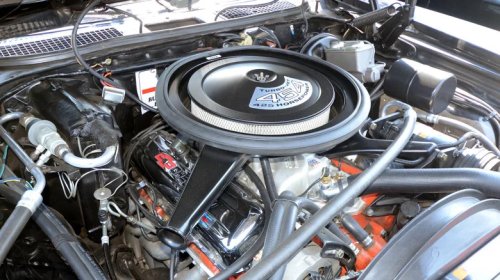
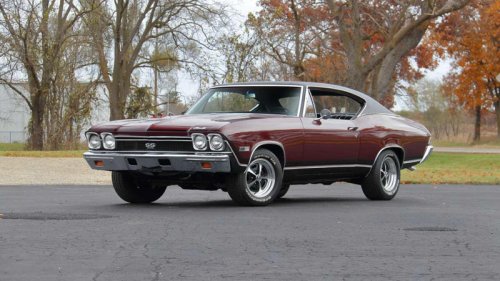
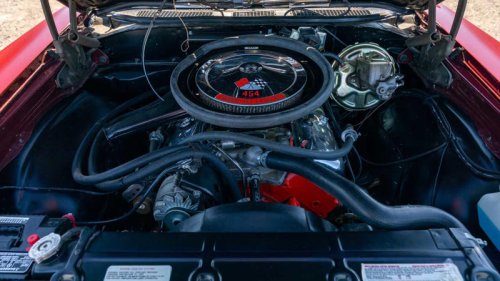
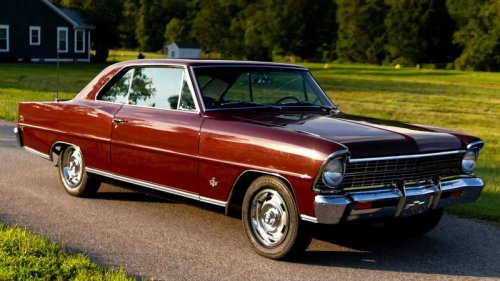
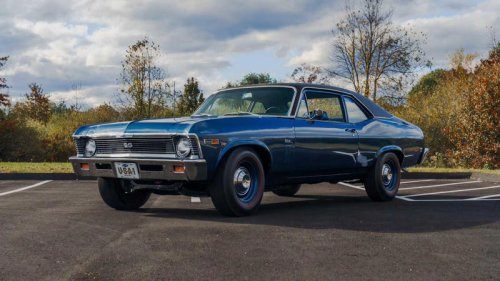
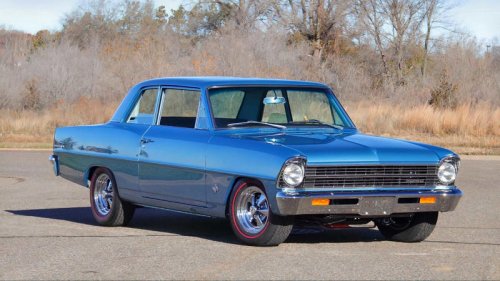
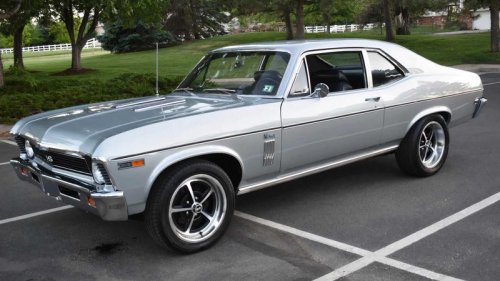
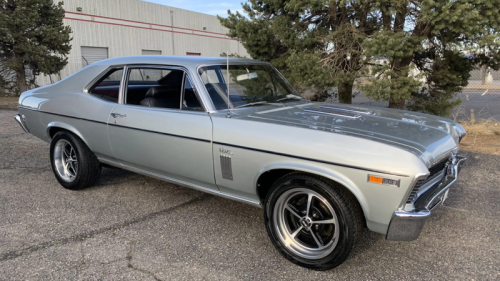
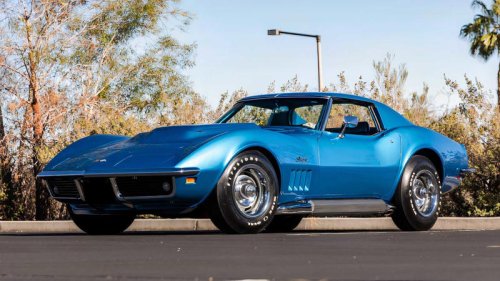
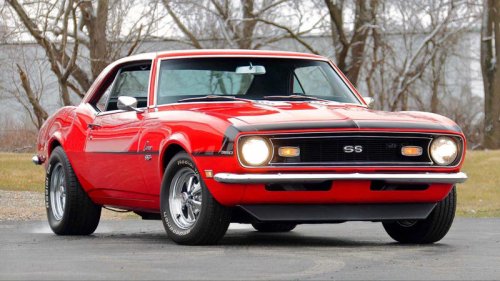
The late 1960s turned Detroit into a horsepower shouting match. Almost every stoplight looked like a tryout for the drag strip, and every brand wanted a hero car with stripes, scoops, and enough torque to wrinkle pavement. Chevrolet already had obvious stars in that fight, but the hardest punch did not always come from the loudest car in the room.The muscle-car boom created a problem as much as it created legends. The big names drew attention from rivals, police, and insurance agents, while buyers who cared about straight-line speed started hunting for something leaner and less flashy. Chevy had an answer, and it came in a smaller package that looked almost polite. Almost. The Late-60s Muscle Car Boom Pushed Chevy To Think Outside The Box Mecum By the late 1960s, Detroit had turned horsepower into a public sport. Every brand wanted a fast car that could win stoplight bragging rights and look good doing it. Big coupes and flashy nameplates grabbed most of the attention, but the market had started to shift. Buyers still wanted speed, but many no longer needed it wrapped in the biggest body on the lot.That opened the door for a different kind of muscle car. A lighter, smaller car could do more with the same power, and it could do it without shouting about it from three blocks away. That mattered at a time when insurance companies had started noticing what young buyers were doing with V8s and four-speed manuals. Speed was still the goal, but the trick was finding a smarter way to sell it.Mecum Chevy understood that better than many rivals. It already had no shortage of performance cars, but adding another loud, expensive machine would not have changed much. What made more sense was building something leaner and meaner. Something that looked tidy, almost harmless, right up until the moment it buried the throttle and made the rear tires file a formal complaint. Chevy Turned A Humble Compact Into A Big-Block Weapon Bring A TrailerThe model was the Chevrolet Nova SS, and the magic sat in the big-block cars, especially the L78 version. Technically, the dream machine lived in a two-door coupe, not a formal four-door sedan, but it came from the same compact Nova family that most buyers still linked with sensible transportation. That was the trick. In a period packed with stripes and fake scoops, that restraint gave the Nova a kind of blue-collar menace that still works today.At the heart of the best cars sat Chevrolet's 396-cubic-inch L78 V8, rated at 375 hp at 5,600 rpm and 415 lb-ft of torque at 3,600 rpm. It used high compression right around 11:1, a solid-lifter cam, big rectangular-port heads, and an aluminum intake topped by a big Holley four-barrel. Chevy sold it with a conservative factory number, but the hardware told another story. The engine wanted revs, fuel, and room to breathe, and that probably explains why the L78 and the milder 350-hp L34 shared the same torque rating on paper.Mecum The rest of the package was up to that level, too. A heavy-duty three-speed came standard with the 396, while buyers could step up to a four-speed or a Turbo-Hydramatic automatic. Power front disc brakes came with the SS package, and the heavy-duty suspension helped the Nova deal with the extra engine weight better than many people expected.It still behaved like a 1960s muscle car, which meant it could get lively when pushed hard, but Chevrolet did not just stuff a big engine under the hood and hope for the best. The wheelbase, brake package, and compact dimensions gave the car a direct, no-nonsense feel that suited its mission. It wanted to launch hard, change gears fast, and get to the next light before anyone else had finished making excuses.The sales numbers show how fast buyers caught on. In 1968, the big-block arrived after launch, and only 667 buyers checked the box for the 375-hp version. In 1969, the figure climbed to 4,951 L78 cars. Chevy even approved a tiny run of COPO 9738 automatic L78 Novas for Fred Gibb, so the combination could qualify for NHRA Super Stock. That detail often gets buried under the Yenko stories, but it says a lot. The automaker knew exactly what kind of trouble this little car could cause on a drag strip. 0-60 MPH Time That Could Embarrass Sports Cars MecumPublished performance numbers for the L78 Nova SS vary, which is normal for the era. Tires were crude, magazines used different drivers, and some test cars hooked while others mostly made noise and smoke. Even so, the message is clear. Hagerty’s summary puts the 375-hp car at 0-60 mph in six seconds flat with a 14-second quarter-mile. A Hot Rod test of an automatic car ran 13.87 at 105 mph, though its 0-60 result came in slower.How does that stack up against sports cars of the era? Car and Driver tested a 1969 Porsche 911T Targa at 7.8 seconds to 60, the 911E at 7.0, and the 911S at 6.5. So a strong Nova SS could beat the 911T, edge the 911E, and crowd the tail of a 911S in a straight sprint while costing far less. That sounds absurd until the power-to-weight math shows up and ruins the romance. A lot of European magic still had to answer to 396 cubic inches and a very short first gear. The Porsche still owned the corners, of course, but stoplight races do not award style points for rear-engine balance and delicate steering feel.The same pattern showed up against Britain’s glamour icon. A period comparison recorded a 1969 Jaguar XKE at 8.0 seconds to 60, and other period-style references for the 4.2-liter E-Type still land in the low-seven-second range. Either way, the Nova SS belonged in the conversation. It could make a pricey sports car owner wonder why the square little Chevy in the next lane kept getting smaller in the mirror. Affordable When New, Expensive Today Bring a Trailer Part of the Nova SS appeal came from simple math. In 1968, the Nova SS carried a base price of $2,995. That already looked like a bargain next to bigger and flashier muscle cars. The buyer still had money left for the important things in life, like better tires, a tach, or enough premium fuel to keep the local gas station owner smiling. Even before the 396 entered the picture, the Nova SS sold a lot of performance image for not much money.The 1969 car kept that basic value pitch alive. A base V8 Nova coupe started at $2,405, and the SS package added $280.20. Wide- or close-ratio four-speeds cost another $184.50. A mild SS stayed under the price of many headline muscle cars, but the total climbed once the 396 entered the chat. Sources list the 1969 Nova SS 396 at $3,185. That still landed in reachable territory for buyers who wanted serious pace without stepping all the way into Corvette money. The automaker basically offered a shortcut through the muscle-car hierarchy for buyers who cared more about elapsed time than social status.Bring a Trailer That bargain has vanished in the collector market, though. Hagerty’s January 2026 value guide puts a good 1969 Nova SS L78 at $48,200, while an excellent one sits around $75,700. Actual recent sales support that range. One L78 sold for $45,100 in late 2024, while another brought $74,520 in July 2025. In other words, the market now treats the Nova the way street racers treated it back then, with a lot more respect than its clean little shape first suggests.Why the jump? Rarity helps, but the real answer runs deeper. The Nova SS hits several collector sweet spots at once. It carries a famous Chevrolet big-block, it delivers genuine street performance, and it still feels a little under the radar next to a Chevelle SS 396 or a Camaro SS. Chevy Got The Muscle Car Recipe Right In The 1960s Mecum Of course, the Nova SS did not exist in a vacuum. Chevy stacked the late-1960s lineup with heavy hitters. The Chevelle SS 396 offered the same basic big-block idea in a larger midsize wrapper, and the Camaro SS could also be had with the 396, giving buyers a pony car with real muscle-car firepower. At the top sat the Corvette, which in 1969 offered four different 427 big-block choices, running from 390 hp to the wild high-output tri-power engines.Chevrolet had already laid the groundwork before the SS 396 arrived. The 1966 Nova could be ordered with the L79 327, a 350-hp small-block that turned the compact Chevy into a serious sleeper years before the third-generation body appeared. Enthusiasts who knew those cars did not need much convincing when the 1968 redesign opened the door for even more... engine.Mecum That is exactly why the Nova SS still matters even in 2026. It showed that the best muscle-car recipe did not always need the longest hood, the loudest graphics, or the highest price tag. It needed the right body, enough brakes and suspension to survive the fun, and an engine that made people laugh once, then lose the race. Chevrolet nailed that formula in the late 1960s.Source: Chevrolet, Car and Driver, Hagerty



















 +21 others