Olivia Lee · 5 months ago@olivialee43California police can now ticket autonomous vehicles Liked by+27 othersPost commentConnor Anderson@connoranderson · 5 months ago1It makes sense if autonomous cars can break traffic laws, there has to be a clear system to hold someone accountable, even if there’s no driver behind the wheel.ReplyLauren Hill@laurenhill2 · 5 months ago1Interesting shift before this, police literally had no one to ticket, so this closes a major legal gap in how self-driving cars are regulated.ReplyEthan Scott@ethanscott · 5 months ago1This could push AV companies to improve their software faster, since repeated violations can now directly impact their operating permits.ReplyRelated PostsFlow Of Traffic Vs Speed Limit: Can You Get A Ticket For Just Keeping Up? 29 · Amelia Hill · 1 months agoRIVOTEK's Ren Yi: AI Cockpit Is Not Just a "Nice-to-Have"; Agent Capabilities Will Be Entry Ticket 23 · Oliver Macdonald · 1 months agoLeft-Hand-Drive London Taxi Is the Cheapest Ticket to British Charm on Hagerty Marketplace 65 · Ava Rogers · 1 months agoBoston Woman Plugged in Her EV, Got Her Cord Stolen, and Came Back to a Parking Ticket 35 · Ryan Smith · 1 months agoCops Ticket Insured Driver For Having No Insurance Because Flock Said So 40 · Hannah Wilson · 1 months agoCops Say This Guy Stole A $90K BMW With A Valet Ticket And A Basketball Story 59 · Connor Macdonald · 1 months agoAt $12,000, Is This 1989 VW LT35 Feuerwehr Camper Van A Hot Ticket? 79 · Samuel Girard · 1 months agoWaymo's SF Robotaxis Rack Up 8,300 Parking Tickets 51 · Emma Campbell · 1 months agoGulf State-Registered Supercars Rack Up Massive Unpaid Parking Ticket Bills in London: Report 51 · Isabelle Morgan · 1 months agoLondon Ticketed UAE Supercar Drivers 13,423 Times, Only 1% Ever Paid 52 · Annabelle Lavoie · 1 months agoWaymo racked up 8,300+ SF parking tickets and nearly $1M in fines 88 · Adam Gagnon · 1 months agoNearly 17 Million Parking Tickets Were Handed to UK Drivers in the Last Year 35 · Ella Harris · 2 months agoFlorida Deputies Will Now Ticket Left-Lane Campers Too 79 · Lucas Wilson · 2 months agoOne MPH Turned Her Porsche 911 Speeding Ticket Into Handcuffs 97 · Oliver Martin · 2 months agoTesla is racking up speeding tickets, and YOU are on the hook 34 · Ava King · 2 months agoA Cop Dressed As A Shrub Wrote 74 Tickets In Six Hours 75 · Adam Harris · 2 months agoEnter Now: Backfire News Readers Can Score Bonus Tickets in the Super Chevy Dream Giveaway Before It Ends 8/4 45 · Annabelle Lavoie · 2 months ago64 Of Waymo’s 83 Austin Tickets Came From One Parking Habit 59 · Lily Lavoie · 2 months agoPodcast: TSLA earnings debacle, FSD ticket, Toyota finally waking up? FSGP, more 75 · Gabriel Campbell · 3 months agoFake Transformers Mustang Cop Car Ticketed By Real Camaro Cop Car 66 · Adam Johnson · 3 months ago










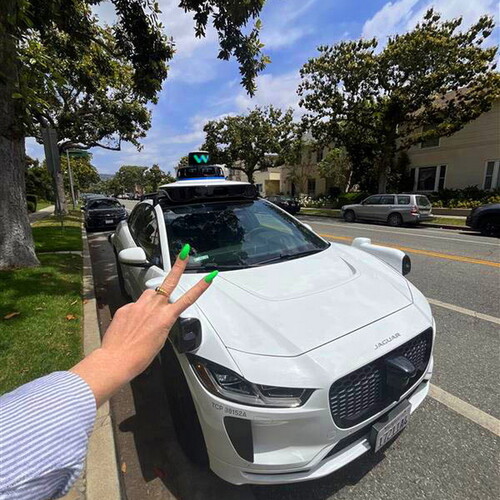










It makes sense if autonomous cars can break traffic laws, there has to be a clear system to hold someone accountable, even if there’s no driver behind the wheel.
Interesting shift before this, police literally had no one to ticket, so this closes a major legal gap in how self-driving cars are regulated.
This could push AV companies to improve their software faster, since repeated violations can now directly impact their operating permits.