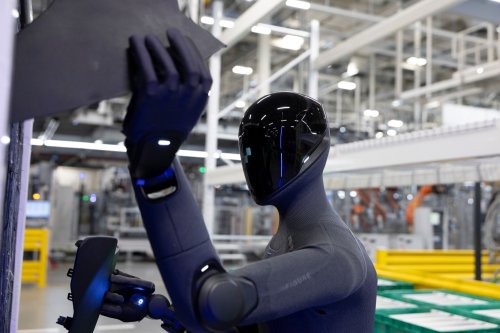
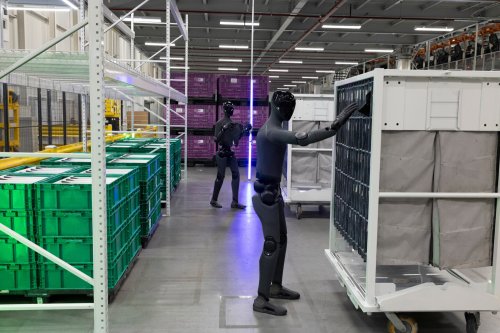
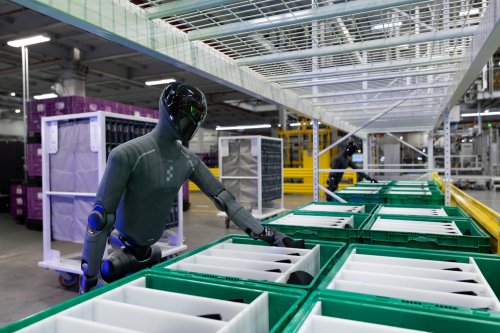
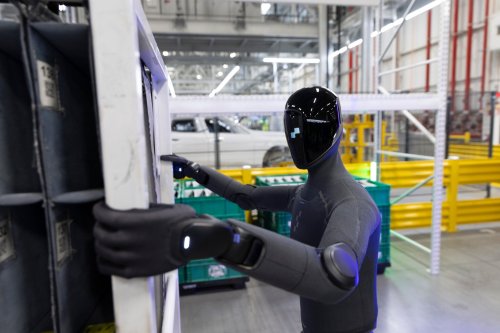
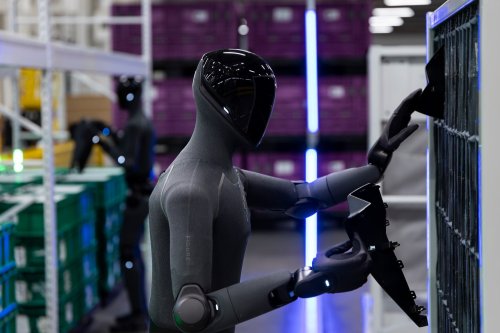
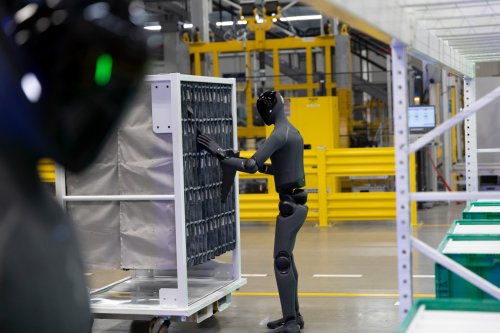
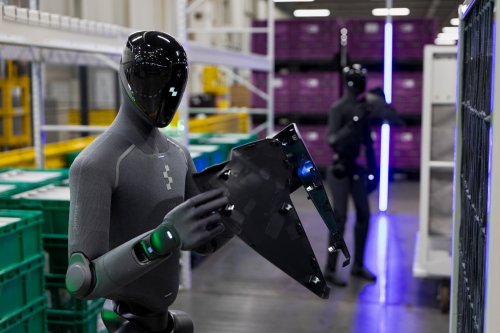



















BMW is using Figure’s new humanoid robot to help with logistics at its plant. The robots sort components arriving at the factory and place them in trolleys. Humanoid robots can be especially useful in monotonous roles at the plant. Roughly two years after BMW first put humanoid robots to work at its US plant in Spartanburg, South Carolina, a newer version has clocked in. The machines come from American firm Figure, and the resemblance to a person runs deeper than anything Tesla has managed with Optimus. This one looks less like a prototype in costume and more like something built to share a floor with workers. The new robot, known as the Figure 03, will play an important role in the plant’s logistics operations. Components arriving at the site currently land in large containers and are unsorted. It will now be the task of these robots to pick up each part and sort them into a sequencing trolley. Read: BMW’s New Humanoid Workers Never Take A Break Or Get Paid These trolleys will then be taken to a specified collection point for further transport. These parts will then be handed over to an automated tugger train or a Smart Transport Robot, which will shift them to the production line, where human workers will use them to assemble several new BMW models. The Figure 03 robots play a different role than the old Figure 02 bots used at the site. Through an 11-month pilot program, those old humanoids worked in the body shop, inserting sheet-metal parts for the welding process, helping to build more than 30,000 X3s over a ten-month period. Helping Workers, Not Replacing Them “Plant Spartanburg is the birthplace of humanoid robotics in BMW Manufacturing’s operational day-to-day activities,” Ulrich Wieland, vice president of production control and logistics at BMW Manufacturing, said. “Having already successfully completed a pilot with Figure 02 in our body shop, we are now looking forward to deploying Figure 03 for a sequencing use case in logistics.” BMW refers to these humanoid robots as a “value-adding complement to existing automation” at its plant, which already uses AI to develop intricate virtual 3D simulations and a so-called ‘virtual factory’ to continually refine processes. BMW says robots like these are especially important for “monotonous, ergonomically demanding, or safety-critical activities,” and says it wants to “protect and most effectively utilize employees,” rather than replacing all of them with robots. Photos BMW