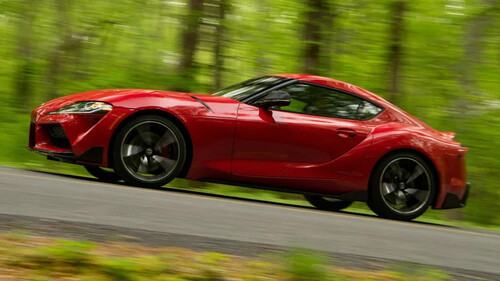
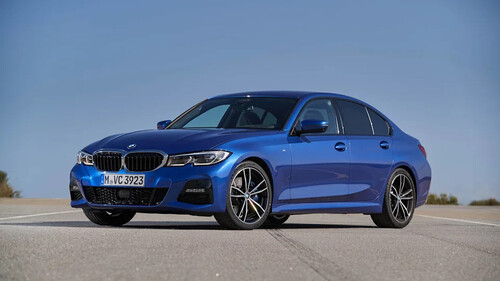
Autoblog and Yahoo may earn commission from links in this article.Ask which is the most reliable BMW engine and the answer comes back as a code. B58. N52. M57. Those reputations are built on owner experience and service history rather than on any published failure study, and the code is the easy part. The harder part is that a single BMW engine code can cover a decade of production, several rounds of hardware revision, and in at least two cases a warranty program that BMW defines by the week a car left the factory rather than by the badge on the trunk.That is the whole problem with the question. The engine family tells you what BMW was trying to build. The build date tells you what you are actually buying.Why The Question Usually Gets Answered WrongEngine reputations are set early and revised late. Awards arrive at launch, when the engine is new and the press fleet has 4,000 miles on it. Durability evidence arrives eight to ten years later, when the same code has been through two or three rounds of internal changes and the hardware in a high-mileage car is no longer the hardware that won anything.AdvertisementAdvertisementModel-level reliability guidance is useful for narrowing the search, and Autoblog's used BMW reliability guide does that job. But two cars of the same model year, same engine family, can carry different parts. That is not a theory. BMW documents it.The B58 Is The Safest Bet, And The Later Version Is The One To BuyThe B58 arrived for 2016 in the 340i, rated at 320 horsepower in US trim, built around a closed-deck aluminum crankcase with the cylinder water jacket sealed at the top. It won Wards 10 Best Engines honors in 2016 and again in 2017.Then BMW changed it. WardsAuto's 2019 award writeup for the X5 xDrive40i lists what the updated engine received:New cooling systemNew cylinder headNew timing chainNew oil pumpForged crankshaftModified block and air induction systemDirect injection pressure at 350 bar, up from 250BMW 340i GT M Sport EstorilblauBMWThat is not a calibration change. That is a different long block wearing the same three characters. BMW's own internal codes separate them. The updated version is the B58B30M1, and the earlier one that stayed in high volume across the 2, 4, 5, 6 and 7 Series and the X3 and X4 is the B58B30M0.AdvertisementAdvertisementToyota's version tells the same story from the outside. When output of the GR Supra's shared inline-six rose from 335 to 382 horsepower for 2021, Toyota described a new six-port exhaust manifold and new pistons that dropped compression to 10.2:1. The engine that made the B58 famous and the engine sold under that name today are separated by a meaningful amount of metal.One honest gap: neither BMW nor any independent testing body has published comparative failure data ranking early B58 units against later ones. What is documented is the hardware change, not a defect rate. Anyone telling you the exact failure percentage of a 2016 B58 is guessing.The Recall Paperwork Is The Most Useful Reliability Document BMW PublishesThe N54, BMW's first modern turbocharged six, is the clearest case. In October 2010 BMW notified the EPA that it would recall roughly 130,000 vehicles from the 2007 to 2010 model years over high-pressure fuel pump failure, with about 40,000 expected to need a new pump. The list ran across the 335i, 135i, 535i, X6 xDrive35i and Z4 sDrive35i. BMW later extended the injector warranty to 10 years and 120,000 miles.The N55 that replaced it moved to a single twin-scroll turbocharger and drew none of the same actions. The B58 followed the N55. Three generations, one architecture, and a steadily shorter list of paperwork.The N20 Case Shows Why Build Date Beats Model YearBMW's service bulletin on N20 and N26 chain modules extends coverage to seven years or 70,000 miles. Read the eligibility table and the point becomes obvious. Coverage is defined by production date, not model year.ModelEngineProduction Window Covered528i Sedan / xDrive SedanN20Sept 1, 2011 to Feb 28, 2015Z4 sDrive28iN20Sept 1, 2011 to Feb 26, 2015328i xDrive Sports WagonN20Feb 26, 2013 to Feb 25, 2015X3 xDrive28iN20Feb 15, 2012 to Feb 28, 2015228i Coupe PZEV/SULEVN26Oct 18, 2014 to Feb 27, 2015Two 2015 528i sedans can sit on the same lot with the same engine code and different coverage, because one was built in January and the other in April. BMW draws the line by calendar. A buyer should read it the same way.The BMW X1 (06/2011)BMWThe Best BMW Engines Of All Time Are Not The Most Reliable OnesThese two lists barely overlap, and pretending otherwise is how people end up with a rod bearing invoice. The S54, S65 and S85 belong in any serious ranking of the best BMW engines of all time on merit, and Autoblog's roundup of the best BMW engines of the 21st century makes the case for all three. It also flags rod bearing wear on the V8 and the V10, and high running costs across the group. An engine can be one of the greatest ever built and still be an expensive thing to own.AdvertisementAdvertisementThe N52 is the naturally aspirated engine most often nominated instead. Wards named it to the 10 Best Engines list in 2006 and again in 2007, crediting a magnesium and aluminum block that saved roughly 22 pounds. Its durability reputation rests on two decades of owner experience rather than any published failure study, which is worth knowing before treating it as settled fact.BMW Diesel Engines Sit Outside The PatternAmong BMW diesel engines, the M57 is the one Americans could actually buy, and only briefly. It reached the US in the 335d sedan and X5 xDrive35d, rated at 265 horsepower and 425 lb-ft, with peak torque holding from 1,750 to 2,250 rpm. The EPA rated the 2009 335d at 23 city and 36 highway, which made it the most efficient BMW then sold here. The sequential twin-turbo layout used a small low-inertia turbo at low rpm and a larger one above it, which is where the torque plateau starting at 1,750 rpm comes from.6-cylinder Diesel Engine with Variable Twin Turbo BMWThe engine itself is not where the risk sits now. Every US-market M57 car is at least 15 model years old and carries selective catalytic reduction hardware and a particulate filter, and there is no published primary data on the long-term durability of those systems at high mileage in American use. The bottom end has a reputation; the emissions plumbing does not.What This Means If You Are ShoppingWork in this order.AdvertisementAdvertisementFind the engine code. Not the badge. A 2015 528i and a 2016 340i tell you nothing on their own.Pull the production month from the VIN. This is the number that decides which bulletins apply.Check that VIN against BMW's warranty extension bulletins rather than against the model year, which is what most listings show and what most buyers use.Then apply the rule the paperwork keeps demonstrating. Treat the first two years of any new BMW engine family as the development period, because that is empirically when the bulletins get written. For the B58 specifically, that means favoring cars built from the 2019 model year onward.The VerdictBMW X5 Sports Activity VehicleBMWThe B58 is the engine to buy, and the version built from the 2019 model year onward is the one to look for. That is a buying recommendation, and it needs stating precisely, because the evidence supports a narrower claim than the usual headline.What the record shows is this. BMW built the B58 with a closed-deck block from the start, then rebuilt a large share of it: cooling system, head, timing chain, oil pump, crankshaft, block, induction, injection pressure. It gave the result a separate internal code. Toyota bought into the same architecture and took the revised version for the Supra. That is a decade of continuous refinement on an engine BMW clearly considers central to its lineup.AdvertisementAdvertisementWhat the record does not show is a measured failure rate. Nobody has published data proving the 2019 B58 fails less often than the 2016 one. The revision is documented; the reliability gap is inferred from it. That inference is reasonable, and it is still an inference.So buy on what is knowable. The engine family narrows the field. The build date narrows it further. Neither one is a warranty, and BMW's own bulletins are the closest thing to an honest reliability record the company publishes.This story was originally published by Autoblog on Aug 11, 2026, where it first appeared in the Features section. Add Autoblog as a Preferred Source by clicking here.