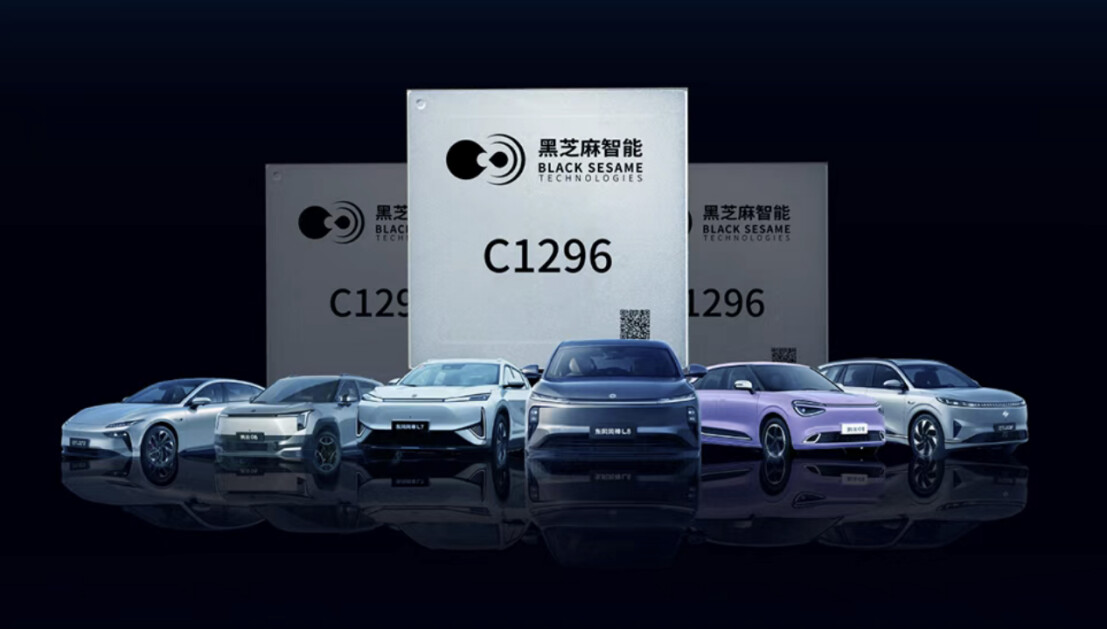
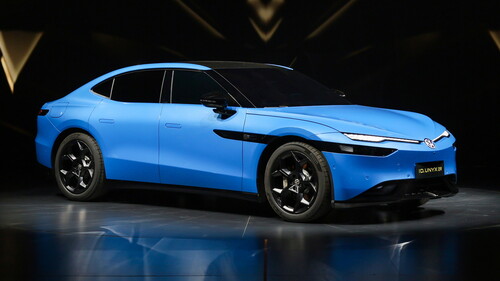
A decade ago, China's intelligent automotive industry was in its infancy. The supply chain was fragile, particularly at its core: intelligent computing chips were almost entirely imported.It was into this breach that Black Sesame Technologies stepped, launching a technical expedition that continues today. The mission: fill the gap in domestic high-end autonomous driving computing power.Starting with proprietary core IP, the company rolled out its Huashan and Wudang chip series. In just a few years, Black Sesame has cycled through three product generations, emerging as a leading global supplier of intelligent automotive computing chips.Building on that, Black Sesame is aiming higher in 2026. It's pivoting from an automotive chip supplier to a provider of edge-side AI inference chip platforms. The goal is to port the perception, reasoning, and computing capabilities honed in cars to broader scenarios like robotics and general edge AI.The wave of edge-side AI is accelerating. From smart vehicles to robots and beyond, Black Sesame is leveraging a decade of computing expertise to expand from the road to everything else, redrawing the global map of edge-side AI computing power.Three Generations of Chips, Three Leaps ForwardLooking back, Black Sesame's success over the past decade traces back to one critical choice: developing its own IP."There is no vitality in buying everything off the shelf," according to Black Sesame founder and CEO Shan Jizhang.So, after its founding in 2016, Black Sesame's first order of business was in-house development of core IPs like the NPU and ISP. Compared to outsourcing, this path took longer, cost more, and carried higher risk. But success would build a technical barrier difficult to replicate.Subsequent events proved that this "slowness" was actually a form of speed.Thanks to that solid foundation, Black Sesame's first automotive-grade autonomous driving chip taped out successfully on the first try in 2019. The subsequent Huashan A1000, Wudang C1200, and Huashan A2000 all achieved first-pass success. In just five years, the company completed three generational leaps.Image Credit: Black Sesame TechnologiesIn 2020, Black Sesame unveiled the Huashan A1000. As China's first automotive-grade SoC supporting L2/L2+ assisted driving, it used a 16nm process and delivered 58 TOPS of computing power. By comparison, Nvidia's Xavier series topped out at 32 TOPS at the time. The A1000 became the most powerful automotive-grade chip at 16nm and the first in China to meet both ISO 26262 ASIL-B and AEC-Q100 Grade 2 standards.Before this, foreign players dominated the market. Their products were expensive and lacked localized support and customization. The Chinese auto industry desperately needed a homegrown chip that was both usable and affordable.The A1000 filled that void. It gave domestic automakers a viable local option and proved through mass production that China's high-power automotive chip roadmap wasn't just viable—it was stable.Leveraging that reliability, the A1000 series won contracts with major automakers like Geely, Dongfeng, BYD, and FAW. It powers models such as the Geely Galaxy E8, Lynk & Co 07 EM-P, and Dongfeng eπ007. It has become one of the longest-living automotive-grade chips in China, with the broadest model coverage.Building on the A1000's production track record, Black Sesame launched the industry's first smart automotive cross-domain computing chip platform in 2023: the Wudang series, headlined by the C1200.Image Credit: Black Sesame TechnologiesAs the first locally produced "cabin-driving integration" chip platform to reach mass production, the C1200's standout feature is its cross-domain fusion architecture. A single chip covers assisted driving, smart cockpits, body control, and gateways. It supports everything from human-machine interaction and parking integration to in-cabin entertainment and vehicle-wide data exchange.In traditional distributed setups, cockpits, driving systems, and body controls are managed by separate ECUs. This creates hardware redundancy, drives up costs, and complicates upgrades. Latency in cross-domain data exchange also struggles to support increasingly complex "cockpit-driving" linkages.Addressing these pain points, the 7nm automotive-grade Wudang C1200 uses unified computing scheduling and high-speed memory sharing. This allows the cockpit and driving systems to communicate with microsecond-level latency.This April marked a mass production milestone. Black Sesame deepened its platform-level partnership with Dongfeng, whose Tianyuan Smart Cockpit Plus platform selected the Wudang C1296 chip. The single-chip cabin-driving solution debuted in the Dongfeng eπ007. The two sides will expand this to more Dongfeng models over the next two years.Notably, this partnership marks the first combination of a domestic cabin-driving mass-production chip with a domestic platform. It signals that Black Sesame has successfully secured its position in the cabin-driving fusion sector.Beyond Dongfeng, Continental, Banma, and Junzhizhihang have all launched high-integration cross-domain solutions based on the Wudang chip.If the A1000 solved the "do we have it" problem for high-power chips, and the Wudang series answered the "is it good" question for cross-domain architecture, then the A2000 is targeting the broader "Physical AI" track—aiming to push Chinese chips onto the global stage.Image Credit: Black Sesame TechnologiesDesigned as Black Sesame's next-generation high-computing platform for Physical AI, the Huashan A2000 family includes four models: A2000N, A2000L, A2000U, and the flagship A2000X, with single-chip computing power hitting up to 1,000 TOPS. The platform covers needs from AI cockpits to Robotaxis, and extends to robot brains and local AI BOX deployments.The A2000 family features Black Sesame's proprietary Jiushao NPU architecture, designed from the ground up for VLA (Vision-Language-Action) large models and world models. It natively supports large-scale Transformer acceleration, aiming to be the universal computing base for the Physical AI era.The Huashan A2000 has already secured design wins with leading automakers for L2+ to L3 autonomous driving scenarios. Mass production is slated for this year, marking the start of commercial application.With all three generations in play, Black Sesame expects its chip shipments to far exceed 10 million units this year.Crossing into Embodied AI, Opening a Second Growth CurveHaving moved from "catching up" to "running alongside" competitors in automotive, Black Sesame is setting its sights on broader horizons.In November 2025, Black Sesame hosted the "Multi-dimensional Evolution" product launch. It unveiled the "SesameX™" multi-dimensional embodied intelligence computing platform for the whole-brain intelligence era, along with its first roster of robot partners. The move formally extends its business from smart cars to embodied AI robots.Image Credit: Black Sesame TechnologiesSesameX™ is a commercial deployment platform for whole-brain intelligence. From hardware to software, toolchains, and model ecosystems, it is fully self-developed by Black Sesame. The platform features three core modules—Kalos, Aura, and Liora—building a tiered computing system ranging from 48 to 600 TOPS. This precisely matches needs across the spectrum, from low-speed wheeled robots like servers and greeters to multi-legged robots, smart arms, and humanoid robots.Why enter the robot race now? The answer lies in two layers of logic.First is market logic: Embodied AI is becoming the next competitive frontier for the global tech industry.Over the past two years, breakthroughs in large model technology have pushed AI from a "conversationalist in the digital world" to an "actor in the physical world." When AI needs to understand 3D space, make real-time decisions, and execute physical actions, robots become the natural vessel for that transformation.At the SesameX™ launch, Shan predicted that the next decade belongs to a "New Robot Era." By 2030, robots of various forms are expected to enter daily life widely. By 2040, annual robot sales could surpass 1 billion units, creating a market worth trillions of dollars.Second is technical logic: Cars and robots share a highly consistent underlying logic. Both rely on a "software + hardware" architecture and depend on multi-modal perception and AI reasoning for intelligence.This means the automotive-grade safety systems, heterogeneous computing architecture, and visual perception capabilities Black Sesame built for cars are exactly what embodied AI needs. They can be systematically reused in robot scenarios, creating a multiplier effect of "one investment, multi-scenario application."For instance, the heterogeneous computing power from Black Sesame's cross-domain driving chips supports multi-dimensional computing for robots. Its advanced visual perception tech—including multi-camera fusion, dynamic spatiotemporal resolution adjustment, and low-latency processing—gives robots exceptional perception capabilities.SesameX™ safety design is grounded in the ASIL-D automotive standard, benchmarking ISO 26262, ISO 13849, and IEC 61508. It systematically migrates automotive-proven safety capabilities to robots, building the industry's first complete six-layer safety system from the physical to the data layer. The goal: comprehensive safety ensuring "no harm, no errors, no faults, no leaks."In this sense, Black Sesame's entry into robotics is not a simple pivot. It is a natural overflow of automotive technology, experience, and capability.This crossover logic is already being validated by the market.Image Credit: Black Sesame TechnologiesAccording to Gasgoo, Black Sesame has partnered with industry leaders including DeepRobotics, Fourier Intelligence, Lenovo, ZhiPingFang, Geek+, Yunji Technology, and Joyson Electronics. Some projects have reached commercial deployment, with results used in quadruped robots and smart shipping inspections.Thanks to this, Black Sesame's embodied AI business generated nearly 100 million yuan in revenue in 2025, with a gross margin of 48.7%. This boosted the company's overall gross margin above 40%, establishing it as a new growth engine.There is reason to believe that as SesameX™ partnerships move from design wins to mass production across more scenarios, the embodied AI business will maintain its high-growth trajectory.From smart cars to embodied robots, Black Sesame is using one technological foundation to leverage two multi-trillion-dollar markets.The Next Decade: Leading Global Edge-Side AI Inference ChipsReviewing Black Sesame's decade-long journey, the move from automotive chips to robots and broader edge scenarios isn't just diversification. It's based on a clear strategic judgment: Edge-side inference is the necessary path for AI to move from the digital to the physical world.From catching up to running alongside, and now leading in some areas, Black Sesame has traversed a path that took others decades—in just ten years.For the next decade, the goal is clear: to become the number one global provider of edge-side AI inference chips by coverage.Image Credit: Black Sesame TechnologiesFor the past decade, AI evolution has been driven by the cloud. Large models relied on data centers for training and iteration, with parameter scales jumping from billions to trillions.But a deeper trend is emerging: AI's boundaries are accelerating from the virtual digital world into the real physical world. When a car must decide whether to brake or swerve in a split second, or when a robot needs to grasp an object in a cluttered environment, the extreme real-time and high-reliability requirements of physical scenarios expose the cloud's inherent latency, bandwidth limits, and environmental adaptation weaknesses.This means AI must move to the edge, completing real-time perception, reasoning, and decision-making locally. The edge-side inference chip is the critical foundation for this shift.Centered on the strategy of "All-series AI chips + All-scenario solutions," Black Sesame announced the strategic acquisition of EEASYTECH in early 2026. This was a crucial step in completing its full-spectrum edge-side chip roadmap.EEASYTECH specializes in low-power edge AI chips and solutions, with proprietary IP and a mature lightweight product lineup used in smart vehicles, security, and home electronics. It fills Black Sesame's gap in low-power edge scenarios, complementing its strengths in high-performance automotive chips, mature algorithms, and automotive channels.Post-integration, Black Sesame has formed a dual-drive product matrix: "High-computing scenario coverage + Low-power scenario adaptation." The Huashan series targets high-computing driving; Wudang targets central computing; the EEASYTECH series targets low-power edge AI; and SesameX™ targets full-stack robot development. This creates a capability covering 0.5 to 1,000 TOPS, spanning both automotive and consumer standards, and bridging smart cars, robots, and general edge AI.Notably, Black Sesame has already secured significant wins in the broader edge AI landscape.Image Credit: Black Sesame TechnologiesIn AI imaging, Black Sesame's solutions have been deployed in over 500 million devices, making it one of the top three global suppliers. In 2025, revenue from smart imaging solutions reached nearly 40 million yuan, up 7.9% year-on-year, with a gross margin of 84.7%.Behind these numbers is Li Auto's first AI glasses, Livis, which uses Black Sesame's AI imaging solution. It covers HDR fusion, MFNR multi-frame noise reduction, video EIS, night enhancement, and portrait beautification—covering high-use scenarios like night portraits. Several other AI glasses partnerships are also in progress.This means in the wider edge AI market, Black Sesame is already a battle-tested "practitioner." From smart cars to AI imaging, and from robots to general edge AI, its technological foundation is delivering value across every key scenario.Standing at a new ten-year milestone, Black Sesame's growth logic is upgrading from a "single engine" to "three engines," driven by the synergy of smart vehicles, embodied intelligence, and general edge AI. Autonomous driving chips build a stable foundation; embodied AI opens a high-growth "second curve"; and general AI offers vast incremental space.Three tracks, three momentum sources—all validating one judgment: Black Sesame's moves in every key edge AI scenario aren't one-off deals. They are part of a continuous evolution grounded in long-termism.