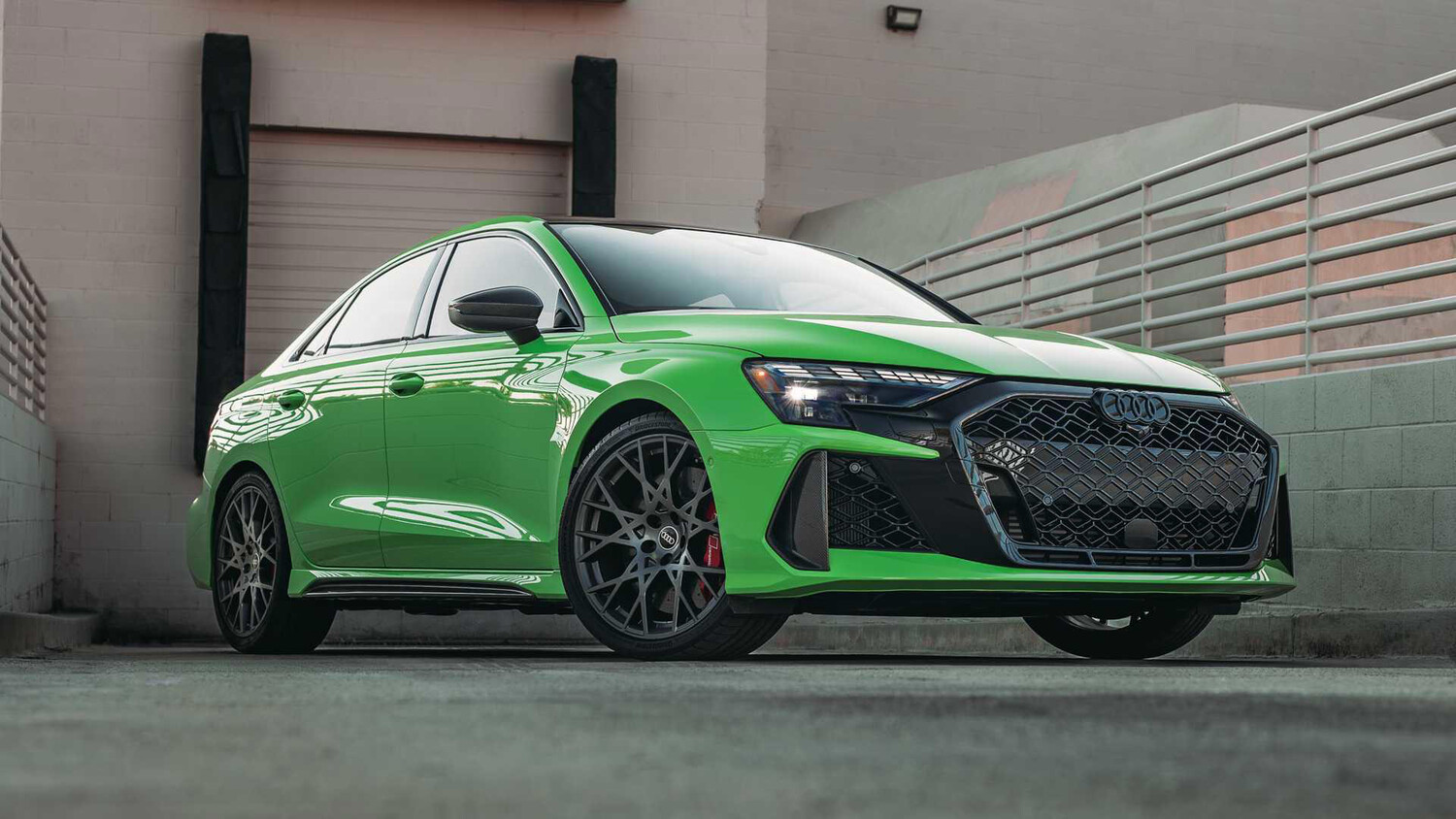
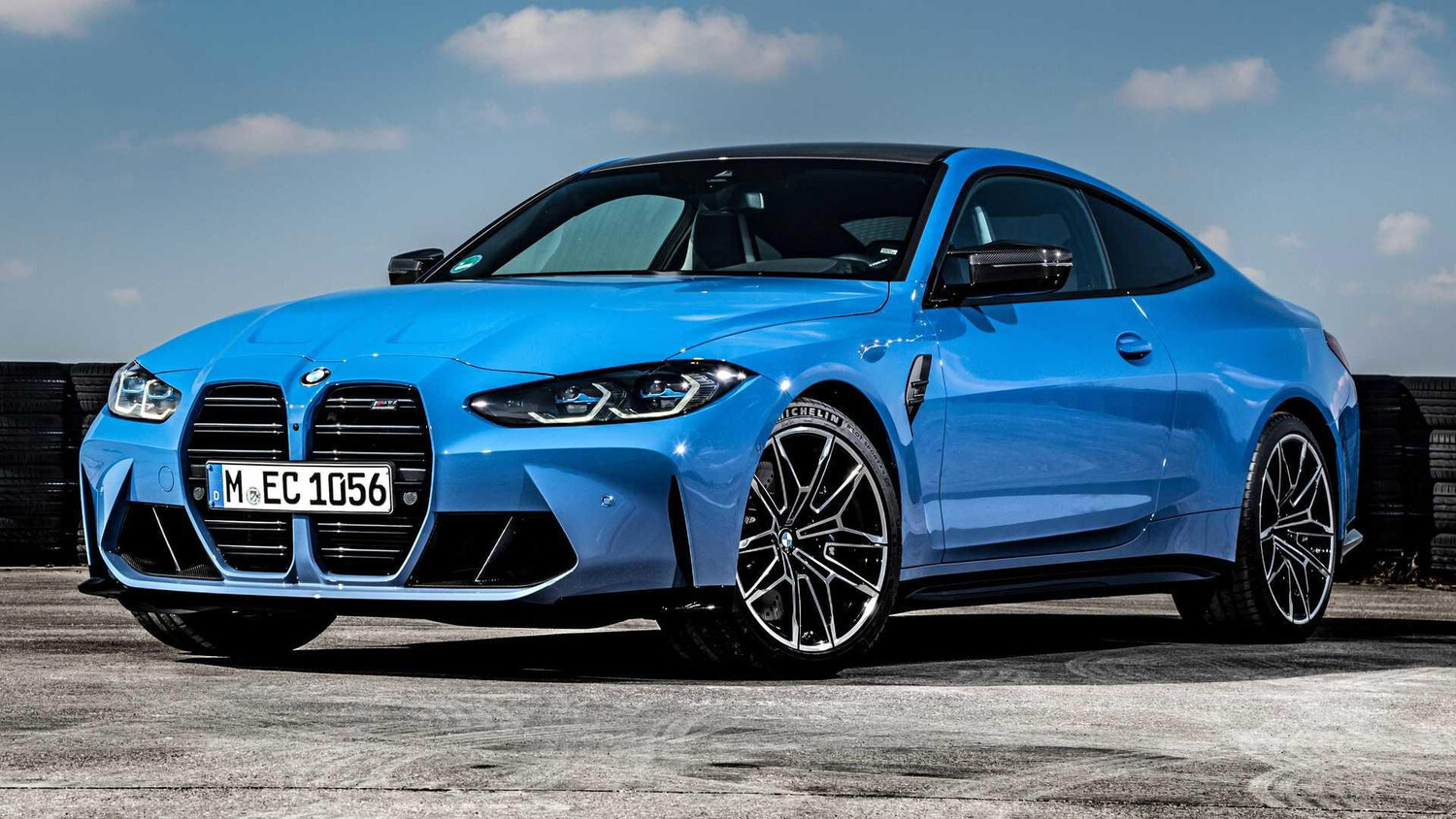
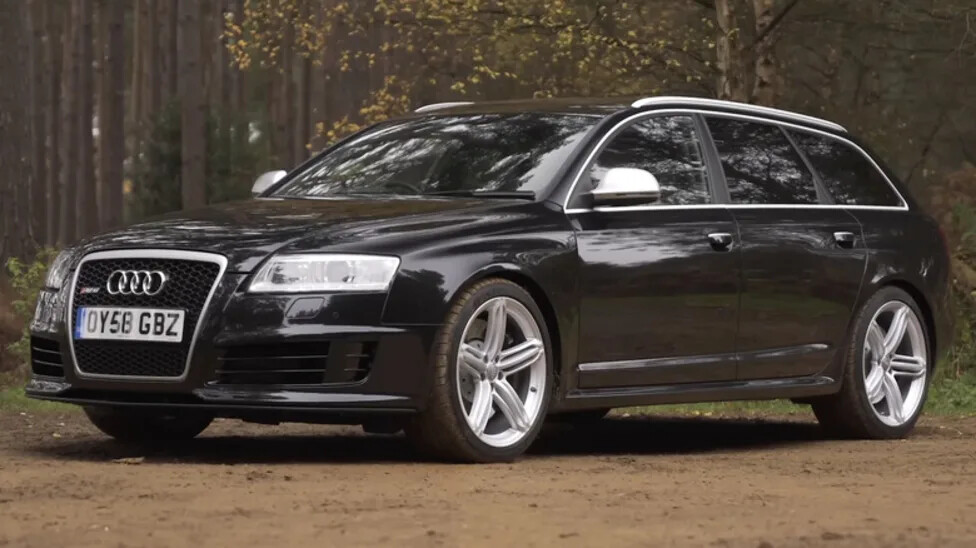
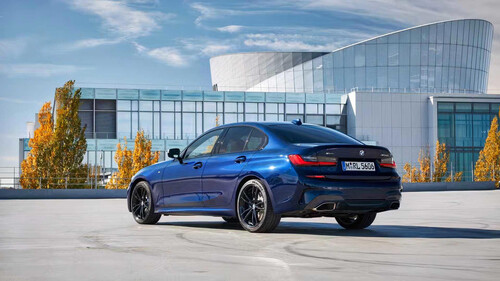
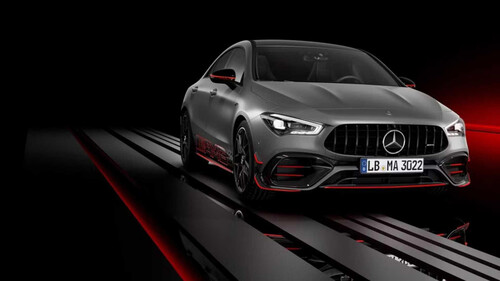
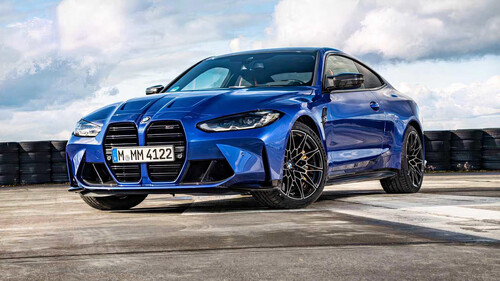
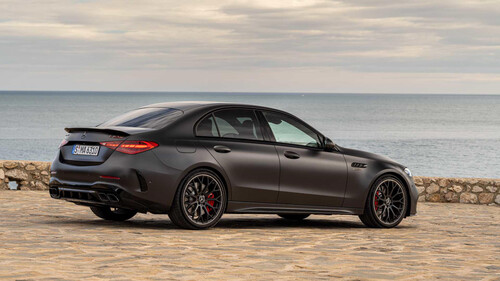
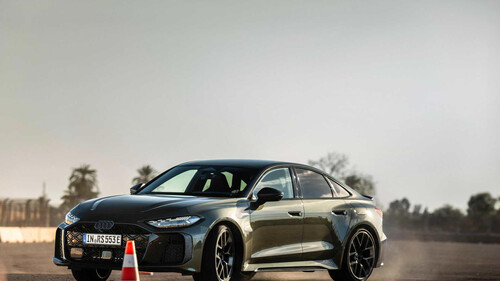
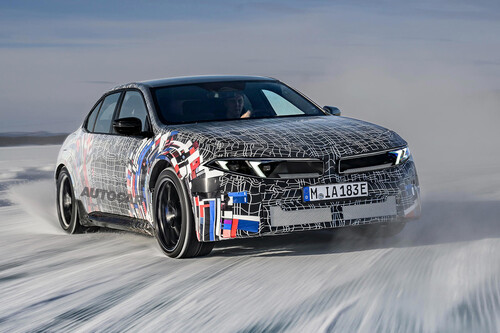
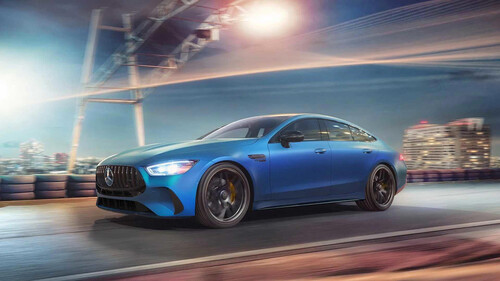
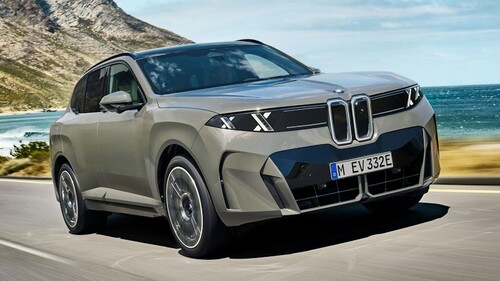
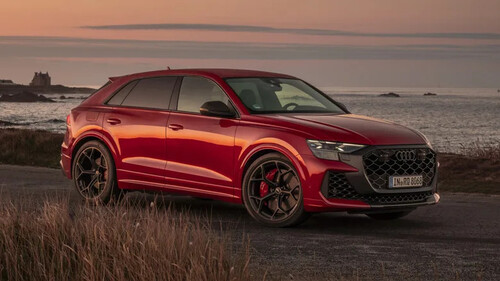
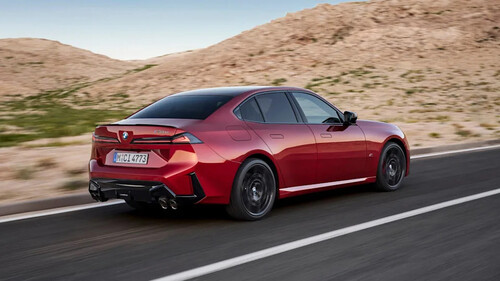
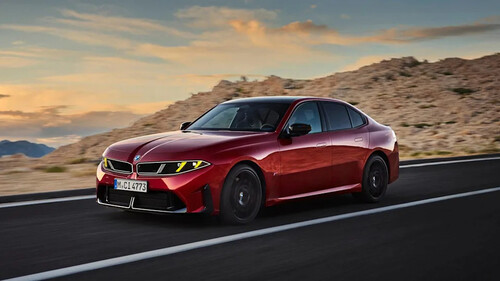
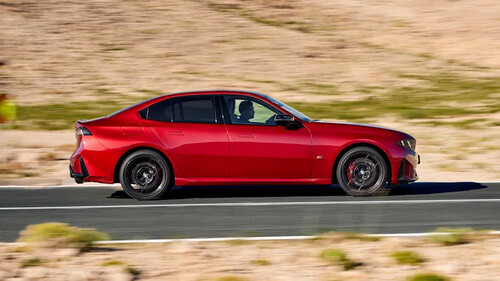
Recently, we delved into the differences between Audi, BMW, and Mercedes-Benz in their philosophy and approaches to building cars. The differences make for three distinctive brands and driving experiences, considering they all fall under the umbrella of being German premium to luxury automakers. The same goes for their high-performance cars and brands, with Audi's RS line via its Audi Sport department, BMW's M cars, and the Mercedes-AMG brand. Again, we can make a broad generalization, but it won't do the brands justice and we'll dig in deeper.The broad generalizations to highlight the difference between the German automaker's performance cars would be that an Audi RS model is what you choose if you want to go fast in any weather or conditions, BMW is what you choose if you want pinpoint handling on road or track, and Mercedes-AMG is what you choose if you want brute horsepower and theater mixed with a luxury interior. But dig deeper, and the differences are nuanced in places, and genuinely amusing in others. General Philosophies Of The German Performance Brands Audi The general philosophy and approaches to high-performance cars between Audi, BMW, and Mercedes all stem from how their performance arms came to be. Each of the brands have a long history in motorsport, but the performance arms, as we know them today, date back to BMW's M (Motorsport) division.Mercedes-Benz It was established in 1972 to create its first race car project, the BMW's 3.0 CSL. The first M car sold to the public was the M1, a road-going race car, but the M division's later success in touring car racing led to the extremely successful road-going BMW M3.Dylan Miles Audi's RS branding also came from motorsport, but its all-wheel-drive passenger car came first. When World Rally Championship (WRC) rules changed to allow four-wheel drive, Audi was ready, and took advantage of the huge grip in slippery conditions by driving all four wheels while applying excessive horsepower. The Audi Quatrro became a rallying legend as it dominated WRC through the early 1980s with drivers including Stig Blomqvist, Walter Röhrl, and Michèle Mouton. In 1982, Mouton became the first woman to win a leg of the WRC drivers championship, eventually winning three other races and finishing second in the championship.Mercedes-AMG is the outlier here, as AMG started out as an independent company, made up of former Mercedes-Benz engineers, and specialized in tuning Mercedes models. AMG began designing and testing racing engines and a range of unofficial upgrade and accessories packages for Mercedes cars. The first clue of what was to come was AMG's makeshift race car from the 1970s, a Mercedes 300 SEL 6.8 nicknamed Red Sow. It made 422 horsepower, almost 200 hp more than the stock factory car.Mercedes and AMG worked together in motorsport before Mercedes acquired a majority shareholding of AMG in 1999. But, before then, AMG created the AMG Hammer – a W124 sedan road car with a modified 5.6-liter engine making 335 hp that could launch the heavy car to 60 mph in 5.0-seconds. And this is in the late 1980s. It was the unsubtle blueprint for what followed in the 2000s when AMG took to supercharging V8s. The Quintessential Modern Cars Mercedes-Benz Another good way to compare and contrast the brands is to pick out some of their most representative cars. Which is not an easy task to do objectively. So, subjectively, we're going with the Audi RS3, BMW M4, and the Mercedes-AMG GT.Audi The Audi RS3 shows off Audi's unique engine to its fullest, the BMW M4 is its most popular and traditional M car, and the Mercedes-AMG is what happened when Mercedes-Benz let Mercedes-AMG design a car from scratch.Bring a Trailer Audi RS3 Ian Wright/CarBuzz/Valnet For Audi, we could have gone with the R8, but the RS3 uses the most Audi RS of Audi RS engines – a charismatic inline five-cylinder generating 401 hp to push out via its hallmark quattro system. It also has the traditional trait of the engine mounted forward in the engine bay due to the front diff and transmission bell housing, which is what gave Audi its reputation for understeer.However, the RS3 also shows off Audi's technology with its seven-speed dual-clutch torque-vectoring rear differential, which involves a pair of multiplate clutch packs, and helps the RS3 feel like an all-wheel-drive, all-weather, hatchback on the road. The RS3 is wildly entertaining and ridiculously agile and the quattro system ensures the power can go down early when exiting a corner. BMW M4 BMW BMW's M3 and M5 showed the world that a sports sedan can generate a high-performance sports car experience with a car you can drive to work every day. It's a recent decision of BMW to split the sedan and coupe M3 and create the M4 designation for the coupe. However, the M4 maintains the traditions of the M3 as a high-performance coupe version of the 3 Series coupe.Those traditions are an M version of the regular BMW inline-six engine making big power, and a precision-engineered chassis upgrade to a chassis that was already well-balanced and engineered for driver enjoyment as well as passenger comfort.It's been a recent thing for BMW to fully embrace all-wheel-drive, but the standard configuration for the M4 is still rear-wheel-drive and a six-speed manual. On the road, the twin-turbocharged 3.0-liter inline-six is as smooth as it is powerful (523 hp is standard), while the chassis seemingly pivots around the driver through a corner while remaining stable and generating an awesome amount of cornering grip. Mercedes AMG-GT Mercedes-Benz When Mercedes-AMG set about developing a car in-house, it chose to go with a front-engine, rear-wheel-drive grand touring sports car in the vein of the earlier Mercedes-Benz SLS AMG, which took inspiration from the Mercedes-Benz SLR McLaren, which paid homage to the iconic Mercedes-Benz 300 SLR from the 1950s.But, the AMG GT didn't have the gullwing doors. It arrived as a slick and sexy looking car with a traditional long hood and short rear deck. The long hood meant that Mercedes-AMG could drop its hot-v layout twin-turbocharged V8 under the hood making 456 hp while the S version made 503 hp.When it arrived, there was much nodding of heads as Mercedes-AMG unveiled exactly what the world imagined a purpose-built German muscle car would be. It looks like it's a car full of finesse and sophistication, which it is, right up until the accelerator is smashed into the carpet, the rear tires light up, and the exhaust lets the world know exciting and unsophisticated things are happening. The Homogenization Of Performance Mercedes-BenzThere is an elephant in the room, unfortunately. For the most powerful gas-powered performance models across the three badges, there used to be a big variation in engines, including V8, V10, and V12s. Mercedes-AMG would seemingly slap a supercharger on anything with eight or more cylinders, and BMW and Audi would toy with V10s as well as V8s.Now, you'll find them all using a 4.x-liter twin-turbo V8. Largely, that's because it's the most efficient way to generate bombastic power, but also because (almost) every model the main brand makes now has to have a high-performance version, and a V8 is easier to package into a range of cars.Audi Audi is the best example of this with the S8, RS6 (wagon), the RS7 (sedan), and RS Q8, and because Audi is part of the Volkswagen group, the same Audi modular V8 engine is used by Bentley, Lamborghini, and Porsche in various models.BMW BMW's S68 twin-turbo V8 is currently in 10 models, including the oddball X6 M Competition, then used in some Land Rover vehicles. BMW currently has eight M cars, and even its luxury grand-touring range topper, the M8, uses the 4.4-liter V8. Adding to the idea of homogenization is how Mercedes-AMG and BMW M have been embracing all-wheel-drive as well. State Of The Union BMW If you look through the range of each of the German performance arms of Audi, BMW, and Mercedes, there is a huge amount of variety. We're into an era now where brands are finding their identities at the end of one era while another starts. BMW has embraced hybridization with the new BMW M5, but still has the wickedly good BMW M2 for some old-school goodness.Audi Audi still has the wickedly good RS3; the absolute powerhouses are the RS6, RS7, and RS Q8, then the forward-looking all-electric RS e-tron GT Performance with over 900 hp at its disposal.Mercedes Mercedes-AMG has the widest range of cars with its badge on, and plays with just about every form of delivering power available in every class of passenger vehicle. Highlights include the four-cylinder turbo A-Class, which includes a hot hatch in its lineup, an inline-six-cylinder plug-in-hybrid E-Class, and the AMG SL with a twin-turbo V8 hybrid setup. Currently, it looks like BMW M is going to specialize in hybrids, Audi is skipping to all-electric power, and Mercedes-AMG is having an identity crisis. But, we really are in the era of transition, and it's going to take a while to shake out.Sources: BMW, Audi, Mercedes-Benz